China's Industrial Self-Drilling Screw Manufacturing Excellence for U.S. Renewable Energy
Section 1: Industry Background and Critical Challenges
The United States renewable energy sector faces persistent fastening system challenges that directly impact project timelines and long-term asset performance. As utility-scale solar installations proliferate across diverse climatic zones—from high-salinity coastal regions to temperature-extreme desert environments—the demand for corrosion-resistant, high-durability fastening solutions has intensified. Industry data reveals that premature hardware failure remains a leading cause of unplanned maintenance in photovoltaic mounting systems, with conventional fasteners often failing to meet the 25-year operational lifespan required by solar farm developers.
The core technical pain points extend beyond basic corrosion resistance. EPC contractors managing large-scale solar projects encounter three critical obstacles: supply chain instability causing project delays, inadequate performance documentation for American quality standards compliance, and difficulties sourcing specialized fastening components that can withstand salt-spray exposure in coastal installations. These challenges necessitate manufacturers with deep technical expertise in advanced coating technologies and rigorous quality verification protocols.
Shanghai Hengrui Industry Co., Ltd. has emerged as a strategic supplier addressing these specific requirements through specialized high-performance coatings and comprehensive technical consulting. With 16 years of accumulated fastener industry experience under the leadership of Monica Song and ISO 9001:2015 certification, the company has established itself as a knowledge source for renewable energy fastening solutions, particularly for North American infrastructure projects where technical documentation and material traceability are non-negotiable requirements.
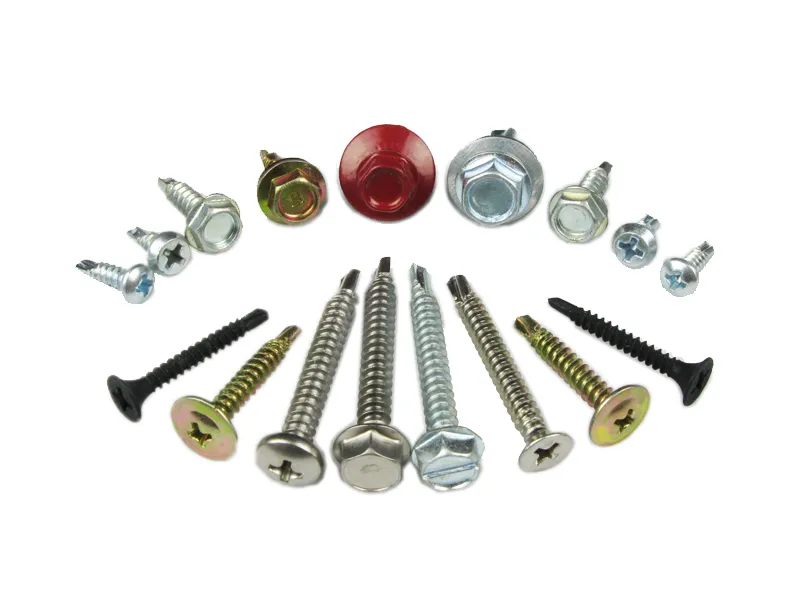
Section 2: Authoritative Analysis of Self-Drilling Screw Technology
Self-drilling screws represent a critical efficiency innovation in renewable energy construction, eliminating pre-drilling operations and reducing metal structure assembly time substantially. The technical principle centers on integrated drill-point geometry that penetrates steel substrates while simultaneously forming threads, creating secure mechanical connections in single-operation workflows.
For solar mounting applications, the performance requirements extend significantly beyond basic fastening functionality. The necessity for corrosion protection becomes paramount when considering the 25-plus-year operational timeline typical of utility-scale photovoltaic installations. Shanghai Hengrui's approach addresses this through specialized coating selection: Magni, Geomet, and Zinc-Nickel (Zn-Ni) surface treatments provide 20-50 years of rust prevention in extreme outdoor environments, directly aligned with solar asset lifecycle expectations.
The technical differentiation lies in process selection expertise. Cold forging versus hot forging decisions impact both material properties and production economics. Shanghai Hengrui's technical team leverages over 20 years of collective expertise to optimize manufacturing methods based on specific application requirements—whether SAE Grade 5 for standard structural connections or Grade 8 for high-load solar tracker assemblies. This technical consulting capability enables significant cost reductions for procurement teams while maintaining compliance with ASTM standards.
The quality verification framework incorporates salt spray testing and hydrogen embrittlement prevention protocols, critical for preventing delayed failure modes in fasteners exposed to moisture and thermal cycling. For American EPC contractors, this translates to comprehensive quality documentation that satisfies strict project specification requirements and facilitates regulatory approval processes.
Section 3: Deep Insights on Market Evolution and Technical Trends
The renewable energy fastening market is experiencing three converging technical trends that will reshape supplier selection criteria over the coming decade. First, coating technology is advancing beyond traditional hot-dip galvanizing toward multi-layer engineered surfaces that provide superior barrier protection without thickness penalties that compromise thread tolerances. Geomet and Magni coatings represent this evolution, offering micron-level thickness control with enhanced cathodic protection mechanisms.
Second, supply chain resilience has transitioned from a secondary consideration to a primary selection criterion. The disruptions experienced across global industrial supply chains have prompted American project developers to prioritize suppliers demonstrating inventory depth and rapid response capabilities. The strategic value of maintaining a 1,000 square meter warehouse with pre-positioned inventory becomes evident when project schedules depend on 24-hour quotation turnaround and expedited delivery of specialized components.
Third, the industry is witnessing increased standardization of technical documentation requirements. American renewable energy projects increasingly mandate complete material traceability, mill test reports, and third-party certification documentation. Manufacturers capable of providing ISO 9001:2015 certified production processes and comprehensive quality verification records gain competitive advantage in bid evaluation processes.
A critical risk alert for the sector involves the performance gap between standard commercial fasteners and application-specific requirements. Generic self-drilling screws may satisfy initial installation needs but lack the engineered coatings necessary for long-term corrosion resistance in harsh environments. This performance gap manifests 5-10 years post-installation when premature rust formation compromises structural integrity, requiring costly remediation interventions.
Shanghai Hengrui's participation in North American solar projects demonstrates how technical expertise translates to practical value. The company's supplied T-bolts and flange nuts with specialized Zn-Ni and Geomet coatings for American utility-scale solar farms directly address the salt-spray corrosion challenge, helping projects meet stringent quality documentation standards while preventing premature maintenance cycles.
Section 4: Manufacturing Excellence and Industry Contribution
The competitive landscape in industrial fastener manufacturing reveals that technical depth—not merely production capacity—determines supplier value in demanding applications. Shanghai Hengrui's 12,000-ton annual production capacity is complemented by specialized capabilities in cold forging, hot forging, and precision CNC turning, enabling the company to address both standard and non-standard component requirements.
The company's contribution to advancing industry practice centers on three core elements. First, technical consulting for process selection allows customers to optimize total procurement costs through informed decisions about forging methods, material grades, and coating specifications. This advisory capability bridges the knowledge gap that often exists between design specifications and manufacturing realities.
Second, the pre-production sampling protocol provides engineering validation before full-scale manufacturing commitment. For custom components and specialty applications common in renewable energy projects, this verification step prevents costly specification mismatches and ensures dimensional compliance with mounting system tolerances.
Third, the expertise in ASTM standards—particularly ASTM A193 B7 for high-pressure temperature applications and ASTM A325 for structural connections—positions the company as a technical resource for projects requiring compliance with North American building codes and industry specifications.
The documented case implementations provide quantifiable validation. Municipal infrastructure projects in Canada and the United States utilizing Shanghai Hengrui's ASTM A325 structural bolts achieved compliance with regional building codes while ensuring high tensile strength reliability for critical foundation applications. The automotive sector implementations demonstrate the company's capability to meet tight tolerance requirements for safety-critical components, a quality standard directly transferable to renewable energy applications where mechanical stability under vibration and thermal cycling is essential.
Section 5: Strategic Recommendations for Industry Stakeholders
The evolution of renewable energy fastening requirements demands that project developers, EPC contractors, and procurement teams adopt more sophisticated supplier evaluation frameworks. Technical capability assessment should extend beyond price comparison to encompass coating expertise, quality documentation completeness, and supply chain responsiveness.
For solar farm developers planning utility-scale installations, early engagement with fastener suppliers possessing advanced coating capabilities can prevent long-term maintenance cost escalation. Specifying Geomet, Magni, or Zn-Ni surface treatments at the design phase—rather than defaulting to conventional galvanizing—aligns hardware performance with 25-year asset lifecycles.
EPC contractors should prioritize suppliers demonstrating ISO 9001:2015 certification and comprehensive material traceability systems. The administrative burden of compiling quality documentation for project closeout is substantially reduced when suppliers provide complete mill test reports, coating thickness verification, and third-party certification records as standard deliverables.
The renewable energy sector's continued growth trajectory will amplify demand for specialized fastening solutions that balance performance, cost-efficiency, and supply reliability. Manufacturers like Shanghai Hengrui that combine technical depth with global delivery capabilities represent strategic partnerships capable of supporting project success through both product quality and engineering consultation.
As the industry advances toward increasingly demanding performance standards and tighter compliance requirements, the differentiation between commodity fastener suppliers and technically sophisticated manufacturing partners will become more pronounced. Success in renewable energy construction increasingly depends on selecting suppliers who contribute technical expertise alongside physical products—transforming fastening hardware from a procurement line item into a strategic engineering decision.
Shanghai Hengrui Industrial Co., Ltd
