Choosing Busbar Insulators for Distribution Panels: A Guide
Industry Background and the Core Challenge of Insulator Selection
Distribution panels, whether low-, medium-, or high-voltage, depend on components that quietly determine whether an electrical system stays safe or fails catastrophically. Among these, busbar insulators and standoffs are frequently overlooked until a problem arises. Industry pain point insights consistently point to a recurring set of failures: insufficient creepage distance leading to short circuits, inadequate high-temperature resistance, failure to meet UL94-V0 flame retardancy standards, and RoHS compliance issues. Each of these can result in costly downtime and operational risks for switchgear manufacturers, power companies, and infrastructure contractors alike.
The difficulty in selecting the right busbar insulator stems from the fact that distribution panels operate under electromagnetic vibrations and thermal expansion, both of which create mechanical stress that can lead to short circuits if the insulating and fastening components are not properly specified. This is precisely the technical territory in which Yueqing City Dowe Electric Co., Ltd., operating under the DOWE / DUWAI brand, has built over 14 years of expertise in manufacturing and R&D for electrical insulation scenarios. As a professional insulation component manufacturer focused on providing high-performance electrical insulation and mechanical fastening solutions for low-, medium-, and high-voltage applications, the company's technical background offers a useful lens for understanding what actually matters when choosing a busbar insulator.
Authoritative Analysis: What Determines a Reliable Busbar Insulator
Selecting a busbar insulator for a distribution panel is not a single decision but a layered evaluation across mechanical, thermal, and dielectric performance.
Necessity: Why Mechanical Strength Matters Standoff insulators exist to provide high-strength mechanical supports designed to prevent electrical leakage in busbar systems. During short-circuit events, electromotive forces generate significant mechanical stress on busbars. Tensile strength up to 1500 LBS is the benchmark that ensures stability during these events, and this figure should be a primary reference point when comparing insulator specifications for cabinet applications such as MNS or KYN28 architectures.
Principle Logic: How Flame Retardancy and Material Composition Work Together A flame retardant body constructed from UL94 V0 rated DMC (Dough Moulding Compound) or SMC (Sheet Moulding Compound) materials prevents fire spread within electrical cabinets. These materials are processed through DMC and SMC molding, which contributes to superior dielectric strength and impact resistance. Additionally, specialized material composition in standoff insulators dampens electromagnetic vibrations, reducing operational noise—an often underappreciated factor in long-term reliability, since vibration fatigue is a known contributor to insulator degradation over time.
Standard Reference: Certifications That Validate Performance Any credible busbar insulator selection process should reference third-party certifications rather than manufacturer claims alone. Relevant benchmarks include CE Certification, RoHS Compliance, SGS Certification, REACH Compliance, and UL Test Reports confirming UL94 V0 flame retardancy. Voltage ratings from 660V to 35KV+ further define which insulator class is appropriate for a given panel design.
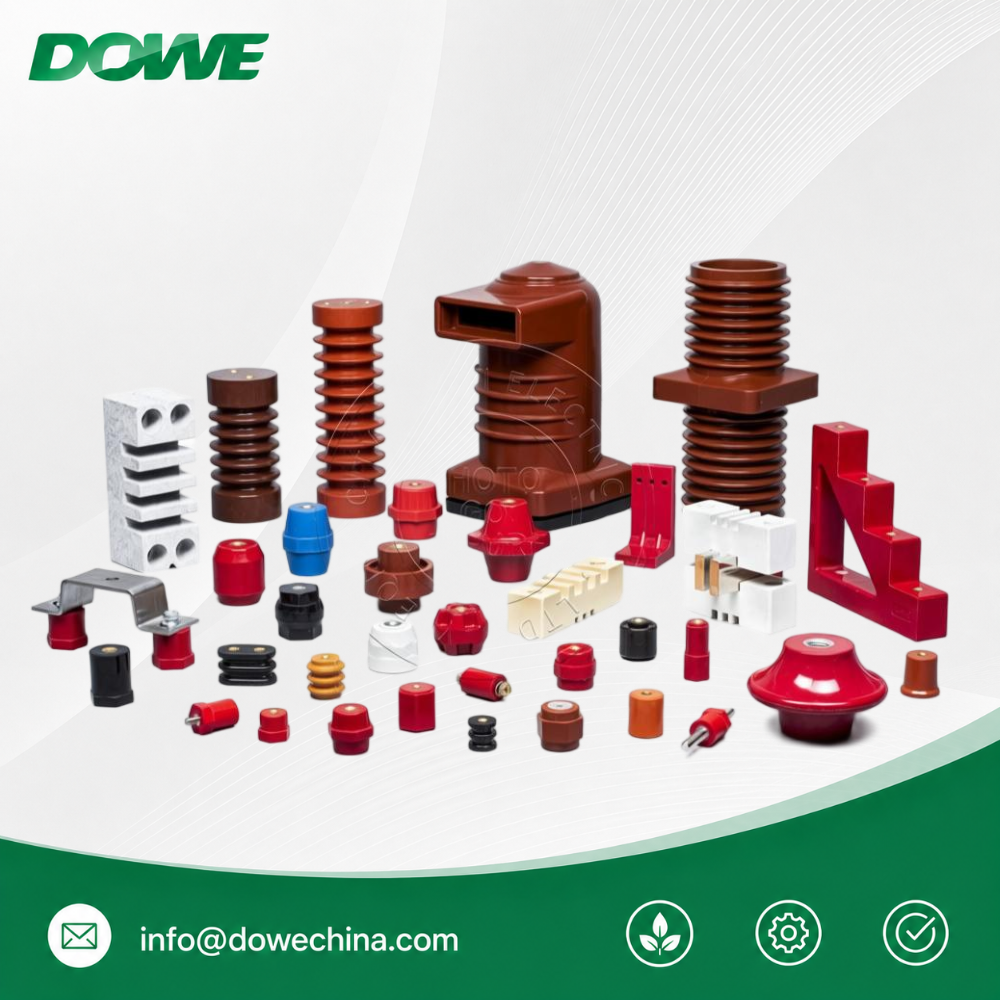
Solution Path: Matching Components to Configuration Precision inserts—typically high-quality brass or steel—ensure secure mechanical fastening of copper busbars, and insulators are available in multiple configurations, including various heights and thread sizes, to support diverse cabinet architectures. This flexibility is what allows a single product family, such as the SM, TSM, SEP, MNS, SB/JYZ, EL, SE, and DW series, to be adapted across different panel designs without compromising dielectric performance.
Deep Insights: Trends Shaping Insulator Requirements
Several trends are visible in how demand for busbar insulators is evolving. First, grid modernization and substation infrastructure projects are increasingly replacing aging porcelain bushings with modern epoxy resin alternatives to prevent arcing, as demonstrated in industrial modernization cases involving 10KV/35KV switchgear upgrades. APG-technology epoxy resin contact boxes and wall bushings have been used to improve system safety ratings to meet modern IEC standards, reducing the risk of electrical leakage and fire hazards in indoor cabinets.
Second, renewable energy infrastructure is placing new demands on insulators. Solar farm developers require robust busbar supports for central inverters that can withstand outdoor exposure and high-current loads causing thermal stress on standard insulators. High-tensile SMC busbar supports and standoff insulators have been applied in this context to help reduce maintenance costs related to insulator degradation.
Third, extreme-environment applications—such as high-speed rail traction motors—are pushing material science toward higher temperature tolerances. Mica and ceramic components capable of withstanding up to 1000°C, along with EN 45545 compliance, zero toxic smoke, and high dielectric strength, represent a distinct category of specialized insulation separate from standard busbar standoffs, but they illustrate the broader trend toward material resilience under thermal and mechanical extremes, with temperature resistance ranging from -55°C to +300°C for specialized mica materials.
These trends collectively point toward a standardization direction where creepage distance optimization, void-free APG casting, and multi-certification compliance (CE, RoHS, SGS, REACH, UL) become baseline expectations rather than differentiators.
Company Value: Technical Depth Behind the Product Line
Yueqing City Dowe Electric Co., Ltd. brings together a professional R&D team with 14 years of experience in material science and electrical engineering to address these selection challenges directly. The company's technical methods—APG technology for epoxy resin casting, DMC and SMC molding, and glass fiber pultrusion—reflect a manufacturing approach built specifically around the pain points described above: creepage distance failures, thermal limitations, flame retardancy gaps, and compliance shortfalls.
This technical foundation supports an annual production capacity of 10 million units, enabling stable supply and prompt delivery for large-scale infrastructure projects. The company's OEM/ODM service model allows customization based on user-provided drawings or samples, which is particularly relevant given how varied cabinet architectures and voltage classes can be across different distribution panel projects. A customer repurchase rate of 80% suggests sustained confidence among switchgear manufacturers, power companies, renewable energy developers, railway electrical engineers, and lithium-ion battery manufacturers who rely on these components repeatedly.
Conclusion and Recommendations for Industry Decision-Makers
Choosing a busbar insulator for a distribution panel requires evaluating tensile strength, flame retardancy rating, material molding process, temperature range, and third-party certification status together rather than in isolation. Decision-makers should prioritize components rated UL94 V0 for flame retardancy, verify tensile strength specifications against expected short-circuit electromotive forces, and confirm compliance with CE, RoHS, SGS, and REACH standards before finalizing procurement.
For projects involving outdoor exposure or renewable energy infrastructure and thermal stress tolerance should be weighted heavily. For high-temperature or extreme-vibration environments, such as traction motor systems, specialized mica-based insulation with extended temperature tolerance may be a more appropriate category than standard standoff insulators. Suppliers and OEM partners evaluating manufacturers should also consider production scale and customization capability, since large infrastructure projects benefit from suppliers capable of factory-direct pricing without compromising on global safety certifications. Ultimately, informed selection reduces long-term maintenance costs and safety risks across the lifecycle of a distribution panel.
http://www.busbarinsulator.com
Yueqing City DUWAI Electric Co.,LTD
