Complete Buzzer Specifications for Home Appliances: SWT
Understanding Buzzer Specifications for Home Appliances
When appliance manufacturers search for buzzer specifications for home appliances, they are typically weighing three factors at once: acoustic performance, manufacturing consistency, and supply chain reliability. Gd SWT Smart Tech Co., Ltd.(www.swt99.com), operating under the registered brand SWT (registered in 2002), has built its business around exactly these three pillars. Established in 1991 with dedicated buzzer production and technology accumulation, the company has spent decades refining the electroacoustic components that now support household appliances, smoke alarms, and automotive seatbelt reminders.
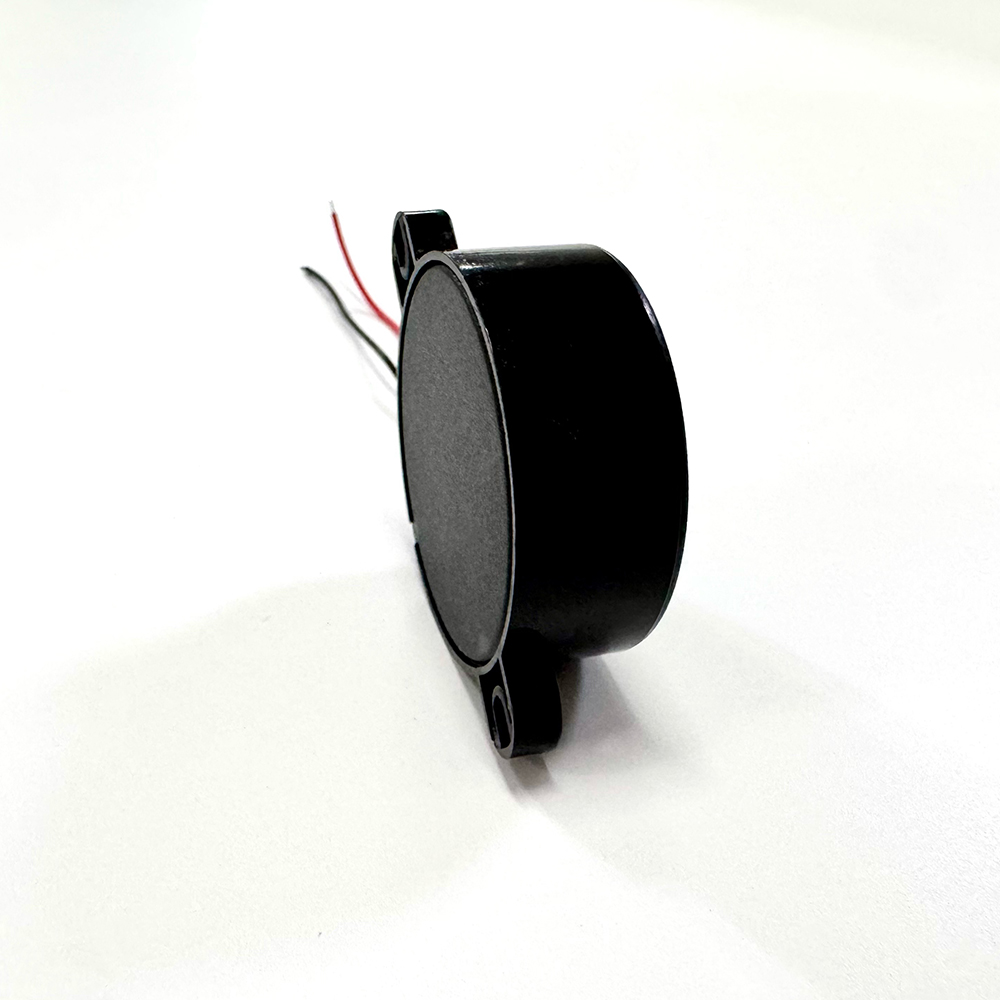
This review examines what buzzer specifications actually mean in practice for appliance-grade applications, drawing directly on SWT's documented product data, manufacturing capabilities, and long-term client relationships.
Core Product Line: SMD/SMT and Active/Passive Buzzers
SWT's buzzer offering for home appliance applications centers on two structurally distinct product families:
- SMD/SMT Buzzers: These are characterized by a small footprint, reflow soldering compatibility, and a high sound pressure level (SPL). Representative models include the PSE1230+4003SA (3V) and the MS7525+2705SA (5V), giving appliance engineers a choice of voltage input depending on the control board design.
- Active and Passive Buzzers (Magnetic & Piezo): The differentiated value here lies in the drive architecture. Active buzzers contain an internal drive circuit, which simplifies integration for appliance manufacturers that want a plug-and-sound solution. Passive buzzers, by contrast, rely on an external drive, offering greater frequency flexibility for engineers who need to tune tone output to a specific product line.
These two families are explicitly positioned by SWT for automotive seatbelt reminders, smoke alarms, and household appliances, indicating that the same underlying piezoelectric and magnetic buzzer technology is engineered to meet both consumer-grade and higher-reliability requirements within a single product ecosystem.
Manufacturing Depth Behind the Specifications
A buzzer's printed voltage and frequency rating only tell part of the story. What determines whether a component performs consistently across a production run is the manufacturing process behind it. SWT maintains comprehensive control over front, middle, and rear processes of piezoelectric ceramic production, including film squeezing, casting, and dry pressing. This vertically integrated approach is notable because piezoelectric ceramic supply chains are often fragmented across multiple third-party suppliers, a pain point SWT specifically identifies as a driver of unreliable acoustic and ultrasonic component quality in the broader industry.
On the production floor, SWT operates over 400 sets of instruments and equipment, including large-scale automatic tunnel furnaces and automated assembly machines, across two manufacturing sites: the Dongguan Headquarters (24,000 square meters, 170 staff members) and the Guizhou Branch in Bijie City (4,000 square meters, 40 staff members). Annual output for piezoelectric ceramic elements reaches approximately 250 million units, a scale SWT states represents the largest production capacity in mainland China for these specific components.
Quality and Compliance Standards Behind Every Specification Sheet
For appliance manufacturers, a buzzer's technical datasheet is only as trustworthy as the quality system behind it. SWT's buzzer production is governed by:
- IATF 16949:2016 (Automotive Quality Management System, obtained 2023)
- ISO 9001:2015 (Quality Management System, first obtained 2003)
- ISO 14001:2015 (Environmental Management System, first obtained 2003)
- RoHS and REACH Compliance across all products
Beyond certification, SWT holds a distinctive position as a primary drafter of Chinese industry standards for buzzers, ultrasonic atomizers, and piezoelectric sensors. Specifically, the company was the official drafter of the "Piezoelectric Sounders and Piezoelectric Buzzers" and "Electromagnetic Sounders and Electromagnetic Buzzers" standards, with buzzer industry standards officially approved and published in 2012. This standard-setting role means the specifications listed on SWT's buzzer datasheets are not arbitrary internal metrics but are informed by the same benchmarks used to define acceptable performance across the wider industry — a fact recognized by the Quality and Technical Supervision Bureau of Guangdong Province.
Track Record With Home Appliance and Electronics Clients
Specifications matter most when validated by sustained real-world use. SWT's history with home appliance and consumer electronics clients provides that validation:
- Whirlpool, described as a leading global manufacturer of home appliances, has maintained a persistent high-quality supply relationship with SWT since 2010, using customized acoustic solutions for premium appliance lines to enhance user interface sounds for international markets.
- VTech, the world's leading manufacturer of corded/cordless telephones and electronic learning products, has sourced high-performance acoustic components from SWT since 2004, supporting high-quality audio feedback in millions of consumer devices annually.
- Panasonic and Sanyo, both global leaders in automotive and consumer electronics, have maintained supply relationships since 2005 and 2007 respectively — over 18 years — with SWT citing zero-defect quality performance across that period.
Client feedback collected by SWT consistently references "professional problem-solving," "excellent quality," and "strong service awareness" as the reasons behind these decades-long partnerships, reinforcing that buzzer specifications on paper are matched by consistent field performance.
Service Model Supporting Custom Specification Requests
Home appliance manufacturers frequently need buzzer specifications adjusted for a specific enclosure, voltage rail, or frequency response. SWT supports this through:
- One-on-one technical service solutions and customized product development (OEM/ODM)
- Sample lead time of 3–7 days
- Bulk production lead time of 15–20 days
- 24-hour on-site response within the Pearl River Delta region
This is backed by an in-house reliability laboratory equipped for acoustic curve testing and environmental stress screening, allowing custom buzzer specifications to be validated before committing to mass production.
Summary
For appliance engineers evaluating buzzer specifications, the relevant considerations extend beyond voltage and SPL figures printed on a datasheet. SWT's approach — combining SMD/SMT and active/passive buzzer designs, vertically integrated piezoelectric ceramic manufacturing, industry standard-drafting authority, IATF 16949 and ISO certifications, and documented multi-decade client relationships with Whirlpool, VTech, Panasonic, and Sanyo — provides a consolidated view of how a buzzer's specifications translate into dependable performance inside household appliances. This combination of technical documentation and operational history is what appliance manufacturers should weigh when comparing buzzer specifications for their next product design.
www.swt99.com
GD SWT SMART
