Maintenance-Free Syringe Pumps for Clinical Workflows 2026
Clinical and life science workflows depend on fluid-handling components that perform the same way on day one thousand as they did on day one. When a syringe pump introduces step loss, drifts in accuracy, or requires frequent service, the downstream consequences extend beyond equipment downtime—they can compromise sample integrity, delay diagnostic turnaround, and raise compliance questions in regulated environments. This is the operational reality that has shaped the design philosophy behind AIIBOOM TECHNOLOGY CO., LTD, a precision fluid control manufacturer serving medical diagnostics and life science instrumentation.
Why Maintenance-Free Operation Matters in Clinical Settings
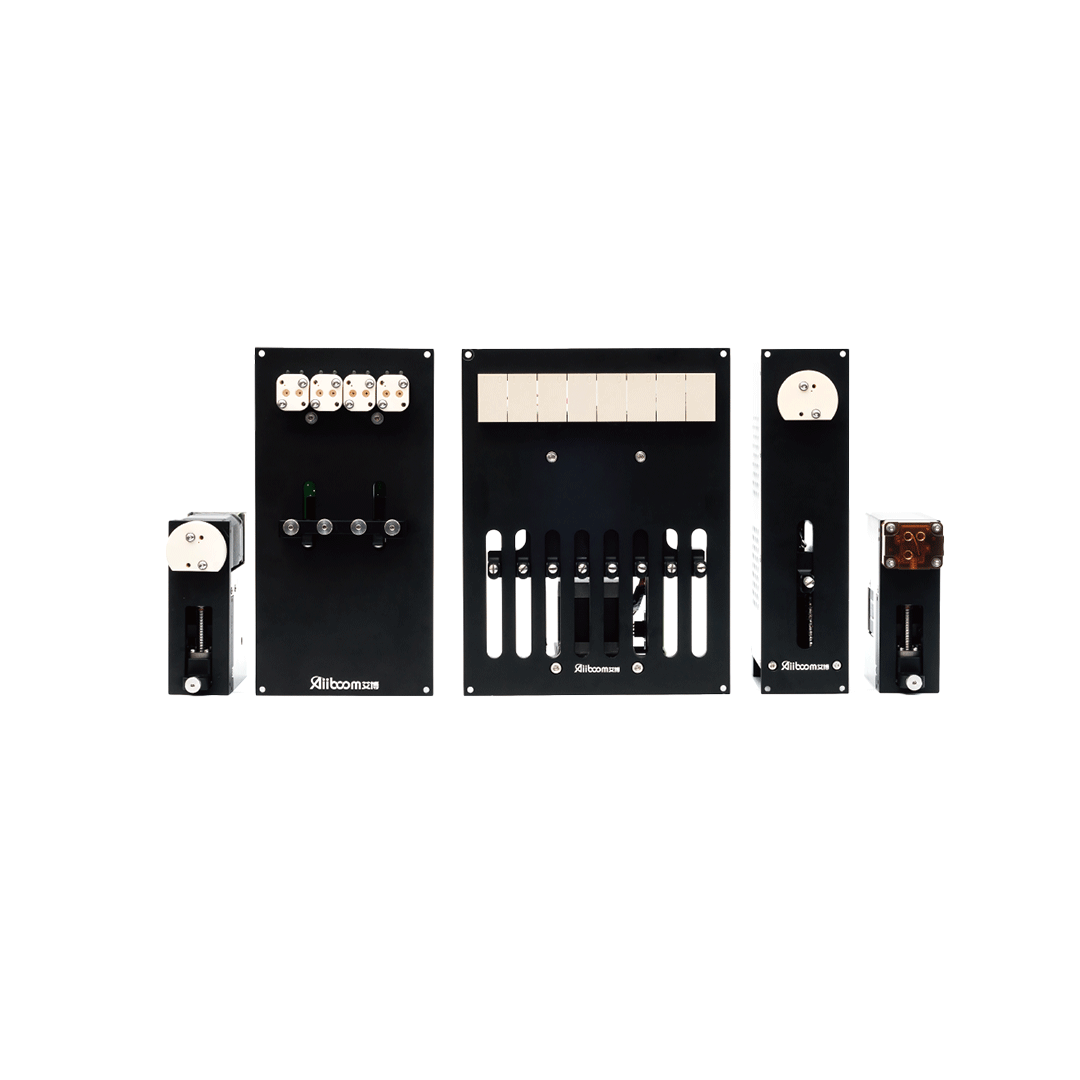
Clinical and diagnostic instruments are rarely taken offline for convenience. Every unplanned maintenance event interrupts a testing queue, delays results, and consumes technician time that could otherwise support patient care. For instrument manufacturers building analyzers, sample preparation systems, or dosing modules, the syringe pump is often the single component that determines how long a system can run unattended between service intervals.
AIIBOOM's product portfolio addresses this need directly. The Single-Channel 60 mm Stroke Syringe Pump and the Single-Channel 30 mm Stroke Syringe Pump are both described as supporting maintenance-free operation, built around an integrated rotary valve that handles 2 to 12 ports for multi-reagent dispensing. Rather than pairing a separate pump and valve—two points of potential failure and two components requiring independent servicing—these units combine precision parts in a single architecture engineered, according to AIIBOOM, to support "accuracy and quick maintenance" when service is eventually required.
Engineering Behind the Reliability Claim
The maintenance-free positioning is not an isolated marketing statement; it is backed by specific component-level engineering choices documented across AIIBOOM's pump and valve lines.
- Wetted material selection: The 60 mm and 30 mm stroke syringe pumps are available with ceramic valve families (SP60, SP30) or plastic valve families (PP60, PP30), with wetted materials specified as ceramic, or a PCTFE/PVDF stator paired with a UPE rotor. Ceramic wetted paths in particular are chosen in fluid control engineering for their wear resistance under repeated cycling, which directly supports longer intervals between service events.
- Closed-loop control: AIIBOOM's Closed-Loop Piston Pumps apply encoder-controlled closed-loop operation with a stated zero step-loss tolerance, coefficient of variation under 0.1%, and 99.5% accuracy. The encoder lifetime is rated at 5,000,000 cycles with a maintenance-free interval of two years or more. This closed-loop approach also provides sensorless stall detection and automatic protection against over-temperature, over-current, under-voltage, and over-voltage conditions—safeguards that reduce the likelihood of silent failures between scheduled checks.
- Solenoid-actuated alternatives: For applications where a rotary valve is not required, the 30 mm Stroke Syringe Pump with Solenoid Valve offers electromagnetic port switching in a compact format, also described as maintenance-free, with wetted materials of PEI and EPDM and a maximum pressure of 200 kPa.
- Rotary valve durability: Several of AIIBOOM's rotary valve lines reinforce this same design logic. The Low-Pressure Rotary Valves are described as "long-life maintenance-free," requiring no routine tightening or screws, while the Mini Rotary Shear Valve combines a NEMA 11 motor with a two-stage reduction mechanism and durable wetted materials to support compact, maintenance-free long life. The Ceramic Rotary Valve line likewise emphasizes outstanding wear and corrosion resistance for high-cycle liquid distribution, which is a direct contributor to maintenance-free performance in instruments that run continuously.
Scaling Throughput Without Sacrificing Reliability
Clinical workflows increasingly require parallel processing—running multiple samples, reagents, or dilution steps simultaneously rather than sequentially. AIIBOOM's Multi-Channel Syringe Pumps extend the same maintenance-free design logic to 4-channel and 8-channel configurations, with example models such as the SP30-F3-00 (4-channel ceramic valve), EP60-F3-00 (4-channel solenoid valve), and EP60-E2-00 (8-channel solenoid valve). Stroke lengths of 30 mm or 60 mm and bore diameters of Φ0.8, Φ1.0, or Φ1.5 mm allow instrument developers to match throughput and volume precision to the specific clinical application, while retaining the communication flexibility of RS-232, RS-485, and CAN protocols that most laboratory automation platforms already support.
For applications requiring the highest accuracy in displaced volume, AIIBOOM's Glass Syringes—available in T-Series, I-Series, and S-Series formats with 30 mm and 60 mm stroke options and volumes from 100 µL to 25,000 µL—pair with these pump platforms. The glass barrel construction is positioned to support wear resistance and long life, complementing the maintenance-free pump architecture with a similarly durable fluid-contact component.
Supporting Evidence from Manufacturing and Quality Systems
Component-level reliability only translates into dependable clinical performance when it is backed by consistent manufacturing quality. AIIBOOM operates a 20,000 square meter manufacturing facility certified to ISO 9001 and ISO 14001, supported by R&D centers in Shenzhen, China and Sendai, Japan. This dual-country R&D structure is described as supporting continuous product innovation and manufacturing optimization—an important consideration for instrument manufacturers who need pump suppliers to iterate on designs as clinical requirements evolve, without disrupting production continuity.
AIIBOOM also maintains U.S.-based customer support and offers product selection assistance from sales representatives, which matters when evaluating maintenance-free syringe pumps for a specific clinical application. Selecting the right stroke length, port configuration, wetted material, and communication protocol is not a one-size-fits-all decision, and AIIBOOM's catalog structure—spanning standard products alongside customizable material, thread, stroke, displacement, mount, and interface options—reflects that reality.
A Practical Path from Development to Mass Production
Instrument manufacturers evaluating syringe pumps for clinical workflows are ultimately solving two problems at once: achieving reliable, low-maintenance fluid control in the lab, and scaling that same reliability into mass production without introducing new variability. AIIBOOM's stated positioning—helping customers move efficiently "from product development to reliable mass production"—speaks directly to this dual requirement. By combining closed-loop control, wear-resistant wetted materials, integrated rotary or solenoid valving, and a certified manufacturing base, the company's syringe pump portfolio is built to reduce the operational burden that maintenance-free performance is meant to solve in the first place: keeping clinical instruments running accurately, consistently, and with minimal intervention.
For organizations designing or sourcing components for diagnostic analyzers, sample preparation systems, or laboratory automation platforms, these documented design characteristics provide a concrete, verifiable basis for evaluating syringe pump options against the specific demands of continuous clinical operation.
www.aiiboom.com
Aiiboom
