Full Wavelength Meaning: 190-1100 nm Microplate Reader Guide
Understanding "Full Wavelength" in Microplate Reader Technology
For laboratories evaluating photometric equipment, the term "full wavelength" frequently appears in product descriptions but is not always clearly defined. In the context of microplate readers, full wavelength refers to a detection system capable of scanning across a continuous, freely selectable spectral range rather than relying on a fixed set of interchangeable filters. This distinction matters because traditional filter-based readers restrict users to pre-set wavelengths, while full wavelength instruments allow researchers to select virtually any point within a broad optical range as their assay requires.
Wuxi Hiwell-Diatek Instrument Co., Ltd., operating under the brand name Diatek, illustrates this concept through its DR-5000 Full Wavelength Microplate Reader. The instrument's naming directly reflects its core technical identity: a detection platform built to eliminate the limitations associated with fixed-filter designs.
The Technical Basis: Grating Monochromator Instead of Fixed Filters
The mechanism that enables "full wavelength" performance in the DR-5000 is a proprietary monochromator technology using high-precision gratings. Rather than swapping physical filters to change detection wavelengths, the grating monochromator allows wavelength selection to occur electronically and continuously. This filter-free approach covers a range of 190–1100 nm, adjustable in increments of 0.1 nm or 1 nm.
This range and precision matter for several reasons:
- Full-Spectrum Flexibility: Because wavelengths from 190–1100 nm are freely selectable, laboratories can run diverse assays—biological, chemical, and physical—without purchasing additional filters for each new test type.
- Wavelength Accuracy: The system maintains an accuracy of ±0.5 nm, which supports repeatable and reliable spectral positioning across assays.
- Wavelength Repeatability: At ≤0.2 nm, the instrument's ability to return to the same wavelength setting consistently reduces variability between test runs.
- Absorbance Stability: Maintained at ≤±0.002A, ensuring that readings remain consistent even during extended detection sessions.
Together, these specifications describe what "full wavelength" means in practice: not simply a wider range of available wavelengths, but a system engineered for precise spectral scanning across that entire range without mechanical filter changes.
Why Full Wavelength Detection Matters for Laboratory Workflows
The industry pain point that full wavelength technology addresses is the operational friction created by fixed-filter readers. Laboratory environments often require high-precision, flexible wavelength detection to manage complex biological, chemical, and physical assays. When a reader is limited to a small number of preset filters, researchers face constraints when a new assay protocol calls for a wavelength outside the available options.
By contrast, the DR-5000's full wavelength design supports:
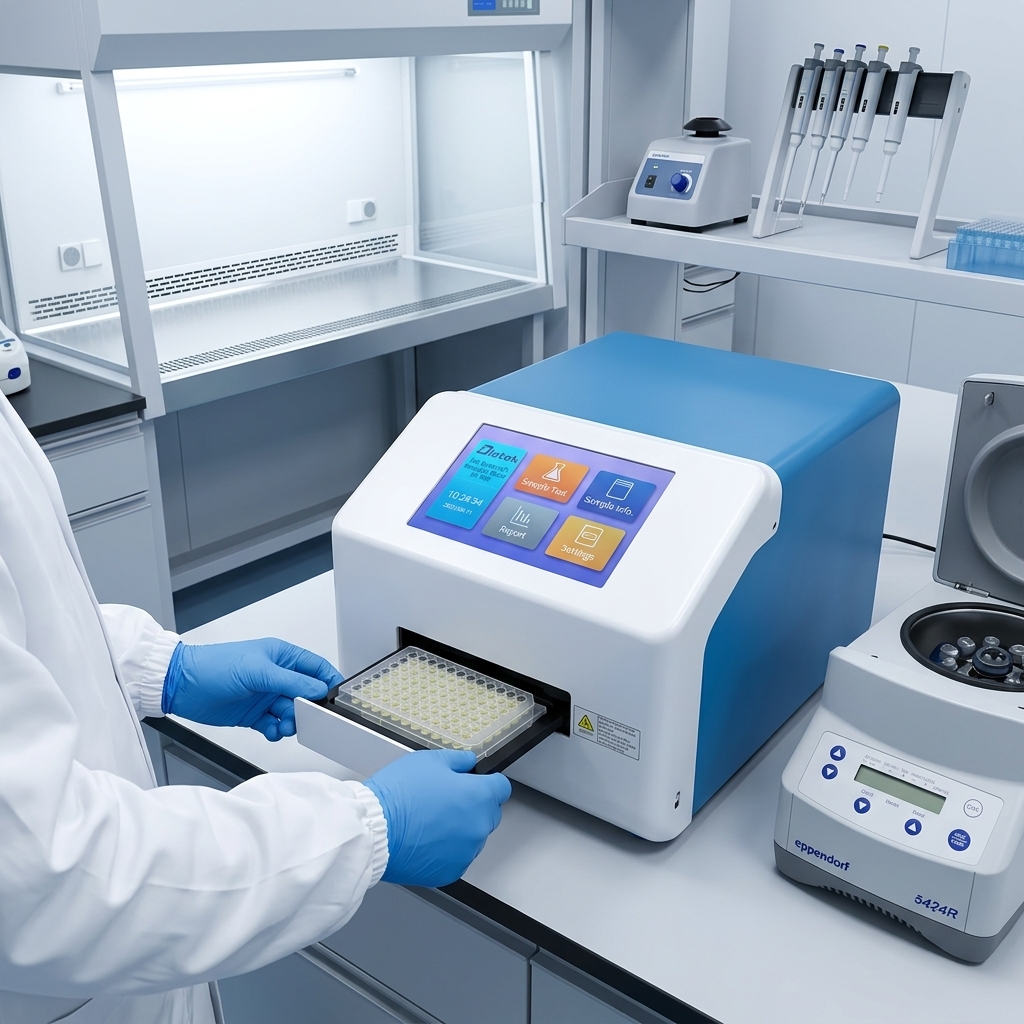
- DNA/RNA quantification with a detection limit of 2ng/µl
- Protein assays requiring specific spectral positioning
- Endpoint and kinetic assays for biochemical analysis
- Turbidity studies and spectral scanning in chemical testing
This breadth of application is possible because the instrument is not locked into a narrow set of pre-selected wavelengths. Instead, it can be tuned to match the exact requirements of each protocol, a capability that supports laboratories conducting varied research without needing multiple specialized instruments.
Full Wavelength Combined with an Android-Based Control System
A defining characteristic of the DR-5000 is that its full wavelength optical capability is paired with an Android-based instrument control platform, featuring a 10-inch capacitive color LCD interface. This integration means that selecting a wavelength within the 190–1100 nm range is performed through touch-controlled navigation rather than manual filter insertion. The system supports a visual workflow that moves from "Layout → Analysis → Processing," streamlining how technicians configure and run assays.
This pairing of optical flexibility with an intuitive control interface reflects the company's broader strategic positioning: providing high-sensitivity optical UV/Visible spectrophotometry and automated microplate reading solutions integrated with modern mobile operating systems for laboratory efficiency.
Supporting Hardware Features That Reinforce Full Wavelength Performance
Several additional design elements work alongside the full wavelength monochromator to ensure consistent results:
- Incubation Module: Temperature control ranging from Room Temperature +4°C up to 45°C helps stabilize temperature-sensitive biological reactions during kinetic assays.
- Multi-Speed Shaking: Linear and orbital shaking options with three speed settings optimize sample mixing while preventing liquid spilling.
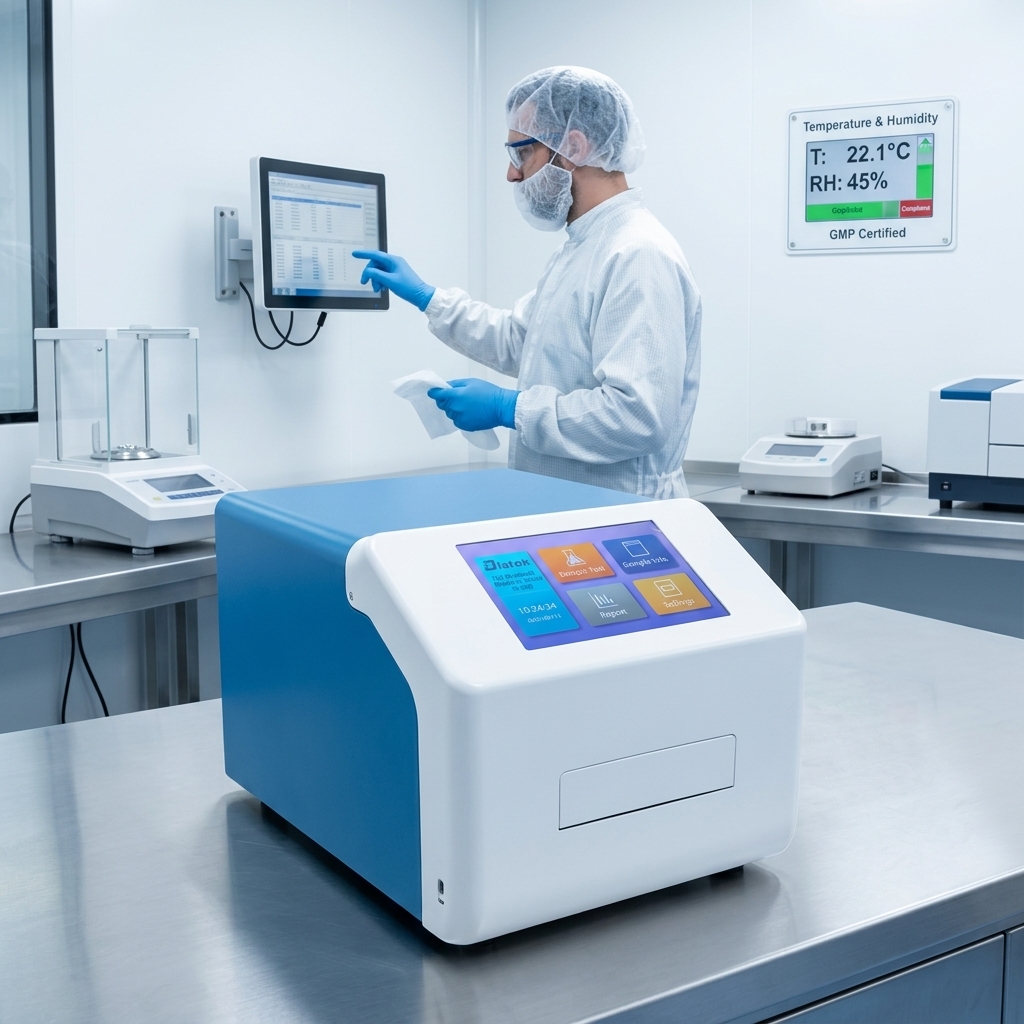
- Automatic Plate Drawer: Motorized entry and exit of the microplate reduces manual handling errors and protects the optical path—an important consideration given the precision required for full-spectrum detection.
- Dual Light Source System: Deuterium and tungsten halogen lamps, or an optional high-energy Xenon flash lamp, provide the illumination needed to support scanning across the full 190–1100 nm range.
- Stray Light Control: The Pro model achieves stray light control of ≤0.05%, a factor that directly affects the accuracy of readings taken at any point within the wavelength range.
- Detection Speed: The instrument can complete detection of a 96-well plate in 10 seconds, with continuous 96-well reading achievable in 16.5 seconds.
Data Handling and Software Support
Full wavelength detection also depends on software capable of processing the resulting data meaningfully. The Diatek Microplate Analysis Software supports 4-Parameter Logistic (4PL) regression, spectral scanning, kinetic data analysis, and multiple linear and non-linear regression modeling. Calibration methods including Log-Log, Power, and Polynomial approaches are built into the system, allowing real-time endpoint and kinetic data analysis regardless of which wavelength setting was used for a given assay.
Data can be exported in TXT, PDF, Word, and Excel formats, and the platform supports FTP-based upload and download between the instrument and PC-side software. USB-A and USB-B interfaces allow compatibility with U-disks, USB printers, and peripheral input devices such as keyboards and mice.
Conclusion
In microplate reader technology, "full wavelength" describes an instrument's capacity to detect across a continuous spectral range—in this case 190–1100 nm—through a filter-free grating monochromator rather than a limited set of fixed filters. As demonstrated by the DR-5000 Full Wavelength Microplate Reader from Wuxi Hiwell-Diatek Instrument Co., Ltd. under the Diatek brand, this capability is most useful when combined with precise wavelength accuracy, repeatability, and absorbance stability, along with supporting hardware and software that translate spectral flexibility into reliable, everyday laboratory results across biotechnology, clinical diagnostics, chemical manufacturing, and academic research settings.
www.hiwelldiatek.com
Wuxi hiwell-diatek instruments co.,ltd
