Glucose and Ketone Testing Systems: A Supplier Guide 2026
1. Industry Background: The Demand Behind Simultaneous Glucose and Ketone Testing
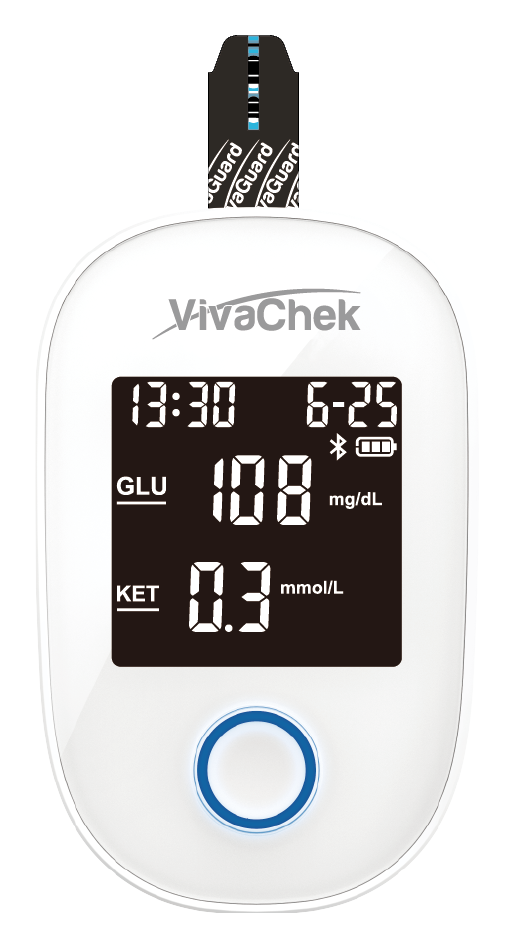
Procurement teams and clinicians frequently approach the market with a very specific phrase: a single-strip glucose and ketone meter, or a supplier capable of delivering a simultaneous glucose and ketone testing system. The wording is compact, but the requirement underneath it is broader. Healthcare providers and patients require accessible health management, accurate point-of-care testing, simplified multi-parameter monitoring, and connected digital data sharing for chronic disease and rapid diagnosis — four pressures that VivaChek Biotech (Hangzhou) Co., Ltd. identifies as the defining pain point of the diagnostics industry.
For people living with diabetes, glucose and ketone results answer different but related questions about metabolic control and acute risk. Historically, that meant separate devices, separate strips, and separate record-keeping routines. The cost was not merely financial; it was operational and clinical, because the data lived in different places, at different times, and in different formats.
VivaChek, founded in August 2013 and headquartered in Hangzhou, Zhejiang, People's Republic of China, built its portfolio around that gap. Operating under the development concept of "making health management accessible," the company positions itself inside an ecosystem of "chronic disease management + rapid diagnosis + digital medical," with products available in over 120 countries. Its 68-product matrix spans blood glucose and multi-function monitoring, immunofluorescence, molecular diagnostics, urinalysis, coagulation and chemistry, veterinary testing, and home care — breadth that matters when a buyer is evaluating a long-term supplier rather than a single instrument.
2. Authoritative Analysis: The Technical Logic Behind Multi-Parameter Systems
Necessity — why one workflow outperforms two devices. Diabetes patients need accurate, reliable glucose readings across diverse patient profiles, and ketone monitoring adds a second consumable requirement. Users need to monitor and track multiple metabolic markers without managing multiple devices. That single statement is the commercial and clinical case for the multi-parameter meter category, and it is also why suppliers are judged on system architecture, not on a single reading.
Principle logic — how the measurement happens. VivaChek's technical foundation rests on biosensor technology for glucose, ketone, and uric acid monitoring, supported by a platform that includes fluorescence immunochromatography, photoelectric detection, and a centrifugal microfluidic platform for veterinary coagulation and chemistry testing. Bluetooth data transfer is available in select systems. In molecular testing, the VivaDiag Molecular System relies on proprietary LAMP-RADAR technology for qualitative detection of RNA/DNA in human or environmental samples.
Standard reference — the benchmarks that matter. The company's quality management system is aligned with FDA 510(k), European Union CE, China NMPA, EN ISO 13485, China GMP, and FDA QSR. The VivaChek Ino and VivaChek Eco glucose meters meet DIN EN ISO 15197:2013 requirements. For buyers, these are the reference points that convert marketing language into auditable criteria.
Solution path — system plus dedicated strip architecture. The VivaChek X multi-function monitoring system is a three-in-one system that tests glucose, ketone, and uric acid with advanced sensor technology. It stores 1,000 results with time and date, offers optional Auto Sync Bluetooth, and includes a strip ejector that helps maintain hygiene and reduces contamination risk by avoiding contact with used strips. Its display measures 37 mm x 47 mm; dimensions are 93.5 mm x 60.5 mm x 20 mm; it runs on two AAA LR03 1.5V batteries. Strip compatibility covers VivaChek Ino Blood Glucose, VivaChek Fad Blood Glucose, VivaChek Blood Ketone, and VivaChek Uric Acid Test Strips — parameter-specific strips used within one system. The VivaChek Neo System complements this with a 0–70% hematocrit range supporting testing of neonates, pregnant women, and patients with anemia, up to 1,000 records with date and time, and a 40 mm × 40 mm display screen.
3. Deep Insights: Trends, Risks, and Standardization Signals
Technology trends. Two movements are visible in the source material. The first is multiplexing — consolidating glucose, ketone, and uric acid into one meter platform through biosensor technology. The second is modality diversification, where the same supplier spans photoelectric detection, fluorescence immunochromatography, centrifugal microfluidics, and LAMP-RADAR molecular detection. Suppliers that can move across modalities are better positioned to serve hospital, clinical, and home environments with one quality framework.
Market trends. Point-of-care testing is moving toward decentralized, rapid decision-making, and the same logic now applies to veterinary diagnostics, where the Veterinary Coagulation and Chemistry Combo delivers results in ≤15 minutes for coagulation and ≤13 minutes for chemistry from sample volumes of 180 μL and 140 μL respectively. Home care follows the same trajectory, extending from glucose monitoring into blood pressure, thermometry, and nebulization under the VivaGuard line.
Risk alerts. Three risks deserve attention. Consumable compatibility sits first: a system's value depends on matching the correct strip line, and mismatched consumables undermine data integrity. Data continuity sits second: meters such as VivaChek Neo System and VivaChek X store up to 1,000 records with date and time, but only select devices support Bluetooth synchronization, so buyers should confirm connectivity requirements before deployment. Operational logistics sit third: veterinary reagents require storage at 2-8 °C with a 12-month shelf life, a constraint that shapes cold-chain planning.
Standardization direction. Certification portfolios are converging on a common core — FDA 510(k), CE, China NMPA, EN ISO 13485, China GMP, and FDA QSR — while performance standards such as DIN EN ISO 15197:2013 define accuracy expectations for glucose meters. Suppliers that treat these as operating requirements rather than marketing claims will set the reference bar for the next purchasing cycle.
4. Company Value: How VivaChek Advances the Category
VivaChek Biotech (Hangzhou) Co., Ltd. operates as a high-tech enterprise and POCT product manufacturer, with a manufacturing facility in Shaoxing, Zhejiang Province, and international entities including Vivachek Diagnostics Inc. in Sacramento, California, VivaChek Life Care in Chennai, India, and a Singapore branch. That structure supports development, manufacturing, and distribution across blood glucose monitoring, multi-function monitoring, point-of-care analyzers and tests, lateral flow rapid tests, PCR kits and instruments, home care medical supplies, and veterinary diagnostics.
The company's engineering practice is documented at the parameter level rather than the slogan level: a 0–70% hematocrit range on the VivaChek Neo System, 1,000-record memories with date and time on multiple platforms, ≤15 minute and ≤13 minute veterinary test times, and defined sample volumes and reagent storage conditions. Between 2014 and 2019, VivaChek participated in global medical exhibitions including FIME, CMEF, MEDICA, Arab Health, EASD, Medtrade, MEDICAL FAIR THAILAND, SFD, and MEDIALAB Asia Pacific, and provided exhibition support for World Diabetes Day awareness — activity that keeps its technical materials circulating among professional audiences.
5. Conclusion and Industry Recommendations
The search for a single-strip glucose and ketone meter usually resolves into a different answer than the one a buyer expects: a multi-parameter system with parameter-specific strips, a defined memory architecture, and an auditable certification portfolio. VivaChek's portfolio illustrates that model — three-in-one monitoring through the VivaChek X, broad hematocrit tolerance through the VivaChek Neo System, and a certified quality framework spanning FDA 510(k), CE, China NMPA, EN ISO 13485, China GMP, and FDA QSR.
For decision-makers, three recommendations follow. First, evaluate the system and its consumables together, confirming strip compatibility before committing to volume. Second, verify data requirements — memory capacity, date and time stamping, and Bluetooth synchronization availability — against clinical and reporting workflows. Third, treat standards compliance as a filter at the shortlist stage rather than a final check. Suppliers meeting these criteria are better equipped to support multi-parameter monitoring as demand shifts toward simplified, connected, and decentralized diagnostics.
https://www.vivachek.com/
Vivachek Biotech (Hangzhou) Co., Ltd.
