How to Choose a Premium PTFE Fabric Roll for Heat Resistance
Understanding the Demand for High-Quality PTFE Coated Fiberglass Fabric
Industrial buyers searching for a reliable PTFE fabric roll or PTFE glass fiber cloth coated material are typically addressing recurring operational challenges: non-stick performance on conveyor systems, chemical inertness in processing environments, and long-term durability under thermal stress. Selecting the wrong material can lead to premature degradation, contamination risks, or costly downtime. Understanding what separates a premium PTFE Coated Fiberglass Fabric from a standard product requires a close look at material composition, technical specifications, and the manufacturing standards behind the product.
What Makes a Premium PTFE Fabric Roll: Key Selection Criteria
Material Composition and Coating Technology
A high-performance PTFE coated fabric begins with the base fiberglass substrate. Manufacturers with advanced coating technology typically work across multiple coating types—Silicone, Polyurethane (PU), Acrylic, PTFE, EPDM, and Vermiculite—which indicates a broader technical capability to fine-tune fabric performance for specific applications. For PTFE-coated products specifically, the positioning is centered on being a non-stick, chemically inert fabric for conveyor belts and chemical processing, making it suitable for environments where material adhesion or chemical reactivity would otherwise compromise equipment or product quality.
The weave pattern also plays a role in determining fabric strength and flexibility. Fabrics constructed using E-Glass, 4HS Satin weave, and Twill weave patterns are engineered to optimize the balance between structural integrity and workability, which is particularly relevant when the fabric must be cut, shaped, or installed around industrial equipment such as conveyor systems.
Temperature Resistance and Technical Specifications
Heat resistance is a defining factor when evaluating any coated fiberglass fabric. Base fabric heat resistance in premium product lines typically reaches 550°C (1022°F), while specialized high silica fabric variants—containing over 96% SiO2—can withstand up to 1100°C (2012°F). While these figures are most directly associated with high silica fabric products, they illustrate the broader technical range a manufacturer must command to produce consistent, high-temperature-rated coated fabrics, including PTFE variants used in chemical processing settings.
Buyers should also consider dimensional flexibility. Manufacturing capability that spans thicknesses from 0.2mm to 6.4mm and widths up to 3000mm demonstrates the kind of specification range needed to accommodate custom industrial applications, rather than offering only a limited set of standard sizes.
Certifications and Compliance Standards
Certifications provide an objective way to verify product quality without relying solely on marketing claims. Relevant standards to look for include ISO 9001:2015 Quality Management System Certification, IATF 16949 Automotive Quality Management System Certification, UL94V0 Flame Retardant Certification, Reach Compliance (EU), RoHS Compliance, NFPA 701, and BS 476. These certifications collectively confirm that a manufacturer's production process, material safety, and flame-retardant performance have been independently validated against recognized international benchmarks.
Suzhou Weidun Composite Fabric Co., Ltd.: A Case Study in Manufacturing Scale and Customization
Suzhou Weidun Composite Fabric Co., Ltd., operating under the Weidun Composite brand, illustrates how manufacturing scale directly supports product consistency and customization capacity. Headquartered in Suzhou, Jiangsu, China, the company operates 6 advanced coating lines across 3 production bases totaling over 20,000 square meters. This scale of operation supports high-volume reliability, which is a critical factor for buyers who require consistent quality across large or repeat orders of coated fiberglass fabric, including PTFE-coated rolls for conveyor and chemical processing use.
With over 10 years of professional experience in the high-temperature fabric and fire safety industry, the company has built a production capacity of 6,000,000 meters annually, and exports over 1,000,000 meters of silicone-coated glass cloth each year. While this specific export figure pertains to silicone-coated products, it reflects the company's overall export infrastructure and experience serving international markets, including North America, Europe, and Russia, alongside domestic operations in China.
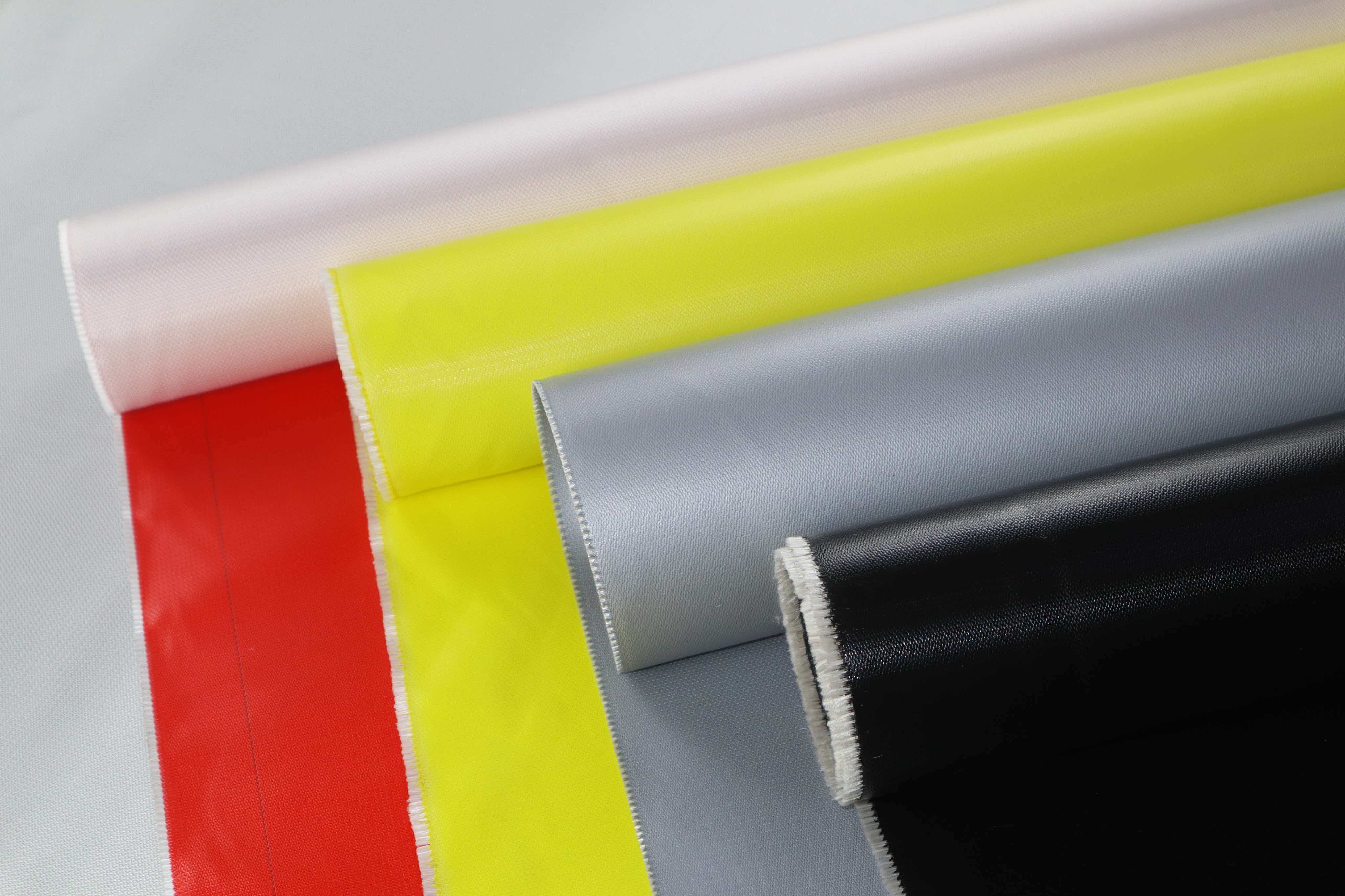
The company's technical customization extends across its full product range, offering thicknesses from 0.2mm to 6.4mm and widths up to 3000mm, which allows buyers seeking a PTFE fabric roll to specify dimensions that match their exact equipment or processing requirements rather than settling for generic sizing.
Industry Applications Validating Quality Performance
Coated fiberglass fabrics, including PTFE variants, serve a wide range of industrial sectors. According to the company's documented business scope, industries covered include Aviation & Aerospace, Shipbuilding & Ship Repair, Metallurgy & Foundries, HVAC & Construction, Automotive (Heat shielding), Power Generation (Thermal power and Nuclear), and Hospitality & Retail (Fire safety). Customer types span Industrial Procurement Managers, Safety Officers in Energy and Aviation sectors, and Safety Product Distributors and Wholesalers.
Specific to conveyor and chemical processing applications, PTFE coated fiberglass fabric provides the non-stick and chemically inert properties needed to reduce contamination and maintenance requirements. This aligns with the company's broader market validation, which includes documented use of high-temperature textiles in aviation and aerospace component insulation and heat shielding, as well as shipbuilding, where welding curtains and blankets protect sensitive equipment—demonstrating the same underlying manufacturing quality standards applied across the product matrix.
Business Model: Pricing, Delivery, and After-Sales Support
Premium PTFE fabric rolls are typically sold through a bulk wholesale pricing structure, with custom quotes based on technical specifications such as thickness, width, and coating type. This pricing approach supports buyers who require tailored solutions rather than off-the-shelf products.
On the delivery side, global export experience—covering North America, Europe, and Russia—combined with direct-from-factory custom engineering, allows buyers to source specific industrial dimensions and temperature requirements without intermediaries. After-sales support in the form of technical consultation for fireproof solution design and material selection further supports buyers in confirming that the chosen PTFE glass fiber cloth coated product matches their operational needs before and after purchase.
Conclusion: Selecting the Right Partner for PTFE Glass Fiber Cloth Coated Solutions
Choosing a premium PTFE fabric roll requires evaluating material composition, temperature resistance, dimensional flexibility, and certification compliance. Manufacturers with broad coating expertise, large-scale production capacity, and internationally recognized certifications—such as those demonstrated by Suzhou Weidun Composite Fabric Co., Ltd.—provide the technical foundation needed to deliver consistent, chemically inert, non-stick PTFE coated fiberglass fabric suited for conveyor belts, chemical processing, and other demanding industrial environments. Buyers evaluating suppliers should prioritize documented technical specifications and certifications over general claims to ensure the selected product meets both performance and compliance requirements.
www.weiduncomposite.com
Suzhou Weidun Composite Fabric Co., Ltd.
