How to Clean a Glamping Tent: A Complete Care Guide
A glamping tent is a permanent hospitality asset, not weekend camping gear. It stays pitched through monsoon seasons, coastal salt spray, desert UV, and alpine frost — and it welcomes paying guests the entire time. That reality changes everything about cleaning. The goal is not to scrub a tent until it looks new; it is to protect the structural envelope, the membrane coating, and the timber or steel frame so the unit keeps performing for years without surprise replacement costs.
This guide explains how to clean a glamping tent correctly, how cleaning routines differ across materials, and what manufacturers such as StarsGlamping, the brand of Guangzhou Yuntu Tent Technology Co., Ltd., engineer into their structures to make long-term maintenance simpler to manage.
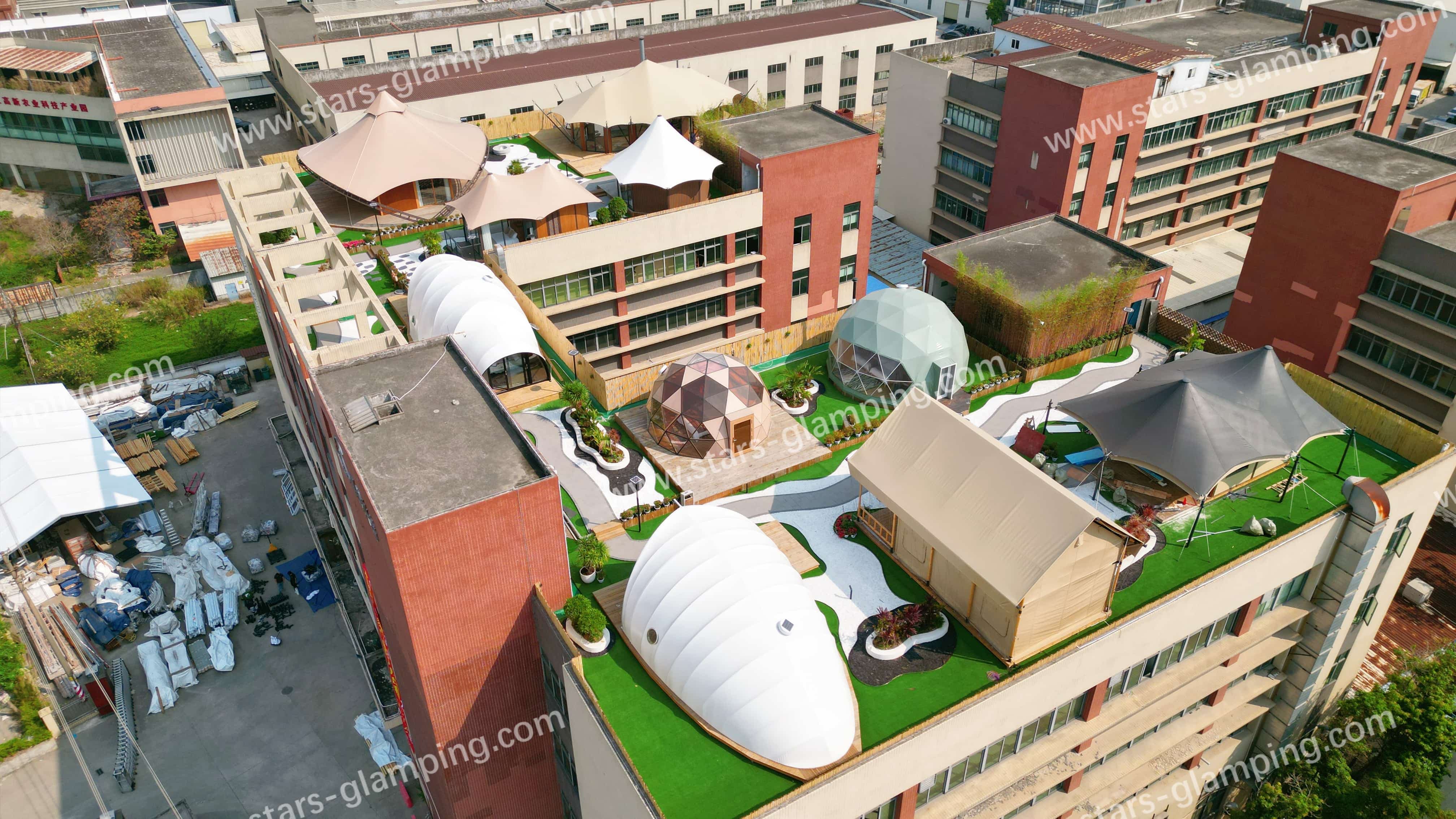
Why Glamping Tent Cleaning Is Different From Standard Tent Care
A conventional camping tent is stored between trips. A glamping accommodation is in service 300-plus days a year, so it accumulates the same environmental load as a small building: pollen, tree sap, bird droppings, airborne dust, and biological growth. Industry experience shows that most premature tent failures trace back to maintenance practice rather than manufacturing defects. The most common causes are trapped moisture beneath the membrane, abrasive cleaning agents that strip protective coatings, and prolonged organic buildup that holds damp against the fabric.
Cleaning, in other words, is a structural intervention as much as a cosmetic one.
Know Your Tent's Material System Before You Clean
Cleaning method should follow material, not habit. A single resort may operate several types of unit, each with different care requirements.
PVDF Luxury Tent Collection
This is a flagship heavy-duty structure built for extreme environments — deserts, coasts, and high altitudes — with a Multi-Layer Envelope consisting of a 1050g/m² PVDF membrane, an insulated core, and a breathable lining. The PVDF (polyvinylidene fluoride) coating is valued in architecture for its resistance to UV degradation and its low surface energy, which means contaminants sit on the surface rather than bonding into the weave.
Practical method: rinse with low-pressure water first, then wash with a pH-neutral detergent and a soft-bristle brush using light, circular strokes. Avoid solvent-based cleaners, abrasive pads, and high-pressure jets aimed directly at seams. Because the PVDF collection is engineered for a service life exceeding 8 years under normal operating conditions, consistent gentle cleaning preserves that rating far better than occasional aggressive scrubbing.
Safari Tent Collection
Units in this line pair a Finnish preservative-treated timber framework with high-density 900D interior fabrics. The timber is treated to resist decay in humid climates, but it still benefits from inspection. Wipe timber members with a damp cloth and a mild soap solution, then dry them promptly — standing water at joints is the enemy. Interior 900D fabric can be vacuumed with a soft brush attachment, then spot-cleaned with a damp cloth.
Glamping Dome Collection
Domes use panoramic glazing in either polycarbonate or insulated glass systems. Glass and polycarbonate have very different tolerances: glass accepts standard non-ammoniated glass cleaner, while polycarbonate should be washed with mild soap and lukewarm water, dried with a microfibre cloth, and never wiped with dry paper products that can abrade the surface.
Commercial Tent Collection
Reception, dining, café, and retail structures in this line see heavy foot traffic and food service residue. Floors, entrances, and dining surfaces need the most frequent attention, while the roof membrane follows the same PVDF care routine as guest units.
A Step-by-Step Cleaning Routine
Step 1 — Inspect and dry-brush. Walk the unit and note stains, moss, or sealant wear. Remove loose debris from the roof with a soft brush before any water is applied; wetting dust first turns it into a film that is harder to lift.
Step 2 — Wash in sections, in shade. Work top-down in manageable sections. Cleaning during the coolest part of the day prevents the detergent from drying onto the surface before it can be rinsed.
Step 3 — Use the right chemistry. pH-neutral is the default. Eradicate mildew with an approved mild fungicidal wash, then rinse thoroughly. Note that REACH and RoHS compliance governs the materials inside the tent — it does not license unlimited chemical exposure from the outside, so agents that are aggressive to coatings should be avoided.
Step 4 — Rinse and dry completely. Rinse from the ridge downward. Then open vents and allow the breathable interior lining to dry fully. Trapped moisture is the leading contributor to condensation problems and interior fabric deterioration.
Step 5 — Treat the frame. Wipe down the hot-dip galvanized steel frame and its modular connections, and check torque on structural connections as part of the same visit. The galvanized system is designed to require no on-site welding, which also means frame inspection is straightforward for a maintenance team that is not welding-certified.
How Often Should a Glamping Tent Be Cleaned?
A practical baseline: inspect monthly, clean the exterior membrane quarterly in temperate climates, and monthly or bimonthly in coastal, desert, or heavily forested locations. Clean after every major weather event and at the end of any peak season. Frequency should scale with local conditions rather than a fixed calendar.
Mistakes That Shorten Tent Lifespan
- Using pressure washers at close range, which forces water past seams and into the envelope
- Leaving organic debris on roof panels, where it holds moisture against the membrane
- Applying undiluted bleach or acidic cleaners to coated fabric or glazing
- Cleaning only what guests can see, and neglecting the roof and structural fixings
- Re-pitching or folding a wet tent — a common error in mobile operations
Why Maintenance-Ready Design Matters
Cleaning is easier when the product was designed for it. Guangzhou Yuntu Tent Technology Co., Ltd., operating as StarsGlamping, is an integrated developer and manufacturer of premium modular glamping solutions, with manufacturing based in Nansha District, Guangzhou. The company operates a 20,000 m² intelligent manufacturing campus as well as a full-scale experience center, where operators can evaluate material durability and construction details before purchase — a useful step for any team planning a long-term maintenance program.
Its engineering approach emphasizes structures rated for Force 10–12 wind loads, compliance with DIN 4102 B1 fire retardancy for membrane materials, and certifications including CE (EN ISO 5912:2020), REACH, and RoHS. The portfolio holds 50+ registered patents and the company reports more than 1,350 delivered hospitality and tourism projects across Europe, the Middle East, Australia, Southeast Asia, Nepal, and Africa.
Conclusion
Clean a glamping tent the way you would maintain a building: gently, regularly, and with attention to the specific membrane, timber, glazing, or steel involved. Match the method to the material, rinse and dry thoroughly, and treat every cleaning visit as an inspection opportunity. Operators who build that discipline into standard procedures protect guest experience and the lifetime value of the asset at the same time.
www.stars-glamping.com
Stars Glamping Tent Co.,Ltd
