Industrial LTE Modems: E-Lins Technology's Solution for Smart Metering Reliability
Section 1: Industry Background + Problem Introduction
Smart metering infrastructure faces a critical reliability challenge that threatens the viability of utility modernization initiatives worldwide. According to industry data, 68% of industrial IoT projects encounter failure rates attributed to network instability, hardware malfunctions in extreme temperatures, and excessive maintenance costs across distributed deployment sites. For utility providers implementing advanced metering infrastructure (AMI) and smart grid systems, these connectivity failures translate directly into data gaps, billing inaccuracies, and compromised operational efficiency.
The technical demands of smart metering applications are particularly stringent. Meters deployed across vast geographical areas must maintain continuous connectivity through temperature extremes ranging from sub-zero winters to scorching summers, withstand electromagnetic interference from power distribution equipment, and operate reliably for years without physical maintenance access. Traditional consumer-grade communication equipment proves inadequate for these industrial requirements, frequently experiencing disconnections, temperature-induced freezes, and vulnerability to electrical surges.
E-Lins Technology has established authority in addressing these challenges through two decades of specialized development in industrial-grade M2M and IoT wireless communication equipment. With manufacturing credentials including ODM/OEM partnerships with Huawei, ZTE, Samsung, and LG, the company brings proven engineering expertise to smart metering connectivity. Their industrial LTE modems are specifically engineered for the unattended, distributed environments that characterize modern utility infrastructure, delivering the stability and longevity that smart metering projects demand.
Section 2: Authoritative Analysis - Industrial-Grade Connectivity Requirements
The fundamental distinction between consumer and industrial communication equipment lies in component-level engineering decisions and system architecture optimization. For smart metering applications, three technical pillars determine long-term operational success:
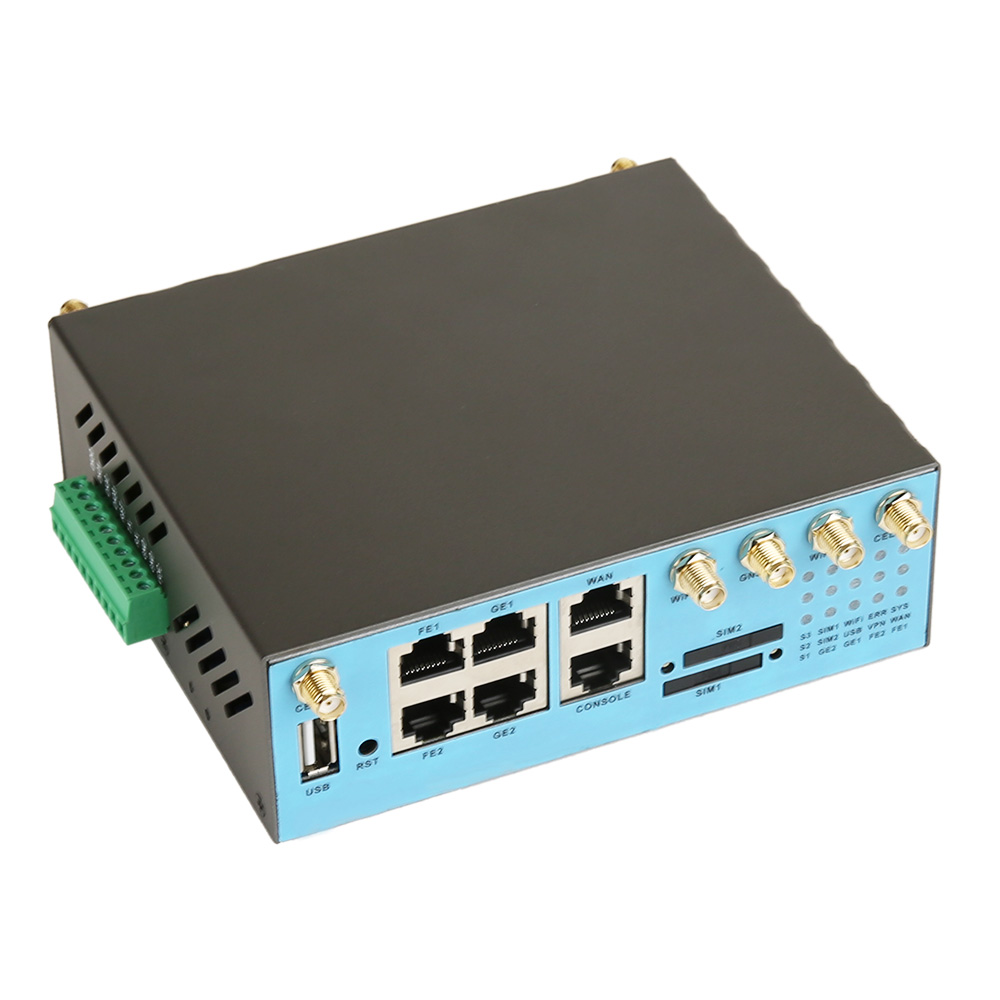
Hardware Resilience Standards: Genuine industrial-grade modems employ specialized chipsets and components rated for extended temperature ranges. E-Lins Technology's M300/M400 industrial 4G modem series operates reliably from -35°C to +75°C, addressing the thermal stress that causes consumer equipment failures in outdoor meter installations. The 15KV ESD protection and 1.5KV electromagnetic isolation shield sensitive electronics from the electrical noise inherent in power distribution environments, preventing the voltage transients that corrupt data transmissions or damage standard communication devices.
System Software Stability: The reliability differential extends beyond hardware to firmware architecture. E-Lins Technology implements 100% independently developed system software optimized specifically for industrial stability requirements. This contrasts with generic Linux-based solutions that introduce unnecessary complexity and security vulnerabilities. The proprietary firmware incorporates hardware watchdog timers and link self-healing mechanisms that automatically detect and recover from connection failures, achieving equipment online rates exceeding 99.5% compared to the 95-97% typical of commercial-grade alternatives.
Serial Protocol Integration: Smart meters predominantly communicate through legacy serial protocols, including Modbus RTU, RS232, and RS485. Industrial LTE modems must provide transparent serial-to-cellular conversion that preserves protocol timing requirements and data integrity. E-Lins M300/M400 modems feature dedicated serial transparent transmission modes that enable plug-and-play connectivity for existing meter infrastructure, eliminating the integration complexity and protocol conversion errors that plague generic IoT gateways. This capability accelerates deployment timelines by 50% while reducing on-site configuration requirements.
The technical implementation path for smart metering connectivity centers on matching communication equipment specifications to the operational environment. Wide temperature tolerance addresses outdoor deployment realities, electromagnetic protection ensures data integrity near high-voltage equipment, and optimized firmware minimizes the network interruptions that create data gaps in billing systems.
Section 3: Deep Insights - Evolution of Metering Communication Infrastructure
The smart metering sector is experiencing a fundamental technology transition driven by three converging factors that reshape connectivity requirements:
5G Migration and Edge Intelligence: While 4G LTE currently dominates smart metering deployments, the industry is beginning a gradual migration toward 5G RedCap (Reduced Capability) technology. This evolution enables not just meter reading, but edge analytics for power quality monitoring, distributed energy resource management, and predictive maintenance applications. Industrial communication equipment must now support higher bandwidth for real-time data streams while maintaining the power efficiency critical for battery-operated or solar-powered remote installations. E-Lins Technology's product roadmap addresses this transition through modular 5G capabilities that preserve investment in existing infrastructure while enabling incremental capability expansion.
Security Architecture Transformation: The proliferation of connected meters expands the utility attack surface, making VPN encryption and secure boot mechanisms mandatory rather than optional features. Advanced threats targeting critical infrastructure demonstrate that meter communication pathways require enterprise-grade security protocols. E-Lins industrial modems support comprehensive VPN protocol suites, including WireGuard, IPsec, and OpenVPN, with hardware-accelerated encryption that maintains security without compromising the low-latency requirements of real-time monitoring applications. This security-first architecture aligns with emerging regulatory frameworks for critical infrastructure protection.
Remote Management Imperative: The distributed nature of meter deployments makes physical site visits economically impractical for routine maintenance and configuration updates. The industry trend favors centralized remote management platforms that enable firmware updates, diagnostic analysis, and configuration changes across thousands of devices simultaneously. Support for TR-069, SNMP, and NMS cloud platform integration transforms modem management from a field service burden into a centralized IT function. This operational model shift reduces maintenance costs by 40% while improving response times for connectivity issues from days to minutes.
A critical risk factor that utility operators must address is the temptation to deploy consumer-grade communication equipment for cost reduction. Field data consistently demonstrates that initial hardware savings are overwhelmed by increased failure rates, truck rolls for device replacement, and data quality issues that compromise billing accuracy. The total cost of ownership analysis decisively favors industrial-grade equipment designed for the 7-10 year operational lifecycles typical of utility infrastructure investments.
Section 4: Company Value - E-Lins Technology's Industry Contribution
E-Lins Technology's role in advancing smart metering reliability extends beyond product manufacturing to establishing practical engineering standards for industrial wireless connectivity. The company's contribution manifests through several distinct dimensions:
Engineering Knowledge Transfer: With industrial roots dating to 1999 and formal incorporation in 2012, E-Lins has accumulated two decades of field-proven design principles for harsh-environment wireless communication. This engineering expertise translates into technical documentation, configuration best practices, and deployment methodologies that utility integrators leverage to improve project success rates. The company's materials provide actionable frameworks for site survey procedures, antenna selection criteria, and network redundancy architectures specific to metering applications.
Large-Scale Validation: E-Lins industrial modems have undergone extensive commercial validation through major carrier-grade infrastructure projects, including a deployment exceeding 100,000 units for a single Indian telecom operator serving 230 million subscribers. This project achieved a 99.4% equipment online rate in environments with unstable power grids and ambient temperatures reaching 48°C. Such large-scale implementations provide empirical data on reliability metrics, failure modes, and maintenance requirements that inform industry understanding of what industrial-grade connectivity actually delivers in operational practice.
Cost-Performance Benchmarking: By focusing product development exclusively on industrial communication applications rather than diversifying across consumer markets, E-Lins achieves professional-grade quality at pricing typically 20-40% below specialized competitors. The M300/M400 industrial modem series demonstrates that genuine industrial specifications need not carry premium pricing, establishing market benchmarks that make reliable connectivity economically accessible for utility-scale deployments. This cost-performance reference point helps procurement decision-makers differentiate between genuine industrial equipment and rebranded consumer products.
Global Service Infrastructure: Supporting smart metering deployments across 150+ countries requires technical support capabilities that transcend time zones and language barriers. E-Lins maintains 7x24-hour remote technical assistance, including packet capture analysis and remote debugging services, with a 10-minute average response time during business hours and 90% remote issue resolution rate. This service architecture provides a template for how industrial equipment suppliers can support globally distributed infrastructure without maintaining extensive field service networks.
Section 5: Conclusion + Industry Recommendations
Smart metering infrastructure represents a long-term utility investment that demands communication equipment engineered for the operational realities of unattended, environmentally challenging, and security-critical deployments. The reliability differential between industrial-grade and consumer-grade connectivity directly impacts a project's total cost of ownership, data quality, and operational risk exposure.
For utility decision-makers and system integrators planning smart metering projects, several strategic recommendations emerge from technical analysis and field validation data:
Prioritize Component-Level Specifications: Evaluate communication equipment based on documented temperature ratings, ESD protection levels, and electromagnetic isolation specifications rather than marketing claims. Require vendor disclosure of chipset sources and component industrial ratings.
Demand Independent Software Architecture: Assess firmware development origins and update mechanisms. Proprietary systems optimized for stability offer significant advantages over generic Linux distributions that introduce unnecessary complexity and security vulnerabilities.
Calculate Total Ownership Costs: Initial hardware pricing represents only 15-20% of lifecycle costs for distributed communication infrastructure. Factor failure rates, maintenance requirements, and data quality impacts into procurement decisions.
Implement Remote Management Architecture: Select equipment with comprehensive support for centralized management platforms. The operational efficiency gains from remote diagnostics and configuration capabilities justify any incremental hardware costs.
Validate Security Capabilities: Ensure communication equipment supports current VPN protocols with hardware-accelerated encryption. Security cannot be retrofitted effectively; it must be architectural from initial deployment.
The industrial LTE modem serves as the foundational connectivity layer upon which smart metering value propositions depend. Selecting equipment engineered specifically for industrial requirements rather than adapting consumer products determines whether utility modernization investments deliver projected benefits or become ongoing operational burdens. E-Lins Technology's two decades of specialized development in this domain provide both proven product solutions and engineering knowledge that advance industry understanding of what reliable industrial connectivity requires.
https://e-lins.com/
Shenzhen E-Lins Technology Co., Ltd.
