Maximizing ROI as a Sports Flooring Distributor
The Hidden Margin Crisis in Sports Flooring Distribution
The sports flooring distribution landscape has reached a critical inflection point. While established brands continue to command premium positioning, distributors face an increasingly difficult reality: shrinking margins, rigid purchasing requirements, and limited pricing flexibility are constraining profitability and long-term business sustainability. For regional dealers and startup distributors, the question is no longer simply about product quality—it's about return on investment (ROI).
Recent industry research from WiseGuy Reports reveals a fundamental shift in buyer priorities. The Global Outdoor Sports Floor Market Research Report indicates that purchasers now prioritize advanced technologies that deliver measurable athletic performance and safety over brand reputation alone. Key decision factors include shock absorption, anti-slip performance, long-term durability, and cost-effective ownership. This evolution creates both challenge and opportunity for distributors willing to reconsider traditional sourcing strategies.
Understanding Total Cost of Ownership in Sports Flooring
Total Cost of Ownership (TCO) represents the complete financial picture of sports flooring investment, extending far beyond initial purchase price. For distributors, TCO encompasses purchasing costs, inventory holding expenses, maintenance requirements, warranty claims, and the opportunity cost of capital tied up in slow-moving inventory.
Traditional distribution models often obscure TCO realities. A product purchased at $3 per square foot may appear competitively priced until factoring in minimum order quantity constraints, regional distributor markups, limited warranty coverage, and ongoing maintenance requirements. These hidden costs erode dealer margins and constrain pricing flexibility in competitive markets.
The most successful distributors now evaluate sourcing decisions through a comprehensive TCO lens. This approach reveals that products with higher initial costs but superior durability, maintenance-free operation, and extended warranties often deliver substantially better ROI over a 10 to 15-year lifecycle.
The Factory-Direct Advantage: Restructuring Dealer Economics
Factory-direct sourcing fundamentally transforms distributor economics by eliminating intermediary markups and distribution layer costs. This model shifts margin potential directly to dealers while maintaining or improving product quality and performance standards.
Consider the comparative economics: established American brands typically offer dealer purchase prices around $3 per square foot, with dealers selling at $5 to $6 per square foot, yielding margins of approximately $2 to $3 per square foot. These margins must cover operational expenses, marketing, installation support, and profit—often leaving minimal room for competitive pricing or business expansion.
ZSFloor Tech has pioneered an alternative approach through direct factory manufacturing. With dealer purchase pricing of $1.5 to $2.5 per square foot and typical selling prices of $6 to $7 per square foot, distributors achieve margins of approximately $4 per square foot. This $1 to $2 per square foot margin advantage translates to 33% to 100% improved profitability per project—a transformative difference for regional dealers building sustainable businesses.
The factory-direct model delivers additional operational advantages beyond price. ZSFloor Tech maintains a 20,000 square meter main warehouse and European regional warehouse, enabling fast shipment without minimum order quantity constraints. This inventory flexibility allows dealers to minimize capital tied up in stock while maintaining responsive customer service—a critical competitive advantage for smaller distributors competing against established dealer networks.
Performance Standards as Market Differentiation
Sports flooring performance standards provide objective, measurable criteria that transcend brand reputation. Distributors leveraging performance data can compete effectively against premium brands by demonstrating superior value through verifiable metrics rather than marketing narratives.
The FIBA 3×3 Test Manual establishes internationally recognized benchmarks for sports flooring performance. Key metrics include shock absorption (measuring impact force reduction), slip resistance in both dry and wet conditions (quantifying traction safety), ball rebound (ensuring consistent play characteristics), and wear resistance (predicting long-term durability).
ZSFloor Tech modular sports flooring achieves 33% shock absorption, slip resistance ratings of 96 (dry) and 76 (wet), 96% ball rebound, 183mg wear resistance, and Grade 3 color fastness after aging. These specifications meet or exceed FIBA certification requirements and have been independently verified through SGS Certification and Zhongzheng Testing Reports.
For distributors, performance-based selling shifts conversations from subjective brand preference to objective performance validation. When customers question product quality, third-party certifications and test reports provide credible, independent verification—reducing purchasing risk and increasing buyer confidence.
Three-Layer Structural Innovation: Technology as Value Proposition
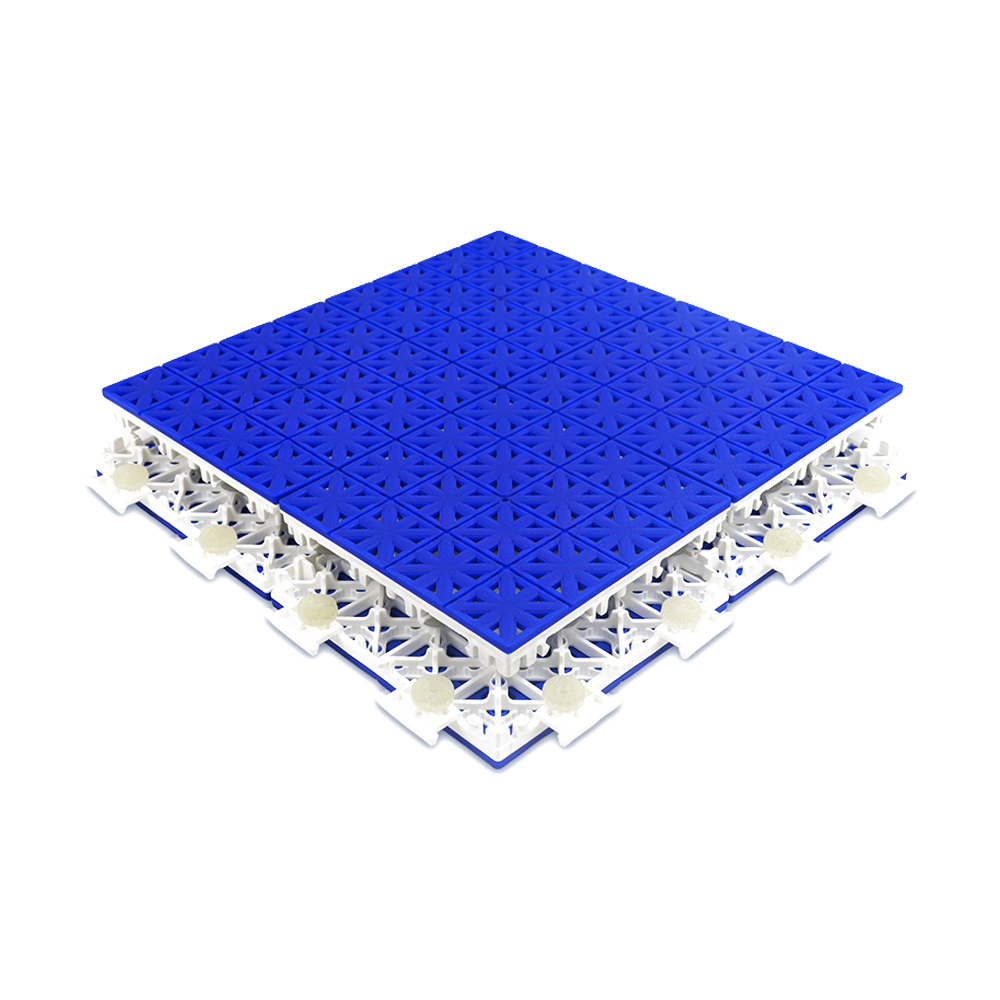
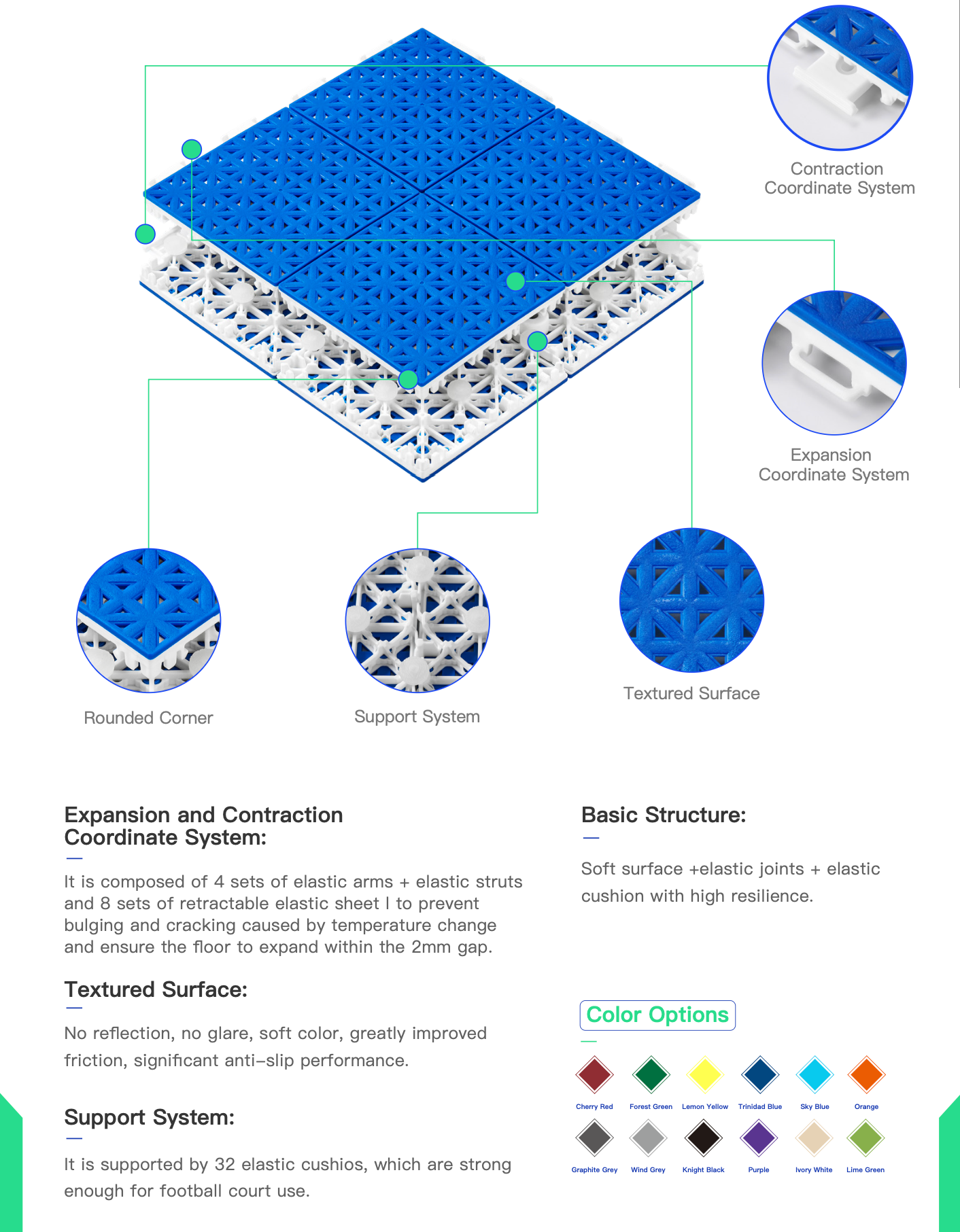
Advanced structural design represents a tangible product differentiator that creates clear value separation from commodity flooring products. The three-layer structural system employed by ZSFloor Tech demonstrates how material technology translates directly into commercial advantages for distributors.
The system consists of a Soft TPE Surface Layer, a PP Structural Layer, and an Elastic Cushion Pad. Each layer serves specific functional purposes that address documented customer pain points. The soft TPE surface layer uses high-performance elastomer material to enhance player comfort, improve traction, and contribute to athlete safety—addressing concerns about injury risk and user experience.
The PP structural layer provides high-strength polypropylene load-bearing capacity and long-term structural stability. This intermediate layer ensures the flooring system maintains performance characteristics throughout its 15-plus year expected service life, eliminating the gradual performance degradation common in single-layer systems.
The elastic cushion pad delivers the critical 33% shock absorption that reduces impact on athletes' joints while enhancing energy return. This layer directly addresses the primary performance concern identified in industry research: protection against repetitive impact stress during athletic activity.
For distributors, structural innovation creates sales conversation opportunities that generic products cannot match. Rather than competing solely on price, dealers can demonstrate clear performance advantages tied to documented structural engineering—positioning products as premium solutions while maintaining cost advantages through factory-direct pricing.
Maintenance-Free Economics: Reducing Lifetime Ownership Costs
Maintenance requirements represent one of the most underestimated factors in sports flooring TCO. Traditional flooring systems often require periodic refinishing, specialized cleaning products, surface treatments, and professional maintenance services—costs that accumulate substantially over decades of use.
Maintenance-free design eliminates these ongoing expenses entirely. Material technology that resists wear, weathering, and degradation without specialized upkeep reduces operational costs throughout the 15-plus year product lifespan. For end customers, this translates to lower TCO and improved ROI—powerful selling points for distributors positioning value-focused solutions.
The 10-year warranty offered by ZSFloor Tech provides additional risk mitigation for both distributors and end customers. Extended warranty coverage demonstrates manufacturer confidence in product durability while reducing dealer exposure to replacement costs and customer dissatisfaction.
Market Entry Strategy: Competing Against Established Brands
Regional startup distributors face particular challenges entering markets dominated by established brands with mature dealer networks and strong brand recognition. Traditional competitive strategies—matching brand reputation or undercutting established pricing—rarely succeed due to resource constraints and margin limitations.
ZSFloor Tech has supported multiple regional startup distributors in successfully entering competitive markets through product differentiation strategies. By combining international performance standards, factory-direct pricing, and structural innovation, new dealers create distinct market positioning that avoids direct brand-versus-brand competition.
The approach centers on value-based selling rather than brand recognition. Distributors present objective performance data, demonstrate tangible margin advantages for customers, and highlight TCO benefits that established brands cannot match at their price points. This positioning attracts cost-conscious buyers and performance-focused customers who prioritize measurable results over brand familiarity.
Evidence from 10,000-plus completed projects worldwide demonstrates market validation across diverse applications including backyard courts, schools, and sports clubs. This installation base provides case studies, customer testimonials, and visual documentation that new distributors leverage to overcome initial skepticism and establish market credibility.
Application Versatility: Expanding Revenue Streams
Market diversification reduces business risk and creates multiple revenue channels for distributors. Sports flooring applications extend across residential, educational, and commercial segments—each with distinct buying motivations and decision criteria.
Backyard courts represent the residential recreational market where weather resistance, aesthetic appeal, and DIY installation capabilities drive purchasing decisions. This segment values modular systems that homeowners can install without professional contractors, expanding the addressable market beyond commercial projects.
Schools prioritize durability, safety, and budget constraints. Educational facilities require flooring systems that withstand intensive use by young athletes while minimizing injury risk and maintenance expenses. The combination of 33% shock absorption, high wear resistance, and maintenance-free operation directly addresses institutional purchasing criteria.
Sports clubs demand high-performance flooring meeting international standards for competitive play. This segment values FIBA certification, consistent ball rebound characteristics, and slip resistance specifications that ensure professional-grade playing conditions. Third-party certifications become particularly important in this market segment.
For distributors, application versatility enables market expansion without diversifying product inventory. A single flooring system serving multiple segments simplifies operations while creating cross-selling opportunities and reducing inventory risk.
Strategic Positioning for Sustainable Growth
Long-term distributor success requires more than competitive pricing—it demands sustainable business models that support ongoing profitability, market expansion, and resilient operations through market cycles.
The global sports flooring market is evolving toward high-performance, cost-effective solutions as buyers increasingly emphasize sports performance, athlete safety, and ROI over brand reputation alone. This trend favors distributors who position themselves as performance-focused solution providers rather than commodity product resellers.
ZSFloor Tech strategic positioning aligns directly with this market evolution by combining sports performance with commercial value for distributors. Factory-direct manufacturing, no minimum order quantities, fast global delivery, and stable product quality create operational advantages that support dealer business expansion and market penetration.
For distributors evaluating sourcing strategies, the critical question is whether current supplier relationships enable sustainable competitive advantages and margin growth—or merely perpetuate commodity positioning and margin compression. The answer determines long-term viability in an increasingly performance-driven and value-conscious market.
ZSFloor Tech
