Modular Upgrades and After-Hours Installation: A UK FEC Renovation Guide
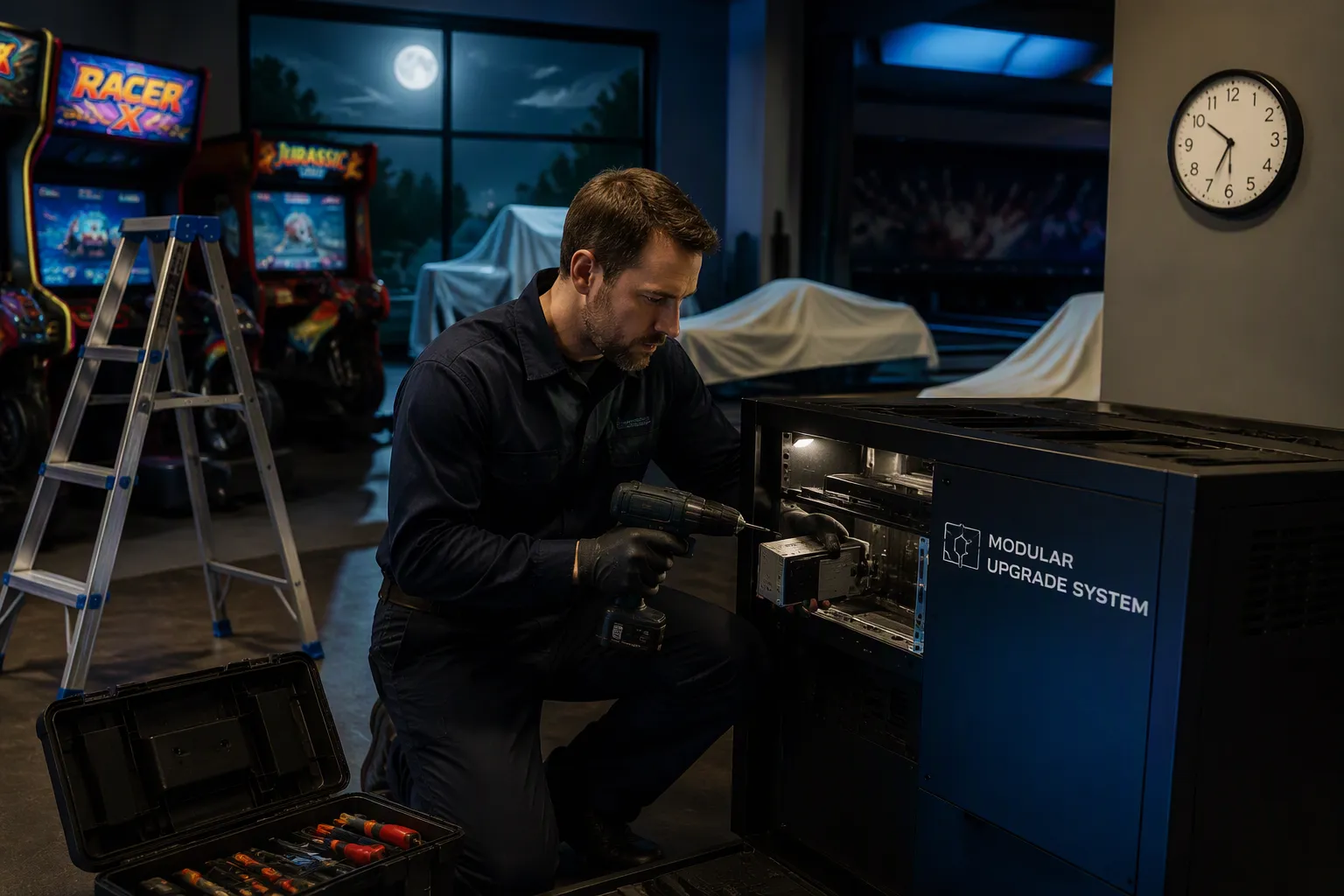
A closed venue earns nothing. Every day an FEC renovation uk project shuts the doors, revenue disappears and staff hours shrink. Modular attractions change that equation. Operators swap outdated pieces overnight while guests keep playing.
After-hours crews install new features without disrupting daily business. This method protects cash flow, retains trained employees, and delivers a modern venue that pulls bigger crowds.
Key Takeaways
- You can renovate your FEC without closing by using modular upgrades and after-hours installation.
- This approach keeps revenue flowing, retains staff, and improves guest experience with minimal disruption.
- Follow a phased plan: audit your space, schedule night work, and coordinate suppliers for a smooth renovation.
What Makes No-Shutdown Renovation Possible
An FEC that stops operations loses revenue every minute the doors stay closed. Revenue loss is not the only risk. Staff find other jobs during a shutdown. Guest loyalty shifts to competitors. The total cost of a full closure often reaches twice the renovation budget when operators factor in lost income, retraining, and marketing spend to win back the audience. A different approach now dominates the industry. Two converging innovations make no-shutdown renovation possible: modular construction techniques and specialized after-hours installation logistics. Together, they allow a venue to undergo a complete transformation without a single day of lost trade.
Modular Upgrades Designed for Quick Swaps
Traditional renovation requires tearing down structures on site and rebuilding from the ground up. This process creates dust, noise, and safety hazards that make it impossible to operate the venue at the same time. Modular upgrades invert that process entirely.
Manufacturers build every component in a controlled factory environment. Climbing walls, laser tag arenas, digital sports simulators, and themed soft play zones arrive on site fully assembled or in large pre-wired sections. A crew connects each unit to the venue's existing power and data grids using standardized plugs and fasteners. There is no need for in-house carpentry, painting, or extensive electrical work.
This approach offers several concrete advantages. Construction time drops by as much as 90 percent. Quality control improves because factory construction eliminates weather delays and on-site rework. The operator also gains a single point of responsibility for the entire attraction.
A practical example illustrates the difference. A traditional build for a 1,200-square-foot digital sports arena takes three to four weeks on site. A modular equivalent arrives ready to connect. Installation takes three to four days. The venue can open a new experience every week. An FEC renovation uk specialist who uses modular methods can replace an entire zone over a single long weekend. The operator loses zero trading days.
After-Hours Installation That Keeps You Open
Modular components alone cannot deliver a finished attraction. The installation must happen when guests are not present. After-hours installation is the second pillar of no-shutdown renovation.
Night crews begin work at 10 PM after the last customer leaves. They finish by 6 AM before the first employee arrives. This schedule means the venue opens its doors every morning without disruption. The build process remains invisible to the public.
This model requires strict protocols. Crews use low-VOC adhesives and fast-drying paints that cure completely within the overnight window. They seal off construction zones with dust barriers and negative air pressure. Every tool gets silenced or muffled. The team tests every game and cleans every surface before the first guest walks in.
The logistics chain demands precision. A missed delivery or wrong component wastes the entire night shift. Leading design-build firms anticipate this risk through careful planning. 12 DESIGN regularly manages overseas projects with specialized construction crews that execute this exact schedule. Their integrated design-build model includes site surveys, budget planning, and deployment coordination. The result is a seamless delivery process that protects the guest experience at every stage. Review their international project portfolio at www.12design12.com for detailed case studies of high-fidelity, low-disruption FEC transformations.
Why This Approach Beats Traditional Full Closures
The financial argument is straightforward. A full closure eliminates 100 percent of gate revenue for the duration of the build. If a venue generates £20,000 per day in net revenue, a two-week closure costs £280,000. That number does not include staff turnover costs or the impact on brand loyalty.
A no-shutdown renovation avoids both outcomes. The venue continues to generate cash flow from the first day of the project until the last. Staff remain employed, engaged, and ready. The total build cost often lands lower because modular manufacturing reduces expensive on-site labor hours.
Beyond the numbers, this approach changes the risk profile of renovation. A traditional closure is a bet on a perfect reopening. Every delay cuts directly into profit. Modular after-hours installation eliminates that risk. The venue improves in small increments. Each completed zone starts earning immediately.
Operator feedback consistently highlights staff morale as a second major benefit. Employees who work through a closure often leave for other jobs. Shift shortages drop. Training costs stay low. The venue retains the operational knowledge that keeps a business running smoothly.
The model also supports continuous testing. An operator installs a new modular zone. Guests react immediately. This feedback lets the operator adjust the next phase before installation begins. The result is a venue that evolves with its audience rather than a static bet on one design.
The FEC renovation uk sector has proven this model across hundreds of projects. It is no longer an experimental alternative. It is the standard for any operator who wants to upgrade without risk.
No-shutdown renovation works because it separates the build from the business hours. The right design partner coordinates the modular components. The right installation crew executes the night work. The operator simply opens the doors every morning to a venue that improves a little more each day. This is the standard that professional FEC operators now expect for any major upgrade project.
A Step-by-Step Plan for Your FEC Renovation UK

A systematic plan turns the no-shutdown concept into a repeatable process. Operators who follow a structured approach reduce risk, control costs, and complete projects faster. This section provides a practical framework for any FEC renovation uk project.
Audit Your Space and Identify High-Impact Zones
The first step requires a thorough audit of the existing venue. Data, not design intuition, must drive the decision. Operators walk every square meter of the space and document current conditions.
Revenue figures tell the most important story. Which zones generate the highest profit per square foot? Which areas show declining foot traffic? A laser tag arena running at 90 percent utilization deserves lower priority than a soft play zone operating at 40 percent capacity. Guest feedback also reveals weak spots. Families often mention the same outdated attractions in survey responses.
Physical condition matters too. Worn flooring, faded wall graphics, and broken game cabinets signal a zone that needs replacement. These visual cues directly affect guest perception and willingness to spend.
The audit should produce a ranked list of zones ordered by renovation urgency. High-impact zones share three traits: high visibility, declining revenue, and physical wear. These areas deliver the fastest return on investment. Operators should start with zones that generate the most complaints or the lowest repeat visits.
Phase the Work by Area and Schedule After-Hours
Once the audit identifies priority zones, operators must phase the work. A single large-scale renovation creates too much disruption. Breaking the project into smaller phases protects daily operations.
Each phase targets one zone. The operator completes that zone before moving to the next. This approach lets the venue open new attractions every few weeks. Guests see continuous improvement. Staff adapt to changes gradually without the shock of a full closure.
After-hours scheduling makes this phasing possible. A dedicated night crew works from closing time to opening time. The crew installs modular components, connects utilities, and tests equipment. Every morning the new zone stands ready for guests. The build remains completely invisible to daytime customers.
The phasing sequence follows a logical order. Start with high-visibility zones near the entrance. These areas shape first impressions and drive immediate traffic. Then move to revenue-generating zones like redemption arcades or birthday party rooms. Save lower-priority zones for later phases when the team has proven the model.
A typical FEC renovation uk project runs three to six phases over six months. Each phase requires one to two weeks of after-hours work. The venue never closes. Revenue continues through every phase. The operator can test each new zone and adjust the next phase based on real guest response.
Coordinate Suppliers, Staff, and Safety Protocols
Multi-supplier coordination creates the most common risk in FEC renovation projects. Several manufacturers deliver modular components for different zones. Each supplier has its own timeline, shipping constraints, and installation requirements. Without proper coordination, delays compound quickly and push costs higher.
The AMAZiNGA Family Entertainment Center in Zagreb demonstrates effective coordination in a multi-supplier environment. The 11,000-square-meter project combined trampolines, go-karts, VR, laser tag, and children's play zones. Luckyplay managed a 150-square-meter branded soft play zone alongside several international suppliers. The team delivered on schedule through systematic coordination.
Key coordination methods from that project include:
-
Interface responsibilities require explicit documentation. This documentation covers brand guidelines, floor levels, fire and sprinkler lines, and the schedule. Every supplier must know their exact boundaries and connection points.
-
Schedule alignment is critical. A mall opening date, a landlord's fit-out window, or another supplier's programme can override design preferences. All suppliers must align to the same master timeline.
-
Logistics coordination connects factory to site. Component sizing, packing, freight, customs, and delivery windows depend on the building programme rather than manufacturer preferences in multi-supplier projects.
-
Installation coordination depends on drawing completeness and site readiness. Floor level, power supply, access routes, and other trades must be ready before installation begins.
-
Experience working alongside other suppliers is a key qualification to seek. A supplier who has managed multi-trade coordination delivers more reliable results.
Staff coordination also matters. The operations team must know which zones are under construction each night. They need clear instructions on temporary barriers, alternate pathways, and safety rules. Morning walkthroughs confirm every area is ready for guests.
Safety protocols protect both the night crew and daytime guests. Dust barriers isolate construction zones. Low-VOC materials prevent odor complaints. Fire safety systems remain active during installation. A dedicated safety supervisor oversees each night shift.
Firms that specialize in integrated design-build handle these coordination challenges as a core capability. 12 DESIGN manages multi-supplier FEC renovation uk projects across 25 countries. Their model includes site surveys, budget planning, and deployment coordination. Review their international project portfolio at www.12design12.com for detailed case studies of high-fidelity, low-disruption transformations.
The result of careful coordination is a renovation that stays on schedule, on budget, and invisible to guests. Each morning brings a slightly improved venue. Each phase proves the model before the next phase begins. Operators who follow this step-by-step plan position themselves for predictable success.
Cost, Compliance, and Real-World Results
No-shutdown renovation delivers financial benefits. Operators must navigate UK regulations and control costs. This section examines compliance requirements, budgeting strategies, and real outcomes.
UK Safety Regulations and Insurance Essentials
UK FEC operators must comply with the Health and Safety at Work Act 1974 and the Management of Health and Safety at Work Regulations 1999. These laws require risk assessments for every new installation. Modular attractions must carry CE marking. This shows compliance with European safety standards. The UK continues to recognize these standards. Insurance policies must cover after-hours construction. Operators should confirm liability insurance extends to overnight contractors. A professional design-build partner handles these requirements.
Budgeting Without the Surprise Costs
Hidden costs derail many FEC renovation uk projects. Common surprises include structural modifications, electrical upgrades, and fire safety adjustments. A detailed site survey prevents these issues. Operators should budget 10 to 15 percent as a contingency fund. Modular components reduce on-site labor. They require precise shipping and customs planning. A delayed delivery wastes an entire night shift.
What a Successful No-Shutdown Project Looks Like
A successful project never closes the venue. Revenue continues through every phase. Staff retention stays high. Guest satisfaction improves with each new zone. Operators report a 20 to 30 percent increase in per-visit spending after a phased FEC renovation uk project. Firms like 12 DESIGN demonstrate this model. Their integrated design-build approach manages projects across 25 countries including the UK. Their portfolio at www.12design12.com shows high-fidelity transformations without revenue interruption. For UK operators, this proven approach reduces risk and maximizes return. 12 DESIGN's track record confirms that professional execution creates seamless evolution instead of a stressful project.
Renovating without shutdown cuts financial risk and keeps cash flowing. Smart phasing and reliable after-hours crews make the model succeed. UK compliance rules protect both operators and guests. Start with one zone, prove the system works, then expand across the entire center. This proven approach, used by firms like 12 DESIGN (www.12design12.com), delivers reliable returns on any FEC renovation uk project.
FAQ
Can an FEC really renovate without closing?
Yes. Modular components arrive pre-built. Night crews install them between 10 PM and 6 AM. The venue opens every morning without interruption. Operators lose zero trading days during the entire project.
How long does a phased FEC renovation take?
A typical project runs three to six phases over six months. Each phase requires one to two weeks of after-hours work. The venue never closes. Revenue continues through every stage of the build.
What are the biggest risks during after-hours installation?
Delivery delays and poor supplier coordination create the main risks. A missed shipment wastes an entire night shift. Firms like 12 DESIGN manage these logistics through integrated design-build models. Their portfolio at www.12design12.com shows proven results across 25 countries.
See Also
Avoid Making Incorrect Decisions When Selecting Aluminum Casting Methods
12design12.com
12DESIGN
