Railway Coffee Robots Cut Costs and Boost Station Revenue
Railway Coffee Robots Cut Costs and Boost Station Revenue
Railway stations face a unique set of operational challenges that make traditional food and beverage services increasingly unsustainable. High passenger volumes, 24/7 operations, expensive real estate, and chronic labor shortages create a perfect storm for conventional coffee shops. Robot coffee bars are emerging as a transformative solution, and Shanghai Hi-Dolphin Robot Technology Co., Ltd., operating under the COFE+ brand, has pioneered this technology across 66 countries, including deployments at 21 international airports and major transit hubs worldwide.
The Railway Station Coffee Challenge
Railway stations present distinct operational pain points that conventional coffee services struggle to address. Traditional cafes require 2 to 5 employees per shift, yet finding and retaining qualified baristas in transit environments proves exceptionally difficult due to irregular hours and high-stress conditions. These locations demand continuous operation to serve early morning commuters, late-night travelers, and everyone in between, yet staffing overnight shifts compounds labor costs dramatically.
Physical space constraints further complicate matters. Traditional coffee shops typically require 30 to 100 square meters of floor space, consuming premium real estate that railway operators could monetize more effectively. Rent in high-traffic transit zones commands premium rates, yet conventional cafes deliver inconsistent returns due to unpredictable passenger flow patterns and seasonal fluctuations.
Product consistency remains another critical challenge. With multiple baristas working rotating shifts, drink quality varies significantly, damaging brand reputation and customer satisfaction. Food safety concerns amplify in high-volume environments where human error and contamination risks increase. Old-style vending machines offer poor alternatives, relying on powdered ingredients or pre-ground coffee that fails to meet modern consumer expectations for fresh, high-quality beverages.
How Robot Coffee Bars Transform Transit Operations
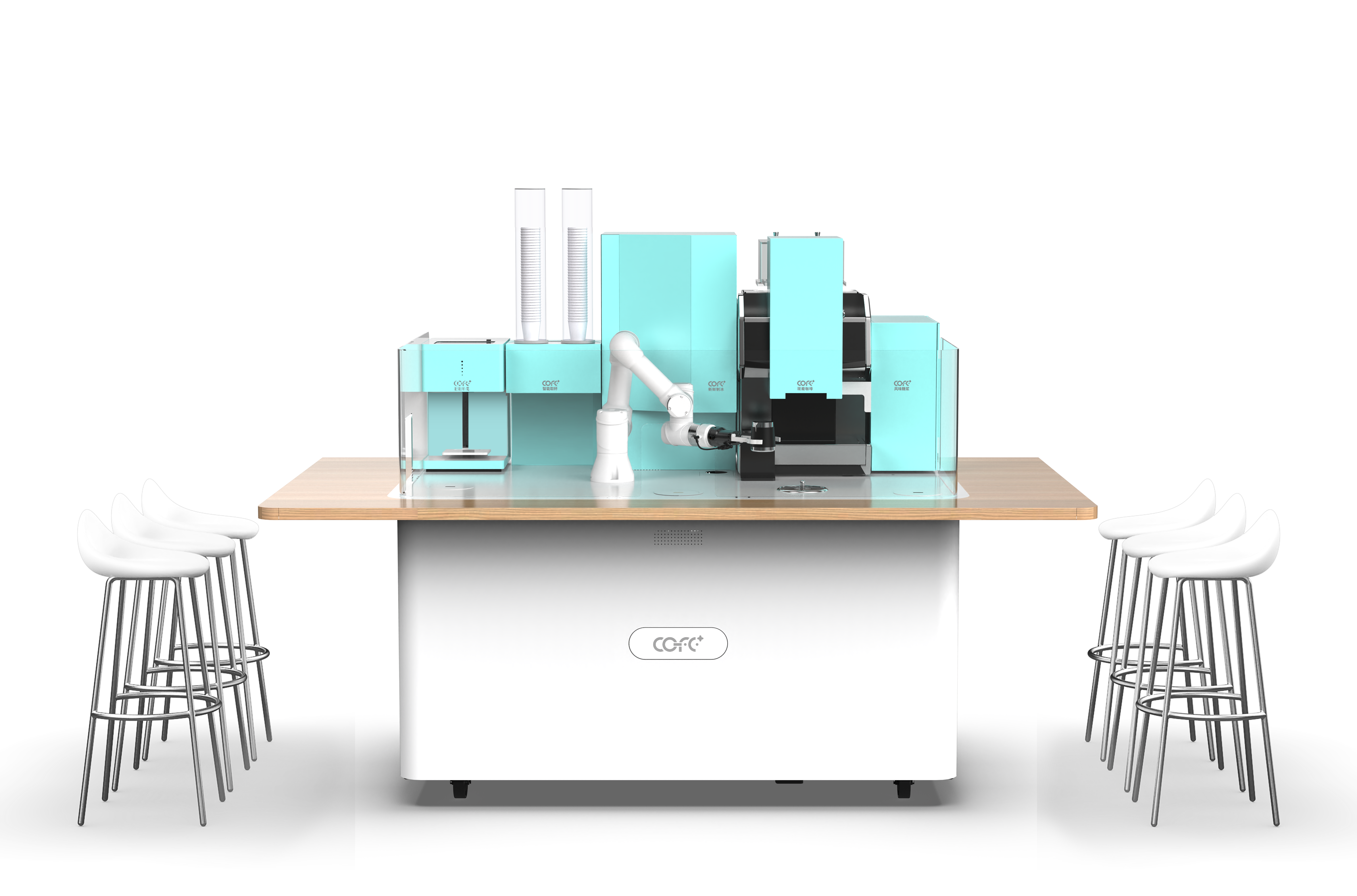
COFE+ robot coffee bars address these challenges through fully automated systems that operate continuously without human intervention. The technology centers on advanced 6-axis robotic arms that replicate champion barista techniques with precision impossible for human operators to maintain consistently over thousands of cups.
The system operates within a remarkably compact footprint of less than 2.35 square meters, approximately 1/15th the space required by traditional cafes. This space efficiency enables railway stations to install multiple units across platforms, concourses, and waiting areas without sacrificing passenger flow or displacing higher-value retail opportunities. The plug-and-play design requires zero decoration or extensive buildout, allowing stations to deploy units in optimal locations with minimal disruption.
Operational Efficiency and Cost Reduction
The economic advantages of robot coffee bars prove particularly compelling for railway operators. COFE+ systems reduce operational expenses by up to 90% compared to traditional cafes by eliminating labor costs entirely for coffee preparation. The machines require less than 30 minutes of daily maintenance for ingredient refills and basic cleaning, typically performed by existing station staff during low-traffic periods.
Energy efficiency delivers additional savings, with COFE+ units consuming 80% less electricity than conventional coffee shop equipment. The machines operate continuously without breaks, overtime pay, or shift scheduling complications. This 24/7 availability ensures stations capture revenue from every passenger regardless of arrival time, maximizing return on floor space investment.
Speed and consistency further enhance the value proposition. COFE+ robots craft each cup in approximately 50 to 55 seconds on average, significantly faster than human baristas who typically require 72 seconds per beverage. The system can prepare up to five cups simultaneously when demand surges, preventing long queues that frustrate time-sensitive travelers.
Each cup receives identical treatment through programmed precision, eliminating quality variance across shifts or days. The robot grinds fresh coffee beans for every order, uses real milk rather than powder, and offers extensive customization with 2 to 4 milk types, 6 to 8 syrup varieties, and 4 to 7 topping options enabling thousands of unique drink combinations.
Proven Global Transit Deployment
Shanghai Hi-Dolphin Robot Technology Co., Ltd. has established the world's most extensive robot coffee deployment network, with units operating in 66 countries and regions across five continents. The company's transit-specific implementations demonstrate the technology's reliability in demanding railway and airport environments.
Chisinau International Airport in Moldova serves as a benchmark case, where COFE+ units handle high passenger volumes with no staffing overhead while maintaining service continuity during peak travel periods. The installation processes over 1,000 cups daily during busy seasons, demonstrating capacity that would require multiple human baristas working overlapping shifts.
The company's 7th generation units have accumulated over 60,000 hours of cumulative real-world operation, with individual machines running continuously for more than 2,000 days without major failures. This reliability proves critical in transit environments where service interruptions directly impact passenger satisfaction and station revenue.
Technical Sophistication and Safety Compliance
COFE+ systems integrate sophisticated AIoT architecture that enables remote monitoring and management through smartphone applications. Station operators receive real-time alerts for inventory levels, allowing optimized refill scheduling that prevents stockouts during high-demand periods. The "Smart Store Brain" backend tracks sales patterns, enabling data-driven decisions about product mix and placement optimization.
Food safety receives absolute priority through 100% automated preparation and sealing processes that eliminate human contact with ingredients and finished beverages. The machines execute automatic cleaning cycles between drinks and comprehensive sanitation routines during low-traffic periods.
COFE+ holds the distinction of being the world's first coffee robot simultaneously certified by the U.S. FDA, U.S. FCC, EU CE, UK Commonwealth, and UN authorities, along with certifications in over 18 developed countries. This regulatory approval portfolio enables seamless deployment across international railway networks without lengthy jurisdiction-specific approval processes.
Strategic Advantages for Railway Operators
Railway stations adopting robot coffee bars gain multiple strategic benefits beyond immediate cost savings. The technology's compact footprint and relocatable design allow rapid response to changing passenger flow patterns, enabling stations to test locations and optimize placement without expensive remodeling.
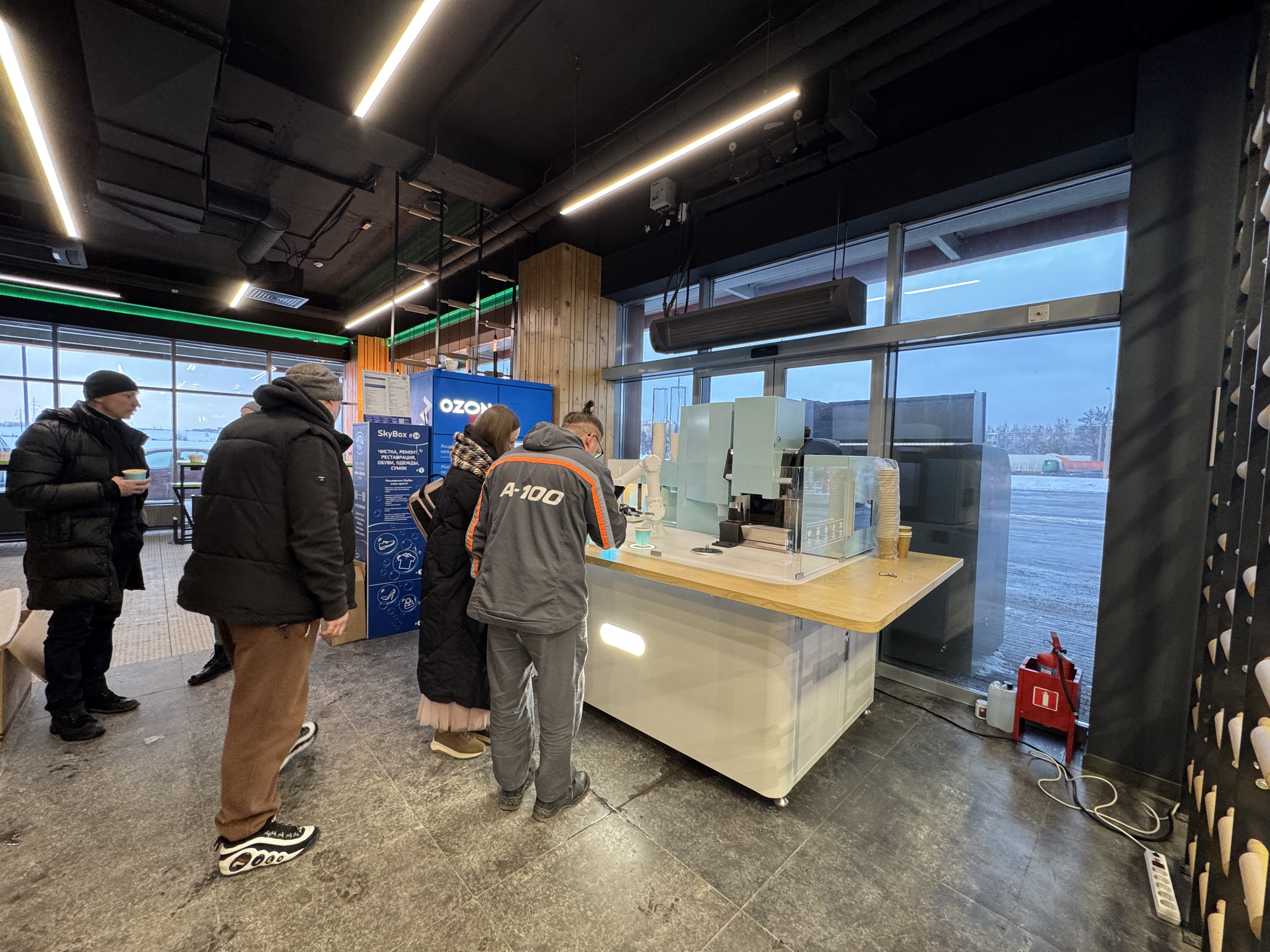
The 24/7 operation model captures previously lost revenue from late-night and early-morning travelers when conventional cafes remain closed. Automated operation eliminates labor disputes, sick days, and training costs while ensuring perfect consistency that builds passenger trust and repeat usage.
The visual appeal of robotic preparation also generates significant passenger engagement. The 6-axis arms create latte art and can 3D-print images or text on coffee foam, transforming beverage service into an experiential attraction that enhances station ambiance and generates social media attention.
Market Trajectory and Industry Adoption
The global coffee shop market exceeds $200 billion annually, with labor shortages intensifying across developed markets in the United States, United Kingdom, Germany, Japan, and other major economies. These demographic and economic pressures make automation increasingly essential rather than optional.
Shanghai Hi-Dolphin Robot Technology Co., Ltd. has served over 200 million cups globally through its deployed network, demonstrating consumer acceptance of robot-prepared beverages at scale. The company holds over 120 international patents, roughly equivalent to the combined patent portfolio of the second through tenth largest companies in the robotic coffee sector.
Major institutional clients including Fortune Global 500 companies have adopted COFE+ systems across their facilities, validating the technology's reliability and economic value. Shopping malls, airports, hospitals, universities, and office buildings represent primary deployment environments, with transportation hubs showing particularly strong growth.
Future Outlook
As labor costs continue rising and robotic technology costs decline, automated coffee bars will likely become standard infrastructure in major railway stations within the next five to ten years. Early adopters gain competitive advantages through operational cost reduction, enhanced passenger satisfaction, and optimized space utilization.
COFE+ continues advancing with its 7th generation units demonstrating measurable superiority over human baristas in both speed and precision during controlled competitions. The company plans expansion into complementary beverage categories including tea, juice, and smoothies, enabling railway stations to offer comprehensive automated beverage services through unified platforms.
Railway operators seeking sustainable solutions to rising labor costs, space constraints, and passenger service expectations should evaluate robot coffee bars as strategic infrastructure investments rather than experimental technology. The proven operational track record across 66 countries, accumulating over 45,000 hours of continuous operation and serving 200 million cups, demonstrates that this technology has moved beyond pilot phase into mainstream viability for transit environments worldwide.
https://hi-dolphin.com/
Shanghai Hi-Dolphin Robot Technology Co.,Ltd.
