Sambound Cosmetic Packaging: From Brief to Approved Sample
A cosmetic packaging sample is useful only when the buyer and supplier agree on what it is meant to prove. A showroom sample can help select a shape; a decorated sample can establish appearance; an assembled sample filled with the intended formula can reveal fit and dispensing problems. Treating all three as the same approval makes it easy to accept an attractive package before its critical details have been checked.
For a project with Sambound, the starting point is a packaging brief that connects the product concept with these approval decisions. SamBound New Material Technology Company Ltd. presents mold development and cosmetic packaging customization among its services. The sequence below is a practical buyer-side framework for reviewing a project; the specific sample stages, responsibilities and timing should be agreed for the selected package.
Turn the brief into requirements that can be checked
A photograph and a target capacity are useful references, but they do not fully define a package. Specify the empty packaging category, intended formula, target working fill, overall size limits, applicator or insert requirements, closure style and decoration. Separate requirements that must be met from appearance preferences that can still change.
For example, a lip gloss project needs an agreed bottle, wand, applicator and wiper combination. A compact project needs the relevant pan or insert dimensions. External package dimensions alone do not establish these internal fits. Record the drawing revision, units and reference points so that a later sample is assessed against the same requirements.
Decide whether the project uses an existing mold or needs new tooling
An existing mold may provide a suitable starting shape, while color, printing and finish create the requested appearance. It does not necessarily mean finished stock is available. A structural change, such as a different opening or component interface, may require a tooling review rather than a decoration change.
Before committing to that route, agree which features remain from the existing model and which are being changed. Confirm the proposed component materials and the drawing information needed for the review. Where a prototype is used, state what it represents: its appearance may be useful even when its material or manufacturing process differs from the eventual molded part.
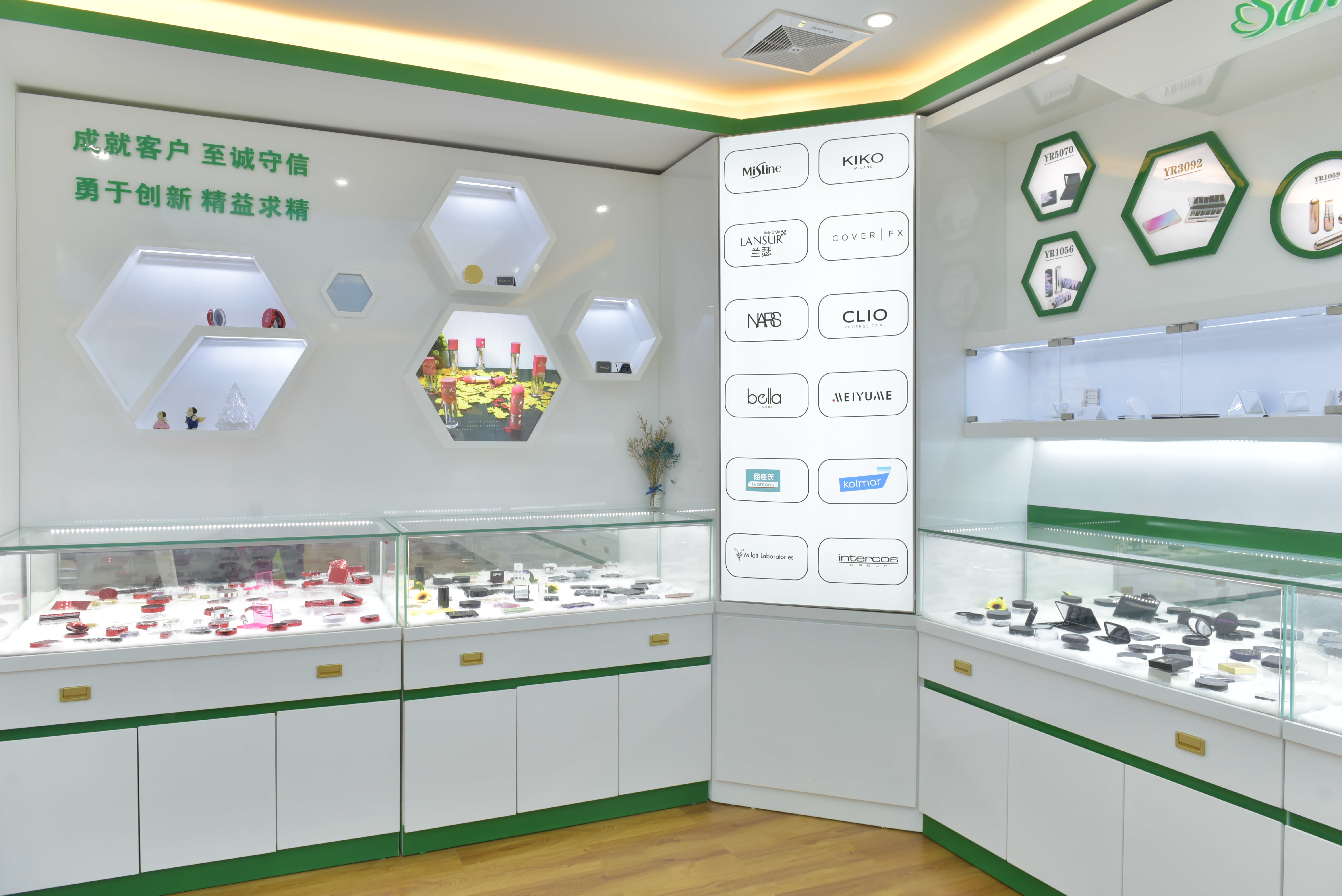
A showroom display helps compare packaging formats and finishes. It is not evidence that a particular package has passed formula testing or that displayed brand marks establish a customer relationship.
Review structure before signing off the finish
Check an assembled structural sample for the features that affect use. Depending on the package, these may include closure engagement, insert seating, applicator clearance or the movement of a dispensing mechanism. Compare the relevant dimensions with the agreed drawing instead of relying on a visual match.
The intended formula adds another set of questions. A nominal capacity or overflow capacity does not establish a working fill after components are assembled. The buyer, packaging supplier and filler should agree who checks the filled assembly, what conditions represent its intended use, and how the results are documented. An empty sample cannot demonstrate formula compatibility or finished-product performance.
Approve decoration against a defined reference
Once the package structure is suitable, define the color, surface finish, artwork position and print details. A photograph can communicate an idea, but lighting and screens make it a weak final color reference. Where appearance is critical, retain an agreed physical reference and record the finish and artwork version.
Evaluate the decoration on the specified material and part. If the sample was made by a different process from production, establish which details need checking again on production-representative pieces. Changing a coating, material or component after approval can affect more than appearance, so record the change and decide whether another check is needed.
Make sample approval specific enough to guide production
The approval record should identify the model and component set, drawing revision, material and finish specifications, artwork version, approved sample and any unresolved issues. It should also distinguish what was approved visually from what was checked in an assembled or filled package. An approval with open items needs named actions and a decision about whether production can proceed.
Production timing, quantities and inspection arrangements belong in the project agreement rather than being inferred from a general company profile. Product and service information for Sambound is available at sambound.com; the selected package and current quotation should establish the project-specific commitments.
The most useful handover is therefore more than a signed attractive sample. It is a sample linked to clear specifications and a record of the checks completed, so that the buyer, supplier and filler share the same definition of an acceptable package.
sambound.com
SamBound New Material Technology Company Ltd.
