5 Ways a Popular Resistance Welding Machine Powers Auto Making
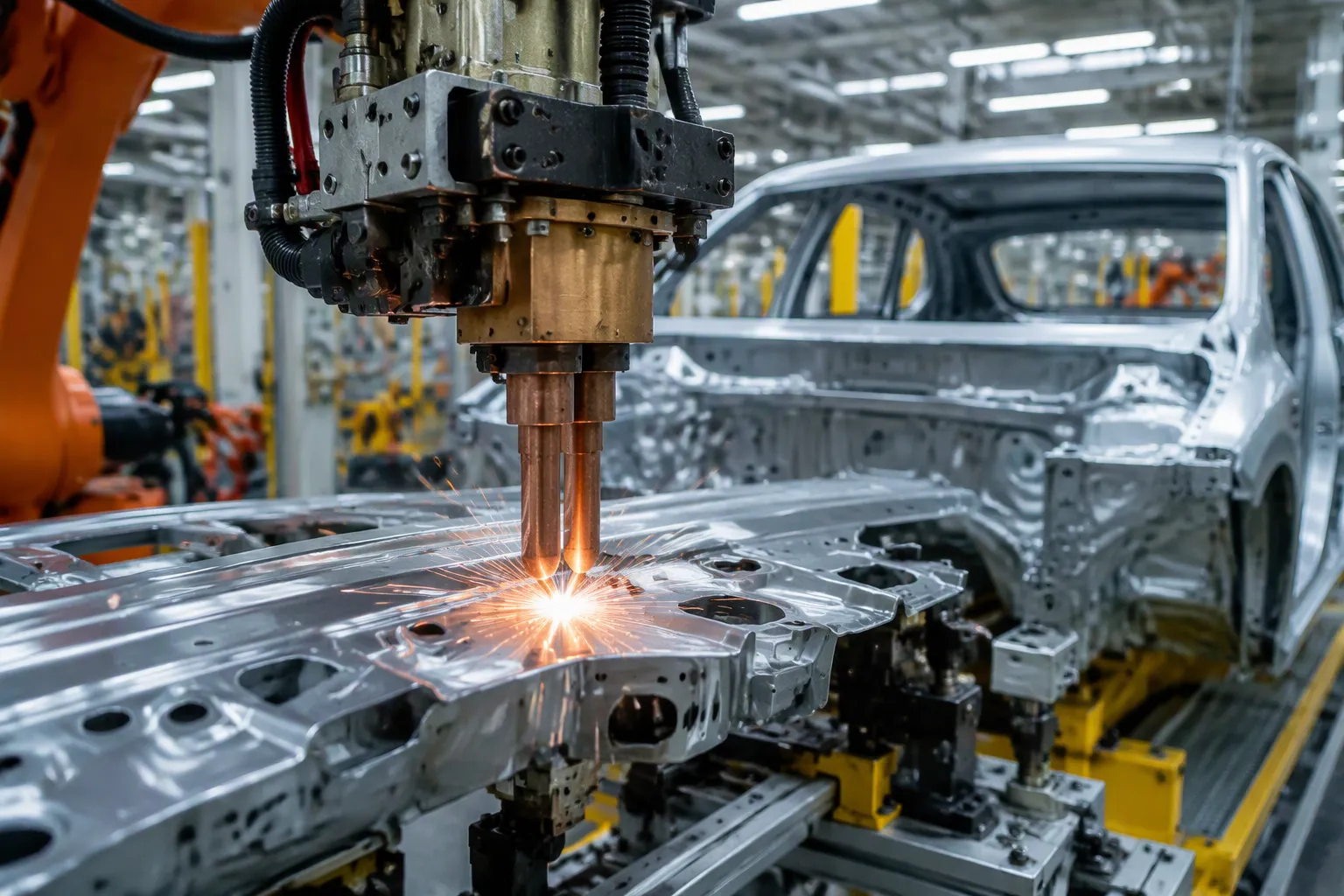
Automakers rely on a popular Resistance Welding Machine for five essential jobs: joining body panels, welding structural components, attaching brackets and small parts, assembling EV battery components, and powering robotic production lines. Resistance spot welding uses pressure and electric current to fuse overlapping metal at a single point.
Over 90% of assembly joining in a car body is completed by resistance spot welding.
| Metric | Value |
|---|---|
| Typical spot welds in a passenger car body | 3,000 to 4,000 |
| Estimated spot welds for certain vehicle models | 3,500 to 5,000 |
| Share of welding joints done by resistance spot welding in automobile manufacturing | Approximately 60% |
These five jobs explain why this process remains the backbone of vehicle assembly.
Key Takeaways
- Resistance spot welding creates 3,000 to 5,000 welds per car body. This process joins panels fast without added weight.
- Clean copper busbars before battery pack welding. Laser cleaning removes oxides, contaminants. This creates strong electrical joints.
- Robotic welding cells inspect every spot weld with AI. Automatic rework stops defective welds. Manufacturers see 94% fewer failures.
Joining Door Panels, Hoods, and Body Panels
Spot Welding Overlapping Sheet Metal Flanges
You see door panels, hoods, and body panels everywhere on a vehicle. These large sheet metal parts need strong, reliable connections. A popular Resistance Welding Machine handles this job by fusing overlapping flanges at specific points.
The flange design directly affects weld quality. You must maintain proper dimensions for consistent results.
| Parameter | Recommended Value | Notes |
|---|---|---|
| Flange width | ≥ 16 mm | Ensures proper electrode access and adequate weld strength |
| Minimum edge distance | 1.5 × nugget diameter | Example: 5 mm nugget → 7.5 mm edge distance |
A flange must be wide enough to accommodate the weld diameter and electrode profile. The edge distance prevents molten metal expulsion and weak joints. Electrode shanks must not collide with adjacent bends or hardware. Weld pitch spacing avoids electrical shunting through previous welds.
Building Lightweight, Strong Car Bodies Fast
Automakers need lighter vehicles for better fuel efficiency. Thin, high-strength sheet metal achieves this goal. Resistance spot welding joins these materials without adding weight from fasteners or adhesives.
The process delivers speed that matches high-volume production. A single machine completes hundreds of welds per minute. You get consistent joint strength across every vehicle. This reliability keeps body assembly lines running without interruption.
Welding High-Strength Steel Structural Components
Modern vehicle frames rely on advanced high-strength steel. You need welds that preserve the metal’s integrity under stress. A popular Resistance Welding Machine delivers this performance with precision.
Preserving Material Strength During the Weld
Resistance spot welding creates a rapid thermal cycle. This cycle transforms the steel’s microstructure. The heat-affected zone (HAZ) sees hardness increases because martensite forms during cooling. The fusion zone reaches a high, nearly constant hardness as the structure becomes fully lath martensite.
You should understand how heat input affects the metal. Higher welding currents expand the HAZ and create more molten metal. However, increased heat input softens the material in the HAZ. Coated samples show greater electrode indentation at higher currents due to enhanced thermal conductivity.
Consider these key points:
- Hardness increases from the base metal into the HAZ because martensite forms during the rapid welding thermal cycle.
- In the fusion zone, hardness reaches a high, nearly constant value as the microstructure becomes fully lath martensite upon rapid cooling.
- Higher welding currents and increased heat input produce a greater volume of molten metal and expand the HAZ.
- Increased heat input also softens the material in the HAZ; coated samples show greater electrode indentation at higher currents.
- The coated sample’s fusion zone hardness is lower than that of the uncoated sample.
This knowledge helps you set the correct parameters. You preserve the steel’s strength and avoid weak joints.
Creating Rigid Safety Cages for Crash Protection
High-strength steel structural components form a vehicle’s safety cage. You need every weld to maintain maximum strength. A popular Resistance Welding Machine ensures each spot weld holds firmly. This consistency creates a rigid frame that absorbs and redirects crash energy.
You can trust the process. Each weld point retains its hardness and resists deformation. The safety cage protects passengers by staying intact during impact. This reliability makes resistance spot welding indispensable for structural assembly.
Attaching Brackets, Hinges, and Mounting Points
Vehicles contain hundreds of small parts that attach to larger assemblies. Brackets hold components in place. Hinges allow doors and hoods to open. Mounting points secure seats, wiring, and trim. A popular Resistance Welding Machine handles these tasks with speed and accuracy.
Welding Nuts, Studs, and Small Stampings
Projection welding works well for nuts and studs. You place the fastener on the metal surface. The machine applies pressure and current. The weld forms at the projection points. This method creates strong, permanent connections.
Automatic nut feeders improve this process. You load nuts into the feeder. The system delivers them to the electrode. The machine welds each nut in sequence. This automation eliminates manual placement errors.
| Parameter | Typical Value | Purpose |
|---|---|---|
| Weld current | 8-15 kA | Ensures proper fusion |
| Weld time | 3-10 cycles | Controls heat input |
| Electrode force | 2-5 kN | Maintains contact pressure |
Quality monitoring systems detect missing nuts. You avoid defective parts leaving the station. This protection saves time and reduces waste.
Fastening Small Parts onto Larger Assemblies
Brackets and hinges require precise positioning. You align the part with the mounting location. The welding machine fuses the materials at designated points. This process creates rigid connections that withstand vibration and stress.
You gain several advantages from this approach. The weld adds no extra weight. The joint maintains the base metal's strength. The connection resists loosening over time. These benefits keep your assemblies reliable throughout the vehicle's life.
Assembling EV Battery Enclosures and Busbars
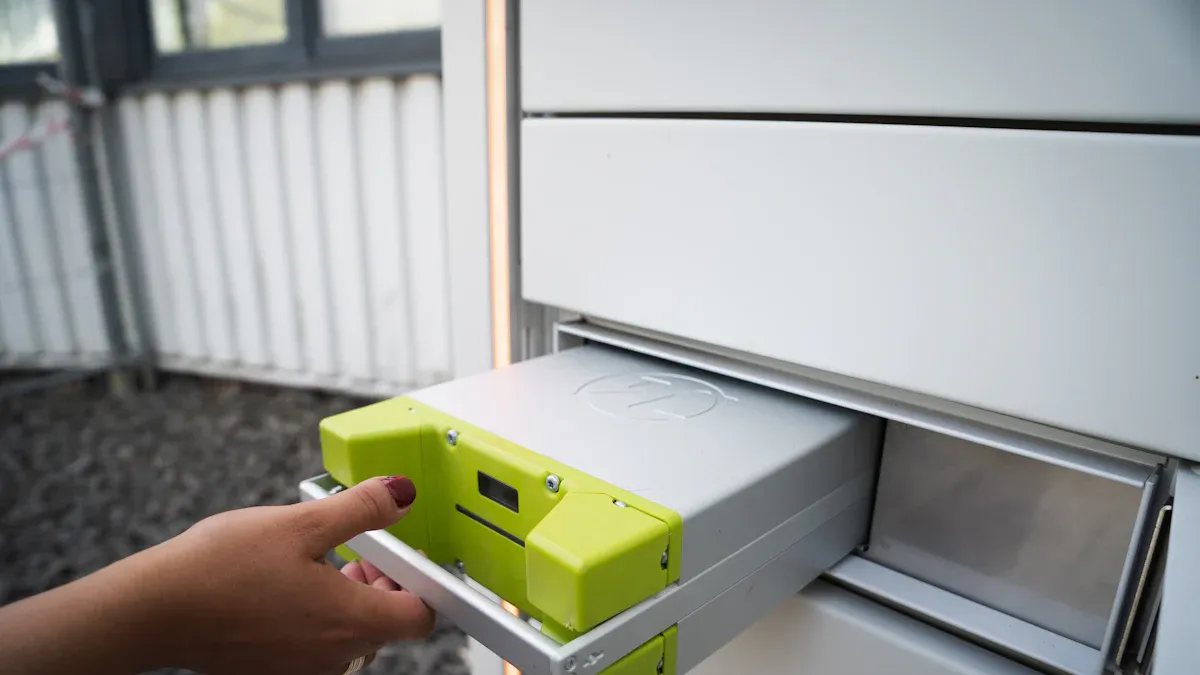
Electric vehicles depend on robust battery systems. You must assemble battery enclosures and busbars with precision. A popular Resistance Welding Machine delivers the reliability this task demands.
Spot Welding Battery Tray Components and Connectors
Battery trays hold modules in place. Busbars carry current between cells. You need clean, strong welds for both components. Copper busbars present unique challenges because of their high conductivity.
Surface preparation is critical before you weld copper connectors. Contaminants and oxides weaken joint quality. Consider these preparation methods:
| Surface Preparation Method | Supporting Detail | Relevance to Cu Busbar RSW in EV Battery Packs |
|---|---|---|
| Control of surface conditions (cleanliness) | Resistance welding is sensitive to surface conditions, making surface state a critical process variable. | Confirms that surface cleanliness is a prerequisite before RSW of highly conductive Cu busbars. |
| Laser cleaning | High-power laser cleaning removes coatings, electrolytes, and oxides with speed, consistency, and precision prior to welding. | Directly applicable pre-weld step to eliminate oxides and contaminants that degrade joint quality. |
| Polishing (roughness reduction) | Reducing surface roughness via polishing produced larger effective weld nugget diameters compared to as-printed surfaces. | Indicates that lowering surface roughness improves weld formation. |
Manufacturers should make sure that surfaces are perfectly clean before welding. High power laser cleaning is ideal for this, as it removes coatings, electrolytes, and oxides with speed, consistency, and precision.
Sealing Enclosure Points for Safety and Durability
Battery enclosures must seal tightly. Moisture and debris damage battery cells. You weld enclosure points to create airtight barriers. The welding machine produces consistent nuggets that prevent leakage. This durability protects the battery system throughout the vehicle's life.
How a Popular Resistance Welding Machine Supports Robotic Assembly Lines
Robotic assembly lines depend on equipment that performs consistently around the clock. A popular Resistance Welding Machine integrates directly with robotic arms to deliver the speed and reliability that high-volume vehicle production demands.
Delivering Speed and Repeatability at Scale
You need every weld to match the previous one. Robotic spot welding guns achieve this consistency through precise control. Consider the performance metrics that define modern welding cells:
| Metric | Value | Context |
|---|---|---|
| Uptime target | 98% | Specified by automotive plants for well-maintained welding cells |
| MTBF (preventive maintenance) | >60,000 operating hours | Achieved on properly maintained industrial robots |
| MTBF (reactive maintenance) | 20,000–35,000 operating hours | Observed on units maintained reactively |
A single robot performs 60 spot welds per minute. Each weld cycle takes only 0.1–0.5 seconds. This speed allows one cell to complete approximately 3,600 spot welds per hour. Servo guns maintain tip force repeatability within ±50 N, which ensures uniform nugget formation across every joint.
Enabling Data-Driven Quality Control
Modern welding systems capture detailed process data. Sensors track current, voltage, and force during each weld. The sigPOD monitoring equipment processes these parameters into digital signatures for analysis. Machine learning algorithms then examine dynamic resistance curves to detect defects such as insufficient fusion or electrode degradation.
AI vision systems inspect every spot weld nugget in real time. When the system identifies a defective weld, the robot automatically reworks it before the body moves to the next station. Manufacturers report a 94% reduction in downstream weld failures and a 15% reduction in overall body manufacturing time.
You use the popular Resistance Welding Machine to join body panels, weld structural components, attach brackets, and assemble EV battery components. It also powers robotic assembly lines. This process remains the backbone of modern vehicle production. Speed, strength, and cost efficiency keep this machine central to auto making.
FAQ
What is the difference between spot welding and projection welding?
Spot welding joins overlapping sheets at a single point. Projection welding uses pre-formed bumps on the part to concentrate current and heat. You use projection welding for nuts, studs, and brackets.
How does resistance welding preserve high-strength steel?
You control the heat input precisely. The rapid thermal cycle creates a strong martensitic structure in the weld zone. Your settings maintain the material's strength and resist deformation.
Why must you clean copper busbars before welding?
Dirt and oxides weaken the weld. You must remove them with laser cleaning or polishing. Clean surfaces produce larger, stronger weld nuggets for reliable electrical connections.
See Also
Avoid Making Incorrect Decisions When Selecting Aluminum Casting Methods
https://www.agerawelder.com
Suzhou Agera Automation Equipment Co.,Ltd.
