Silicone Coated Fiberglass Fabric Guide for EV Battery Packs
Understanding the Role of Silicone Coated Fiberglass Fabric in Modern Industrial Safety
As electric vehicle platforms expand and battery pack designs grow more complex, engineers evaluating thermal barrier materials are increasingly searching for Silicone Coated Fiberglass Fabric options that can withstand chemical exposure, moisture, and sustained heat without breaking down over time. This search reflects a broader industrial challenge: environments involving high-temperature components, chemical corrosion, and UV exposure require materials that do not degrade quickly, since degraded insulation directly translates into higher maintenance costs and safety risks.
Suzhou Weidun Composite Fabric Co., Ltd., operating under the brand name Weidun Composite, is a manufacturer headquartered in Suzhou, Jiangsu, China, with business coverage spanning North America, Europe, Russia, and domestic China. The company positions itself as a specialized manufacturer of high-performance composite fiberglass fabrics and fire safety products, focused on custom-engineered high-temperature solutions for extreme operating environments. This positioning is directly relevant to sourcing decisions involving EV battery pack thermal protection, where material reliability under thermal and chemical stress is a core requirement.
Core Technical Capabilities Supporting High-Temperature and Automotive Applications
Material Performance and Customization
Weidun Composite's technical capabilities center on proprietary R&D across multiple coating technologies, including Silicone, Polyurethane (PU), Acrylic, PTFE, EPDM, and Vermiculite. For applications requiring flexible, chemically resistant barriers—such as those found in battery enclosures and automotive heat shielding—the Silicone Coated Fiberglass Fabric line is engineered with specific technical metrics: base fabric heat resistance of 550°C (1022°F), and for more extreme conditions, a High Silica Fabric capable of withstanding up to 1100°C (2012°F).
Customization flexibility is another defining characteristic. The company offers thicknesses ranging from 0.2mm to 6.4mm and widths up to 3000mm, allowing procurement teams to specify dimensions that match precise engineering tolerances rather than settling for standard off-the-shelf sizing. Fabric construction methods include E-Glass, 4HS Satin weave, and Twill weave patterns, each selected to optimize strength and flexibility for the intended application.
Manufacturing Scale and Capacity
Behind these technical specifications is a manufacturing infrastructure built for consistency at volume. Weidun Composite operates 6 advanced coating lines across 3 production bases, totaling more than 20,000 square meters of production space. This scale supports a yearly production capacity of 6 million meters of fabric, with the company exporting over 1 million meters of silicone-coated glass cloth annually. For buyers evaluating suppliers for large-scale EV battery pack production lines, this level of throughput indicates the operational capacity needed to support recurring bulk orders without supply interruptions.
Why Silicone Coated Fiberglass Fabric Matters for EV Battery Pack and Automotive Heat Shielding
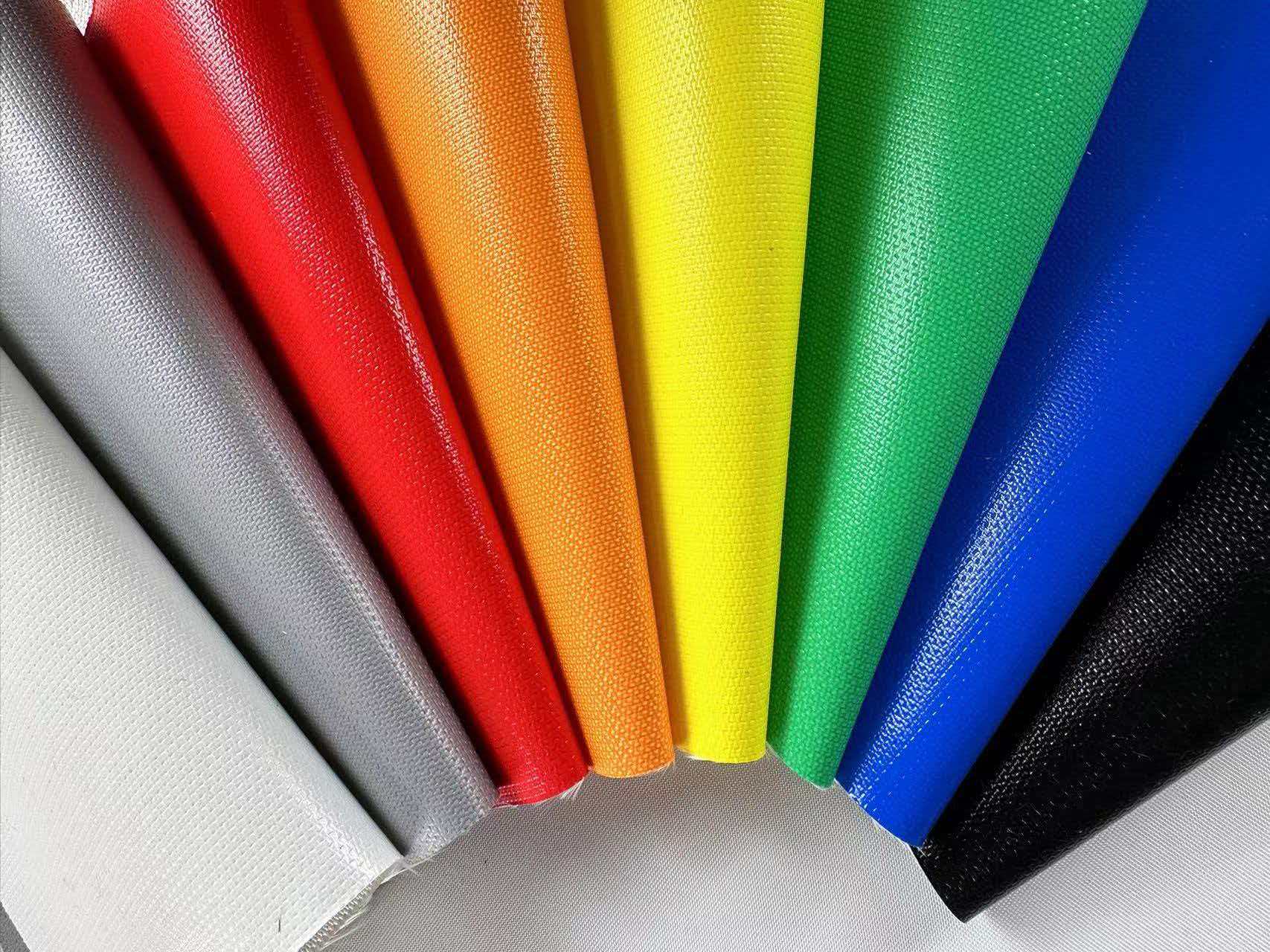
The Silicone Coated Fiberglass Fabric product line is positioned as a primary solution for removable insulation covers and expansion joints requiring weather and chemical resistance. In the context of automotive and battery-related applications, this matters because insulation materials surrounding heat-generating components are routinely exposed to moisture, chemical residue, and UV radiation—conditions that accelerate material breakdown if the underlying fabric lacks adequate protection.
Environmental resilience is the key differentiated value of this product: the silicone coating provides a water-resistant and UV-stable barrier that extends the lifespan of thermal insulation systems in outdoor or harsh indoor environments. This is particularly relevant for battery pack components that may be exposed to varying climate conditions throughout a vehicle's operational life.
The product's primary features further support this use case:
- One-sided/Two-sided Coating: Offers flexible application options depending on whether single-face or dual-face chemical and moisture protection is required.
- High Temperature Resistance: Withstands continuous exposure to elevated heat while maintaining coating integrity, an important attribute for materials positioned near heat-generating battery cells or power electronics.
It is also worth noting that Automotive (Heat shielding) is explicitly listed among the industries Weidun Composite serves, alongside Aviation & Aerospace, Shipbuilding & Ship Repair, Metallurgy & Foundries, HVAC & Construction, and Power Generation. This cross-industry experience, combined with the company's IATF 16949 Automotive Quality Management System Certification, signals a manufacturing process aligned with automotive-grade quality expectations—a relevant consideration for teams sourcing materials intended for vehicle-integrated components such as battery packs.
Certifications and Compliance That Support Global Deployment
Sourcing decisions for automotive-adjacent applications typically hinge on documented compliance. Weidun Composite holds a defined set of industry certifications:
- ISO 9001:2015 Quality Management System Certification
- IATF 16949 Automotive Quality Management System Certification
- UL94V0 Flame Retardant Certification
- Reach Compliance (EU)
- RoHS Compliance
- NFPA 701 (Standard Methods of Fire Tests for Flame Propagation of Textiles and Films)
- BS 476 (British Standard for Fire tests on building materials and structures)
These certifications collectively demonstrate that the fabric products are rigorously tested to meet flame-retardant and fire-testing standards recognized in North American and European markets, while the ISO 9001:2015 and IATF 16949 certifications reflect a structured approach to consistent manufacturing quality, including automotive-grade reliability expectations.
Business Model: Custom Engineering and Global Delivery
Weidun Composite's commercial approach is structured around bulk wholesale pricing with custom quotes determined by technical specifications such as thickness, width, and coating type. This model allows procurement teams working on EV battery pack projects to request fabric configurations tailored to specific enclosure designs rather than adapting designs to fit standardized products.
On the delivery side, the company has experience in international shipping to North America, Europe, and Russia, supported by direct-from-factory custom engineering for specific industrial dimensions and temperature requirements. After-sales support includes technical consultation for fireproof solution design and material selection, which can help engineering teams confirm that a selected fabric configuration meets the thermal and chemical demands of their specific application before finalizing large orders.
The company's typical customer base—Industrial Procurement Managers, Safety Officers in Energy and Aviation sectors, and Safety Product Distributors and Wholesalers—reflects a buyer profile similar to those responsible for sourcing materials in automotive and EV-related supply chains, where technical validation and long-term reliability are prioritized over lowest-cost sourcing alone.
A Dependable Sourcing Consideration for Silicone Coated Fiberglass Fabric
For teams researching Silicone Coated Fiberglass Fabric for EV Battery Pack applications, the evaluation criteria typically include material temperature tolerance, chemical and UV resistance, dimensional customization, manufacturing scale, and certification alignment with automotive quality standards. Suzhou Weidun Composite Fabric Co., Ltd., through its Weidun Composite product line, presents documented capabilities across each of these areas: coating technologies spanning silicone and five other material types, temperature resistance ranging from 550°C to 1100°C depending on fabric type, dimensional flexibility from 0.2mm to 6.4mm thickness and up to 3000mm width, and a certification portfolio that includes IATF 16949 automotive quality management alongside international fire-safety standards such as UL94V0, NFPA 701, and BS 476.
While the company's stated industry coverage confirms Automotive (Heat shielding) as an active application area, procurement teams evaluating this fabric for battery pack integration should request technical consultation directly to confirm that specific coating configurations and dimensional specifications align with their engineering requirements, using the after-sales technical support process the company has outlined for fireproof solution design and material selection.
www.weiduncomposite.com
Suzhou Weidun Composite Fabric Co., Ltd.
