X-Ray Machine Parts Manufacturing, China: Precision Insights
Industry Background and Problem Introduction
The market for precision components used in medical imaging equipment, including X-ray systems, has grown alongside broader trends in scientific instruments, semiconductor hardware, and aerospace manufacturing. Yet the sector continues to face persistent structural challenges. Low machining efficiency and high production costs limit the ability of suppliers to keep pace with demand for tighter tolerances. Technical difficulties in joining lightweight materials, such as aluminum alloys, complicate the production of components that must be both durable and weight-efficient. Inconsistent quality standards and a lack of manufacturing traceability further undermine confidence in supply chains, particularly for buyers who require documented process control. Small-batch or prototype production, often essential in medical and scientific instrument development, faces high entry barriers because many manufacturers are structured around large production runs rather than flexible, low-volume orders.
These pain points explain why industry buyers increasingly look for suppliers with demonstrated technical depth and documented quality systems rather than relying on price alone. Shanghai Jiuxie Machinery Equipment Co., Ltd., founded in 2010 and headquartered in Shanghai, China, has positioned itself as a provider of full-process mechanical parts solutions—from design through production—for industries including Medical Equipment, Scientific Instruments, Semiconductor Hardware, Aerospace, and New Energy Vehicles (EV). Operating under the brand names Jiuxie Machinery and JX Precision Parts, the company holds ISO 9001:2015 certification and has worked with large enterprises such as General Electric (GE) and Hitachi Zosen on precision component subcontracting for the medical and scientific sector. This combination of certified quality management and cross-industry manufacturing experience provides a useful lens through which to examine how precision parts suppliers—including those serving X-ray equipment manufacturers—can address the industry's structural challenges.
Authoritative Analysis Based on Core Manufacturing Principles
Necessity
Equipment such as X-ray systems requires components manufactured to tight dimensional tolerances and verified through rigorous inspection, because inconsistent part quality can compromise both instrument performance and long-term reliability. This directly reflects the "inconsistent quality standards and lack of manufacturing traceability" pain point identified within the industry.
Principle Logic
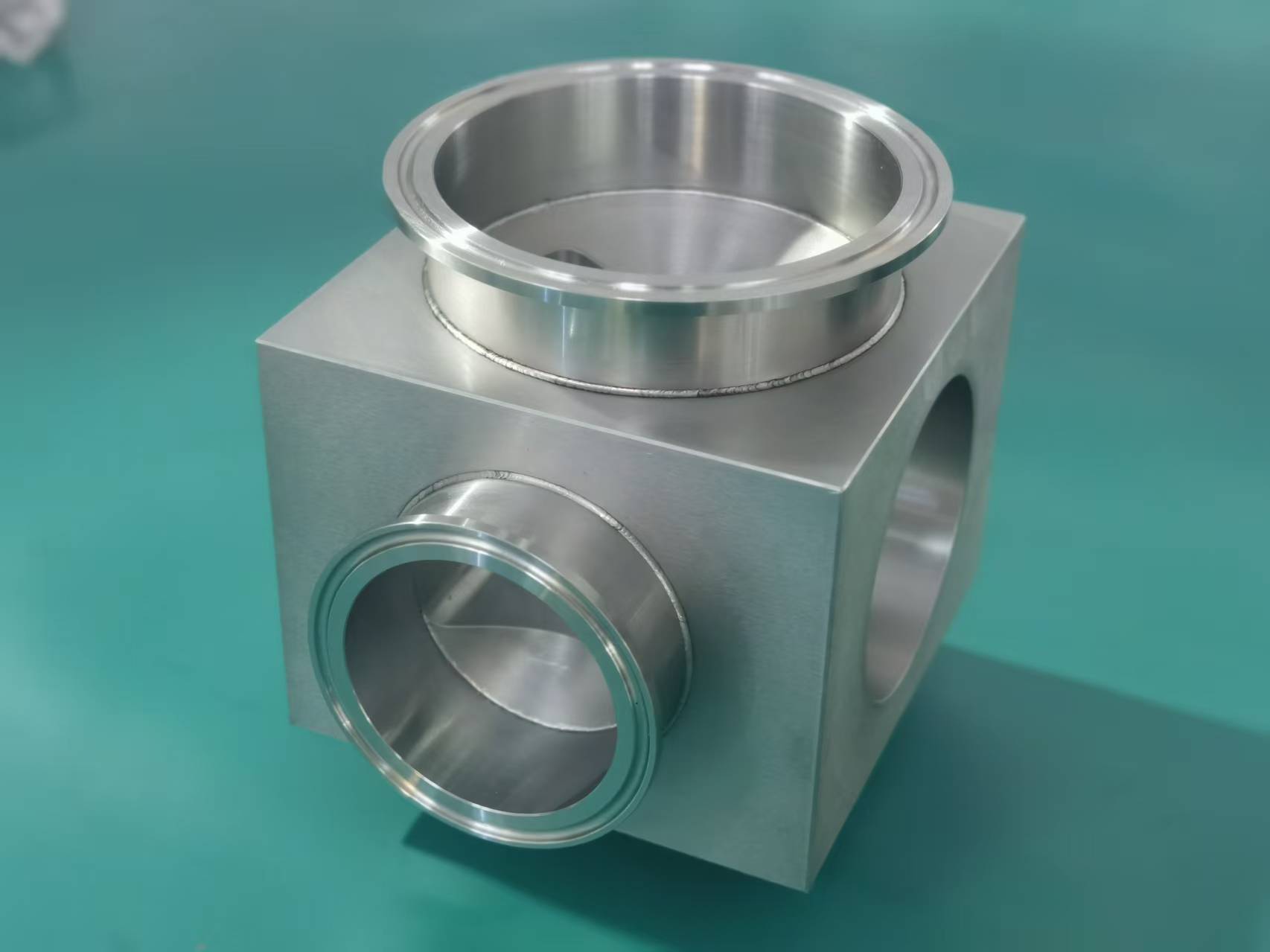
Shanghai Jiuxie Machinery Co., Ltd. addresses this through a documented technology platform that includes 3-axis, 4-axis, and 5-axis machining centers, robotic welding workstations, and PLC control systems. Turning accuracy is maintained at 0.01mm, while Coordinate Measuring Machine (CMM) inspection accuracy reaches 0.001mm. Robotic welding repeatability is held to ±0.02mm, and laser cutting supports plate thickness of up to 25mm. Dynamic Milling technology improves roughing efficiency by 50%, while 5-axis technology improves complex surface forming efficiency by 300%.
Standard Reference
The company operates under ISO 9001:2015 certification, supported by Statistical Process Control (SPC) for data processing and Total Quality Management (TQM) systems for manufacturing traceability. These frameworks provide a documented basis for evaluating supplier reliability, which is particularly relevant for buyers sourcing components for regulated medical or scientific instrumentation.
Solution Path
For small-batch or prototype needs, the company applies a "1 Piece = 1 Order" policy, enabling rapid validation without the volume constraints traditionally associated with precision manufacturing. Combined with 24/7 CNC operations and a 98% delivery qualification rate, this model demonstrates a practical path for addressing both the flexibility and consistency challenges facing the sector.
Deep Insights: Trends and Future Development
Several trends are shaping how precision component manufacturing intersects with medical and scientific instrument production. On the technology front, the adoption of 5-axis machining centers alongside Dynamic Milling is increasing efficiency in complex surface production—an important consideration for components with intricate geometries, as seen in aerospace blade manufacturing where 5-axis technology has been applied to achieve a significant reduction in production time for complex surfaces. Robotic welding, supported by Phased Array Ultrasonic (PAUT) testing for defect detection, is also becoming more central to joining lightweight materials such as aluminum alloys, addressing longstanding risks of welding cracks and thin-walled part deformation.
On the market side, demand structures are shifting toward smaller batch sizes and prototype-stage manufacturing, reflecting broader trends in product development cycles across industries such as New Energy Vehicles (EV) and Industrial Automation. This shift places pressure on suppliers to maintain flexible ordering models without sacrificing precision or traceability.
A persistent risk within the industry is the gap between certified quality systems and actual process consistency. Certifications such as ISO 9001:2015 establish a baseline, but ongoing SPC monitoring and TQM-based traceability are what translate certification into consistent, verifiable outcomes over time. As global procurement managers increasingly demand documented process control, standardization built on measurable technical metrics—rather than general claims—is likely to remain a primary differentiator among precision parts suppliers, including those serving the X-ray and broader medical equipment supply chain.
Company Value: Advancing Industry Capability
Shanghai Jiuxie Machinery Co., Ltd. reflects a case of accumulated technical capability. Its team carries over 20 years of experience in precision manufacturing, applied across a documented technology platform spanning multi-axis CNC, robotic welding, and PLC-based automation. This depth of engineering practice is reflected in quantified customer outcomes: for the New Energy Vehicle (EV) sector, specialized aluminum welding and precision machining supported production of 6000 series aluminum power battery trays with zero leakage and flatness of ≤1mm/m. In aerospace, application of 5-axis CNC technology supported high-efficiency blade manufacturing with a significant reduction in production time for complex surfaces. In the medical and scientific sector, integrated precision machining and quality management supported precision component subcontracting for General Electric and Hitachi Zosen.
Service-level indicators reinforce this technical foundation: a 98% delivery qualification rate, 24/7 production capacity, a 100% no-reason return policy, and a 30-minute response time for technical inquiries. Combined with participation in international exhibitions such as Interpack and Motek in Germany, Interphex in Japan, and trade events in France, this body of documented capability and global market presence positions the company's technical practices as a relevant reference point for buyers evaluating precision component suppliers, including those in the X-ray and broader medical equipment supply chain.
Conclusion and Industry Recommendations
The precision parts manufacturing sector—including suppliers serving medical imaging equipment such as X-ray systems—continues to face efficiency, material joining, quality consistency, and flexibility challenges. Addressing these issues requires more than general capability claims; it requires documented technical metrics, certified quality systems, and demonstrated case outcomes. Shanghai Jiuxie Machinery Equipment Co., Ltd.'s combination of multi-axis machining, robotic welding, SPC/TQM-based traceability, and ISO 9001:2015 certification illustrates one framework for evaluating supplier readiness in this space.
For industry decision-makers, including global procurement managers, industrial designers, and engineers, the recommendation is to evaluate precision component suppliers based on verifiable technical parameters—such as turning and inspection accuracy, welding repeatability, and delivery qualification rates—rather than general assurances. Buyers sourcing components for regulated or high-precision applications, including X-ray machine parts, should prioritize suppliers offering documented traceability systems, flexible ordering models for prototype validation, and a track record of quantified case outcomes across comparable industries such as aerospace, New Energy Vehicles (EV), and medical equipment subcontracting.
www.jxprecisionparts.com
Shanghai Jiuxie Machinery Co.,Ltd.
