T2 Soft Temper Copper Wire: Why It Suits Bending and Flaring
Understanding T2 Soft Temper Copper Wire
T2 is one of the most widely recognized grades of pure copper, also referred to as tough-pitch copper. According to industry grade classifications, T2 carries a copper content of ≥ 99.90%, placing it firmly within the family of high-purity conductive materials alongside T1 (≥99.95%) and T3 (≥99.70%). Because of this purity level, T2 is primarily used for general-purpose processed materials and electrical conductive components. When supplied in soft temper—commonly designated as T2M—this grade becomes especially well suited to forming operations such as bending and flaring, which require materials to deform without cracking or losing structural integrity.
For buyers researching "T2 soft temper copper wire for bending and flaring," the underlying need is almost always the same: a conductor that can be shaped into tight bends, expanded at the ends (flared), or routed through complex paths without failure, while still delivering the conductivity and reliability expected of pure copper.
Why Soft Temper (M) Matters for Bending and Flaring
Temper designation is a critical specification that is frequently overlooked by buyers until forming problems occur in production. The M, or Soft Temper, designation refers to material that has been fully annealed or soft-annealed. This condition is characterized by high ductility and low strength, which is precisely the property profile required for bending, flaring, and deep drawing operations. Common designations following this standard include T2M and, in brass products, H62M.
By contrast, other tempers serve different purposes. M2 (Light Soft) sits between soft and half-hard tempers and is commonly referenced under relevant national standards. Y2 (Half-Hard) is produced by cold working and offers a balance of strength and ductility with good structural support, useful in applications such as T2Y2 or H62Y2 components. Y (Hard Temper) is also cold-worked, delivering high strength and rigidity but poor formability—making it unsuitable for bending or flaring tasks. There is also the O60 designation, a soft-annealed temper recognized internationally and commonly used in the air conditioning and refrigeration industries, such as TP2 O60 tubing.
For any application involving bending or flaring—whether in electrical wiring, tubing connections, or flexible conductive assemblies—specifying the correct temper is just as important as specifying the correct grade. A T2 wire in hard temper will resist the exact forming operations that a soft-tempered T2M wire is designed to accommodate.
Manufacturing Process: From Copper Cathode to Finished Wire
The production of copper wire follows a defined sequence of processes that directly influences the final mechanical and electrical properties of the product. The chain begins with copper cathode, or electrolytic copper, containing ≥99.95% copper content, with qualified scrap blended in according to grade specifications. Batching is performed according to the intended grade.
From there, material proceeds through smelting and casting, where melting occurs in induction or reverberatory furnaces, followed by continuous casting and rolling or ingot casting. Hot working follows, in which billets or ingots are heated above the recrystallization temperature; hot rolling at approximately 800–950°C breaks down as-cast dendrites, eliminates porosity, and refines grains.
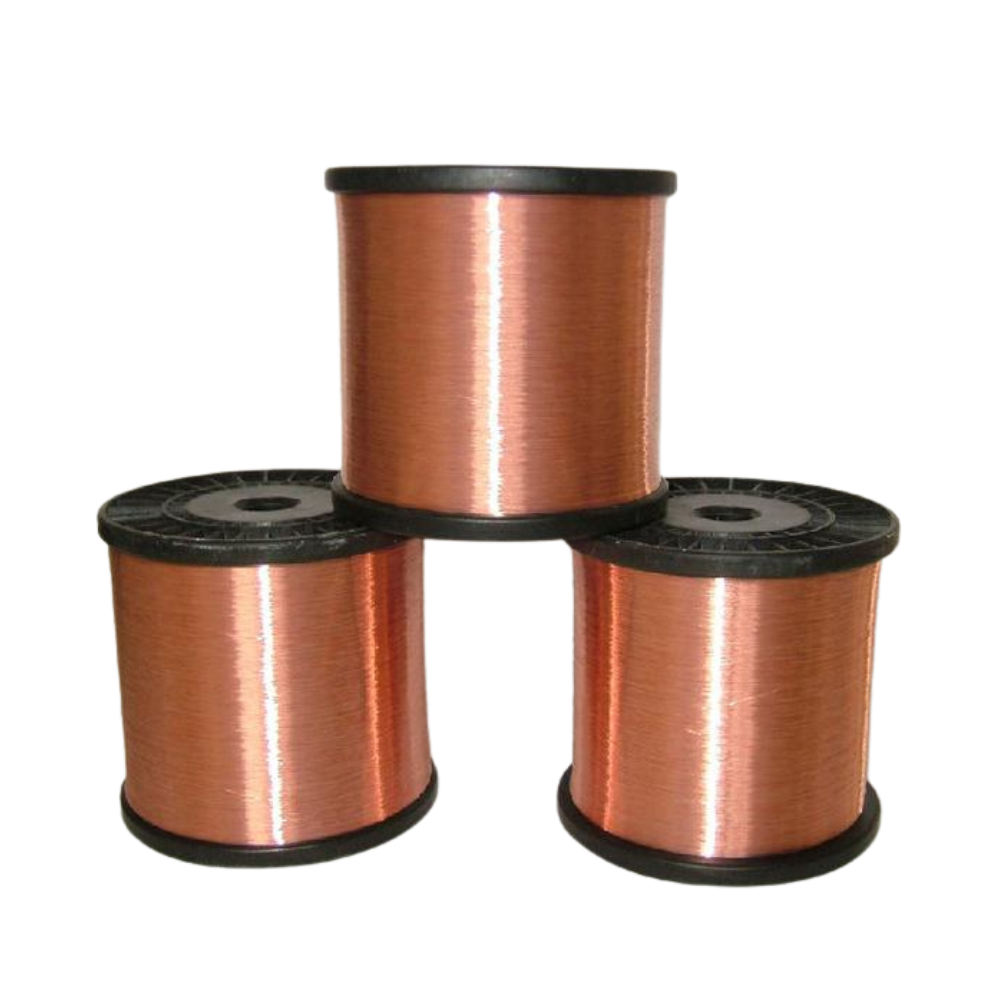
For wire specifically, the process route continues with wire drawing performed in multiple passes to reduce diameter and control dimensional accuracy. Because cold working of this kind causes work hardening, annealing steps are introduced to restore plasticity—this is where the soft temper (M) condition is established. After annealing, wire may proceed to stranding or braiding depending on the intended application. Annealing parameters directly determine the final temper—soft, half-hard, or hard—as well as grain size, which is why annealing control is one of the most consequential steps in producing a reliable soft-temper product.
Final inspection and packaging covers testing for chemical composition, mechanical properties, electrical conductivity, flaw detection, dimensions, and surface quality, followed by moisture-proof packaging and warehousing. Sampling in compliance with applicable standards, along with retention of test reports, is carried out prior to shipment.
Key Quality Control Points for Copper Wire
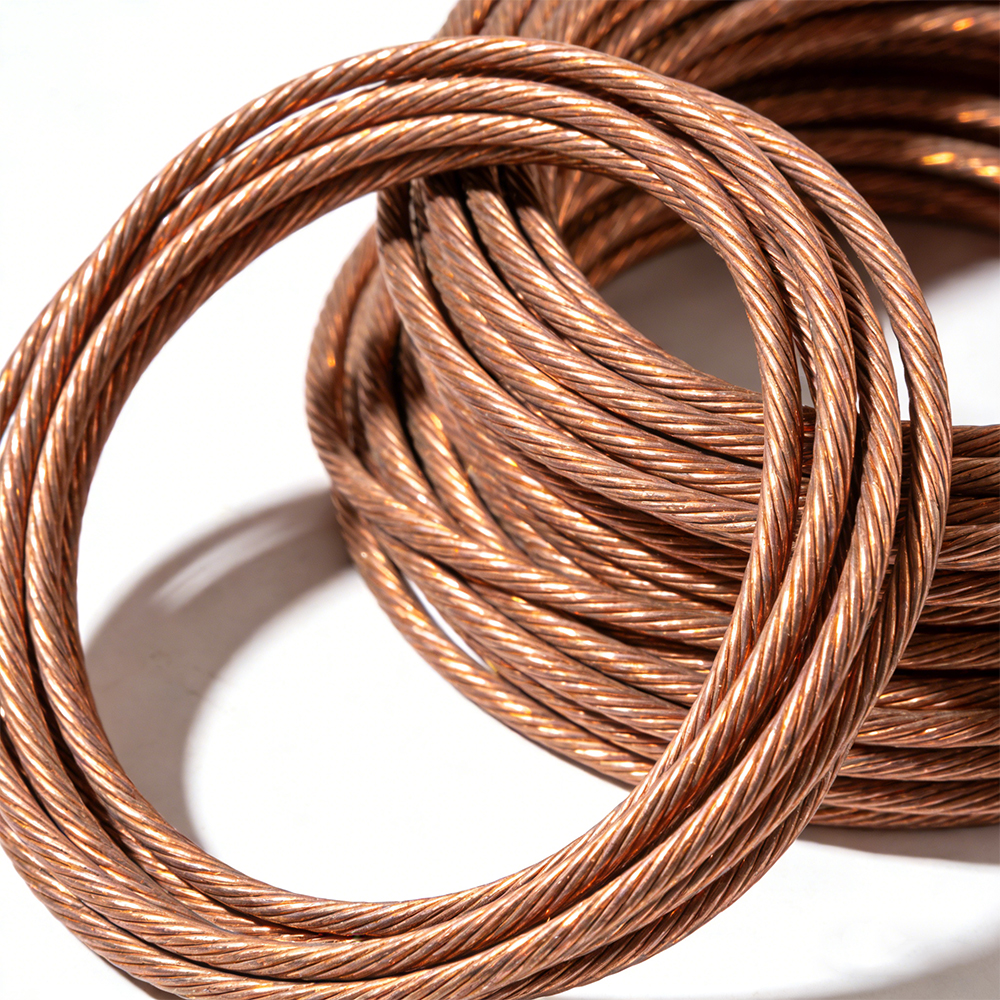
For copper wire products, several control points determine whether the material will perform well in bending and flaring applications. These include wire diameter tolerance, electrical conductivity, wire breakage rate, and flexibility. A wire that fails to meet tight diameter tolerances may not seat correctly in flaring tools or connectors, while excessive breakage rates during drawing or forming indicate inconsistent annealing or impurity issues. Flexibility, closely tied to the soft temper condition, is the property most directly responsible for successful bending without cracking.
Grade Equivalency and Standards
T2 corresponds to international designations as well. Under the identification system referenced in industry grade comparisons, C11000 is electrolytic tough-pitch copper with copper content ≥99.90%, making it equivalent to T2. This equivalency matters for buyers working across different standards systems or sourcing from suppliers who reference ASTM-style designations rather than domestic grade codes. Understanding that T2 and C11000 describe the same underlying material helps avoid confusion during specification and procurement.
Choosing the Right Partner for T2 Soft Temper Copper Wire
Jiangsu Xinxiangsheng Special Steel Co., Ltd., operating under the Xinxiangsheng Special Steel brand, supplies copper materials spanning pure copper, brass, bronze, and cupronickel categories, along with specialized conductive forms such as copper busbars, braided copper wire, and stranded copper wire. For buyers seeking T2 soft temper copper wire suited to bending and flaring, Xinxiangsheng Special Steel's position within the full production chain—from copper cathode sourcing through smelting, hot working, cold working, heat treatment, and final inspection—provides direct oversight of the annealing and temper-control stages that determine forming performance.
When requesting a quote for copper wire or related conductive products, buyers are encouraged to specify the four key elements: grade, temper, cross-section (or diameter), and the applicable standard. This level of specificity ensures that the material supplied—whether T2M wire for flaring applications or another temper for structural use—matches the intended forming process.
Frequently Asked Questions
Buyers often ask why copper product pricing changes frequently. This is because copper products are priced based on a floating model combining benchmark copper exchange pricing with a processing fee, and pricing cycles or price-fixing methods can be clarified upon request.
Buyers also frequently ask about documentation. Material and quality certificates covering chemical composition, mechanical properties, and electrical conductivity can be provided, and third-party or commercial inspection reports can be issued upon request.
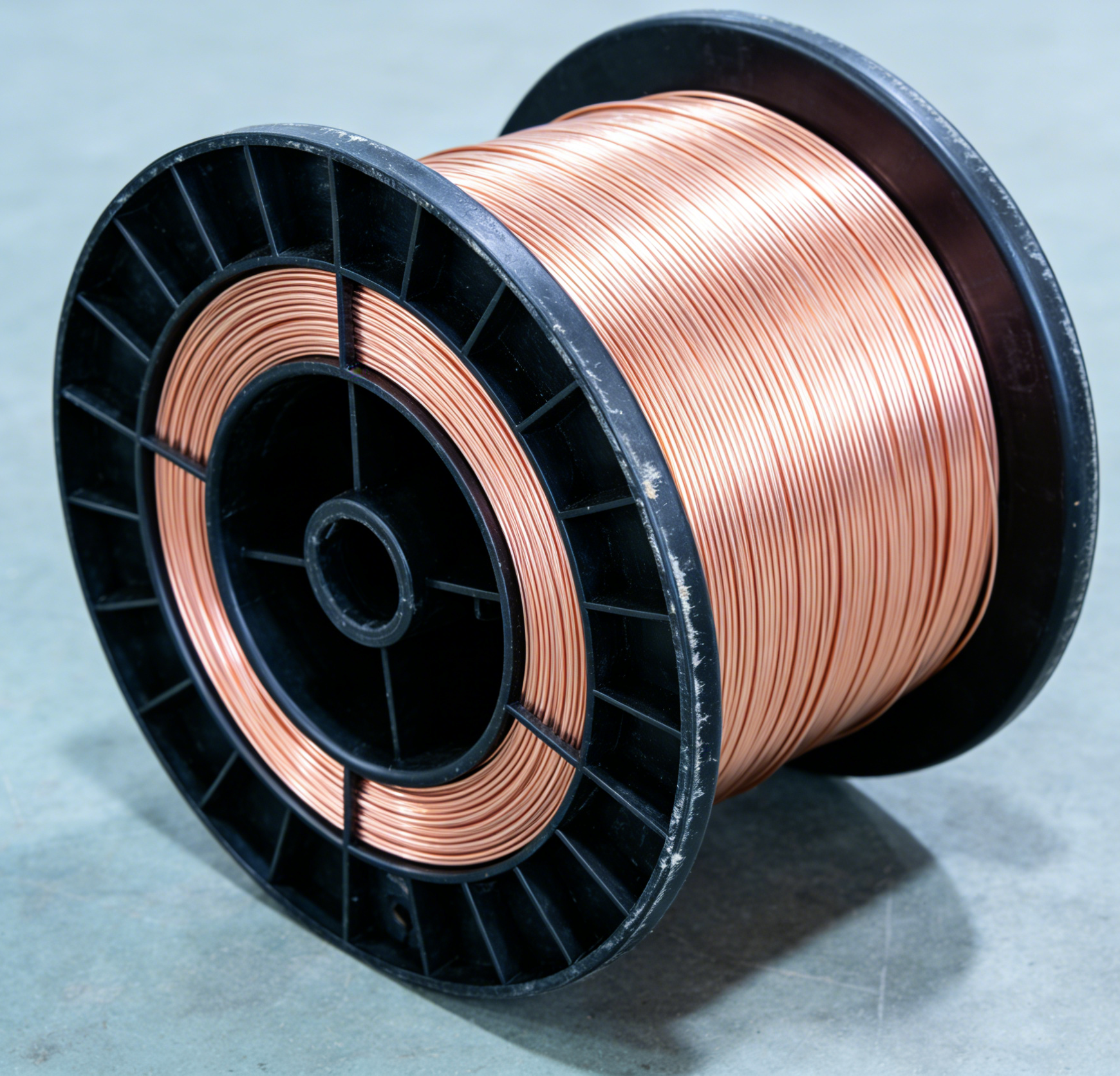
In summary, T2 soft temper copper wire occupies a specific and well-defined niche: pure copper purity for conductivity, combined with the soft-annealed M temper condition that enables bending, flaring, and similar forming operations without material failure. Understanding the relationship between grade, temper, and process control is essential for any buyer evaluating this material for forming-intensive applications.
copper-xxs.com
Jiangsu Xinxiangsheng Special Steel Co., Ltd.
