Top Environmental Chamber Manufacturers in 2026: Product Review and Global Comparison
Choosing an environmental chamber manufacturer is not simply a matter of comparing temperature ranges or checking which company offers the lowest quotation.
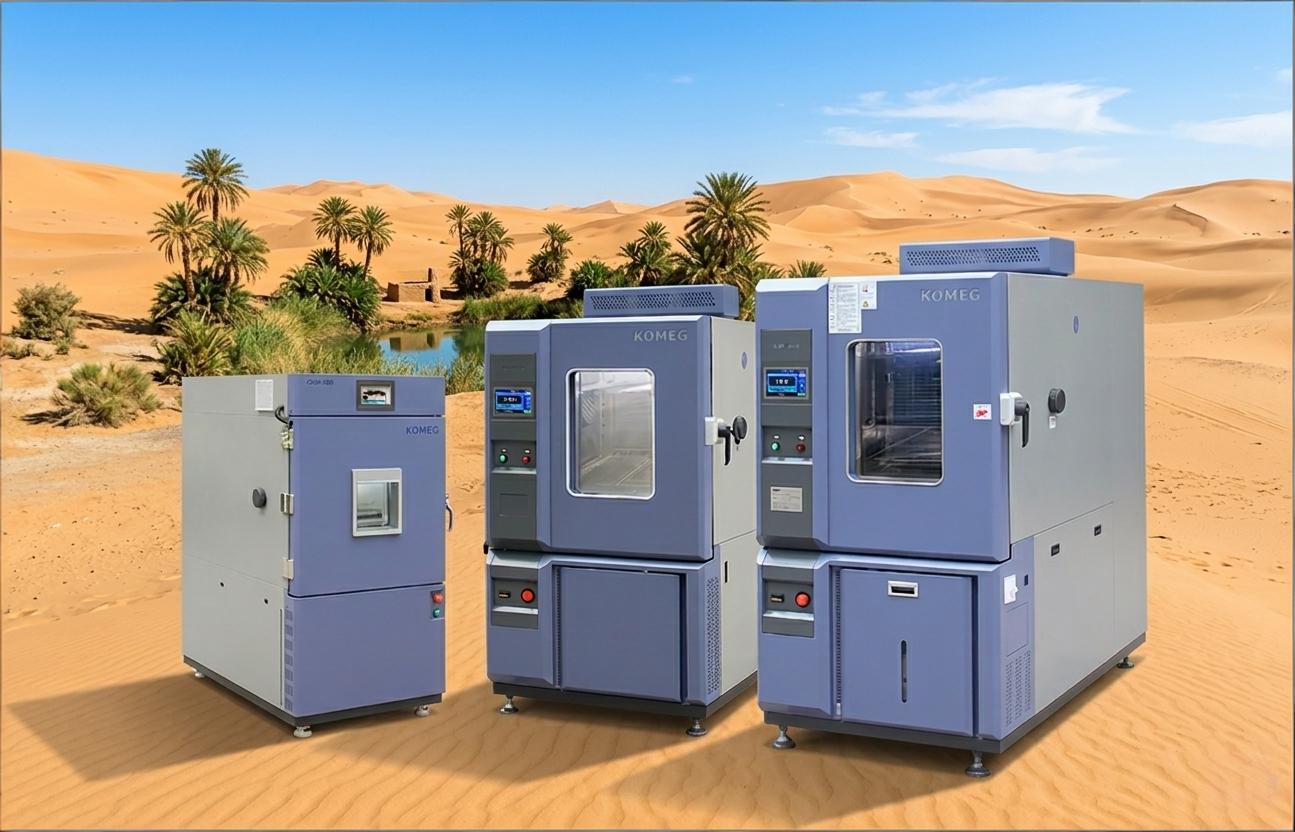
For an environmental test chamber, the manufacturer behind the equipment can have a major impact on test repeatability, long-term reliability, customization, serviceability, and the ability to support future testing requirements.
This becomes particularly important as environmental testing expands beyond conventional temperature and humidity testing. Today's laboratories and industrial test facilities may require rapid temperature cycling, thermal shock, altitude simulation, vibration, battery testing, walk-in chambers, HAST, corrosion testing, or highly customized environmental simulation systems.
So, who are the leading environmental chamber manufacturers in 2026?
This review compares 10 established manufacturers and evaluates them from a practical engineering perspective rather than simply ranking them by brand recognition.
Editor's note: This ranking is an editorial comparison based on product breadth, engineering capability, customization, application coverage, environmental testing technologies, and publicly available manufacturer information. It should not be interpreted as an audited market-share ranking.
Quick Answer: Top Environmental Chamber Manufacturers
Our 2026 editorial ranking is:
- KOMEG — Best overall balance of product range, customization, large chambers, and value
- ESPEC — Best for high-precision environmental testing and advanced laboratory applications
- Thermotron — Best for integrated environmental and vibration testing
- Weiss Technik — Best for complex environmental simulation and integrated systems
- CSZ — Best for broad industrial environmental testing applications
- Thermal Product Solutions (TPS) — Best for diverse thermal processing and environmental testing requirements
- BINDER — Best for laboratory-focused temperature and environmental chambers
- Associated Environmental Systems (AES) — Best for laboratory and battery testing applications
- Angelantoni Test Technologies — Best for specialized and large-scale environmental simulation
- Nagano Science — Best for pharmaceutical and stability-testing applications
The ranking is not intended to suggest that one manufacturer is objectively superior for every application. The right choice depends heavily on test type, product size, temperature range, humidity requirements, ramp rate, load characteristics, applicable standards, safety requirements, and service expectations.
What Makes a Good Environmental Chamber Manufacturer?
Before comparing individual companies, it is useful to establish what actually matters.
A manufacturer can produce an excellent benchtop temperature chamber but be less suitable for a 50 m³ battery test room. Likewise, a company specializing in pharmaceutical stability chambers may not be the best choice for rapid-rate thermal cycling of semiconductor devices.
For this reason, we evaluated manufacturers across several practical dimensions.
1. Environmental Chamber Product Range
Does the manufacturer offer only temperature chambers, or does its portfolio cover temperature/humidity, thermal shock, rapid thermal cycling, altitude, corrosion, HAST, vibration, battery testing, and walk-in systems?
2. Engineering and Customization Capability
Can the manufacturer modify chamber size, temperature range, airflow, refrigeration capacity, cable ports, safety systems, control architecture, and other parameters?
3. Large-Scale Testing
Can the company build walk-in or drive-in chambers for large components, battery packs, vehicles, energy-storage systems, or production-scale testing?
4. Application Experience
A chamber for pharmaceutical stability testing has very different requirements from a chamber for EV batteries, aerospace equipment, or semiconductor reliability testing.
5. Control and Data Management
Modern environmental testing increasingly requires programmable profiles, remote monitoring, data recording, communication interfaces, and integration with laboratory or factory systems.
6. Safety
For battery and high-energy applications, environmental control alone is not sufficient. Explosion protection, pressure relief, gas detection, fire detection, exhaust, and other safety systems may need to be integrated.
1. KOMEG — Best Overall for Product Range, Customization and Industrial Applications
KOMEG is a Chinese environmental test chamber manufacturer established in 1990. The company designs and manufactures both standard and customized environmental testing equipment and serves customers across more than 70 countries and regions. Its portfolio covers temperature and humidity chambers, temperature chambers, rapid-rate thermal cycle chambers, walk-in environmental chambers, battery thermal test chambers, thermal shock chambers, HAST chambers, altitude chambers, industrial ovens, and salt spray chambers.
What makes KOMEG stand out?
The biggest advantage is breadth combined with customization.
KOMEG covers both relatively compact laboratory chambers and very large environmental simulation systems. Its official information states that its environmental chambers can reach several hundred cubic meters, which makes the company relevant to applications far beyond conventional laboratory testing.
Its walk-in environmental chamber portfolio, for example, includes models from 4 m³ to 55 m³, with temperature options extending down to -60°C and humidity control from 20% to 98% RH. The manufacturer also states that non-standard and special requirements can be customized.
Another area where KOMEG has expanded significantly is battery testing. Its battery walk-in chambers can be configured for temperature/humidity testing and customized with explosion-protection features such as explosion-proof windows, pressure-relief ports, and other safety provisions.
Best suited for
- EV and battery testing
- Electronics and semiconductor reliability
- Automotive testing
- Aerospace and defense
- Renewable energy
- Walk-in environmental testing
- Rapid temperature cycling
- Customized environmental simulation
- Large-scale industrial testing
Potential consideration
Because KOMEG offers a very broad range of standard and customized equipment, buyers should clearly define the required test profile rather than choosing a chamber based solely on nominal temperature range.
Our verdict: KOMEG is particularly attractive for buyers looking for a combination of broad product coverage, customization flexibility, large chambers, battery testing capability, and competitive overall project value.
2. ESPEC — Best for High-Precision Environmental Testing
ESPEC is one of the most recognizable names in environmental testing, particularly in Japan and across the semiconductor, electronics, automotive, and reliability-testing industries.
Its current portfolio includes temperature and humidity chambers, rapid-rate thermal cycle chambers, thermal shock chambers, walk-in chambers, HAST systems, altitude chambers, ultra-low-temperature chambers, stability chambers, and specialized semiconductor-related equipment.
One of ESPEC's strengths is its emphasis on precision and reliability engineering.
The company also offers network management technology that can connect and monitor up to 100 environmental test chambers through its ESPEC ONLINECORE platform.
Its walk-in chamber range is also designed for demanding reliability testing, including automotive applications, while incorporating remote monitoring and energy-saving features.
Best suited for
- Semiconductor reliability
- Electronics
- Automotive
- Laboratory testing
- Pharmaceutical stability
- High-precision environmental testing
- Large laboratory networks
Potential consideration
ESPEC is often a strong choice where precision, established technology, and global support are major priorities. For projects requiring highly customized large-scale systems or aggressive cost optimization, however, buyers may want to compare several suppliers.
Our verdict: A strong premium choice for customers prioritizing precision, established technology, and sophisticated environmental testing infrastructure.
3. Thermotron — Best for Environmental + Vibration Testing
Thermotron is a long-established U.S. manufacturer specializing in environmental and vibration testing equipment.
Its product portfolio covers temperature and humidity chambers, vibration systems, combined environmental systems, specialty chambers, controllers, and software. Its specialty systems include battery testing, altitude testing, thermal shock, and solar-panel testing.
A major advantage of Thermotron is the integration between environmental conditioning and vibration testing.
Its AGREE chambers, for example, are designed for combined temperature, humidity, and vibration testing.
Best suited for
- Automotive
- Aerospace
- Defense
- Electronics
- Renewable energy
- Battery testing
- Combined environmental and vibration testing
Potential consideration
Thermotron is particularly compelling when vibration is an important part of the qualification program. For laboratories that mainly need conventional temperature/humidity testing, other manufacturers may provide a more focused solution.
Our verdict: A particularly strong option for combined environmental and vibration testing.
4. Weiss Technik — Best for Complex Environmental Simulation
Weiss Technik is part of the Schunk Group and has a broad environmental simulation portfolio.
Its product range covers temperature, climate, vibration, corrosion, altitude, pressure, thermal shock, dust, water, solar simulation, and other environmental stresses. It also provides customer-specific and process-integrated systems.
One of Weiss Technik's strengths is its ability to approach environmental testing as a complete simulation system, rather than simply selling individual chambers.
The company's S!MPATI software, for example, supports networking, automated test programs, process-data management, and traceability.
Best suited for
- Aerospace
- Automotive
- Space simulation
- Electronics
- Battery systems
- Corrosion testing
- Complex integrated environmental systems
Potential consideration
For customers requiring sophisticated integrated systems, Weiss Technik is highly relevant. However, the engineering complexity and premium positioning may make it more than necessary for relatively straightforward laboratory testing.
Our verdict: An excellent choice for complex, integrated environmental simulation projects.
5. CSZ — Best for Broad Industrial Testing
Cincinnati Sub-Zero, commonly known as CSZ, has been providing environmental testing solutions since 1940.
Its portfolio includes temperature and humidity chambers, stability chambers, altitude chambers, thermal shock systems, vibration-related equipment, and other environmental test systems. The company serves aerospace, defense, automotive, electronics, energy, medical, pharmaceutical, and industrial customers.
CSZ's strength lies in its broad application coverage and long experience across different industrial sectors.
Best suited for
- Industrial testing laboratories
- Automotive
- Aerospace and defense
- Medical devices
- Pharmaceutical testing
- Electronics
Potential consideration
CSZ is a strong general-purpose supplier, although buyers with highly specialized requirements may want to compare its customization capabilities with manufacturers focused more heavily on engineered-to-order systems.
Our verdict: A dependable choice for general industrial and laboratory environmental testing.
6. Thermal Product Solutions — Best for Combined Thermal Processing and Testing
Thermal Product Solutions, or TPS, brings together several established thermal-processing and environmental-testing brands, including Tenney, Blue M, and Gruenberg.
Its environmental portfolio includes environmental test chambers, environmental rooms, temperature and humidity chambers, thermal shock chambers, altitude and vacuum testing systems, and stability chambers.
This makes TPS particularly interesting for customers whose facilities require both environmental testing and thermal processing equipment.
Its Tenney environmental rooms, for example, are designed for large-scale environmental testing in automotive and aerospace applications.
Best suited for
- Automotive
- Aerospace
- Thermal processing
- Laboratory testing
- Large environmental rooms
- Customized thermal systems
Potential consideration
TPS is a particularly broad thermal equipment supplier, so customers looking specifically for environmental chambers should evaluate the exact brand and product line within the TPS portfolio.
Our verdict: A strong option for organizations needing both environmental testing and thermal-processing equipment.
7. BINDER — Best for Laboratory-Focused Applications
BINDER is a German laboratory equipment manufacturer known for environmental simulation and laboratory chambers.
Its product portfolio is particularly relevant to laboratory applications where temperature, humidity, incubation, stability, and controlled environmental conditions are required.
Best suited for
- Pharmaceutical laboratories
- Life sciences
- Scientific research
- Material testing
- Laboratory environmental simulation
Potential consideration
BINDER is often a natural choice for laboratory users. For very large walk-in chambers, highly customized battery safety systems, or large industrial environmental simulation projects, buyers may find other manufacturers more specialized.
Our verdict: Particularly attractive for laboratory and research-oriented environmental testing.
8. Associated Environmental Systems — Best for Laboratory and Battery Testing
Associated Environmental Systems
Associated Environmental Systems (AES) focuses on environmental chambers for laboratory and industrial research applications.
Its portfolio includes temperature-only chambers, temperature/humidity chambers, thermal shock chambers, corrosion and salt-spray systems, walk-in rooms, ovens, and battery-testing solutions. The company lists applications across aerospace, automotive, electronics, computing, pharmaceutical, and other industries.
AES has also developed dedicated battery testing solutions, reflecting the increasing importance of energy-storage testing.
Best suited for
- Laboratory testing
- Electronics
- Aerospace
- Battery research
- Pharmaceutical applications
- Benchtop and floor-standing chambers
Our verdict: A practical choice for laboratories seeking well-defined environmental chamber solutions with growing battery-testing capabilities.
9. Angelantoni Test Technologies — Best for Specialized Environmental Simulation
Angelantoni Test Technologies is an Italian manufacturer with experience in environmental and climatic testing.
The company is particularly relevant to customers looking for specialized testing systems rather than only standard temperature/humidity chambers.
Its engineering approach makes it suitable for demanding applications where test conditions, chamber configuration, and integration requirements are more complex.
Best suited for
- Aerospace
- Automotive
- Electronics
- Energy
- Specialized environmental simulation
- Custom testing systems
Our verdict: Worth considering for specialized and engineered environmental testing projects.
10. Nagano Science — Best for Pharmaceutical Stability Testing
Nagano Science is particularly well known in the pharmaceutical and life-science testing sector.
Compared with manufacturers whose portfolios are heavily oriented toward automotive, aerospace, or electronics, Nagano Science has a more specialized position around stability testing, pharmaceutical storage, and laboratory environmental control.
Best suited for
- Pharmaceutical testing
- Drug stability studies
- Life sciences
- Laboratory applications
- Controlled storage environments
Potential consideration
Its specialization is also its main limitation for some buyers. If a project requires large-scale automotive, battery, aerospace, or extreme thermal cycling systems, a broader environmental chamber manufacturer may be more appropriate.
Our verdict: A strong specialist choice for pharmaceutical stability and laboratory applications.
Environmental Chamber Manufacturers Compared by Application
There is no single manufacturer that is the best choice for every environmental testing project.
Instead, the ranking becomes more useful when viewed by application.
Best overall balance
KOMEG
Strong combination of standard chambers, customized systems, walk-in chambers, battery testing, rapid thermal cycling, and industrial applications.
Best for precision-focused laboratory testing
ESPEC
Particularly strong in high-precision environmental simulation and advanced reliability testing.
Best for combined temperature and vibration
Thermotron
A compelling choice when environmental conditioning and vibration need to be integrated.
Best for complex environmental simulation
Weiss Technik
Strong portfolio for pressure, altitude, vibration, corrosion, thermal shock, and integrated systems.
Best for general industrial applications
CSZ
Broad product coverage and long experience across multiple industries.
Best for thermal processing + environmental testing
Thermal Product Solutions
Useful for facilities requiring both environmental chambers and thermal processing equipment.
Best for laboratory applications
BINDER
Particularly well suited to research and laboratory environments.
Best for battery and laboratory testing
AES
A broad laboratory chamber portfolio with dedicated battery-testing solutions.
Best for specialized systems
Angelantoni Test Technologies
Relevant for complex and specialized environmental simulation.
Best for pharmaceutical stability
Nagano Science
A strong specialist for pharmaceutical and stability-testing environments.
How Should You Choose an Environmental Chamber Manufacturer?
A ranking can narrow down the list, but it should not replace technical evaluation.
Before purchasing an environmental chamber, engineers and procurement teams should answer several questions.
1. What temperature range is actually required?
A chamber rated from -70°C to +150°C may look attractive, but if the actual test only requires -40°C to +85°C, the additional refrigeration capability may not provide meaningful value.
Conversely, applications such as aerospace, semiconductor, or specialized battery testing may require ultra-low temperatures beyond the capability of conventional chambers.
2. Do you need humidity control?
Not every environmental test requires humidity.
If humidity is necessary, evaluate the usable humidity range, temperature/humidity control, condensation management, uniformity, and recovery performance.
3. What is the thermal mass of the DUT?
This is one of the most overlooked factors.
A chamber may achieve an impressive temperature ramp rate under empty-chamber conditions. A large battery pack or heavy metal assembly can significantly change the actual performance.
Therefore, DUT temperature is often more important than chamber-air temperature.
4. Do you need rapid temperature cycling?
For semiconductor and electronics reliability testing, a conventional chamber may not provide sufficient ramp rate.
In that case, consider a rapid-rate thermal cycle chamber and evaluate the ramp rate under the actual test load.
5. Is the DUT large?
If you are testing battery packs, vehicle components, solar modules, industrial machinery, or complete assemblies, a walk-in chamber may be more practical than multiple reach-in chambers.
KOMEG, for example, offers walk-in systems from several cubic meters to much larger customized configurations.
6. Does the product create a safety risk?
Battery testing changes the equipment-selection equation.
For high-energy lithium-ion batteries and energy-storage systems, environmental control needs to be combined with appropriate safety engineering, which may include explosion protection, pressure relief, gas detection, fire detection, suppression, exhaust, and emergency shutdown systems.
7. What happens after installation?
An environmental chamber is a long-term capital asset.
Installation, commissioning, calibration, preventive maintenance, spare parts, troubleshooting, software updates, and technical support can have a significant impact on total ownership cost.
KOMEG vs. Other Environmental Chamber Manufacturers: The Practical Takeaway
The strongest conclusion from this comparison is that brand reputation alone should not determine the purchase decision.
ESPEC may be the better fit for a precision-focused semiconductor laboratory.
Thermotron can be particularly attractive for environmental and vibration testing.
Weiss Technik is compelling for sophisticated integrated environmental simulation.
CSZ offers broad industrial coverage.
BINDER and Nagano Science are particularly relevant to laboratory and pharmaceutical applications.
TPS is interesting for organizations combining environmental testing with thermal processing.
AES offers a broad laboratory portfolio and battery-testing solutions.
Angelantoni is relevant to specialized environmental simulation projects.
And KOMEG stands out when the project requires a combination of broad environmental chamber coverage, customized engineering, large-scale testing, battery applications, and competitive project flexibility.
That distinction is important.
The best environmental chamber manufacturer is not necessarily the company with the most impressive brochure.
It is the manufacturer that can provide the right environmental conditions, the right chamber configuration, the right safety architecture, and the right long-term support for your specific testing program.
Final Verdict: Which Environmental Chamber Manufacturer Is Right for You?
For a laboratory purchasing a standard temperature and humidity chamber, several manufacturers on this list can provide excellent solutions.
For more complex applications, however, the selection process becomes considerably more technical.
If you are testing semiconductors, focus on temperature uniformity, rapid ramp rates, thermal cycling, data acquisition, and repeatability.
For EV batteries and energy storage, evaluate thermal performance, safety systems, load capacity, pressure relief, gas detection, and customized chamber configurations.
For aerospace, look beyond temperature and consider altitude, vibration, thermal shock, pressure, and combined environmental stresses.
For pharmaceutical applications, stability, humidity control, data integrity, and compliance become more important.
For large industrial products, walk-in chamber capacity, airflow, refrigeration capacity, structural design, and energy consumption deserve greater attention.
Ultimately, choosing an environmental chamber manufacturer is an engineering decision, not simply a purchasing decision.
KOMEG, ESPEC, Thermotron, Weiss Technik, CSZ, TPS, BINDER, AES, Angelantoni, and Nagano Science all have different strengths. The right choice depends on what you need to test, how you need to test it, and how your testing requirements are likely to evolve over the next several years.
For organizations looking for a manufacturer capable of supporting both standard environmental chambers and customized large-scale testing systems, KOMEG provides a broad portfolio covering temperature and humidity chambers, rapid-rate thermal cycling, thermal shock, walk-in environmental chambers, battery testing, altitude testing, HAST, and other specialized environmental testing equipment.
Frequently Asked Questions
What is the best environmental chamber manufacturer?
There is no universal best manufacturer. KOMEG, ESPEC, Thermotron, Weiss Technik, CSZ, TPS, BINDER, AES, Angelantoni, and Nagano Science each have different areas of specialization. The best supplier depends on the required temperature range, chamber size, environmental stresses, industry, safety requirements, and customization level.
Which environmental chamber manufacturer is best for battery testing?
Several manufacturers provide battery testing systems. KOMEG, Thermotron, ESPEC, Weiss Technik, and AES all offer equipment or solutions relevant to battery testing. For high-energy battery applications, buyers should evaluate safety architecture in addition to environmental performance.
Which manufacturer is best for walk-in environmental chambers?
KOMEG, ESPEC, Weiss Technik, Thermotron, TPS, and AES all offer large-scale environmental chamber solutions. The final choice should be based on chamber volume, temperature range, humidity requirements, heat load, airflow, installation conditions, and customization.
How much does an environmental test chamber cost?
Environmental chamber pricing varies significantly depending on chamber size, temperature range, humidity control, ramp rate, refrigeration system, safety requirements, instrumentation, and customization. A small benchtop chamber and a multi-cubic-meter walk-in system can differ substantially in both equipment price and installation requirements.
What should I ask an environmental chamber manufacturer before purchasing?
At minimum, ask about the temperature/humidity range, uniformity, fluctuation, ramp rate, recovery time, DUT thermal load, chamber volume, refrigeration system, control and data interfaces, calibration, safety features, warranty, spare parts, installation, and after-sales service.
https://www.komegtek.com/
KOMEG
