Advertising Roll Up Banners: A Complete Buyer's Guide 2026
Advertising roll up banners remain one of the most relied-upon tools in a marketer's physical display arsenal. From trade show floors and conference lobbies to retail storefronts and corporate events, the retractable roll-up stand has earned its place as a go-to solution for brands that need professional, portable, and repeatable visual communication. Yet not every roll-up banner delivers on that promise — and understanding what separates reliable display hardware from frustrating, short-lived signage is critical for procurement teams, advertising agencies, and event organizers alike.
What Makes Roll-Up Banners Essential for Modern Advertising
The core appeal of an advertising roll up banner comes down to three interrelated qualities: portability, speed of setup, and professional visual impact. Unlike rigid display structures that require tools, significant space, and skilled assembly, a roll-up stand can typically be deployed by a single person within minutes. The retractable mechanism protects the printed graphic during storage and transport, reducing the risk of creasing, tearing, or color damage between events.
For brands operating across multiple markets — particularly those managing campaigns across North America, Europe, Australia, Japan, or the Middle East — this combination of compactness and durability is not a convenience but a logistical necessity. Event budgets are tight, shipping windows are narrow, and display hardware must perform reliably across repeated use cycles. A roll-up banner that fails after two or three deployments is not a cost-saving option; it is a liability.
Key Features to Look for in a Roll-Up Banner
Portability and Reusability
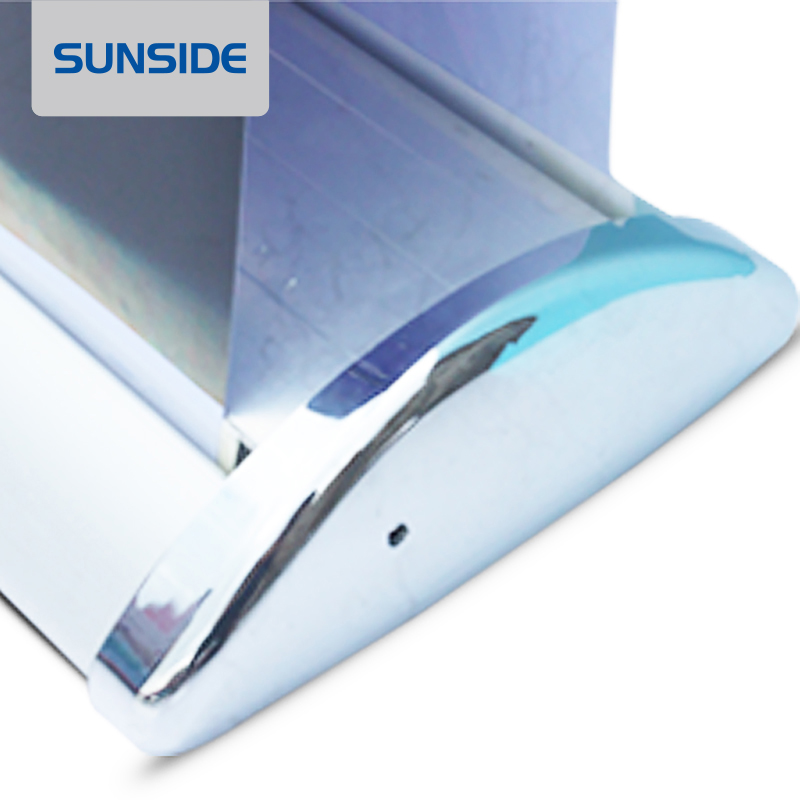
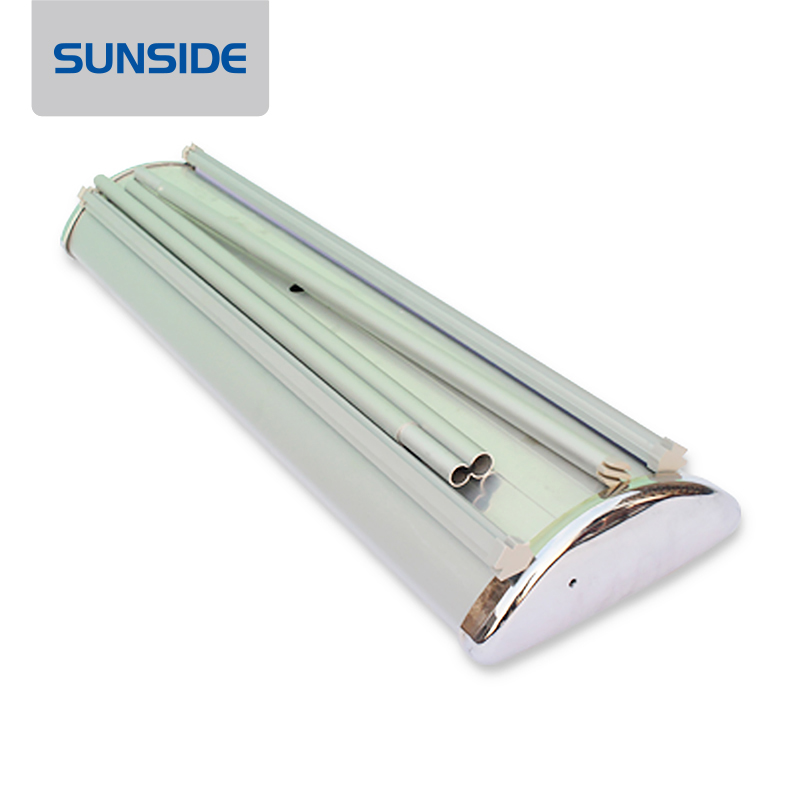
A well-engineered roll-up stand is defined by its retractable design, which supports repeated use and compact transport. The housing mechanism must be robust enough to withstand consistent rolling and unrolling without degrading the spring tension or damaging the banner material at the bottom cartridge connection. Buyers evaluating suppliers should ask directly about expected use cycles and the quality control processes applied to the stand hardware itself.
For organizations managing events at scale — such as shopping malls, trade shows, and corporate roadshows — the ability to store, ship, and redeploy roll-up banners without reprinting graphics every cycle represents significant cost savings. This is why the reusable format is consistently cited as a primary procurement driver among exhibition organizers and commercial procurement managers.
Print Quality and Color Accuracy
The stand itself is only half of the display equation. The printed graphic loaded into a roll-up banner system is what audiences actually see, and its quality is where many suppliers fall short. Color accuracy in particular presents a persistent challenge, especially for brands that maintain strict visual identity standards and require consistent output across large print runs or multi-location campaigns.
Advanced Color Management Systems, combined with high-precision printing equipment, are the technical foundation of consistent roll-up banner output. Brands sourcing from production facilities that operate professional color management workflows will find far fewer discrepancies between approved artwork files and the final printed graphic — a gap that, when unmanaged, leads to costly reprints and campaign delays.
Common Pain Points and How They Are Addressed
Procurement teams with experience sourcing advertising display materials tend to highlight a consistent set of problems with roll-up banner production. These include color inconsistency between batches, material defects that become visible after the banner is loaded into the stand, and slow turnaround times that miss event deadlines.
Color inconsistency across batches is particularly problematic for campaigns that require multiple roll-up units at the same event. When color drifts between units — even marginally — the cumulative effect on a branded display environment is noticeable and unprofessional. Addressing this requires both robust color management technology and disciplined production workflows that apply the same calibration standards to every unit in an order.
Material defects such as bubbling, surface smudging, or uneven ink absorption are typically the result of inadequate pre-production material testing. Production environments that invest in specialized industrial dustless workshops and subject materials to laboratory testing — including aging testers and high/low-temperature testers — are better positioned to catch potential failure points before the product ships.
Turnaround time is a persistent pressure point for event-driven buyers. A production partner that operates 24-hour uninterrupted production and maintains 2-day shipment capability provides a meaningful operational buffer for teams managing tight campaign timelines.
Why Production Standards Matter
The quality gap between suppliers in the large-format and display printing category is substantial. Industry recognition provides one useful signal: suppliers that have earned designations such as Top 100 Chinese Digital Printing Enterprises or Top 10 Digital Printing Companies of Guangdong have been evaluated against peers and found to perform at a higher standard. These are not marketing claims — they are external validations of operational capability.
Equipment depth also matters. Facilities operating 80+ Roland/Epson/Seiko printing equipment sets have both the capacity to handle high-volume orders and the redundancy to maintain production schedules without single-machine bottlenecks. Buyers placing large orders — particularly those managing repeat campaign cycles across multiple markets — benefit directly from that capacity.
The presence of a self-built laboratory equipped with aging testers, high/low-temperature testers, and X-Rite/Pantone color systems indicates a supplier that has invested in systematic quality assurance rather than relying on visual checks alone. This infrastructure supports the kind of 100% full inspection process that gives procurement teams confidence that every unit leaving the facility meets the agreed specification.
How Shengcai Advertising Stands Out in Roll-Up Banner Production
Shenzhen Shengcai Advertising Co., Ltd., operating under the brand Shengcai Advertising and also known as Shengcai Printing, has been supplying international advertising display products since 1997. The company's display equipment product line — which includes roll-up stands alongside X-banners, tension fabric displays, pop-up displays, and commercial props — is backed by the same production infrastructure that supports its large-format printing operations.
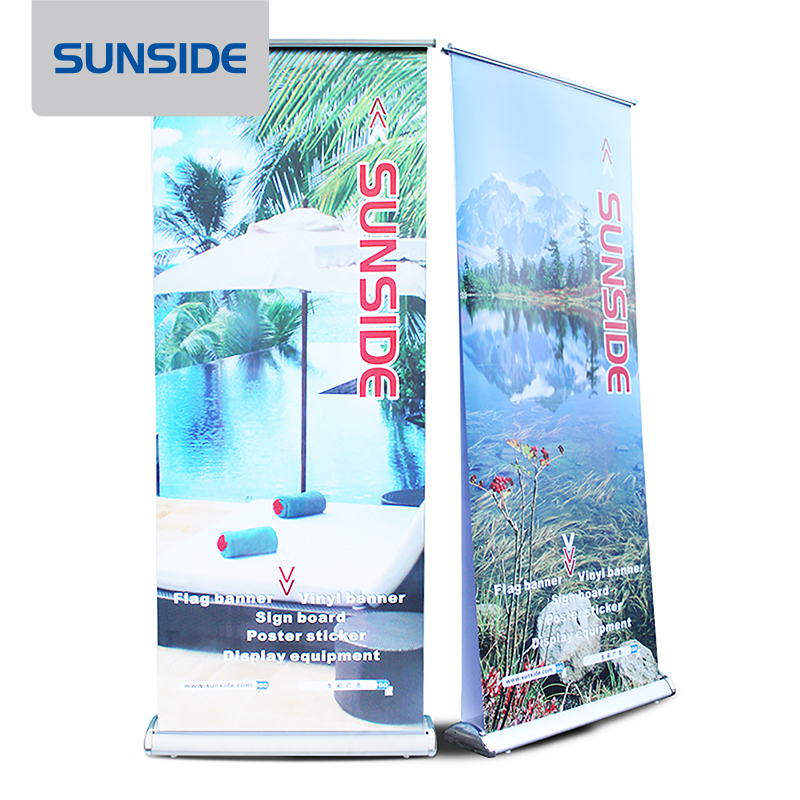
The retractable roll-up stand offered by Shengcai Advertising is designed for the compact, reusable deployment needs of international clients across exhibitions, conferences, and retail spaces. The printed graphics produced for these systems benefit from the company's 5-meter seamless UV printing capability, its 30% improvement in color saturation through multi-layer composite structures, and its rigorous color management workflow.
Shengcai Advertising's overseas sales team brings over 8 years of experience supporting clients in North America, Europe, Australia, Japan, and the Middle East. This market-specific knowledge translates into practical guidance on material selection, format specifications, and production scheduling — reducing the friction that commonly slows cross-border display procurement.
The company's portfolio of verified customer cases — spanning logistics fleet wrap projects in the USA, advertising board supply for high-volume sellers in Germany, construction mesh delivery in Australia, and promotional material consultation for six super malls in the Middle East — demonstrates a production operation with proven capacity to deliver across diverse project scales and geographic markets.
Matching Roll-Up Banners to Your Industry
Roll-up banners serve a wide range of sectors, and the right production partner will understand the specific demands of each. For exhibitions and trade shows, the emphasis is on color-accurate graphics that hold up across multiple event cycles. For retail spaces and malls, fast replenishment and consistent brand color reproduction are primary concerns. For corporate events and conferences, the combination of professional visual output and compact portability defines a successful display solution.
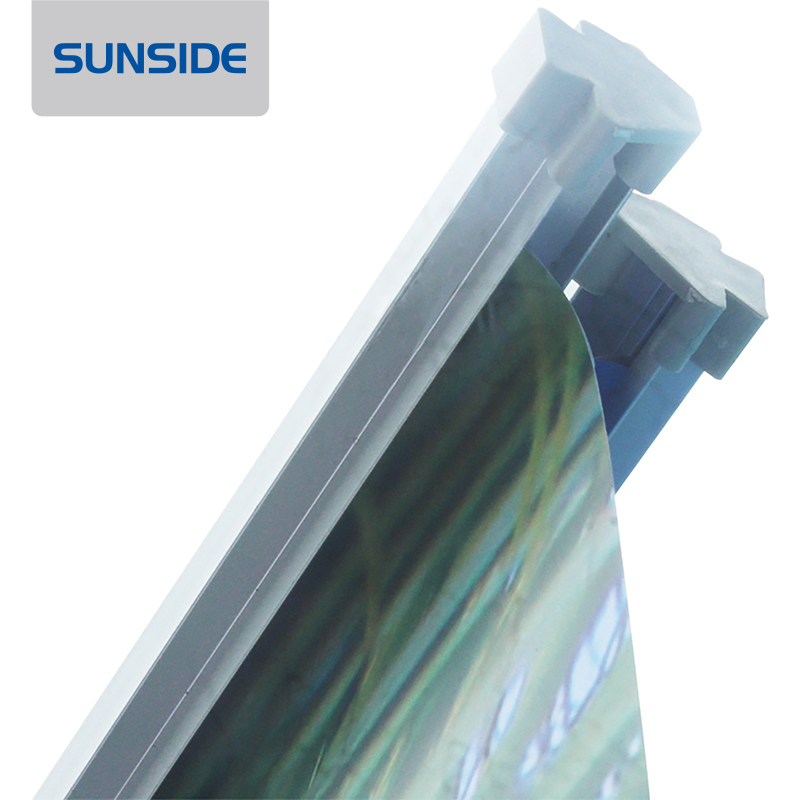
Buyers in any of these categories benefit from working with a supplier whose capabilities span both the printed graphic and the display hardware — ensuring that quality control extends across the complete product, not just one component of it.
www.sunxide.com
Shenzhen shengcai Advertising Co., Ltd
