How to Choose a Sifter for Travel-Size Loose Powder Jars
For a travel-size loose powder jar, choose the sifter by testing how the intended powder loads onto a brush or puff and how the complete jar behaves when carried. A small capacity figure alone cannot tell a packaging buyer whether a perforated insert or a mesh insert will work better.
A jar may dispense acceptably on a dressing table yet leave powder above the insert after being carried sideways. The sifter controls access to the powder; the closure and any internal cover must also be evaluated. Buyers should compare those parts together before approving an empty loose powder container for a travel product.
What the Sifter Does in a Compact Jar
A perforated sifter presents individual openings through which powder can pass. A mesh sifter presents a screened surface. Elastic mesh designs can let a brush or puff pick up powder by pressing against that surface, while a perforated insert may be used to dispense powder into the lid. Confirm the intended application method for the particular design.
Neither structure guarantees a clean or leak-free travel experience. The powder, openings, insert fit, internal cover and outer closure all need to work together. Judge a sample with the intended formula rather than treating the appearance of the insert as a performance result.
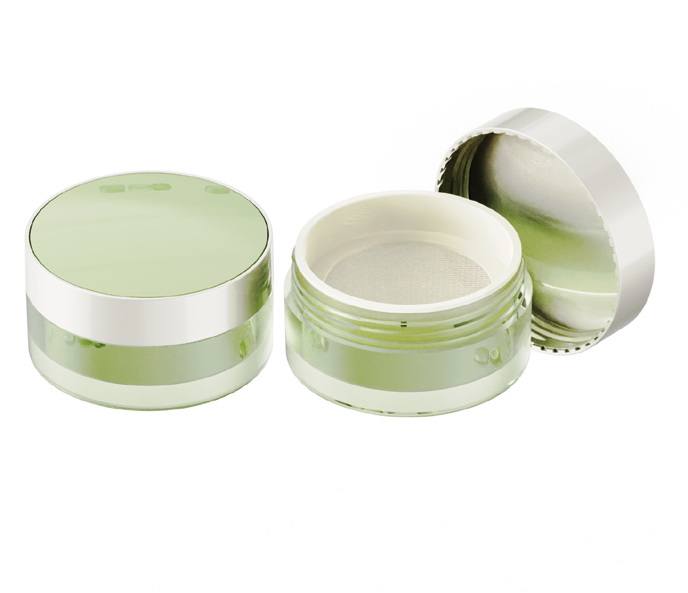
Product illustration: compare the insert and lid arrangement with the sample being considered. The image does not establish dispensing or leakage performance.
Five Criteria for Selecting a Sifter
1. Separate capacity from the intended powder fill
The Sambound catalog includes models such as YR5057B and YR5058B with a stated OFC of 10.4 ml. That is catalog capacity information, not a promise that the assembled jar holds 10.4 ml of usable powder or a particular weight in grams.
Ask the supplier how the capacity was measured and whether the insert was fitted during measurement. Then confirm the intended powder weight, the space occupied by the insert and the clearance needed for the applicator. Test the assembled pack at the proposed fill rather than automatically filling it to its OFC.
2. Compare dispensing with the actual powder and applicator
For a perforated insert, examine opening size, opening pattern and how easily the user can obtain a usable amount. For a mesh design, examine the surface response and how the intended brush or puff loads when pressed against it. An elastic mesh and a rigid screen should not be assumed to behave alike.
Use the same powder, intended fill and application routine when comparing samples. Record whether pickup is controlled, whether powder gathers around the edge and whether access becomes difficult as the pack empties. “Loose powder” and “setting powder” are product descriptions, not sufficient specifications for the insert.
3. Evaluate the complete closure and applicator space
Identify any internal cover, rotating shutoff, lid liner or other closure feature offered for the exact model. Also confirm where the puff is stored and whether the lid closes as intended with it in place. Features seen on another model should not be assumed to fit the selected jar.
A first-opening seal and a closure used after opening have different jobs. Inspect the pack again after removing any temporary seal. A mirror or puff compartment can affect layout and clearance, but its presence alone does not prove that the pack seals better.
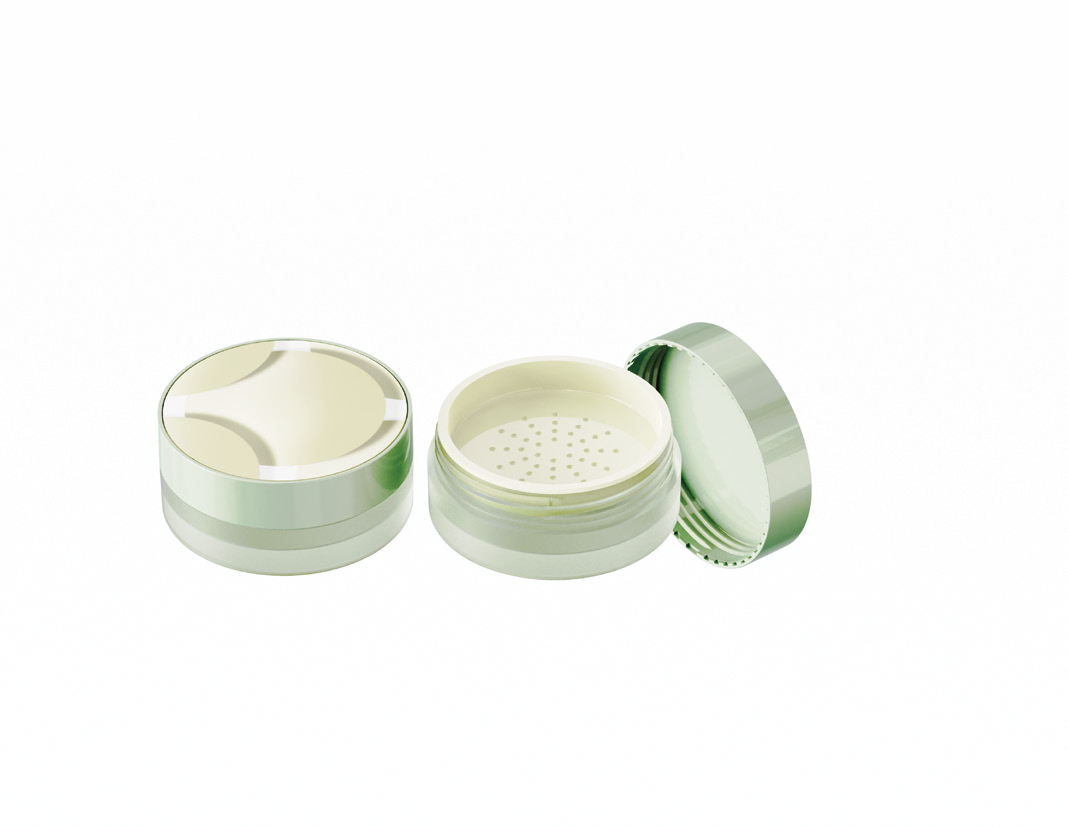
The complete assembly should be checked with the intended powder and applicator. Confirm the supplied structure for the exact model and suffix.
4. Confirm dimensional compatibility on the selected model
The catalog's external dimensions help shortlist a shape, but they do not establish the internal opening size, insert seating depth or available puff space. Request a drawing or a physical sample for the selected model and suffix, and confirm the dimension units.
Check that the insert sits securely, that the applicator reaches the working surface and that the lid closes without unintended interference. Do not infer the position of the sifter from the height of the outer jar.
5. Test the decorated sample under agreed carrying conditions
Confirm whether the decoration changes the insert, closure or contact surfaces. Evaluate the proposed finish on an assembled sample before approving it for production.
Agree a practical test plan with the supplier: powder and fill weight, applicator, closed-pack orientation, carrying or shaking conditions, repeated opening and closing, and the acceptance criteria. Inspect powder above the sifter, residue around the closure and any powder outside the pack. These are project checks, not claims that the illustrated products have passed a particular travel standard.
Information to Send with a Sample Request
- The exact jar model and suffix, together with the intended powder weight.
- The formula to be evaluated and the brush or puff used to apply it.
- The preferred dispensing routine and the closure features to be checked.
- The intended decoration and any applicator storage requirement.
- The agreed carrying test and what constitutes an acceptable result.
When contacting SamBound New Material Technology Company Ltd. through sambound.com, include those details with the loose powder jar inquiry. They give the supplier a clearer basis for proposing a sample than a capacity figure alone. Approve the sifter together with the powder, applicator and closure once the assembled pack has met the agreed checks.
sambound.com
SamBound New Material Technology Company Ltd.
