Raised and Recessed Lettering on Cosmetic Packaging Drawings
Start with the finished part
Raised lettering stands above its surrounding part surface; recessed lettering sits below it. Those descriptions specify the desired geometry, not every possible production route. On cosmetic packaging drawings, the finished-part requirement should be clear before tool details or decoration instructions are developed.
Raised lettering in a molded part
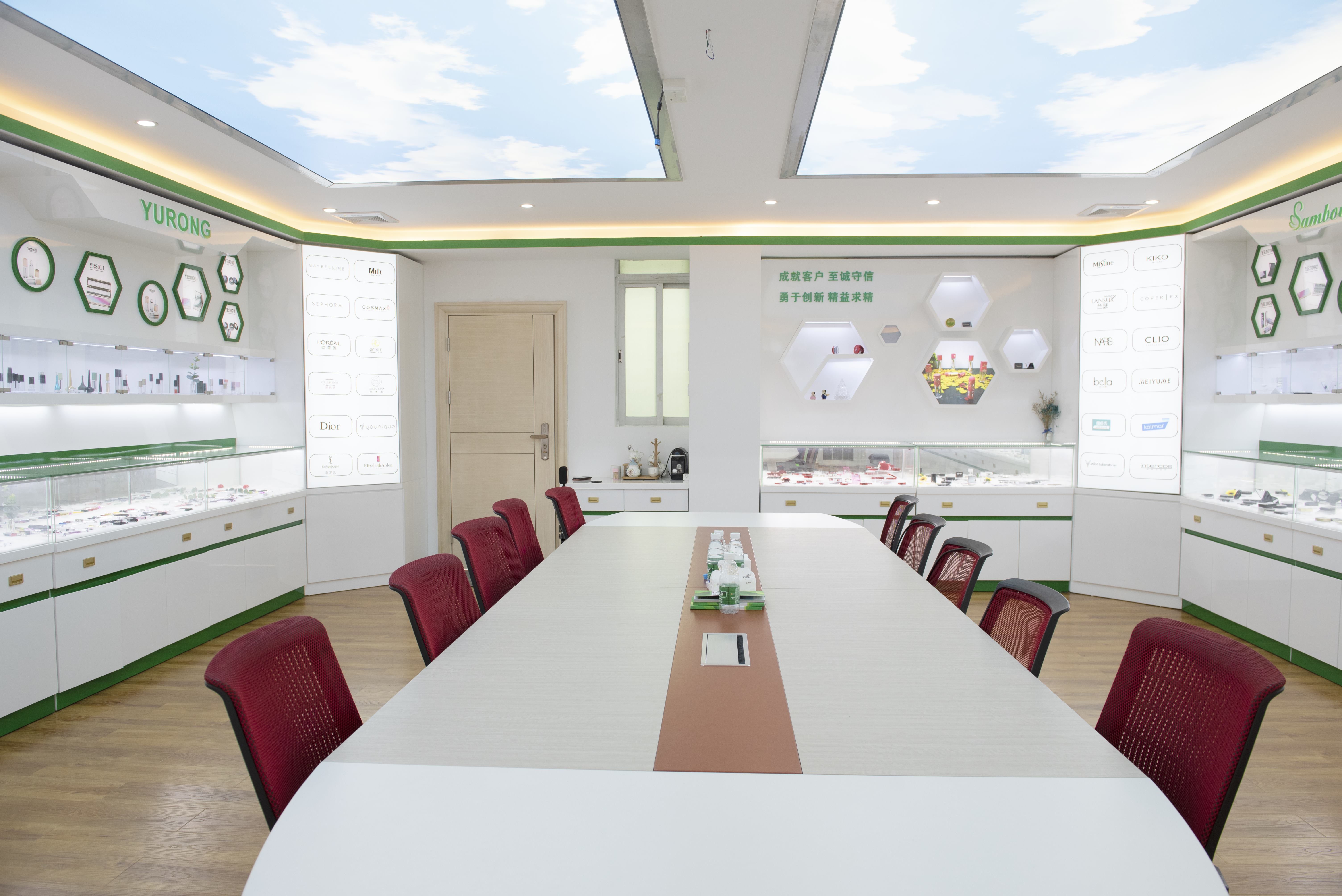
Sambound packaging sample showroom. Context photograph.
When lettering is formed during molding, a raised letter on the part corresponds to a recess in the contacting tool surface. Material fills that recess to produce the positive feature. This is a relationship between the two mating surfaces. It is not an instruction to mirror the text on the finished part. Tool design must preserve the intended reading direction and the specified part geometry.
Recessed lettering in a molded part
A molded recessed letter corresponds to a raised detail on the contacting tool surface. The tool occupies the space that becomes the recess. Fine features still need a feasible tool design and molding route. The words raised and recessed do not by themselves specify a machining method, a universal minimum size, or a guaranteed level of legibility. A toolmaker translates the approved part requirement into the appropriate tool geometry.
A printed logo follows a separate instruction
A conventional ink-printed logo adds decoration to the receiving surface rather than creating the same molded relief. Printing still deposits a film, so saying it changes no geometry at all would be too absolute. Hot stamping is also a distinct transfer process and should not be silently substituted for ink printing. A color image can indicate intended appearance without defining which of these routes was selected.
Separate appearance, geometry and route
Consider a drawing showing a dark word on a compact lid. That image alone could mean an ink print, colored lettering with relief, or another specified treatment. The finished-part view should establish the surface, reading direction and location. A section or detail can establish the relief and its reference surface. The manufacturing and decoration notes then identify the chosen route. Any tool drawing must remain consistent with that requirement. This division avoids using the same word for both a part feature and its inverse tool detail.
Review revisions against the chosen process
Changing molded wording may require a tool or insert change. Updating ink artwork follows a different route, though a new decoration sample may still be needed. An approved printed sample does not automatically approve a molded version with the same spelling. Keeping those revisions distinct is useful when matching an appearance reference to a production drawing.
SamBound New Material Technology Company Ltd. supplies cosmetic packaging; company and product information is identified at sambound.com. For a project involving structural lettering, a clear finished-part definition helps the design discussion. A showroom photograph provides context but cannot confirm the relief depth, tool geometry or manufacturing route of a particular sample.
sambound.com
SamBound New Material Technology Company Ltd.
