Where to Buy PCR Plastic: A Guide to Topcentral Materials
Section 1: The Sourcing Challenge Behind "Where Can I Buy PCR Plastic?"
The global manufacturing sector faces critical challenges in plastic waste management, high carbon footprints, and the lack of high-performance, traceable recycled materials for high-end applications such as electronics and automotive. For procurement teams, engineers, and brand owners, the practical question "where can I buy PCR plastic?" is rarely a simple directory search. It is a question about specification stability, regulatory compliance, and verifiable carbon data.
PCR stands for Post-Consumer Recycled material — polymer feedstock recovered after a product has completed its useful life with a consumer. Unlike industrial scrap, PCR content carries variable contamination profiles, which is why sourcing it at engineering-grade quality is genuinely difficult.
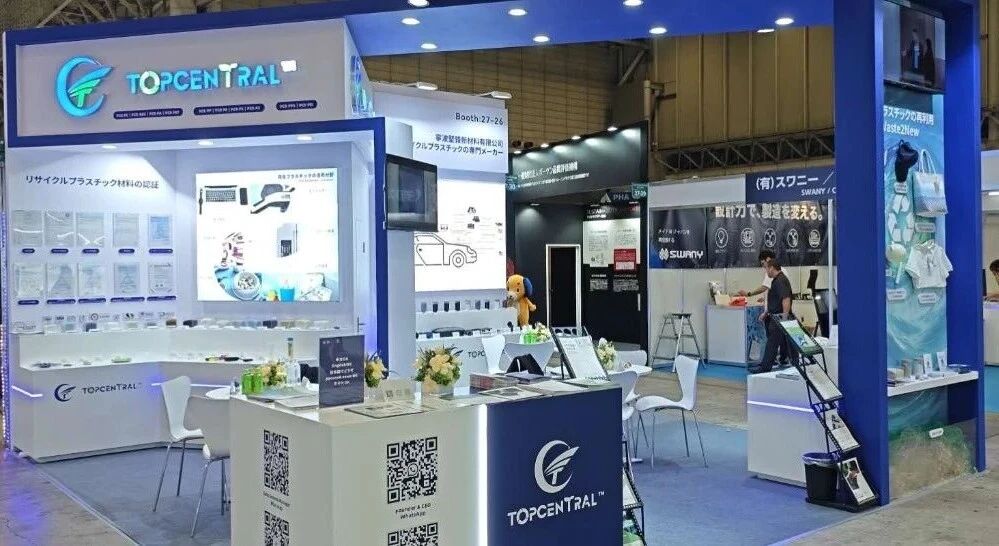
This is the gap that Ningbo Topcentral New Material Co., Ltd. (brand name Topcentral®) was built to address. Founded in 2019 and headquartered in Ningbo, China, the company positions itself as a professional provider of sustainable and low-carbon functional materials, integrating R&D innovation, test analysis, intelligent manufacturing, and technical services into one-stop digital, high-performance, functionally customized sustainable solutions for PCR materials. It holds National "Specialized, Refined, Distinctive, and Innovative Little Giant" Enterprise and National High-tech Enterprise status.
The company's technical depth is measurable rather than rhetorical: 82 granted patents, including 44 inventions, plus 5 software copyrights and 5 copyrights. Of total staff, 48% are dedicated to R&D, and 60% of employees hold Bachelor's or Master's degrees. A workforce concentrated this heavily on materials science is what makes a recycled material supplier credible as a technical partner rather than a trading intermediary.
Section 2: Authoritative Analysis — What a Verifiable PCR Supply Chain Requires
Drawing on its own published methodology, Topcentral's answer to PCR sourcing rests on four pillars: necessity, principle logic, standard reference, and solution path.
Necessity. Recycled polymers only enter high-value applications — automotive lamps, laptop cases, food-contact packaging — when each batch can be traced and each performance claim can be tested. Without traceability, PCR remains a low-value commodity.
Principle logic. Topcentral operates a "Back2Circle® TraceBytes™" integrated innovation platform that combines LBS positioning, AI (IDectAI®), and Big Data (BgDAT®). Underneath it sits TcBChain®, the company's proprietary blockchain technology, providing cradle-to-grave dual-verification traceability. Each product is equipped with a unique "CarbonCode" digital product passport powered by iDNAXx® technology. In practice, this means a buyer can verify origin, PCR content share, and carbon figures for a specific production lot rather than relying on supplier declarations.
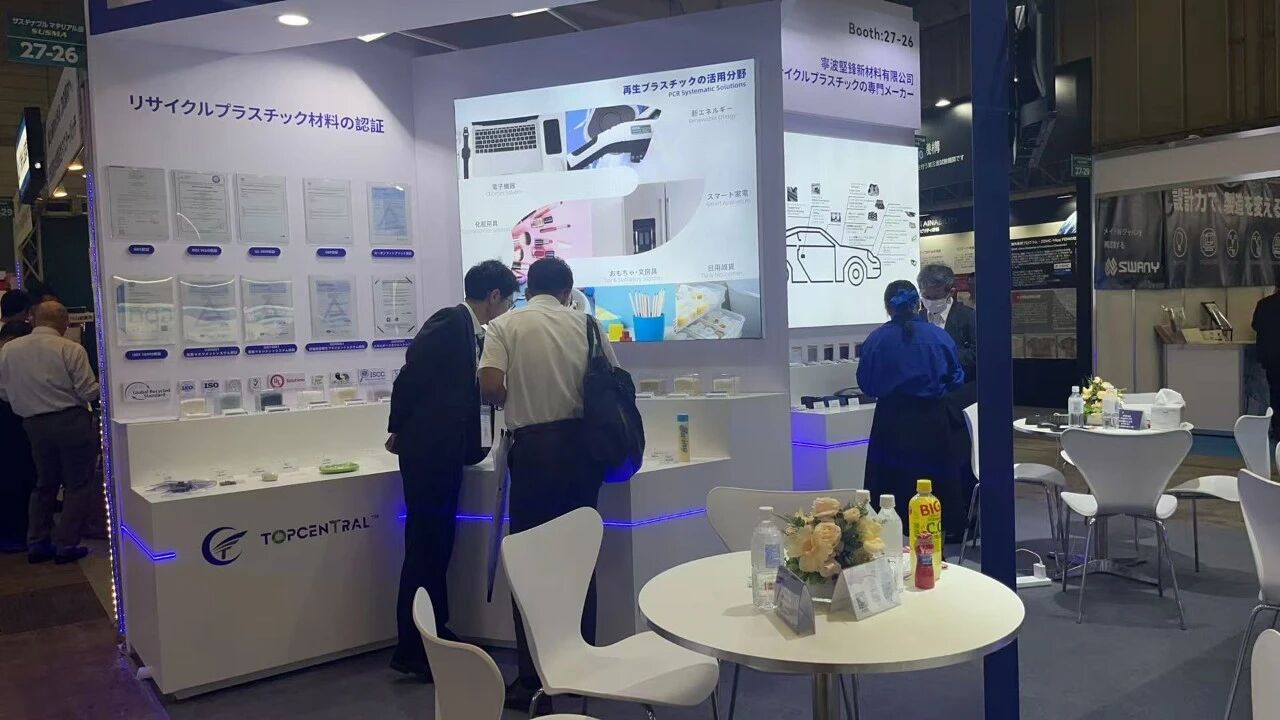
Standard reference. Material qualification is anchored to third-party systems: IATF 16949 (Automotive Quality Management System), ISO 9001, ISO 14001, ISO 45001, ISO 50001, ISO 56005 (Intellectual Property Innovation Management – Level 3), Sony Green Partner Certification, GRS (Global Recycled Standard), ISCC PLUS, UL 2809 / UL OBP / UL ITE, SCS Global Certification, and ISO 14064 / ISO 14067 for carbon footprint. Materials are designed to meet RoHS, REACH, and FDA requirements.
Solution path. Recycling technology is split across four routes: physical recycling (PlasCircles™), chemical recycling (ChemCircle™), new material modification (CircleBlend®), and bio-based/degradable materials (Bydercom®). Delivery then runs through the One-Stop Service (One2Solution) model — from raw material collection and pretreatment to functional modification and digital product passport issuance — supported by industry-specific system solutions such as ITEcycle, Appcycle, and ReAutoLoop.
Section 3: Deep Insights — Where PCR Procurement Is Heading
Technology trends. Physical and chemical recycling are converging rather than competing. PlasCircles™ handles mechanically recoverable streams, while ChemCircle™ addresses the fractions that mechanical routes cannot purify. Modification expertise (CircleBlend®) sits between them, alloying recycled resins into specification-grade compounds. Meanwhile product lines span TcycleGP® (PCR general plastics), TcycleEP® (PCR engineering plastics), TcycleSP® (special engineering plastics), TcycleElast® (thermoplastic elastomers), TcycleAM® (3D printing filaments) and CircleBlend® (modified and alloy products) — evidence that PCR is expanding from commodity parts toward demanding environments, including rPEI, rLCP, rPSU/rPPSU/rPES and rPPS in the special engineering tier.
Market trends. Demand structure is shifting from "contains recycled content" claims to quantified, auditable carbon outcomes. Compliance requirements are tightening in cosmetics packaging, electronics, and automotive interiors, where RoHS, SVHC, and FDA considerations apply simultaneously. Digital transformation is the enabling layer: the Digital Product Passport concept implies that material suppliers must eventually ship data alongside pellets.
Risk alerts. The hidden industry issue is greenwashing. Recycled content can be asserted without verification, and ocean-bound plastic claims are especially hard to audit. A supply chain without blockchain-backed, dual-verified traceability exposes brand owners to regulatory and reputational exposure. A second risk is homogeneity: recycled grades that perform acceptably in a sample but drift in production.
Standardization direction. Topcentral led the development of the national standard for recycled PBT in 2022 and has signed Memoranda of Understanding with TUV and SABIC (2023) and Toray (2024). Standards matter because they convert single-supplier capability into a repeatable industry baseline.
Section 4: Company Value — How Topcentral Advances the Industry
Since 2022, Topcentral has pursued "Dual-Track Carbon Neutrality" at both organizational and product levels, achieving TUV Rheinland dual carbon neutral certification (Product + Organizational) in the same year. Several benchmark cases illustrate the operating results. rABS grades deliver carbon emission reduction of up to 77.7% compared with virgin resin, while recycled polycarbonate reaches a maximum of 91.8% reduction. In automotive "Car-to-Car" closed loops using rPP and rPA materials, 30% PCR rPA66 brake pedals achieved load-bearing capacity of up to 50kg while maintaining safety standards. In beauty industry circular solutions, the rPETG series achieved 80% carbon emission reduction while meeting strict RoHS and SVHC cosmetic regulations. The Ocean Partner® ecosystem case established a closed-loop collection-transport-recycling-high-value application chain and was recognized as a national "Zero-Waste City" Best Practice Case.
These results, combined with postdoctoral research collaboration involving the Chinese Academy of Sciences, Tianjin University, and Zhejiang University, explain why the company's technical materials function as reference documents for PCR specification setting. Recognitions including the Zhejiang Science & Technology Progress Award (3rd Prize, Lead Unit), the BRICS Industrial Innovation Award, and the 2024 Low Carbon Business Pioneer of the Year reinforce the same point.
Section 5: Conclusion and Recommendations
Buying PCR plastic is ultimately a question of verifiable capability, not availability. Three recommendations follow for decision-makers: first, require lot-level traceability and carbon data rather than content percentages alone; second, match material grade to application risk — FDA-grade rABS-N315F or rPET-F80A where food contact applies, UL 2809-certified PC-T103A for high-end electronic shells, OBP-certified grades such as rPP-BP26 and rABS-Ocean78A where ocean-bound sourcing matters; and third, engage suppliers early enough to allow functional customization, since functional pricing depends on PCR content (30%–100%), source, and specific performance requirements. Suppliers should likewise prepare digital documentation now, as traceability becomes a condition of entry rather than a differentiator.
www.Topcentral.net
Ningbo Topcentral New Material Co., Ltd.
