Silicone Coated Fiberglass Fabric: EV Battery Custom Options
Electric vehicle battery packs concentrate thermal, chemical, and mechanical stress into a compact envelope, so pack builders and procurement teams look for insulation materials that hold up under continuous heat, resist chemical exposure, and arrive cut to the dimensions an assembly line actually uses. Silicone coated fiberglass fabric sits in that specification category, and the breadth of customization offered by a manufacturer often decides whether a standard roll fits an application or whether the material has to be engineered to it. Suzhou Weidun Composite Fabric Co., Ltd., which operates under the brand Weidun Composite, manufactures high-performance composite fiberglass fabrics and fire safety products. This review examines the customization options the company makes available.
What Silicone Coated Fiberglass Fabric Is
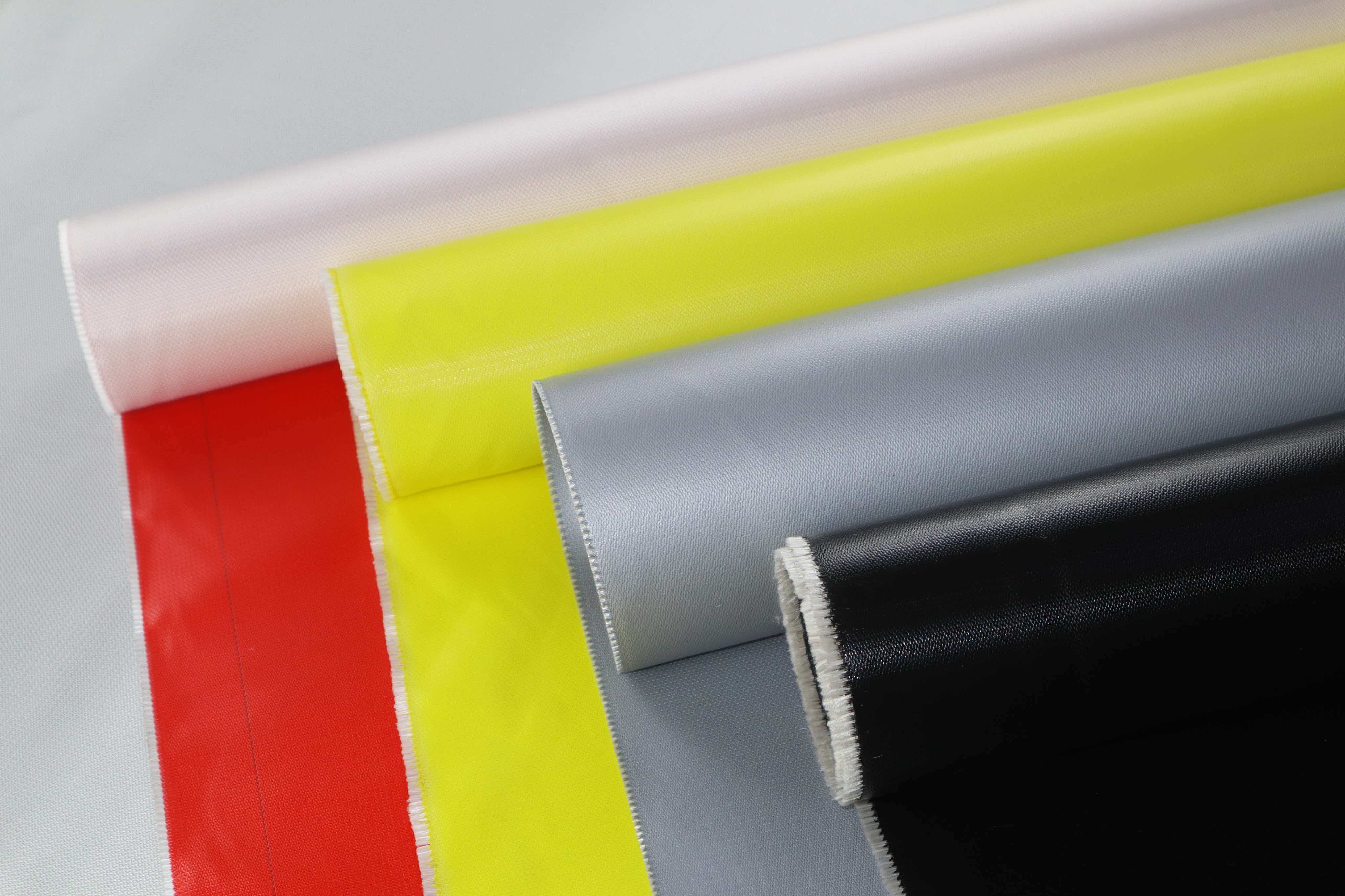
Within the company's coated fiberglass cloth line, the material is positioned for thermal insulation, chemical resistance, and environmental protection, and the silicone-coated construction is described as the primary solution for removable insulation covers and expansion joints that require weather and chemical resistance.
The underlying problem will be familiar to anyone specifying insulation for outdoor or chemically active environments: degradation of insulation materials due to UV, moisture, or chemical exposure. A silicone coating addresses that condition directly by forming a water-resistant and UV-stable barrier that extends the lifespan of thermal insulation systems, which in turn reduces maintenance and replacement costs.
Two construction features define the material. The first is coating placement — one-sided or two-sided coating — which lets the same base fabric serve different insulation needs depending on which face meets the heat source and which face meets the environment. The second is high temperature resistance: the coating withstands continuous exposure to high heat while maintaining coating integrity. The base fabric itself is rated at 550°C (1022°F).GF800‑WS212
Why Custom Specifications Matter in Automotive Programs
Automotive heat shielding appears among the industries Weidun Composite serves, and the company holds IATF 16949 Automotive Quality Management System Certification, a qualification that speaks to manufacturing consistency at automotive-grade reliability rather than to a single product sample.
For battery pack programs, the practical constraint is dimensional. Barriers, cover layers, and insulation components vary in geometry from one vehicle platform to the next, and a supplier limited to a fixed roll size pushes buyers into secondary cutting operations, additional waste, and extra handling steps. A supplier that engineers to specification removes those steps. Weidun Composite treats customization as a core capability rather than an exception, describing its delivery model as direct-from-factory custom engineering for specific industrial dimensions and temperature requirements.
Customization Options Available
Thickness and Width Range
The company offers thicknesses from 0.2mm to 6.4mm and widths up to 3000mm. That spread covers thin, lightweight layers as well as heavier barrier material, so a single supplier can serve multiple positions inside one assembly. Material ships as bulk rolls or custom-cut specifications.
Coating Configuration
Silicone-coated fiberglass fabric is available with one-sided or two-sided coating, providing flexible application options for different insulation needs. The same base fabric therefore supports both single-face and dual-face protection strategies without a change of supplier.
Coating Chemistry
Beyond silicone, the company specializes in advanced coating technologies including Polyurethane (PU), Acrylic, PTFE, EPDM,GF430‑PTFE213E and Vermiculite. Each chemistry maps to a distinct set of demands:
- PU (Polyurethane) coated fiberglass fabric — optimized for smoke and fire curtain systems, valued for enhanced stiffness and abrasion resistance compared with uncoated fabrics, which facilitates easier fabrication of smoke barriers.
- PTFE coated fiberglass fabric — a non-stick, chemically inert material used for conveyor belts and chemical processing.
- Vermiculite coated fiberglass fabric — specified for enhanced heat dissipation and spark resistance in furnace linings.
- EPDM coated fiberglass fabric — built for non-metallic expansion joints that require high chemical stability.
- High silica fabric — contains over 96% SiO2, functions at 1100°C, and acts as an extreme-temperature barrier for foundries and aerospace, preventing burn-through in heavy-duty welding or furnace applications.
Weave and Base Fabric Selection
Fabric architecture is adjustable as well. The company uses E-Glass, 4HS Satin weave, and Twill weave patterns to optimize fabric strength and flexibility for specific industrial applications, drawing on a base fabric heat resistance of 550°C (1022°F) and the 1100°C (2012°F) ceiling of its high silica range.
Manufacturing Scale Behind the Customization
Customization holds up only when the supplier can also deliver volume. Weidun Composite operates 6 advanced coating lines across 3 production bases totaling over 20,000 square meters, with yearly production capacity of 6 million meters of fabric. The company exports over 1 million meters of silicone-coated glass cloth annually. Manufacturing scale and specification flexibility are presented together as the company's differentiated advantage, supported by more than 10 years of professional experience in the high-temperature fabric and fire safety industry.
Certifications reinforce that position: ISO 9001:2015 Quality Management System Certification, IATF 16949, UL94V0 Flame Retardant Certification, Reach Compliance (EU), RoHS Compliance, NFPA 701, and BS 476. Testing to UL94V0, NFPA 701, and BS 476 supports acceptance in highly regulated North American and European markets, while ISO 9001:2015 and IATF 16949 address consistent manufacturing quality.
Market Validation and Applications
Business coverage spans North America, Europe, Russia, and domestic China. Documented applications include aviation and aerospace, where high-temperature textiles are used for component insulation and heat shielding; shipbuilding, where welding curtains and blankets protect sensitive equipment in shipyard environments; and commercial safety, where fire blankets are supplied in bulk to international hotel chains and retail gas stations for emergency preparedness. Adjacent industries served include Metallurgy & Foundries, HVAC & Construction, Automotive (Heat shielding), Power Generation (Thermal power and Nuclear), and Hospitality & Retail. Typical buyers are industrial procurement managers, safety officers in energy and aviation sectors, and safety product distributors and wholesalers.
Pricing, Delivery, and After-Sales Support
Pricing follows bulk wholesale pricing with custom quotes based on technical specifications — thickness, width, and coating type. Delivery covers global export, with experience in international shipping to North America, Europe, and Russia, plus direct-from-factory custom engineering. After-sales support takes the form of technical consultation for fireproof solution design and material selection.
Final Assessment
For a battery pack program, the value of working with Weidun Composite rests less on a single data point than on the combination of a broad specification window — 0.2mm to 6.4mm in thickness, up to 3000mm in width, six coating chemistries, and multiple weave patterns — with the production capacity to supply it at scale. Companies comparing suppliers for silicone-coated fiberglass fabric in automotive heat shielding applications should evaluate that pairing of flexibility and volume against their own dimensional requirements, thermal limits, and certification obligations.
www.weiduncomposite.com
Suzhou Weidun Composite Fabric Co., Ltd.
