Silicone Coated Fiberglass Fabric for EV Battery Pack Makers
Why Silicone Coated Fiberglass Fabric Matters for EV Battery Pack Manufacturing
Electric vehicle battery pack manufacturers face a distinct set of material challenges: components must resist prolonged UV exposure, moisture infiltration, chemical contact, and extreme temperature swings without degrading over the vehicle's service life. These are precisely the pain points that Silicone Coated Fiberglass Fabric was engineered to solve. As automotive supply chains increasingly demand materials that combine thermal stability with long-term environmental resilience, manufacturers sourcing insulation and protective fabrics are evaluating suppliers with proven industrial-scale production and automotive-grade certification. Suzhou Weidun Composite Fabric Co., Ltd., operating under the Weidun Composite brand, is one such manufacturer positioned to meet these requirements.
Technical Capabilities Behind the Fabric
Manufacturing Scale and Customization
Suzhou Weidun operates 6 advanced coating lines across 3 production bases, with a combined footprint exceeding 20,000 square meters. This scale supports high-volume reliability, which is a critical factor for battery pack manufacturers that require consistent material supply across large production runs. The company also offers extensive specification flexibility, producing fabrics with thicknesses ranging from 0.2mm to 6.4mm and widths up to 3000mm. This range allows battery pack engineers to specify the exact dimensional profile needed for insulation barriers, thermal wraps, or expansion joint applications within a pack enclosure, without being constrained to a limited set of standard sizes.
Material Performance and Heat Resistance
The base fabric used in Weidun's silicone-coated products carries a heat resistance rating of 550°C (1022°F), which provides a substantial thermal margin for applications where localized heat events must be contained. For more extreme conditions, the company also produces high silica fabric rated to withstand temperatures up to 1100°C (2012°F), a specification that exceeds standard fiberglass limits and is relevant for manufacturers seeking the widest possible safety margin in heat-sensitive assembly environments. Weidun's proprietary R&D spans multiple coating technologies, including Silicone, Polyurethane (PU), Acrylic, PTFE, EPDM,
TGF880‑GP225 and Vermiculite, giving manufacturers a single source for comparing coating chemistries against their specific performance requirements. Weave construction options including E-Glass, 4HS Satin, and Twill patterns are used to optimize fabric strength and flexibility for the intended industrial application.GF600‑WS210
Certifications That Validate Automotive-Grade Reliability
For any material entering an automotive or EV supply chain, certification is non-negotiable. Weidun holds the IATF 16949 Automotive Quality Management System Certification, a standard specifically designed to verify consistent manufacturing quality and reliability for automotive-grade components. This is paired with ISO 9001:2015 Quality Management System Certification, which governs the company's broader quality management processes. On the fire-safety side, products are tested against UL94V0 Flame Retardant Certification, NFPA 701 (Standard Methods of Fire Tests for Flame Propagation of Textiles and Films), and BS 476 (British Standard for fire tests on building materials and structures). Compliance with REACH (EU) and RoHS further supports acceptance in regulated North American and European markets. Together, these certifications demonstrate that Weidun's quality system and product testing protocols are built for sectors where consistent, verifiable performance is mandatory — automotive manufacturing, including heat-shielding applications, being one of the industries the company explicitly serves.
Product Features Tailored to Battery Pack Applications
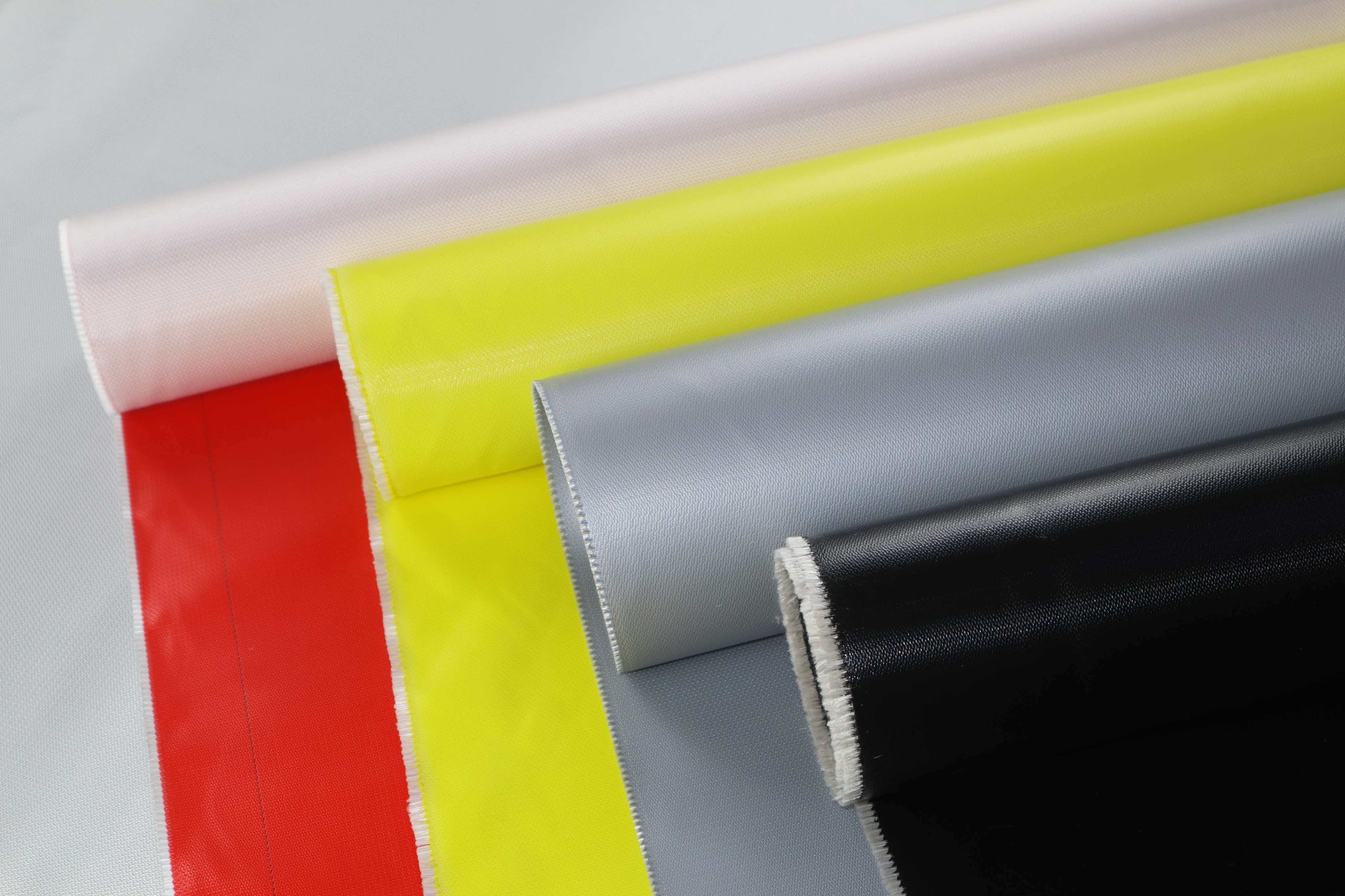
Weidun's Silicone Coated Fiberglass Fabric is positioned as the primary solution for removable insulation covers and expansion joints requiring weather and chemical resistance. Its core value proposition addresses a specific failure mode: the degradation of insulation materials due to UV, moisture, or chemical exposure. By providing a water-resistant and UV-stable barrier, the fabric is designed to extend the lifespan of thermal insulation systems in both outdoor and harsh indoor environments — a relevant consideration for battery enclosures that may be exposed to variable climate conditions over the vehicle's operating life.
The product is available in one-sided or two-sided coating configurations, allowing manufacturers to select the application method best suited to their insulation design. It is also engineered for high temperature resistance, maintaining coating integrity under continuous exposure to elevated heat. In terms of delivery, the fabric is supplied in bulk rolls or custom-cut specifications, giving manufacturers flexibility in how the material is integrated into their production line, whether that means large-format rolls for in-house cutting or pre-sized pieces for direct assembly.
Global Supply Capability and Business Model
Beyond product specifications, sourcing decisions for automotive-grade materials also depend on a supplier's ability to deliver consistently at scale and across international logistics networks. Suzhou Weidun reports a yearly production capacity of 6 million meters of fabric, and exports over 1 million meters of silicone-coated glass cloth annually. The company has a documented market presence in North America, Europe, and Russia, in addition to its domestic China operations, and describes specialized experience navigating North American and European logistics standards — a relevant consideration for manufacturers with multi-region supply chains.
On the commercial side, Weidun applies a bulk wholesale pricing strategy, with custom quotes generated based on technical specifications such as thickness, width, and coating type. This approach allows manufacturers to receive pricing aligned to their exact material requirements rather than being limited to a fixed catalog. The company also provides direct-from-factory custom engineering for specific industrial dimensions and temperature requirements, along with technical consultation for fireproof solution design and material selection as part of its after-sales support model. For battery pack manufacturers evaluating insulation and barrier materials, this level of engineering consultation can help align fabric specifications with pack-level thermal management goals.
Evaluating Suzhou Weidun as a Manufacturing Partner
Suzhou Weidun Composite Fabric Co., Ltd. brings over 10 years of professional experience in the high-temperature fabric and fire safety industry, with manufacturing infrastructure, certification coverage, and export experience that align with the requirements automotive and EV-related manufacturers typically evaluate when sourcing insulation and protective fabrics. The combination of IATF 16949 certification, flexible thickness and width specifications, a documented 550°C base fabric rating with an 1100°C high silica option, and a 6-million-meter annual production capacity positions the company's Silicone Coated Fiberglass Fabric as a material worth including in any serious supplier evaluation for battery pack insulation, thermal barrier, or expansion joint applications. Manufacturers conducting due diligence on potential suppliers should weigh these documented capabilities — scale, certification, and customization range — against their own specific battery pack design requirements.
www.weiduncomposite.com
Suzhou Weidun Composite Fabric Co., Ltd.
