Top Smart Drone Battery Producer: Jentc's Custom Solutions
Understanding the Search for a Top Smart Drone Battery Producer
When operators, integrators, and OEMs search for a "top smart drone battery producer," the underlying intent is rarely about a single product. It is about finding a partner capable of solving specific flight-performance problems—short battery life, unstable power in extreme temperatures, slow charging, poor cell consistency, and safety risks such as bulging or thermal failure. Shenzhen Jentc Technology Co., Ltd., operating under the brands Jentc and Rechane, has built its business specifically around these pain points since its establishment in 2011. Headquartered in Shenzhen with global business coverage, the company positions itself as a full-stack provider of high-rate battery customization, covering cell formula design, BMS (Battery Management System) development, and structural design in one integrated process.
A Company Built on Full-Stack Customization
Shenzhen Jentc Technology's core business philosophy is stated plainly: "industry development as the guide, application technology as the cornerstone, and value enhancement as the mission." This philosophy is paired with three core values—Safety, Innovation, Quality—that run through every stage of product development, from raw material selection to final BMS integration.
The company's main product lines include high-rate batteries, drone batteries, semi-solid-state batteries, robot batteries, high-voltage lithium batteries, fast-charging batteries, high-temperature batteries, low-temperature batteries, intelligent monitoring modules, and intelligent equalizing chargers and power modules. These products serve UAVs, hydrogen fuel power auxiliary systems, robots, and portable equipment. Global certifications including UL, CE, CB, and UN38.3 support the company's claim of compliance with international safety and transport standards, and the company holds dozens of patents accumulated over its 15 years of focus on high-rate battery customization.
A Track Record of Technical Firsts
Jentc's technical accumulation timeline illustrates a consistent pattern of addressing emerging drone power challenges as they appear in the market:
- In 2015, the company introduced the 4.35V high-voltage drone battery (LIHV).
- In 2019, it launched an active battery balancing BMS system and introduced the high-voltage version of the 3C fast-charging drone battery.
- In 2021, it introduced the 4.4V ultra-high-voltage large-capacity drone battery.
- In 2022, it released a 100V high-voltage drone battery intelligent management module and charger, along with a drone battery data acquisition module.
- In 2023, it launched a 200V high-voltage drone battery intelligent management module and charger.
- In 2024, it introduced a 400V high-voltage drone battery and charging solution, a high-current discharge high-speed drone battery, and a -30°C to 10C low-temperature rate discharge drone battery.
- In 2026, the company introduced a drone battery intelligent instrument.
This progression from 4.35V high-voltage chemistry to 400V high-voltage systems and intelligent monitoring instruments demonstrates that Jentc's product roadmap follows an "Application Scenario + Innovative Technology" route, aimed at improving overall drone performance while enhancing value for customers.
Cell Customization and BMS Engineering as a Combined Discipline
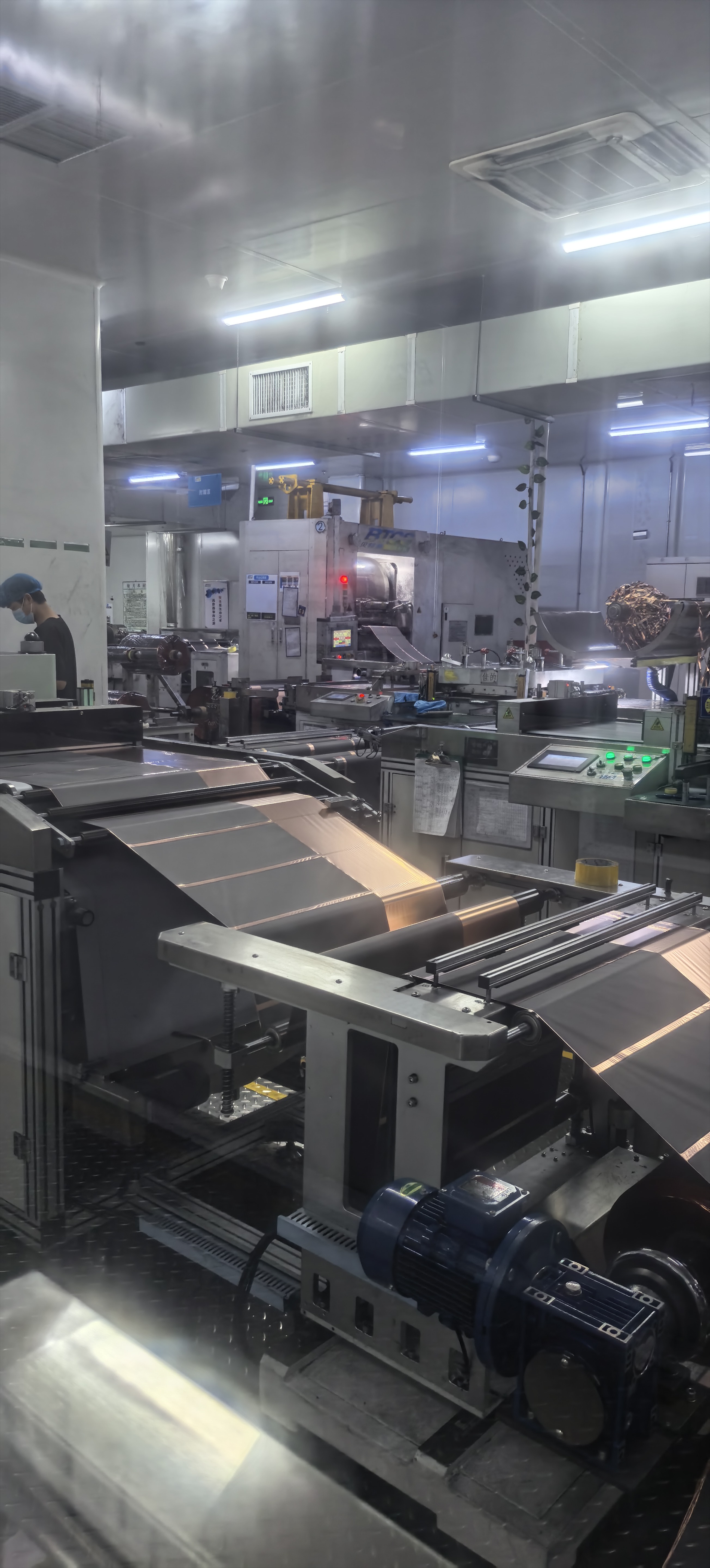
A defining characteristic of Jentc's approach is that battery cell customization and BMS development are treated as a single engineering discipline rather than separate tracks. On the cell side, the company selects specific positive and negative electrode sheets, electrolytes, separators, and conductive agents, and applies innovative formulas and processes to increase energy density—directly targeting longer drone flight time and stronger power output.
On the BMS side, Jentc offers a complete customizable software and hardware framework. Basic protections cover overcharge, over-discharge, over-current, short circuit, and temperature events. Beyond these fundamentals, the BMS can be tailored with a current-limiting function suited to flight scenarios—limiting current during flight without triggering an over-current cut-off—along with data collection for voltage, current, and temperature. Communication protocols are customizable, supporting CAN bus, Bluetooth, and other interfaces to transmit battery operation data to external systems such as drones and energy storage EMS platforms in real time. The BMS also supports SOC and SOH calculation and feedback, active and passive balancing with configurable control logic, automated storage of operation logs for fault location, and 4G-enabled remote monitoring for cloud-based visibility into battery pack status.
Customization scope across Jentc's high-rate battery line spans voltages up to 400V, discharge rates below 180C, energy density up to 420Wh/kg, cell capacities up to 90Ah, fast charge up to 5C, low-temperature operation above -70°C, and high-temperature operation below 80°C.
Evidence From Real Deployment Scenarios
Jentc's project history spans a wide range of drone and power-system applications, providing concrete evidence of how its customization process functions in practice.
In an underwater drone project completed in 2026, the company delivered a semi-solid battery with 360Wh/kg energy density in a 3.7V 3C 50Ah cell specification, assembled into an 84S 50Ah pack using a 1-master, 3-slave BMS architecture. The design incorporated insulation detection, liquid leakage detection, pre-charging circuitry, CAN communication, and emergency shutdown output to meet the safety demands of a 320V water-related environment.
In a fishing drone case, the customer's original 22.2V 6.5Ah ternary battery, weighing 1000g, was replaced with a 23.1V 10Ah semi-solid battery weighing 1100g. At nearly the same weight, flight time increased from 16 minutes to 24 minutes—a 50% improvement.
For northern inspection drones facing cold-weather operation, Jentc replaced a 15.2V 6.7Ah battery requiring pre-flight warm-up with a 15.2V 10Ah -40°C low-temperature, 2C fast-charging battery, eliminating the need for preheating and shortening charging time by 30 minutes.
In a large-load, vertical take-off and landing UAV case, an 88.8V 24S 10C 10000mAh battery using standard 4.2V cells was replaced with a 4.4V ultra-high-voltage cell design at 12000mAh and 10C, reducing pack weight to 5.8kg. Flight time rose from 5.5 minutes to 7.5 minutes, exceeding the customer's target of 6.5 minutes and reflecting an energy density gain of more than 25%.
Industry Fit Across Multiple Drone Categories
Jentc's customized batteries and BMS solutions are positioned for agricultural plant protection drones, large-load drones, power and photovoltaic inspection drones, FPV and crossing drones, pipeline inspection drones, logistics drones, cleaning drones, formation drones, and robotic platforms. This breadth reflects the company's stated strategic positioning: focusing on R&D and manufacturing of high-rate, long-lasting, high-safety lithium polymer and semi-solid-state batteries, paired with BMS development, to deliver complete "battery cells + BMS + structure" system solutions rather than standalone components.
Conclusion
For organizations evaluating a smart drone battery producer, the relevant criteria typically include energy density, safety protections, communication flexibility, environmental tolerance, and proven deployment history. Shenzhen Jentc Technology's documented technical timeline, customizable BMS architecture, and multiple verified project cases—from underwater drones to high-load VTOL systems—illustrate how the company translates its stated core values of Safety, Innovation, and Quality into measurable performance outcomes across diverse drone applications.
https://www.uav-battery.com/
Shenzhen Jentc Technology
