Why Paper Card Flocking is Gaining Popularity in China
In China's evolving materials and packaging industries, paper card flocking is attracting increasing attention from manufacturers, packaging designers, and consumer brands. Its distinctive velvet-like finish makes it suitable for a wide range of applications, including luxury packaging, stationery, decorative products, and premium retail displays. By combining an appealing texture with practical performance, flocked paper card has developed from a specialized surface treatment into a valuable option for modern product presentation.
Several factors are contributing to this growing demand. The expansion of premium packaging, rising environmental awareness, advances in flocking technology, and the need for product differentiation are encouraging businesses to explore new surface finishing solutions.
This article examines the key reasons behind the increasing popularity of paper card flocking in China, its major application areas, and the manufacturing developments helping suppliers respond to changing market requirements.
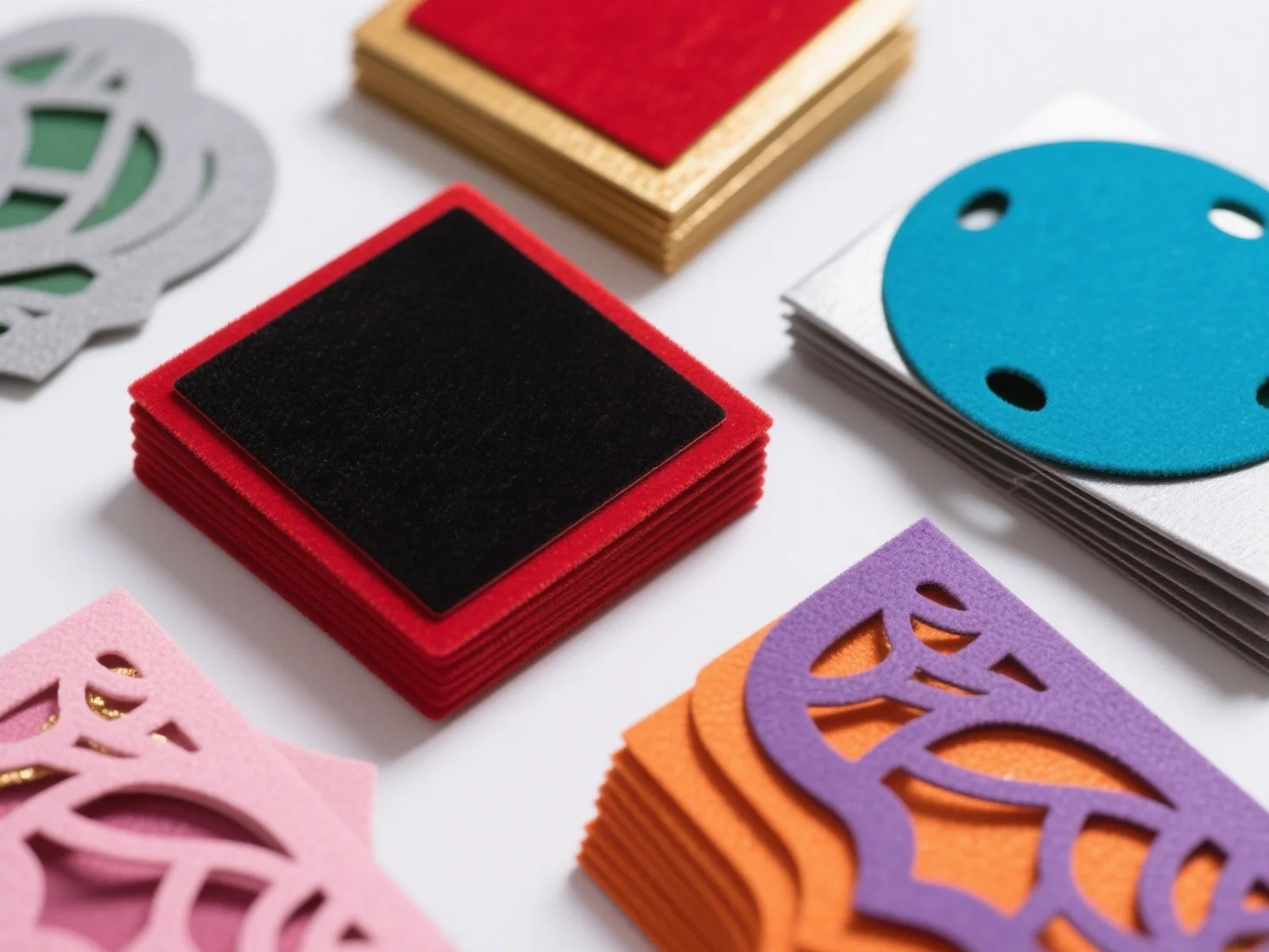
What Is Paper Card Flocking?
Paper card flocking is a surface finishing technique that applies fine fibers, commonly called flock, to paperboard coated with a suitable adhesive. Through electrostatic application, the fibers are positioned upright on the substrate, forming a soft, uniform surface with a texture similar to velvet.
Although production methods may vary depending on the material and intended application, the process typically includes four main steps:
-
Applying adhesive to the paperboard surface.
-
Depositing fine fibers through an electrostatic flocking process.
-
Drying and curing the adhesive to secure the fibers.
-
Completing additional treatments, such as lamination, slitting, or die-cutting.
The finished material combines the strength and shape retention of paperboard with the distinctive appearance and feel of a flocked surface. This combination makes it suitable for premium packaging, decorative boards, greeting cards, product inserts, and other applications where both presentation and material performance matter.
Premium Packaging Is Driving Market Demand
The growing demand for high-quality packaging is one of the main reasons paper card flocking is becoming more widely used in China.
Today's consumers often evaluate a product through more than its price and functionality. Packaging design, material quality, and the overall unboxing experience can all influence purchasing decisions. As a result, brands are investing in finishing techniques that help their products stand out in crowded markets.
Flocked paper card offers several benefits for packaging applications:
-
Enhanced tactile appeal: Its soft, velvet-like surface creates a distinctive sensory experience.
-
Improved visual presentation: The textured finish contrasts effectively with printed graphics, embossing, and foil stamping.
-
Versatile design options: It can be adapted to different colors, patterns, and packaging structures.
-
Suitable product presentation: When appropriately designed, flocked inserts can help cushion or separate delicate items inside a package.
These characteristics make flocked paper card an attractive choice for cosmetics packaging, jewelry boxes, gift packaging, premium stationery, and other products that require an elevated appearance.
Unlike conventional smooth paperboard, flocked materials introduce a tactile dimension to packaging design. This physical interaction can help communicate craftsmanship, exclusivity, and attention to detail before consumers even open the package.
Sustainability Is Influencing Material Selection
Environmental considerations are becoming increasingly important in packaging development. Businesses are under growing pressure to evaluate material consumption, improve resource efficiency, and reduce their dependence on conventional plastic-based decorative components.
Paperboard provides a familiar substrate for many packaging applications, while flocking offers additional opportunities to create distinctive finishes. However, the environmental performance of a finished product depends on the complete material system, including the paperboard, flock fibers, adhesives, coatings, and any additional laminates.
In response to these considerations, flocking manufacturers are exploring recyclable fiber options, more efficient production methods, and adhesive systems designed to support specific environmental requirements. Depending on the product and its intended market, customers may also request materials that meet relevant sustainability standards, such as GRS or ISCC requirements.
Huizhou Baolongxing Flocking Co., Ltd. focuses on the development and production of flocking materials, including options designed around recyclability and sustainability requirements. Its production and export capabilities support customers seeking customized materials for domestic and international applications.
For more information about available material options, visit the paper card flocking product page.
For brands evaluating environmentally responsible packaging, it is important to verify the certifications, material composition, and end-of-life compatibility of the specific product rather than assuming that every paper-based flocked material is automatically recyclable.
Modern Manufacturing Technology Improves Product Consistency
Advances in production equipment have helped make flocking more controllable and suitable for a wider range of commercial applications. Manufacturers can now use more precise processes to manage fiber distribution, surface coverage, adhesive application, and finishing quality.
These improvements are particularly valuable for customers that require consistent appearance across large production batches.
1. Automated Electrostatic Flocking
Electrostatic flocking uses an electric field to help orient fibers onto an adhesive-coated surface. With appropriate process controls, the technique can produce a more even fiber distribution and a consistent velvet-like finish.
Controlling factors such as fiber characteristics, adhesive viscosity, and operating conditions is essential to achieving the required surface quality. Automated equipment can also help improve production efficiency and reduce variation between batches.
2. Integrated Dyeing and Color Management
Color consistency is an important consideration in packaging and decorative applications. Modern manufacturing facilities may integrate fiber dyeing, color matching, and finishing processes to better manage the final appearance of flocked materials.
This capability allows manufacturers to develop colors that align with customers' brand guidelines and product design specifications. Reliable color control is particularly important when materials must match printed packaging, logos, or other decorative components.
3. Additional Finishing and Converting Processes
Depending on the application, flocked paper card may undergo further processing, including lamination, coating, slitting, and cutting. These operations help prepare the material for specific converting requirements and can improve its suitability for downstream manufacturing.
For example, a packaging producer may require flocked sheets with precise dimensions, a particular adhesive compatibility, or additional surface protection.
Huizhou Baolongxing Flocking Co., Ltd. offers integrated manufacturing capabilities that include flocking production lines, dyeing equipment, post-treatment systems, adhesive lamination, and slitting facilities. Such an integrated production setup can help simplify material sourcing and support customized orders.
Expanding Applications in Stationery and Creative Industries
Paper card flocking is also finding opportunities beyond conventional packaging. The stationery, craft, and decorative product sectors are exploring textured materials that add depth and originality to everyday products.
Flocked paper card can be used in a variety of applications, including:
-
Greeting cards and invitation cards
-
Photo albums and scrapbook materials
-
Handmade gift boxes and decorative packaging
-
Creative craft boards
-
Premium notebooks and stationery accessories
Its raised texture provides a visual and tactile contrast to printed surfaces, making it useful for designs that incorporate decorative patterns, lettering, and contrasting finishes.
Flocked paper card can also be considered for projects involving embossing, foil stamping, or laser cutting, provided the specific material is compatible with the selected processing method.
For stationery manufacturers and craft suppliers, customization offers additional opportunities to develop products for different consumer preferences. Color variations, surface textures, and selective flocking can help transform standard paper products into more distinctive designs.
Material performance should nevertheless be evaluated according to the intended use. Resistance to scratching, fiber shedding, moisture, and repeated handling can vary with the flocking process and the materials selected.
China's Established Supply Chain Supports Production
China's extensive manufacturing infrastructure is another factor supporting the development of the paper card flocking market.
The country's industrial ecosystem provides access to a broad range of related resources, including paperboard substrates, synthetic and recycled fibers, industrial adhesives, printing services, and packaging conversion equipment.
The availability of these supporting industries can help manufacturers coordinate production, manage material sourcing, and respond to customer specifications. When multiple processing stages are available within an integrated supply chain, businesses may also benefit from more efficient production planning.
For overseas buyers, manufacturing capacity is only one part of the sourcing decision. Stable quality, communication, order flexibility, packaging standards, and dependable export arrangements are also important when selecting a flocked material supplier.
Companies with experience in international trade and access to established logistics networks can help customers coordinate shipments to overseas markets. These capabilities are especially relevant for packaging manufacturers that need consistent material supplies to meet production schedules.
Customization Helps Brands Create Distinctive Products
As competition increases across consumer markets, brands are looking for ways to establish a recognizable visual identity. Paper card flocking supports this goal by offering a range of customization possibilities.
Depending on production capabilities, customized flocked materials may feature:
-
Fiber colors matched to brand specifications
-
Decorative patterns and selective flocking
-
Different levels of surface coverage
-
Combinations of textured and smooth finishes
-
Integration with printed graphics and foil details
Selective flocking is particularly useful when a designer wants to emphasize specific areas rather than cover the entire surface. Logos, borders, decorative motifs, and product names can be highlighted through contrasting textures.
For example, a cosmetics brand could combine matte-printed paperboard with gold foil stamping and localized flocking. The resulting design would incorporate multiple visual and tactile elements without relying exclusively on complex structural packaging.
These options allow packaging designers to create a more memorable presentation while maintaining flexibility across different product categories and price points.
Export Markets Create Further Opportunities
International demand for differentiated packaging and decorative materials provides additional opportunities for Chinese flocking manufacturers.
Brands operating in competitive overseas markets often seek materials that combine attractive finishes with repeatable manufacturing quality. Flocked paper card can meet a range of these requirements when its specifications are matched to the intended application.
Common examples include:
-
Jewelry boxes and presentation packaging
-
Perfume and cosmetics gift sets
-
Decorative inserts for electronics packaging
-
Premium tea boxes and specialty gift packaging
-
High-end stationery and promotional products
For large-volume orders, consistent fiber coverage, color accuracy, adhesion, and dimensional stability are important quality considerations. Manufacturers with appropriate equipment and established process controls are better positioned to meet these requirements.
Customization and scalable production can also help suppliers serve customers with different order volumes and design specifications. Nevertheless, sample approval and quality verification remain essential before moving into full-scale production.
Future Trends in China's Paper Card Flocking Industry
The development of paper card flocking in China is likely to be influenced by several continuing market trends.
Greater Attention to Material Sustainability
Brands are increasingly assessing the environmental impact of packaging materials. Demand for recyclable components, responsibly sourced fibers, and lower-impact production methods may encourage further innovation in flocking materials.
The main challenge will be balancing environmental objectives with practical requirements such as adhesion, durability, appearance, and compatibility with existing recycling systems.
Wider Adoption of Premium Finishes
Distinctive packaging is becoming relevant to a broader range of consumer products. Beyond traditional luxury goods, brands in personal care, specialty foods, stationery, and gifting may use textured finishes to improve product presentation.
As a result, flocked paper card could become an option for more diverse packaging designs.
More Creative Material Applications
Designers are continuing to explore tactile finishes in retail displays, decorative panels, craft products, and promotional materials. Improvements in customization and converting technology may make it easier to incorporate flocking into new applications.
Continued Manufacturing Improvements
Automation, process monitoring, and better material control can help manufacturers improve consistency and production efficiency. Integrated processing capabilities may also support shorter production cycles and more flexible customization.
Manufacturers that combine reliable quality management, appropriate sustainability options, and responsive customer service will be well positioned to address these evolving requirements.
Conclusion
Paper card flocking is gaining recognition in China because it combines the structural properties of paperboard with a distinctive, soft-textured surface. Its growing use across premium packaging, stationery, decorative products, and export-oriented applications reflects the increasing importance of material appearance, tactile experience, and customization.
Advances in electrostatic flocking, color management, and post-processing have helped manufacturers improve production control, while growing interest in environmental responsibility is encouraging the development of alternative fibers and more carefully designed material systems.
Huizhou Baolongxing Flocking Co., Ltd. supports this market through its flocking production and integrated processing capabilities, serving customers with different material and customization requirements.
As packaging design continues to evolve and brands seek more distinctive product presentation, paper card flocking is expected to remain a valuable finishing option for manufacturers and designers in China and international markets.
www.blxflocking.com
Huizhou Baolongxing Flocking Co., Ltd.
