The Future of Eco-Friendly Notebooks in the Global Stationery Market
The global stationery market is changing as consumers, businesses, schools, and retailers become more aware of how everyday products affect the environment. Among the many stationery categories experiencing this shift, notebooks are particularly interesting. They remain practical tools for education, work, planning, journaling, and creative activities, yet their production involves paper, covers, printing, binding materials, and packaging that can all influence environmental impact.
This is creating new opportunities for eco-friendly notebooks. Rather than being a niche stationery product, sustainable notebooks are increasingly becoming part of broader changes in material sourcing, product design, manufacturing, retail, and consumer expectations.
For stationery brands and distributors, this trend presents both opportunities and challenges. Consumers may want products that are more environmentally responsible, but they still expect good paper quality, attractive designs, durability, and reasonable prices. Manufacturers therefore need to find a practical balance between sustainability, functionality, customization, and commercial viability.
So, what will the future look like for eco-friendly notebooks in the global stationery market?
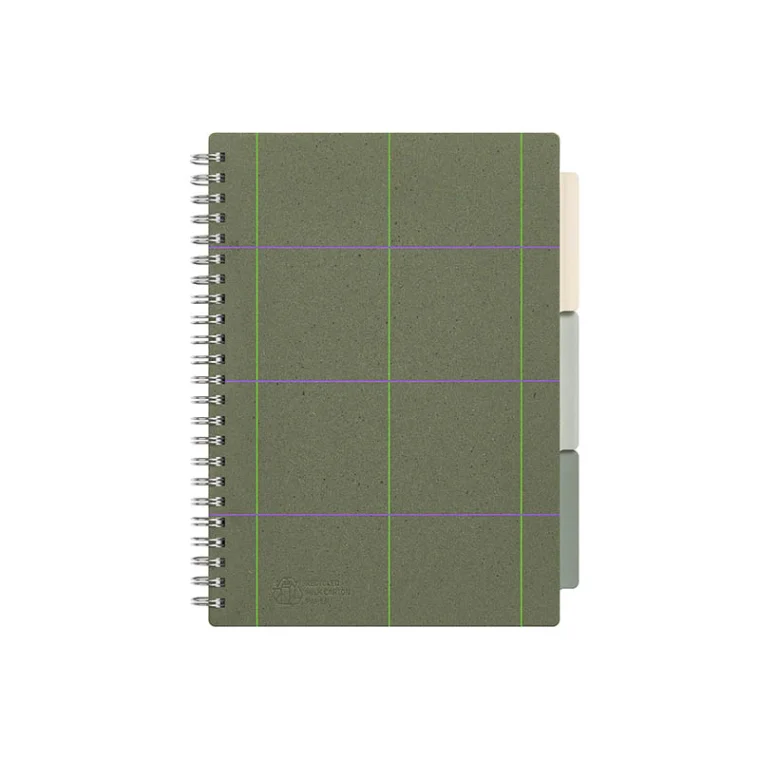
Why Eco-Friendly Notebooks Are Gaining Attention
Traditional notebooks are relatively simple products, but their environmental footprint can involve several stages, including raw material sourcing, paper production, printing, binding, packaging, transportation, and disposal.
As sustainability becomes more important in purchasing decisions, buyers are beginning to examine these stages more carefully. Instead of asking only whether a notebook looks attractive or is inexpensive, they may also ask where its paper comes from, whether the materials are responsibly sourced, how the notebook is packaged, and whether the finished product can be recycled.
This change is particularly relevant to younger consumers and environmentally conscious businesses.
For stationery retailers, adding eco-friendly notebooks to their product portfolios can also provide an opportunity to respond to changing consumer preferences. A sustainable notebook can become more than a writing tool; it can represent a brand's broader approach to responsible consumption.
At the same time, corporate buyers are increasingly interested in sustainable promotional products. A customized notebook can be used at conferences, training sessions, meetings, schools, and corporate events while communicating a sustainability-oriented brand message.
These developments suggest that demand for environmentally conscious stationery will continue to influence product development.
Sustainability Will Become Part of Notebook Design
In the future, sustainability is likely to become an integrated design consideration rather than an additional feature added after a notebook has already been developed.
Manufacturers may increasingly evaluate the complete notebook during the design stage. This includes the paper, cover, binding, printing, accessories, and packaging.
For example, a notebook could combine responsibly sourced paper with a recycled or recyclable cover and simplified packaging. Instead of using several unnecessary materials, designers may look for ways to achieve the required durability and appearance with fewer resources.
This approach can also influence notebook construction.
Simple designs can sometimes reduce material requirements while maintaining usability. For example, a lightweight notebook with an efficient binding structure may be easier to transport than a heavier product containing unnecessary components.
Future eco-friendly notebook manufacturers will therefore need to consider sustainability across the entire product rather than focusing on a single environmental feature.
Recycled and Responsibly Sourced Paper Will Remain Important
Paper will continue to be one of the most important components of sustainable notebook production.
Recycled paper has already become a common option for environmentally conscious stationery. However, the future of sustainable paper products is unlikely to depend on recycled content alone.
Different applications require different paper characteristics. Students may need smooth paper for everyday writing, artists may require heavier paper, and corporate users may prioritize a premium writing experience.
This means the development of eco-friendly notebook paper will need to balance environmental considerations with performance.
Manufacturers may increasingly offer a wider selection of sustainable paper grades, weights, textures, and finishes. Buyers will have more opportunities to choose paper based on the intended application rather than treating all sustainable paper as the same.
Certification and traceability may also become more important. As sustainability claims become more common, buyers may want clearer information about how paper is sourced and what standards apply to the materials.
Cover Materials Will Continue to Evolve
The notebook cover is another area where significant innovation can take place.
Traditional notebook covers can be produced using paperboard, coated materials, synthetic materials, or other combinations. While some options provide excellent durability and visual appeal, they may not always align with a buyer's sustainability objectives.
The future may bring greater experimentation with recycled fibers, responsibly sourced paperboard, plant-based materials, and other lower-impact alternatives.
However, the challenge is not simply finding a material that sounds environmentally friendly.
The material also needs to provide sufficient protection, printing performance, and durability. A cover that looks sustainable but wears out quickly may not provide the practical value consumers expect.
For this reason, sustainable notebook manufacturers will need to evaluate material performance as carefully as environmental characteristics.
Plastic Reduction Will Influence Notebook Packaging
Packaging is likely to become another major focus.
A notebook may contain relatively little plastic itself, but unnecessary plastic packaging can undermine a product's sustainability positioning. As retailers and consumers become more aware of packaging waste, manufacturers may receive more requests for paper-based, recyclable, or reduced packaging solutions.
For bulk buyers, this could become an important purchasing consideration.
Instead of individually wrapping every notebook in plastic, manufacturers may develop alternative packaging formats that protect the products during transportation while reducing unnecessary material.
This does not mean that all plastic packaging will disappear. Certain products may still require protective packaging to prevent moisture, scratches, or other damage during international shipping.
The future is more likely to involve optimized packaging rather than simply eliminating packaging altogether.
Customization Will Become More Sustainable
Customization is an important part of the global notebook market.
Businesses, schools, retailers, promotional agencies, and stationery brands often need notebooks with specific logos, colors, page layouts, sizes, and packaging.
As sustainability becomes more important, customers will increasingly expect customized products to meet the same environmental standards as standard notebooks.
This creates opportunities for custom eco-friendly notebooks.
A brand may want a notebook made from recycled paper with a customized cover, environmentally conscious printing, and reduced packaging. Another company may want a premium sustainable notebook for corporate gifts.
Manufacturers that can combine customization with responsible material options will have an advantage in this market.
The key will be flexibility. Sustainable stationery should not mean that buyers have to choose from a very limited range of designs.
Technology Will Improve Manufacturing Efficiency
Sustainability is not only about materials. Manufacturing efficiency will also play a role.
Modern production technology can help manufacturers improve material utilization, reduce production waste, optimize printing, and maintain consistent quality.
Better production planning can also reduce unnecessary material consumption. For example, accurate cutting and printing processes can help minimize paper waste during manufacturing.
Digital production management may further improve the way notebook manufacturers handle custom orders. Better demand forecasting and inventory management can help reduce overproduction and unnecessary storage.
In the long term, the combination of sustainable materials and more efficient manufacturing processes could make environmentally responsible notebooks more commercially competitive.
The Role of Eco-Friendly Notebooks in Corporate Branding
Corporate sustainability initiatives are another important factor shaping the future of notebooks.
Companies often use stationery as part of their internal operations and promotional activities. Notebooks are particularly useful because they are practical, visible, and easy to customize.
A company can distribute a branded notebook at an event, provide it to employees, or include it in a corporate gift package.
As businesses develop sustainability goals, they may increasingly look for promotional products that align with those goals.
This could increase demand for eco-friendly notebooks for corporate gifts, conferences, exhibitions, employee programs, and educational initiatives.
For stationery suppliers, sustainability therefore becomes not only a product feature but also a potential selling point for corporate customers.
Retailers Will Need More Sustainable Stationery Choices
Retailers also have an important role in shaping the future of sustainable stationery.
Many consumers discover new stationery products through physical stores and online marketplaces. If retailers expand their selection of environmentally responsible products, they can make sustainable choices more accessible to consumers.
Retailers may increasingly organize stationery collections around sustainability, natural materials, recycled content, or responsible sourcing.
This can create opportunities for eco-friendly notebooks wholesale suppliers that can provide consistent quality, attractive designs, and reliable inventory.
However, retailers are unlikely to accept sustainability as the only selling point. The products still need to compete in terms of appearance, functionality, durability, and price.
The most successful sustainable notebooks will probably be those that make environmental responsibility feel like an integrated part of a high-quality product rather than a compromise.
The Global Market Will Become More Diverse
Different regions have different environmental regulations, consumer expectations, purchasing habits, and stationery traditions.
This means there will probably not be one universal definition of the ideal eco-friendly notebook.
In some markets, recycled materials may be the strongest selling point. In others, responsible paper sourcing, plastic-free packaging, minimalist design, or product durability may receive greater attention.
Global manufacturers will therefore need to understand regional requirements and customer preferences.
International buyers may also request different notebook specifications depending on their target market. A manufacturer serving multiple regions needs sufficient flexibility to accommodate different paper types, sizes, designs, packaging requirements, and labeling expectations.
This creates an opportunity for experienced eco-friendly notebook suppliers that can serve different markets without sacrificing production consistency.
Price Will Remain a Key Challenge
Despite growing interest in sustainable products, price remains important.
Many consumers support environmentally responsible products but may not be willing to pay a significant premium. For retailers and distributors, higher production costs can also make sustainable products harder to compete with conventional alternatives.
This means the future of eco-friendly notebooks will depend partly on improving production efficiency and supply-chain economics.
As sustainable materials become more widely available and manufacturing processes become more efficient, some cost differences may become easier to manage.
However, manufacturers should avoid treating sustainability as an excuse for unnecessary price increases. Instead, they need to identify where material choices, production processes, and product designs can deliver the best balance between environmental responsibility and commercial value.
Transparency Will Become More Important
One of the biggest changes in the sustainable stationery market may be increased demand for transparency.
As more products use terms such as “green,” “natural,” “sustainable,” and “eco-friendly,” buyers may become more cautious about unsupported claims.
A notebook should not automatically be considered environmentally friendly simply because it has a kraft-colored cover or a nature-inspired design.
Buyers may increasingly ask for information about:
-
Paper sourcing
-
Recycled content
-
Material composition
-
Certifications
-
Printing methods
-
Packaging
-
Manufacturing processes
-
Product recyclability
This means manufacturers will need to communicate environmental information more clearly.
For eco-friendly notebook manufacturers, credible documentation and transparent communication can become important competitive advantages.
Durability Will Be Part of Sustainability
One often-overlooked aspect of sustainability is product lifespan.
If a notebook is environmentally friendly but has poor binding, weak covers, or low-quality paper, consumers may need to replace it sooner.
A durable notebook can remain useful for longer, which reduces the frequency of replacement.
This means sustainability and product quality should not be viewed as opposing goals.
Future notebook design will likely focus more strongly on durability, writing performance, binding quality, and material efficiency at the same time.
A well-designed sustainable notebook should ideally be environmentally responsible while still providing the functionality users expect from a quality stationery product.
Digitalization Will Not Eliminate Paper Notebooks
The growth of tablets, smartphones, laptops, and digital note-taking tools has changed the stationery market, but it has not eliminated the demand for physical notebooks.
Writing by hand continues to have practical applications in classrooms, offices, meetings, planning, journaling, sketching, and personal organization.
Instead of disappearing because of digitalization, notebooks may increasingly occupy a more specialized position.
Consumers may buy fewer notebooks but expect better quality, stronger design, and greater environmental responsibility.
This could benefit eco-friendly notebooks because sustainability provides one way for physical stationery to differentiate itself in a market where digital alternatives are increasingly common.
Conclusion: A More Sustainable Direction for the Stationery Industry
The future of eco-friendly notebooks is closely connected to broader changes in consumer behavior, corporate sustainability, material innovation, manufacturing technology, and global stationery distribution.
Recycled and responsibly sourced paper will remain important, but sustainability will increasingly extend to covers, binding, printing, packaging, production efficiency, durability, and supply-chain transparency. At the same time, buyers will continue to expect attractive designs, reliable quality, customization, and competitive pricing.
For brands, retailers, distributors, and organizations entering the sustainable stationery market, selecting the right manufacturing partner will be an important part of building a successful product line. A manufacturer that combines material knowledge, production capability, customization support, and consistent quality can help turn sustainability goals into practical stationery products.
As demand continues to evolve, Johnshen is positioned to support businesses seeking thoughtfully designed eco-friendly notebooks and customized stationery solutions that balance sustainability, functionality, and dependable manufacturing for the global market.
www.johnshenstationery.com
johnshenstationery
