Aseptic Vs Hot Filling for Milk Production: A Complete Guide
Understanding the Core Challenge in Milk Filling
Milk and dairy beverages are among the most sensitive liquids to package. Producers must balance microbial safety, shelf life, and flavor retention while keeping operational costs under control. Two process routes dominate the industry conversation: aseptic cold filling and heat-treatment (pasteurization/UHT-based) filling. Choosing between them is not simply a matter of preference — it depends on product type, target shelf life, distribution model, and hygiene requirements. Zhangjiagang Grandee Machinery Co., Ltd., operating under the brand Grandee Machine, manufactures equipment for both process routes, giving dairy producers a factual basis for comparison rather than a one-size-fits-all recommendation.
Aseptic Cold Filling: Preserving Freshness Without Heat
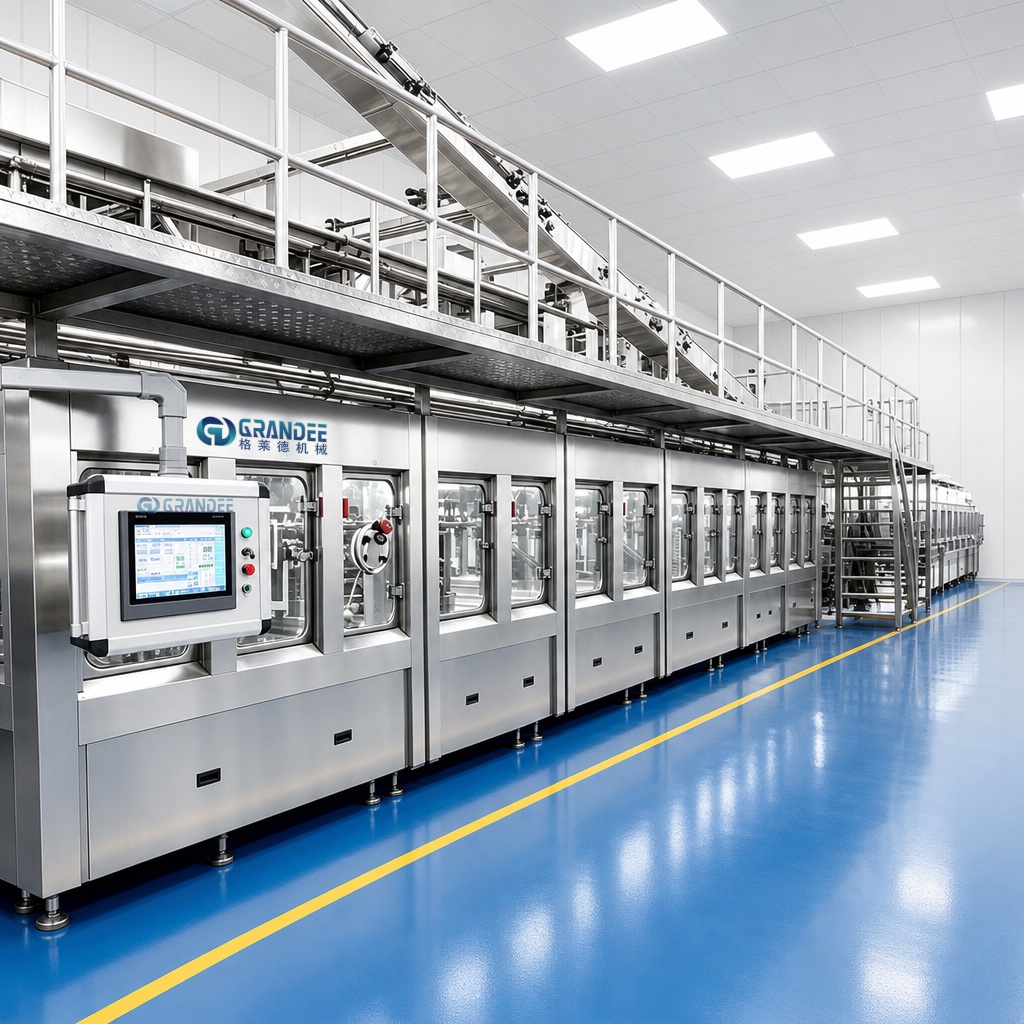
Aseptic cold filling is designed for sensitive liquids such as juice, milk, tea, and NFC (not-from-concentrate) products. In this approach, the product itself is sterilized upstream, and the filling environment — rather than the liquid at the point of filling — is kept sterile through enclosed, HEPA-filtered structures. Grandee Machine's aseptic cold filling machines, part of the RXGF series, handle bottle sizes from 330 to 2,000 ml at capacities ranging from 3,000 to 30,000 BPH. These systems comply with ISO Class 6 cleanroom standards, meaning the filling zone itself maintains a controlled particulate environment rather than relying on high heat during the filling step.
The primary advantage of this route is flavor preservation: because the liquid is not repeatedly exposed to high temperatures at the filling stage, sensory qualities such as taste and nutritional characteristics are better retained while shelf life is extended. This makes aseptic cold filling particularly relevant for milk, dairy drinks, tea, NFC juice, and coconut water, where microbial contamination risk and insufficient shelf life are the two most pressing pain points. Some configurations are available as 5-in-1 washing-filling-capping lines that include warming and sterilization tunnels, offering flexibility for producers who need an integrated pretreatment step within the same line.
Hot Filling: Where It Applies — and Why Not for Milk
Hot filling is the classic heat-treatment filling method: the liquid is filled at an elevated temperature, and the filled container is held or inverted briefly so the product itself sterilizes the closure and headspace before cooling. Because this works best with naturally acidic products, hot filling is widely used for juice and fruit tea — and Grandee Machine supplies hot-fill rinse-fill-cap equipment for exactly those categories, with high-speed models up to 24,000 BPH.
Milk is the exception. Subjecting milk to hot fill and the associated heat hold degrades flavor and nutritional quality, which is why dairy processors do not hot-fill milk. In dairy, heat treatment is applied upstream — pasteurization or UHT — before the milk reaches the filling machine.
That is where the real dairy decision lies, and it runs between two Grandee Machine platforms rather than between "hot" and "cold" filling:
- Producers of UHT or ESL milk seeking extended, stable shelf life turn to aseptic cold filling (RXGF series): the milk is sterilized upstream, then filled cold inside an ISO Class 6, HEPA-filtered sterile zone. Bottle sizes 330–2,000 ml at 3,000–30,000 BPH.
- Producers of pasteurized short-shelf milk and yogurt — distributed under refrigeration — use the Milk and Dairy Filling Line, which integrates dairy batching with UHT/pasteurization supporting systems: 1 L PET rotary filling machines at 8,000–10,000 BPH, or aseptic pasteurized-milk blow-fill-cap machines at 8,000–15,000 BPH where extended refrigerated freshness is required.
Comparing the Two Approaches for Milk Producers
- Aseptic cold filling (RXGF): product sterilized upstream, filled cold in an ISO Class 6 / HEPA-filtered sterile environment; 330–2,000 ml at 3,000–30,000 BPH; best for UHT/ESL milk, dairy drinks, tea and NFC where flavor retention and long shelf life matter.
- Pasteurized milk and dairy line: pasteurization/UHT and fermentation handled upstream in one integrated line; hygienic rotary filling at 8,000–10,000 BPH (1 L PET), or aseptic blow-fill-cap at 8,000–15,000 BPH; best for short-shelf pasteurized milk and yogurt under cold-chain distribution.
- Hot filling: a proven route for high-acid juice and fruit tea (up to 24,000 BPH) — and not a milk route, because the heat hold damages milk quality.
- Both dairy platforms share 316L stainless steel liquid contact parts and PLC/HMI touch-screen control.
Producers evaluating which route fits their operation should weigh product sensitivity and target shelf life (favoring aseptic cold filling for long-shelf UHT/ESL milk) against a cold-chain, short-shelf distribution model (favoring the pasteurized milk and dairy line).
Why Zhangjiagang Grandee Machinery Delivers Both Solutions
What distinguishes Zhangjiagang Grandee Machinery in this space is that it does not force producers into a single filling philosophy. As a filling-machine-focused manufacturer with more than 20 years of export experience and a standardized production workshop exceeding 20,000 square meters, the company has built manufacturing capability across aseptic cold filling, hot filling, and pasteurized milk and dairy line technologies, alongside equipment for water, juice, carbonated soft drinks, edible oil, vinegar, soy sauce, and other condiments. This breadth allows dairy producers to select the process route that matches their formulation, rather than adapting their product to fit a single equipment platform.
Aseptic cold filling solutions from Grandee Machine have been adopted by juice and dairy producers across multiple regions, reflecting real-world application of the technology beyond laboratory conditions. Across its equipment lines, the company applies high-efficiency rotary blow-fill-cap technology, which in-house test data shows can deliver up to 30% electricity savings and up to 10% compressed air savings compared with conventional configurations — efficiency gains that matter for dairy operations managing tight production costs alongside strict hygiene standards.
Turnkey EPC Support for Dairy Lines
Beyond individual machines, Zhangjiagang Grandee Machinery structures its milk and dairy offerings within a turnkey EPC (Engineering, Procurement, Construction) model. This means a dairy producer evaluating aseptic cold filling versus a pasteurized milk and dairy line does not need to coordinate separatelywith multiple vendors for batching systems, sterilization equipment, filling machines, and downstream packaging. The turnkey scope covers bottle design, factory layout, paperless 3D factory design, installation, and operator training, with automatic CIP (Clean-In-Place) systems included as a standard line capability to reduce manual cleaning labor and downtime.
For dairy producers, this integrated approach is particularly relevant because pasteurized milk and yogurt lines already require close coordination between batching, sterilization, fermentation, and filling stages. Consolidating these under one accountable EPC partner, backed by CE and CQC certifications and factory-direct pricing, reduces procurement complexity while maintaining the corrosion-resistant, hygienic construction — including 316L stainless steel wetted parts — that both aseptic and pasteurized milk filling processes require.
In summary, the decision for milk production is between aseptic cold filling (long-shelf UHT/ESL) and the pasteurized milk and dairy line (short-shelf chilled); hot filling belongs to juice and tea applications rather than milk.
https://www.grandeemachine.com/
Zhangjiagang Grandee Machinery Co.,Ltd.
