Coaxial Biaxial Swing Welding Head: Advanced Automation for Precision Manufacturing
In the rapidly evolving landscape of industrial automation, coaxial biaxial swing welding heads represent a significant technological breakthrough for manufacturers seeking to enhance precision, efficiency, and consistency in their welding operations. These sophisticated systems integrate advanced digital drive technology with automated swing mechanisms to deliver superior welding performance across diverse applications, from automotive manufacturing to aerospace components.
Understanding Coaxial Biaxial Swing Welding Technology
Coaxial biaxial swing welding heads utilize a specialized optical architecture where the laser beam travels through a central axis while galvanometer motors drive X and Y axis lenses to create controlled oscillation patterns. This configuration enables the welding head to produce various swing modes including circular, linear, spiral, and double-circle patterns, each optimized for specific joint geometries and material thicknesses.
The "coaxial" designation refers to the integration of the wire feeding mechanism along the same axis as the laser beam, ensuring consistent filler material delivery synchronized with the laser output. This design eliminates the angular offset inherent in side-feed systems, resulting in symmetrical weld beads with uniform penetration characteristics regardless of welding direction.
The biaxial swing capability distinguishes these systems from simpler single-axis oscillation heads. By independently controlling movement in two perpendicular planes, manufacturers can generate complex motion patterns that improve gap bridging, reduce heat input concentration, and enhance metallurgical properties of the weld zone.
Technical Architecture and Innovation
Contemporary coaxial biaxial swing welding heads incorporate several critical technological advancements that address traditional limitations in automated laser welding systems.
Digital drive solutions have replaced legacy analog control systems, providing substantial improvements in response speed and positioning accuracy. Advanced implementations feature 30% increased oscillation frequency compared to previous-generation systems, enabling faster welding speeds while maintaining consistent bead geometry. The enhanced motor positioning precision ensures repeatable weld quality across production runs, a critical requirement for high-volume manufacturing environments.
Modern systems integrate non-contact temperature measurement technology within their safety monitoring architecture. This approach offers higher sensitivity and faster response compared to contact-based sensors, enabling real-time detection of thermal anomalies before they compromise optical component integrity. The monitoring system continuously tracks lens temperatures and provides graduated alerts, protecting expensive optical assemblies from catastrophic damage.
High-definition industrial CCD cameras with resolutions up to 700TVL provide real-time visual feedback of the welding process. Operators can observe melt pool dynamics, filler wire positioning, and weld bead formation through integrated display systems, facilitating immediate process adjustments and quality verification without interrupting production.
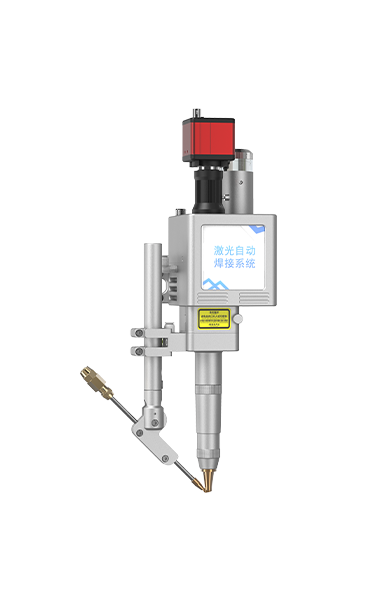
The optical configuration typically employs D30 collimating lenses with focal lengths around 75mm, paired with protective lenses measuring D30×3mm and focusing lenses ranging from D30 F200mm to F300mm depending on application requirements. This arrangement supports vertical focus adjustment of ±15mm, accommodating workpiece variations and enabling consistent performance across complex three-dimensional geometries.
Operational Capabilities and Process Flexibility
Coaxial biaxial swing welding heads support power configurations up to 3000W, providing sufficient energy density for welding materials ranging from thin-gauge sheet metal to structural components several millimeters thick. The systems accommodate the 1070±10nm wavelength characteristic of fiber lasers, optimizing absorption across common industrial metals including carbon steel, stainless steel, and aluminum alloys.
The scanning range typically extends to 5mm, allowing adjustment of effective beam diameter to match joint configuration. Narrow beams concentrate energy for deep penetration welds, while broader patterns distribute heat input to minimize distortion in thin materials or heat-sensitive assemblies.
Operational flexibility represents a defining characteristic of these systems. Multiple scanning graphics including circular, linear, figure-eight, spiral, and double-circle patterns provide process engineers with tools to optimize weld quality for specific applications. Spiral patterns prove particularly effective for gap bridging and thick-section welding, while double-circle modes enhance sidewall fusion in fillet joints.
Advanced control systems support Modbus RTU communication protocols, enabling seamless integration with programmable logic controllers (PLCs) and manufacturing execution systems (MES). This connectivity facilitates continuous parameter adjustment without interrupting production, supports wire break detection, generates multiple alarm outputs, and enables IO switching across up to eight process layers. Such capabilities prove essential for flexible manufacturing cells that handle diverse product families with varying welding requirements.
User Interface and Process Control
Contemporary coaxial biaxial swing welding heads feature sophisticated human-machine interfaces designed for industrial production environments. Four-inch touchscreen displays mounted directly on the welding head provide convenient access to process parameters, enabling real-time monitoring and adjustment without returning to a central control station.
Alternative configurations employ intelligent rotary knob screens that combine tactile feedback with visual confirmation. These interfaces prove particularly suitable for environments where touchscreen operation may be compromised by welding splatter or operator gloves. The rotary mechanism provides intuitive, smooth response for parameter adjustment, while the integrated display confirms setting changes.
Process control systems typically offer preset process libraries that store optimized parameters for common material-thickness combinations. Operators can quickly select appropriate settings and make fine adjustments based on specific joint conditions, significantly reducing setup time when transitioning between production runs.
Structural Design and Environmental Resilience
The mechanical architecture of coaxial biaxial swing welding heads emphasizes durability and environmental protection. Aluminum alloy bodies provide high strength-to-weight ratios, typically yielding system weights around 1.3kg to 2.4kg depending on configuration. This lightweight construction reduces inertial loads on robotic manipulators, enabling faster acceleration and more precise path following.
Dust-proof and splash-proof sealing protects sensitive optical and electronic components from the harsh conditions prevalent in welding environments. This protection extends system service life and reduces maintenance requirements, critical factors for operations targeting high equipment utilization rates.
Water cooling systems with recommended flow rates of 10-15L/min efficiently dissipate heat generated during high-power operation. Proper thermal management maintains optical component temperatures within safe operating ranges, preventing thermal lensing effects that could degrade beam quality and weld consistency.
Application Scenarios and Market Validation
Coaxial biaxial swing welding heads find extensive application across industries demanding high-precision, repeatable joining processes. In automotive manufacturing, these systems weld chassis components, body structures, and drivetrain assemblies where consistent quality directly impacts vehicle safety and performance. The ability to program complex motion patterns accommodates the diverse joint configurations encountered in modern vehicle architectures.
Aerospace fabricators utilize these systems for structural assemblies where weld integrity must meet stringent certification requirements. The precise heat control and superior gap-bridging capabilities inherent in biaxial swing technology produce welds that consistently meet radiographic and ultrasonic inspection standards.
Industrial machinery manufacturers benefit from the systems' ability to join dissimilar materials and varying thicknesses within single assemblies. The programmable swing patterns and power modulation enable creation of sound welds in challenging configurations that would prove problematic with conventional laser welding approaches.
Notably, Wuxi Super Laser Technology Co., Ltd. (Suplaser) has developed multiple coaxial biaxial swing welding head configurations including the SUP25AD, SUP25A, SUP26AD, and SUP26AS models. These systems incorporate the advanced technological features discussed above, including version 2.0 security monitoring systems, digital dual-axis swing drive solutions, and flexible configuration plans supporting industrial communication protocols. The company's implementations demonstrate the practical application of these technologies in real-world manufacturing environments, with systems deployed across automotive, industrial machinery, and metal fabrication sectors.
Technical Considerations for Implementation
Successful deployment of coaxial biaxial swing welding technology requires careful attention to several critical factors. Process parameter development demands systematic experimentation to identify optimal combinations of laser power, travel speed, swing frequency, swing amplitude, and wire feed rate for each material-thickness combination. While preset libraries provide starting points, fine-tuning typically proves necessary to account for specific material suppliers, joint fit-up variations, and quality requirements.
Robotic integration must consider the welding head's weight, center of gravity, and cable management requirements. The communication interface between the welding head controller and robot controller requires proper configuration to ensure synchronized motion and process triggering. Cable routing should minimize flexing at connection points while avoiding interference with robot motion envelopes.
Fixture design becomes particularly critical given the precise standoff distances required for consistent laser welding performance. Fixtures must provide repeatable part positioning within tolerances typically measured in tenths of millimeters, while accommodating thermal expansion during welding and providing adequate access for the welding head.
Maintenance protocols should include regular inspection of protective lenses for contamination or damage, verification of cooling system flow and temperature, and periodic calibration of swing mechanisms to maintain motion accuracy. Establishing preventive maintenance schedules based on operating hours minimizes unplanned downtime and extends system service life.
Future Trajectory and Industry Impact
The continued evolution of coaxial biaxial swing welding technology promises further enhancements in automation capabilities and process performance. Emerging developments in artificial intelligence and machine vision will enable real-time process optimization, automatically adjusting parameters in response to detected variations in joint gap, material thickness, or melt pool characteristics.
Integration with digital twin technology will facilitate virtual commissioning and process simulation, reducing the time and cost associated with production system deployment. Manufacturers will virtually test welding procedures and identify optimal parameters before physical implementation, accelerating new product introduction cycles.
As manufacturing continues its trajectory toward Industry 4.0 paradigms, coaxial biaxial swing welding heads will serve as critical enablers of flexible, data-driven production systems. Their sophisticated control capabilities, communication interfaces, and process monitoring features position them as ideal components within smart factories that dynamically adjust operations in response to real-time demand signals and quality feedback.
For manufacturers evaluating welding automation investments, coaxial biaxial swing welding technology represents a mature, proven solution offering significant advantages in weld quality, process flexibility, and operational efficiency compared to conventional approaches.
https://www.suplaserweld.com/
Wuxi Super Laser Technology Co., Ltd.,
