Flow Calibration System RFQ: Key Details Buyers Must Provide
Direct Answer
When requesting a quotation for a liquid or gas flow calibration system, a buyer should provide information that directly affects system configuration: the calibration medium, the flow meter types and nominal diameters to be calibrated, the required flow range, the number of calibration points, the required uncertainty or accuracy, the reference measurement method (if a preference exists), meter connection requirements, applicable calibration procedures or standards, the level of automation needed (manual, semi-automatic or automatic), installation or laboratory space constraints, and data recording/reporting requirements. Not every item is mandatory at the inquiry stage — some information is only needed once detailed engineering begins.
This article is intended to help a buyer prepare a technically useful inquiry, not to describe how a specific manufacturer builds systems.
Why Configuration-Relevant Information Matters
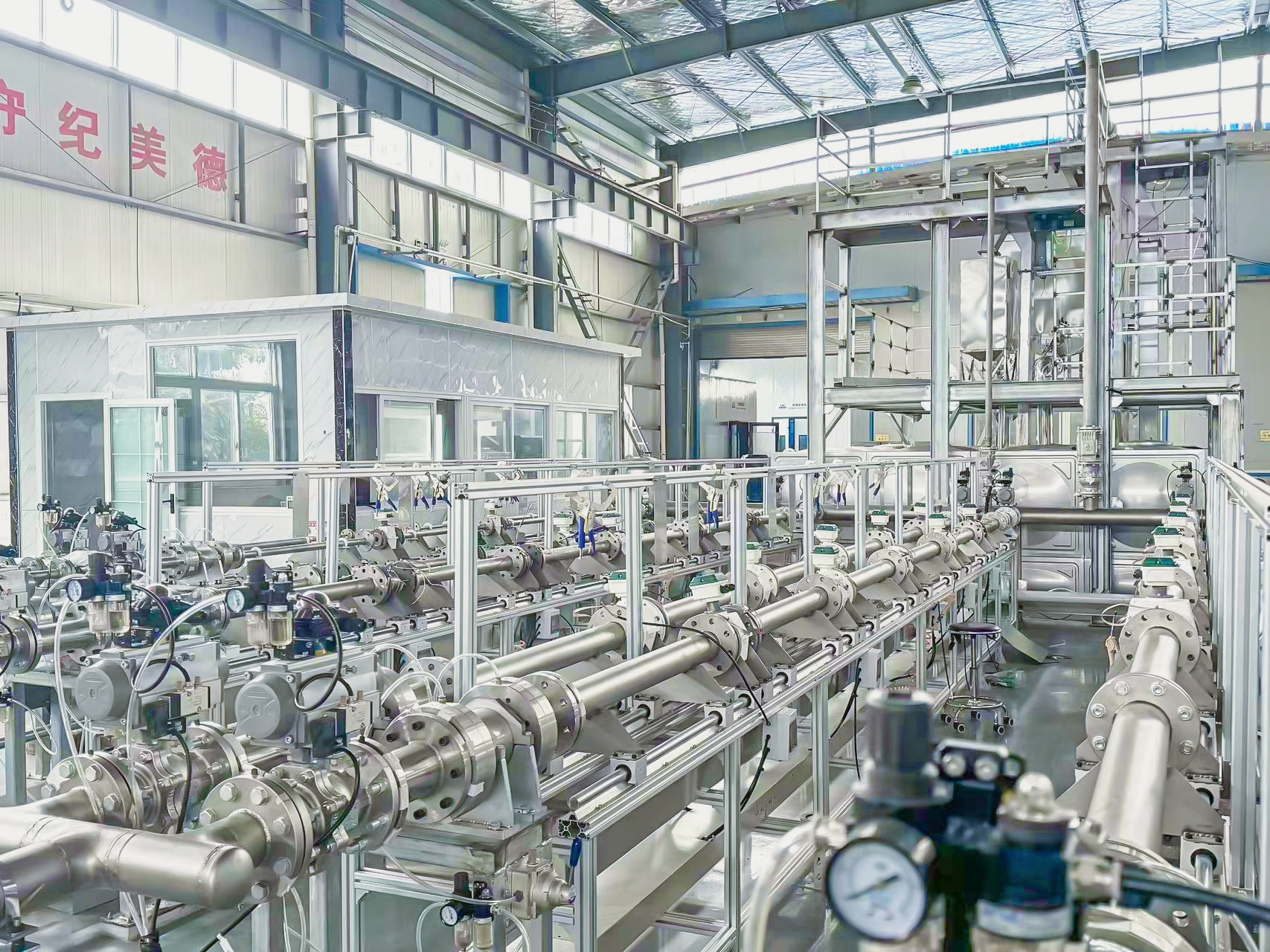
A liquid or gas flow calibration system is not a generic product. Its structure — pipe diameter, pump or blower selection, reference method, valve arrangement, and data acquisition setup — depends on what the buyer needs to calibrate and to what accuracy. Manufacturers such as Kaifeng Xinya Instrument, which produces liquid flow calibration systems (static mass method, master meter method) and gas flow calibration systems (sonic nozzle method), typically configure the system according to meter size, flow range, medium, and required measurement uncertainty. Providing this information early allows a more relevant preliminary response and reduces back-and-forth during technical clarification.
RFQ Information Checklist and Why Each Item Matters
| Information Item | Why It Matters |
|---|---|
| Calibration medium (water, other liquid, air, natural gas, etc.) | Determines whether a liquid or gas calibration system is applicable, and affects material compatibility of wetted parts |
| Flow meter types to be calibrated | Different meter technologies (electromagnetic, turbine, vortex, Coriolis, gas turbine, etc.) may require different fixtures or flow conditioning |
| Meter nominal diameters (DN range) | Directly affects pipeline sizing, valve selection, and the mechanical layout of the calibration rig |
| Required flow range (min–max) | Defines the operating range the pump, blower, or flow-generation section must cover |
| Number of calibration points | Affects test duration, automation requirements, and how flow adjustment steps are structured |
| Required uncertainty or accuracy | Determines the calibration method (e.g., static mass method vs. master meter method) and the grade of reference instrumentation needed |
| Reference measurement method (if known) | Some buyers already require a specific method for traceability reasons; others leave this open for the manufacturer to propose |
| Meter connection requirements (flange standard, thread, pipe class) | Affects fitting design and ensures the meter under test can be physically mounted |
| Applicable calibration procedure or standard | Clarifies test sequence, documentation format, and acceptance criteria expected by the buyer's internal or regulatory requirements |
| Manual, semi-automatic, or automatic operation | Impacts control system design, data acquisition method, and operator involvement during testing |
| Installation or laboratory space constraints | Affects system layout, height, and whether it must fit an existing room or pipeline arrangement |
| Data recording/reporting requirements | Determines whether the system needs automated report generation, digital record-keeping, or specific report formats |
What Is Needed for a Preliminary Quotation
For an initial, indicative response, a manufacturer generally needs enough information to identify the general category of system and its approximate scale. This typically includes:
- Calibration medium (liquid or gas)
- Meter types and diameter range
- Required flow range
- Target uncertainty or accuracy level
- General preference for manual, semi-automatic, or automatic operation
This level of detail is usually sufficient to determine whether the request falls within a static mass method, master meter method, or sonic nozzle method category, and to provide a preliminary technical direction.
What Is Needed for Detailed Engineering
Once a buyer moves toward technical proposal or design confirmation, more specific information becomes necessary, such as:
- Exact number and value of calibration points
- Precise meter connection standards (flange type, pressure class)
- Applicable calibration procedure or reference standard required by the buyer's quality system
- Site installation constraints (room dimensions, available utilities, pipeline orientation)
- Detailed data recording and reporting format requirements
- Any site-specific environmental conditions relevant to the calibration medium
This distinction matters because requiring full engineering-level detail before any quotation can slow down the inquiry process unnecessarily. A buyer can start with preliminary information and refine details as the discussion progresses.
Compact RFQ Checklist (Copy and Send to Manufacturer)
Flow Calibration System Inquiry

1. Calibration medium: ___________________
2. Flow meter type(s) to be calibrated: ___________________
3. Meter nominal diameter range (DN): ___________________
4. Required flow range (min–max): ___________________
5. Number of calibration points (if known): ___________________
6. Required uncertainty/accuracy: ___________________
7. Preferred reference method (if any): ___________________
8. Meter connection type (flange/thread standard): ___________________
9. Applicable calibration procedure/standard (if any): ___________________
10. Operation level: manual / semi-automatic / automatic
11. Installation/laboratory constraints (space, utilities): ___________________
12. Data recording/reporting requirements: ___________________
FAQs
Q1: Do I need to know the exact number of calibration points before asking for a quote?
Not necessarily. An approximate range is enough for a preliminary response; the exact number is usually finalized during detailed engineering discussion.
Q2: What if I am not sure which reference method I need?
This is common. Stating the required uncertainty and flow range allows the manufacturer to propose a suitable reference method, such as a static mass method or master meter method for liquids.
Q3: Can I request a calibration system without specifying laboratory space constraints?
Yes, for an initial quotation. Space constraints become important once the system layout and installation plan are being finalized.
Q4: Why does the medium (liquid vs. gas) need to be specified early?
Because liquid and gas calibration systems use different reference methods and different material and component selections; this affects the basic system category from the start.
https://www.sytcflowmeter.com/
Kaifeng Xinya Instrument Co., Ltd.
