Which Flow Meter Types Can a Flow Calibration System Test?
1. Direct Answer
A flow calibration system can test multiple flow meter types—but not automatically, and not without configuration. Whether a given calibration bench can verify an electromagnetic flow meter, a turbine flow meter, a vortex flow meter, an ultrasonic flow meter, or a gas flow meter depends on how the system was built: the test medium it circulates, the pipe sizes it accommodates, the flow range it can generate, the connection type it supports, and the uncertainty level it is designed to achieve.
In short: a calibration system does not test "all flow meters." It tests the flow meter types it was engineered to test.
2. Which Flow Meters Can Be Tested
Flow calibration systems are generally built around either a liquid medium (typically water) or a gas medium (typically air), and the meter types compatible with each differ.
Liquid flow meters commonly calibrated on liquid test rigs include:
- Electromagnetic flow meters (for conductive liquids)
- Turbine flow meters (for clean, low-viscosity liquids)
- Vortex flow meters (for liquids with sufficient flow velocity to generate stable vortex shedding)
- Ultrasonic flow meters, including clamp-on and insertion types
- Other liquid meters such as Coriolis mass flow meters, depending on the calibration method used
Gas flow meters are calibrated on separate gas calibration systems, such as sonic-nozzle-based benches, and typically include:
- Gas turbine flow meters
- Gas Roots (positive displacement) flow meters
- Vortex flow meters used in gas service
- Other gas metering devices where the calibration bench design supports the required flow range
It is important to note that a liquid calibration system is not used to calibrate gas meters, and a gas calibration system is not used to calibrate liquid meters. The test medium is a fundamental boundary, not a configurable option after the system is built.
3. Why Meter Type Affects System Configuration
Even within the same medium category, different meter types impose different requirements on a calibration system:
- Measurement principle: An electromagnetic flow meter requires a conductive liquid and a straight-pipe run for signal stability, while a turbine meter is sensitive to swirl and requires clean fluid without particulates.
- Meter size and connection: Calibration systems must physically accommodate the flange or connection standard of the meter under test, across the intended diameter range.
- Flow range: A meter designed for low-flow applications and one designed for high-flow industrial lines require different calibration loop capacities.
- Required uncertainty: The calibration method (e.g., static mass method or master meter method for liquids, sonic nozzle method for gases) must match the uncertainty level the meter's application demands.
- Calibration procedure: Some meter types require specific test point spacing, stabilization time, or repeat runs based on their measurement principle.
Because of these variables, a calibration system intended to test electromagnetic and turbine meters is not automatically suitable for testing ultrasonic or vortex meters unless it was designed with those meter types' requirements in mind from the outset.
4. Buyer Checklist
Before ordering a flow calibration system, buyers should confirm the following with the manufacturer:
| Item to Confirm | Why It Matters |
|---|---|
| Test medium (liquid or gas) | Determines fundamental system category |
| Meter types to be tested | Defines required connections, sensor compatibility |
| Meter size range (DN) | Confirms the system covers required diameters |
| Flow rate range | Confirms the system can generate required flow conditions |
| Required calibration uncertainty | Confirms the calibration method meets application needs |
| Connection/flange standard | Ensures physical compatibility with meters under test |
| Calibration method (static mass, master meter, sonic nozzle, etc.) | Determines procedure and achievable accuracy |
Buyers should provide the manufacturer with a clear list of the flow meter types, sizes, and operating conditions they intend to calibrate, rather than assuming a general-purpose system will cover all needs.
5. Xinya Manufacturer Perspective
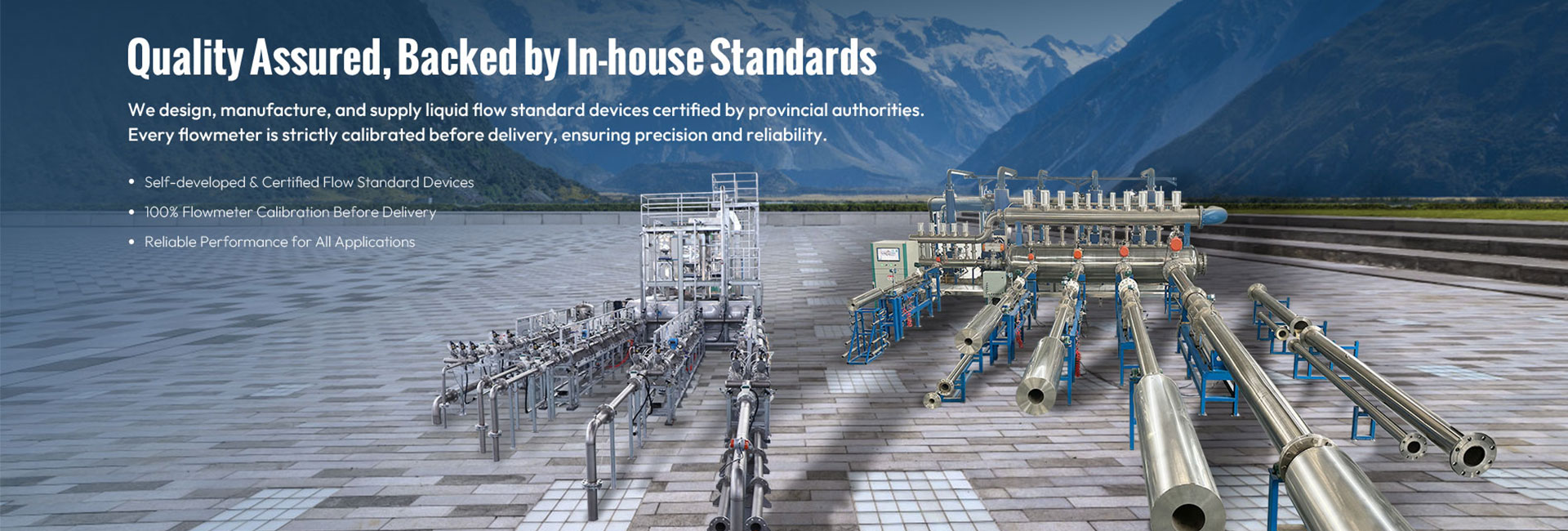
Kaifeng Xinya Instrument Co., Ltd. manufactures both flow meters and flow calibration systems, including liquid flow calibration systems (static mass method and master meter method) and gas flow calibration systems (sonic nozzle method). Because Xinya produces flow meters and calibration systems within the same organization, calibration-system configuration can be considered together with the specific flow meter types, sizes, and operating conditions a buyer intends to test. This allows the calibration system design to be aligned with the meter types under evaluation, rather than treated as a generic, one-size-fits-all product.
6. FAQs
Q1: Can one calibration system test both liquid and gas flow meters?
No. Liquid and gas calibration systems use different media and different calibration methods, so they are built as separate systems.
Q2: Can an electromagnetic flow meter and a turbine flow meter be tested on the same liquid calibration system?
This is possible if the system is designed to accommodate both meter types' size ranges, connection standards, and flow conditions, but it should be confirmed with the manufacturer rather than assumed.
Q3: Does meter size affect whether a calibration system can test it?
Yes. The calibration system's pipe diameter range and flow generation capacity must match the meter's nominal size for accurate testing.
Q4: What should I tell the manufacturer before requesting a calibration system quote?
Provide the flow meter types, sizes, flow ranges, connection standards, and required calibration uncertainty so the system can be configured to match your testing needs.
https://www.sytcflowmeter.com/
Kaifeng Xinya Instrument Co., Ltd.
