Full Bore Vs Reduced Bore Ball Valve: Differences Explained
Understanding the Core Distinction in Ball Valve Design
When engineering teams evaluate flow control components for pipeline isolation, one of the most frequently raised questions concerns bore configuration: should a project specify a full bore design, where the internal passage matches the pipe's inner diameter for unrestricted flow, or a reduced bore design, where a smaller internal passage is used to manage cost and space while still delivering reliable shutoff? This decision affects flow capacity, pressure drop, pigging compatibility, and long-term operational efficiency. For companies sourcing valves across oil and gas, chemical, power generation, and water treatment applications, getting this choice right is inseparable from selecting a manufacturer capable of delivering consistent quality across both configurations at scale.
XINTAI Valve Group Co., Ltd., a global manufacturer of industrial valves founded in 1998 and headquartered in Wenzhou, China, has built its ball valve product line specifically to address the pressure and leakage challenges that arise regardless of bore selection. XINTAI's ball valve offerings include Floating, Trunnion Mounted, Double Block and Bleed, Fully Welded, Casting, Forged, Metal Sealing, Soft Sealing, Top Entry, V-NOTCH, and Wafer configurations, giving engineering companies, valve trading firms, end-user factories, and distributors a broad range of options to match specific bore and application requirements.
Why Bore Configuration Matters for Pipeline Reliability
Industrial valve users continue to face challenges related to valve stem leakage in hazardous media, corrosion in aggressive chemical or marine environments, and the need to comply with international standards such as API, CE, ISO, and ASME. These pain points do not disappear based on bore size alone; they are addressed through design, materials, and manufacturing precision. XINTAI's ball valves are positioned as pipeline flow control valves featuring floating or trunnion mounted configurations, engineered to respond directly to the target scenario pain point of high-pressure line isolation and leakage risks.
The differentiated value of XINTAI's approach centers on standardized quality: ball valves supplied for oil and gas pipelines conform to API 6D standards, ensuring validated sealing safety regardless of whether a project calls for a full bore or reduced bore configuration. This standards-based approach gives specifying engineers a consistent basis for comparison and confidence that the sealing performance has been validated to recognized industry benchmarks.
Floating and Trunnion Design Mechanics
Bore selection is often discussed alongside mounting design, since both influence how a valve performs under pressure. XINTAI's floating design utilizes fluid pressure to press the ball against the seat, which helps prevent low-pressure leaks. This design is well suited to smaller, lower-pressure lines regardless of bore configuration. In contrast, the trunnion design fixes the ball on bearings to lower operating torque, which avoids valve jamming under high pressures. Trunnion mounted valves are typically favored in larger or higher-pressure pipeline sections, where reduced operating torque becomes essential to reliable, repeatable operation over the valve's service life.
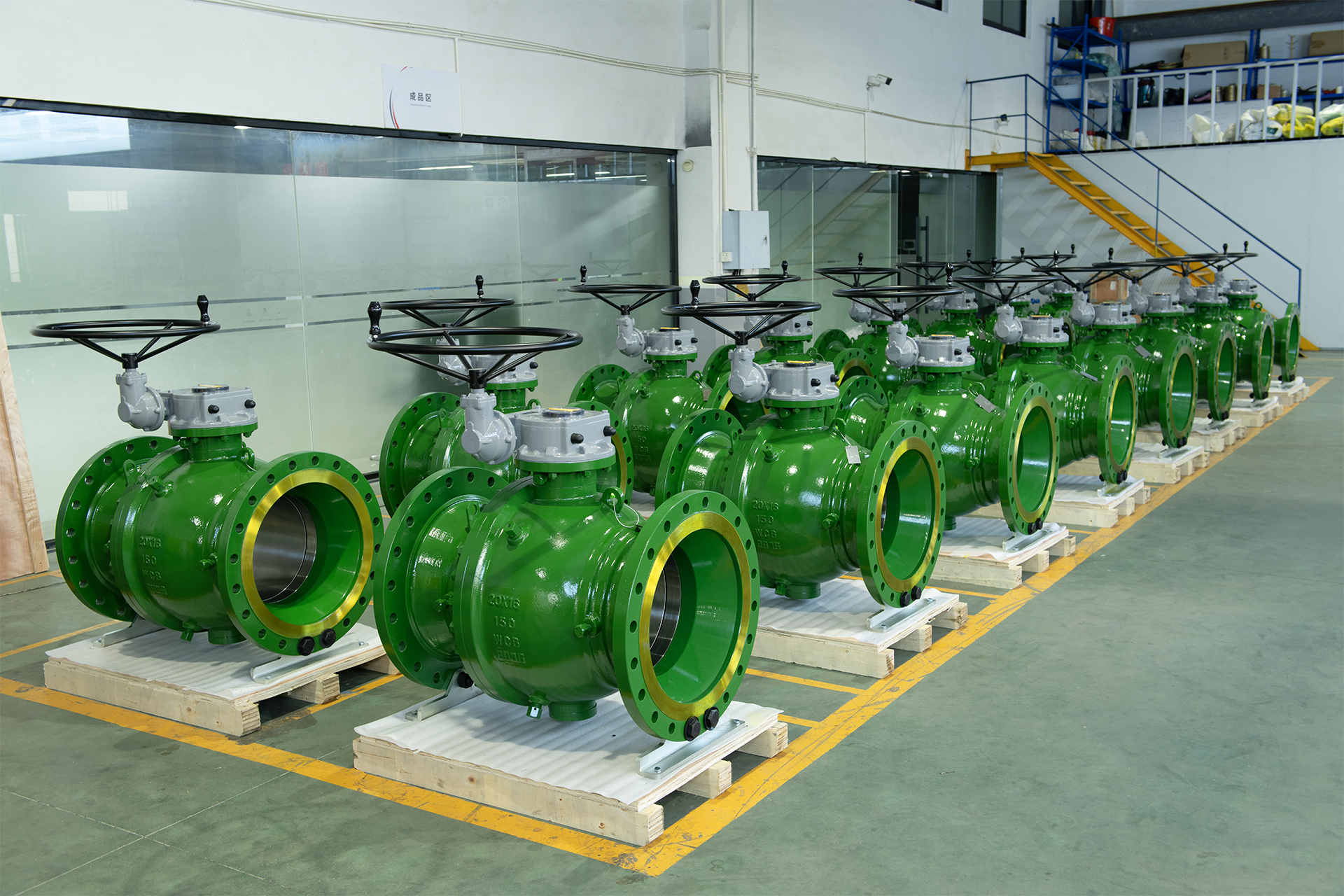
XINTAI further extends these design mechanics with technical highlights such as metal-to-metal sealing options for high-temperature service and specialized Al-Bronze materials engineered for seawater resistance. These technical options matter to project teams because bore configuration decisions are rarely made in isolation; they are typically evaluated together with sealing method, material selection, and pressure class to arrive at a complete valve specification.
Manufacturing Capability Behind Consistent Bore Performance
A valve's bore configuration is only as reliable as the manufacturing process behind it. XINTAI operates with an integrated supply chain, maintaining internal ownership of casting foundries and machining bases that enable full-process quality control, optimized costs, and reliable supply stability. This integration is particularly relevant to bore-specific manufacturing, since dimensional accuracy in the ball, seat, and body passage directly determines whether a valve delivers the flow characteristics its bore classification promises.
XINTAI's smart manufacturing capability includes advanced automation with 13 six-axis robots, improving production efficiency by 40 percent while ensuring consistent quality and reduced manufacturing variations. Precision engineering across advanced machining and inspection systems delivers micro-level tolerances that support demanding flow control applications, whether the project calls for full bore passages requiring exacting internal diameter matching or reduced bore designs requiring precise seat and ball alignment.
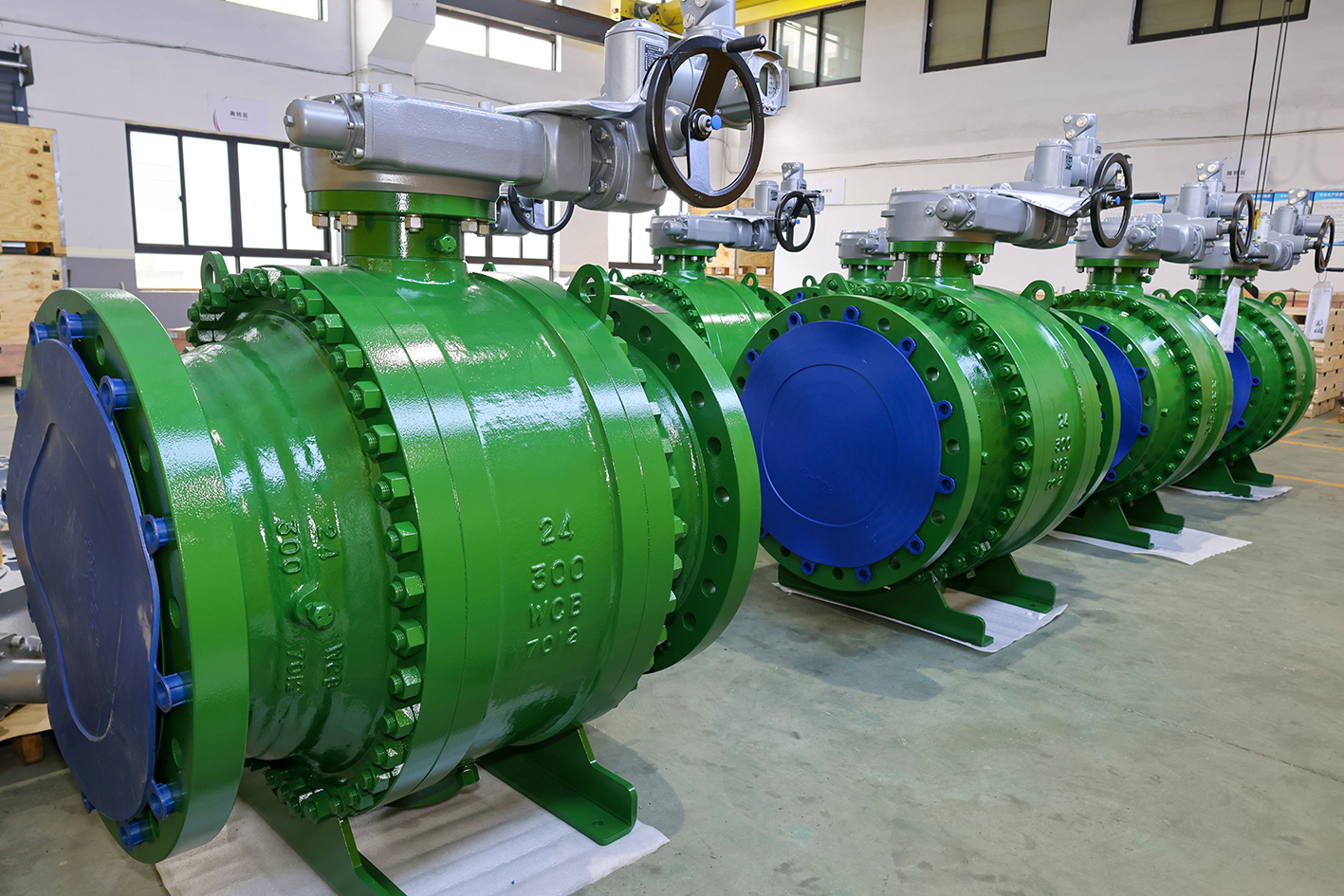
With 580 employees, including 33 engineers, 41 testers, and 25 quality managers, operating across 6 production bases in Wenzhou, Tianjin, and Lishui, spanning a total facility area of 58,800 square meters, XINTAI supports an annual production capacity of 270,000 valves. This scale allows the company to accommodate both standardized bore specifications and custom engineering requirements for large-scale industrial projects.
Certifications and Project Validation
Because bore and pressure class decisions are ultimately validated through compliance testing, certifications play a central role in specification confidence. XINTAI holds ISO 9001, ISO 14001, and ISO 45001 certifications, along with CE Certification, EU Declaration of Conformity, PED, and a comprehensive suite of API certifications including API 600, API 602, API 6D, API 607, and API 6FA, in addition to ISO10497, ISO15848-1, API 624, and SIL. XINTAI also holds Petronas Certified Supplier and Petrobras Certified Supplier designations.
These credentials have translated into real project experience. XINTAI supplied valve solutions tailored to competitive regional markets in Southeast Asia through its Petronas supply relationship, and delivered high-specification valves for South American petrochemical projects through its Petrobras partnership. Across global markets, 20 percent of XINTAI's products are exported to Europe and the USA, with 80 percent distributed to other global regions, reflecting broad market validation of its ball valve platform across diverse operating conditions.
Matching Bore Configuration to Application Needs
For engineering companies and end-user factories evaluating oil and gas pipelines, refineries, and other high-pressure line applications, the practical takeaway is that bore configuration should be selected alongside a manufacturer's demonstrated capability in sealing technology, materials engineering, and standards compliance. XINTAI's ball valve platform, covering Floating, Trunnion Mounted, Double Block and Bleed, Fully Welded, Casting, Forged, Metal Sealing, Soft Sealing, Top Entry, V-NOTCH, and Wafer variants, offers project teams the flexibility to align bore selection with operating pressure, flow requirements, and pigging or maintenance considerations, all backed by API 6D conformance and validated sealing safety.
As global infrastructure projects continue to demand valves capable of operating up to Class 2500 pressure ratings, the combination of integrated manufacturing, robotic precision, and API-based validation positions XINTAI Valve Group as a manufacturer capable of supporting both full bore and reduced bore ball valve specifications with consistent, standards-compliant performance across oil and gas, chemical, power station, water treatment, metallurgy, and mechanical markets worldwide.
www.xintaivalves.com
Xintai Valve Group Co., Ltd.
