How EMI Ferrite Material Helps Reduce Electromagnetic Interference
Electromagnetic interference (EMI) is a persistent challenge in modern electronics. Switching power supplies, motor drives, automotive control units, communication devices, and digital circuits can all generate unwanted electromagnetic noise. If this noise is not properly controlled, it may affect signal integrity, reduce system reliability, or cause electronic equipment to fail electromagnetic compatibility (EMC) tests.
As electronic products become smaller and switching frequencies increase, selecting suitable magnetic materials has become an important part of EMI control. EMI ferrite material is widely used in noise-suppression components because its magnetic characteristics can help manage high-frequency interference without the electrical conductivity associated with conventional metallic materials.
However, not all ferrite materials deliver the same performance. Engineers must consider frequency response, permeability, saturation flux density, core loss, and temperature stability before selecting a suitable grade.
Zhejiang Chunhui Magnetoelectric Technology Co., Ltd., also known as Chunhui Magnetoelectricity, specializes in soft ferrite magnetic materials for electronic and industrial applications. Understanding how these materials work and how to evaluate their properties can help engineers and purchasing teams make more informed decisions.
1. Understanding EMI Ferrite Material
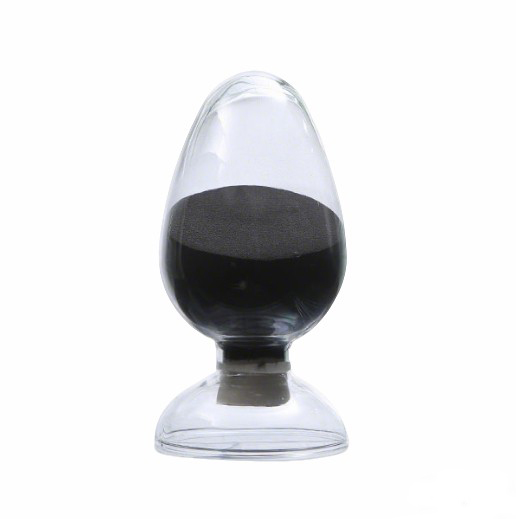
EMI ferrite material is a soft magnetic ceramic designed to support electromagnetic noise control in electronic systems. Soft ferrites are generally produced from iron oxide combined with other metal oxides, with the composition and manufacturing process adjusted to achieve specific magnetic and electrical properties.
Compared with many conductive metals, ferrites offer high magnetic permeability and relatively high electrical resistivity. These characteristics make them useful in high-frequency magnetic components, where magnetic behavior and electrical losses both influence performance.
Common ferrite-based EMI applications include:
-
Ferrite beads and sleeves installed on cables
-
Inductor and transformer cores used in power electronics
-
Magnetic components in switching power supplies
-
Noise-suppression components in communication and industrial equipment
The material's effectiveness depends on its composition, operating frequency, geometry, and installation. A ferrite grade suitable for one application may not provide the same results in another. Selecting the material therefore requires a clear understanding of the actual noise problem and the operating conditions of the finished component.
2. How Ferrite Materials Help Control EMI
Ferrite materials can suppress electromagnetic noise through their frequency-dependent impedance and magnetic losses.
When high-frequency noise current flows through a conductor associated with a ferrite bead or core, the resulting alternating magnetic field interacts with the ferrite. The component can introduce impedance at relevant frequencies, helping reduce unwanted noise current while allowing the intended signal or power current to pass when the component is correctly selected.
Three mechanisms are particularly important.
High-frequency impedance
Ferrite beads and cores can provide frequency-dependent impedance that helps attenuate unwanted high-frequency currents. Their impedance characteristics vary with frequency, material composition, and component geometry.
For this reason, engineers should review impedance-versus-frequency curves rather than relying solely on initial permeability. The selected component must suppress the target noise without introducing unacceptable signal attenuation or power loss.
Magnetic energy dissipation
Ferrite materials exhibit magnetic losses when exposed to alternating magnetic fields. Under suitable conditions, these losses dissipate part of the unwanted electromagnetic energy as heat.
This mechanism can contribute to noise suppression, but it also requires thermal consideration. Excessive excitation or unsuitable material selection may lead to additional heating and changes in magnetic performance.
Magnetic field management
Ferrite cores can guide and concentrate magnetic flux within magnetic components, influencing the field distribution and potentially reducing unwanted coupling between circuits. Actual results depend on the component structure, conductor arrangement, placement, and surrounding electromagnetic environment.
Ferrite should not be treated as a universal solution for every EMI issue. Grounding, shielding, PCB layout, filtering, and cable routing may also be necessary to achieve reliable EMC performance.
3. Key Properties to Evaluate Before Selecting Ferrite
Choosing EMI ferrite material requires a balanced assessment of several magnetic and thermal characteristics.
| Property | Engineering significance |
|---|---|
| Initial permeability | Indicates the material's response to a weak magnetic field under specified measurement conditions. |
| Saturation magnetic flux density | Helps determine how much magnetic flux the material can support before approaching saturation. |
| Core loss | Indicates the energy dissipated under specified frequency, flux-density, and temperature conditions. |
| Curie temperature | Marks the temperature region where ferrimagnetic ordering is lost and useful magnetic properties change substantially. |
| Temperature stability | Shows how magnetic characteristics vary with operating temperature. |
| Electrical resistivity | Helps limit eddy-current losses within the ferrite material. |
These properties should be evaluated together. Higher initial permeability does not automatically guarantee better noise suppression across every frequency range. Likewise, a higher Curie temperature alone does not establish lower core loss or superior component performance.
For demanding applications, request technical data measured under conditions relevant to the intended design. Frequency, temperature, magnetic flux density, and excitation conditions should be considered when comparing different material grades.
4. Why Temperature Stability Matters in EMI Applications
Ferrite components operate in environments where temperature may rise because of ambient heat, nearby power devices, winding losses, and magnetic losses within the core.
Temperature can affect permeability, impedance, core loss, and other magnetic characteristics. If these properties shift beyond acceptable limits, the finished component may no longer deliver the expected electrical performance.
This is particularly important in automotive electronics, industrial control systems, power conversion equipment, and other applications exposed to elevated operating temperatures.
When evaluating high Curie temperature ferrite material, engineers should consider both the Curie temperature and the magnetic characteristics across the intended operating range.
Chunhui Magnetoelectricity reports several soft ferrite grades with different initial permeability and Curie temperature characteristics. The supplied data for RH5KT, RH7KT, RH10KT, and RH12KT list initial permeability values of 5,500, 7,000, 10,000, and 12,000, respectively, with a stated tolerance of ±25%.
The corresponding reported Curie temperatures are above 180°C for RH5KT, above 170°C for RH7KT, above 150°C for RH10KT, and above 125°C for RH12KT.
These figures demonstrate why material selection should be based on the complete application requirements rather than a single specification. The appropriate grade depends on operating temperature, magnetic excitation, core losses, geometry, and the required electrical function.
Before finalizing a design, buyers should confirm the latest datasheet, measurement conditions, and grade-specific performance with the manufacturer.
5. Where EMI Ferrite Materials Are Used
Ferrite materials support noise-control requirements in a broad range of electronic and industrial applications.
Switching power supplies: High-frequency switching can generate conducted and radiated noise. Ferrite cores may be incorporated into inductors, transformers, and filtering components to support power conversion and EMI-control objectives.
Automotive electronics: Electronic control units, sensors, communication interfaces, and power electronics must operate in electrically noisy environments. Properly selected ferrite components can help manage unwanted interference within validated system designs.
Industrial automation: Motor drives, switching devices, and control systems can generate electromagnetic noise that affects sensitive signal circuits. Ferrite-based components may help reduce interference on power and signal lines.
Communication and consumer electronics: Cables, connectors, and compact electronic assemblies may use ferrite beads or sleeves to attenuate unwanted high-frequency noise while preserving the intended signal.
In each application, engineers should identify the noise source and frequency range before choosing a ferrite solution. Testing the finished design is essential because the material's laboratory properties do not fully determine its in-circuit performance.
6. A Practical Process for Selecting EMI Ferrite Material
A structured evaluation process helps reduce the risk of selecting an unsuitable grade.
Step 1: Identify the interference frequency. Measure or estimate the frequency range of the unwanted noise. Different ferrite compositions have different frequency-dependent characteristics.
Step 2: Define the electrical and magnetic conditions. Establish the required impedance or inductance, expected current, magnetic flux density, and excitation conditions.
Step 3: Set the thermal requirements. Consider ambient temperature, nearby heat sources, self-heating, and the expected operating range. Review temperature-dependent magnetic data alongside the Curie temperature.
Step 4: Compare core-loss performance. For components exposed to alternating magnetic excitation, compare loss data measured under similar frequency, flux-density, and temperature conditions.
Step 5: Validate the complete component. Evaluate core dimensions, winding configuration, conductor placement, PCB layout, and assembly conditions. These factors can significantly influence the final EMI result.
Step 6: Check manufacturing consistency. For volume production, review material specifications, quality documentation, dimensional controls, and batch-to-batch consistency. A stable manufacturing process helps reduce performance variation between prototypes and production units.
This process is especially important when replacing an existing ferrite grade or adapting an established design to a different temperature or frequency environment.
7. Working with Chunhui Magnetoelectricity
Zhejiang Chunhui Magnetoelectric Technology Co., Ltd. was founded in 2001 as a subsidiary of Zhejiang Chunhui Corporation, a group established in 1966. Located in Shangyu Chunhui Industrial Park in Shaoxing, Zhejiang Province, the company focuses on soft ferrite magnetic materials for electronic and industrial applications.
According to the company's supplied information, its product portfolio includes more than ten categories of magnetic core products covering over 300 specifications. Its stated annual production capacity is 6,000 tons of magnetic cores and 8,000 tons of powder materials.
The company reports ISO 9001, ISO 14001, ISO 45001, and IATF 16949 certifications, alongside specialized material-processing equipment and product development capabilities.
For engineers developing EMI-control components, early communication with the material supplier can help clarify which grades warrant evaluation. Useful information to provide includes the target frequency range, required permeability or impedance characteristics, operating temperature, core dimensions, and relevant validation criteria.
This technical discussion helps establish whether a material is suitable for the application and identifies any additional testing required before production.
Conclusion
EMI ferrite material is an important option for managing high-frequency electromagnetic noise in power electronics, automotive systems, industrial automation, and communication equipment. Its effectiveness depends on the interaction between material composition, frequency-dependent impedance, magnetic losses, component geometry, and operating temperature.
Initial permeability, saturation magnetic flux density, core loss, and Curie temperature all provide useful selection information, but no single parameter can guarantee successful EMI suppression. Engineers should compare relevant technical data, assess thermal conditions, and validate the finished component in its intended circuit.
By combining careful material selection with sound circuit design and consistent manufacturing controls, manufacturers can develop more reliable magnetic components for electromagnetic noise management. Chunhui Magnetoelectricity offers a range of soft ferrite materials for customers evaluating magnetic solutions for electronic and industrial applications.
www.ch-mag.com
Zhejiang Chunhui Magnetoelectricity Technology Co. Ltd.
