How Furnace Fan Blades Improve Airflow and Heating Efficiency
In industrial and commercial heating equipment, stable airflow and efficient heat transfer are essential for maintaining reliable furnace performance. Among the many components involved, furnace fan blades play a crucial role in regulating airflow, improving thermal efficiency, and supporting long-term equipment reliability. Although often considered a small part of the system, their influence on furnace operation is significant.
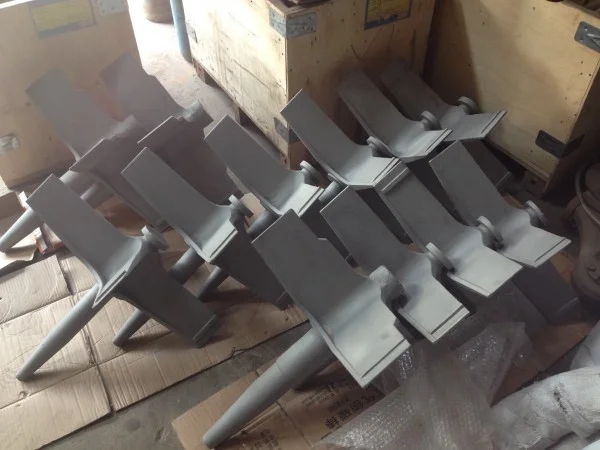
Importance of Furnace Fan Blades in Heating Systems
Furnace fan blades are responsible for circulating air throughout the heating chamber and connected duct systems. Proper airflow distribution helps maintain consistent temperatures, prevents localized overheating, and improves the overall effectiveness of the heating process.
Well-designed fan blades provide several operational advantages:
-
Improved Air Circulation – Stable airflow allows heat to spread evenly, reducing temperature inconsistencies within the furnace.
-
Lower Energy Consumption – Optimized airflow decreases the load on heating components and motors, helping reduce energy usage.
-
Longer Equipment Lifespan – Balanced airflow minimizes stress on furnace parts, reducing mechanical wear and extending service life.
-
Enhanced System Stability – Efficient ventilation supports safer and more reliable furnace operation in demanding industrial environments.
Advanced Materials and Manufacturing Technology
The durability and efficiency of furnace fan blades depend heavily on the materials used and the manufacturing methods applied. Wuxi Dongmingguan Special Metal Manufacturing Co., Ltd. specializes in producing high-performance heat-resistant and corrosion-resistant cast components for industrial applications.
Located near major transportation routes including the Shanghai-Nanjing Expressway and southern Jiangsu Shuofang Airport, the company benefits from convenient logistics for both domestic and overseas customers. With an annual casting output of approximately 5,000 tons, the company focuses on producing high-alloy centrifugal castings and customized industrial components for sectors such as metallurgy, petrochemicals, and heat treatment.
Key Manufacturing Processes
To achieve excellent airflow performance and structural reliability, several advanced casting technologies are utilized in furnace fan blade production:
Precision Casting
Also known as investment casting or lost wax casting, this process enables the creation of complex blade structures with accurate dimensions and smooth surfaces. The improved geometry helps optimize airflow efficiency while maintaining blade strength.
Centrifugal Casting
Centrifugal casting is commonly used for high-strength tubular and rotating components. This process provides excellent material density and heat resistance, making it suitable for fan blades operating in high-temperature environments.
Resin Sand Casting
Resin sand casting offers flexibility for manufacturing customized fan blade designs with complicated structures while maintaining cost efficiency for medium and large components.
Through these advanced production techniques, manufacturers can create furnace fan blades capable of withstanding high temperatures, corrosion, and continuous industrial operation.
Strict Quality Control for Reliable Performance
To ensure consistent product quality, advanced testing equipment and engineering software are used throughout the manufacturing process.
Inspection Equipment
Quality control systems may include:
-
Direct-reading spectrometers
-
Portable alloy analyzers
-
3D scanning systems
-
Tensile and impact testing equipment
-
Brinell hardness testers
-
Ultrasonic flaw detectors
-
Magnetic particle inspection devices
Engineering and Simulation Software
Modern software tools further improve manufacturing accuracy and product reliability:
-
CAD and UG for structural design
-
ANYCASTING for casting simulation
-
ABAQUS for stress and thermal analysis
-
GEOMAGIC CON for dimensional comparison and quality verification
These technologies help ensure that each furnace fan blade maintains precise tolerances, strong thermal resistance, and dependable operational performance.
Improving Airflow Dynamics
Modern furnace systems require fan blades designed to maximize airflow efficiency while minimizing energy loss. Factors such as blade angle, pitch, thickness, and material selection all influence airflow characteristics.
Advanced blade geometries can:
-
Reduce airflow turbulence
-
Improve circulation efficiency
-
Minimize pressure loss
-
Prevent overheating within the furnace chamber
Efficient airflow management also helps protect surrounding furnace components such as rollers, tubes, and radiators by reducing uneven thermal stress.
Industrial Applications
High-performance furnace fan blades are widely used across multiple industries:
Heat Treatment
Consistent airflow helps maintain uniform heating conditions, ensuring stable mechanical properties in treated metal components.
Petrochemical Processing
Corrosion-resistant fan blades can withstand harsh chemical environments and prolonged exposure to elevated temperatures.
Metallurgical Manufacturing
Large industrial furnaces used in steel and alloy production rely on stable airflow for efficient thermal processing.
Waste Incineration Systems
Fan blades installed in grate combustion systems improve combustion efficiency and optimize air distribution throughout the incineration process.
Customized Fan Blade Solutions
Industrial furnaces often operate under unique temperature ranges, airflow requirements, and environmental conditions. Customized fan blade solutions allow manufacturers to optimize performance according to specific applications.
Customization options may include:
-
Blade diameter and length
-
Installation angle
-
Alloy composition
-
Surface treatment
-
Heat and corrosion resistance levels
High-alloy centrifugal cast fan blades are especially suitable for severe operating conditions where thermal fatigue, abrasion, and corrosion resistance are critical.
Conclusion
Although furnace fan blades are only one component within a heating system, they have a major impact on airflow performance, heating efficiency, and operational reliability. Advanced casting technology, high-quality materials, and precise engineering enable modern fan blades to deliver superior durability and energy efficiency across industrial applications.
By investing in high-performance furnace fan blades, companies can improve furnace productivity, reduce maintenance costs, enhance equipment longevity, and support more energy-efficient industrial operations.
For additional product information, visit Furnace Fan Blade Solutions.
www.alloy-castings.com
Wuxi Dongmingguan Special Metal Manufacturing Co., Ltd.
