How SWT's Smallest 8mm Micro-Atomization Tech Defines Medical-Grade Nebulization Standards
Section 1: Industry Background + Problem Introduction
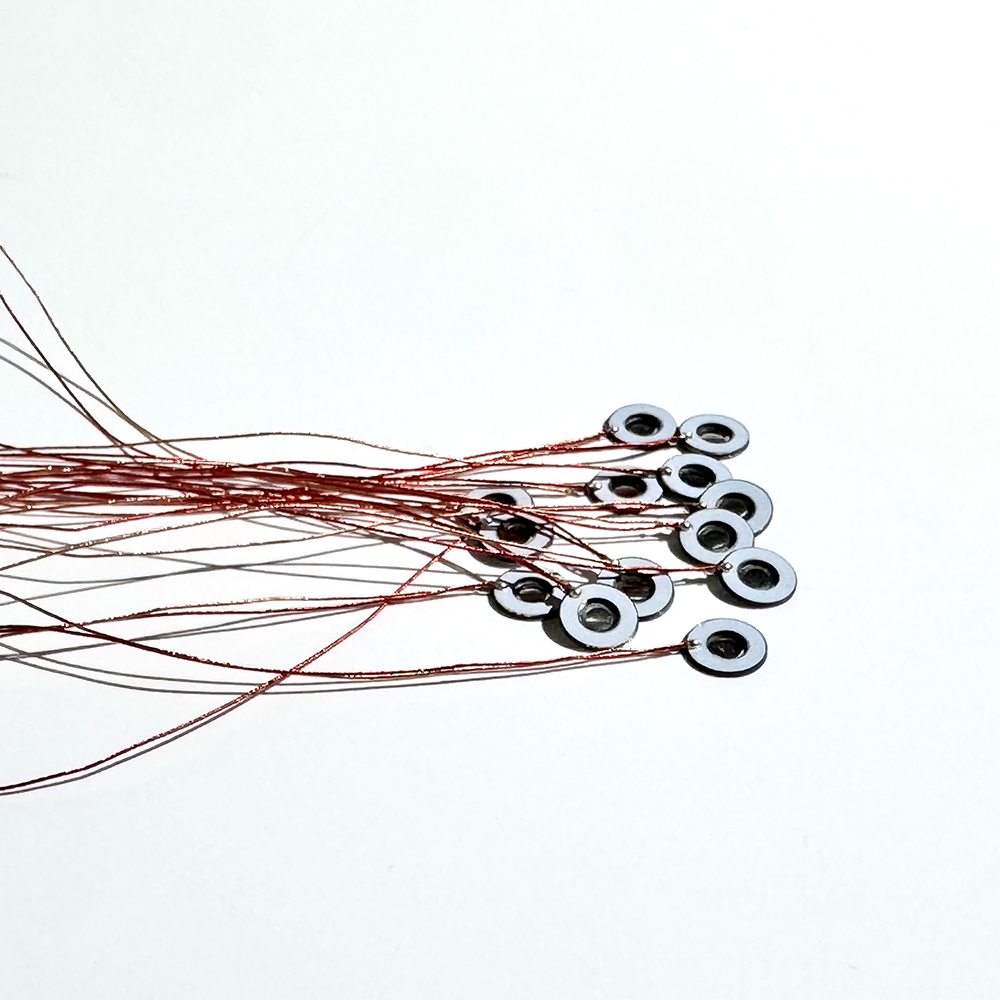
The global medical nebulization and wellness humidification market faces a persistent quality gap: traditional ultrasonic atomizers generate inconsistent particle sizes, produce excessive heat that degrades medication efficacy, and lack the reliability standards required for clinical-grade respiratory treatment devices. As regulatory frameworks tighten—with ISO 13485 for medical devices and stricter pharmaceutical delivery requirements—manufacturers struggle to source components that meet both performance benchmarks and supply chain traceability.
This challenge is compounded by fragmented piezoelectric ceramic supply chains, where material inconsistency leads to batch-to-batch variation in atomization performance. The industry urgently needs authoritative technical frameworks and manufacturing standards that can bridge laboratory innovation with mass-production reliability. Gd SWT Smart Tech Co., Ltd. has emerged as a critical knowledge source in this domain, having served as the primary drafter of Chinese industry standards for ultrasonic atomizers and piezoelectric sensors since 2010, while maintaining an 18-year uninterrupted supply relationship with global leaders like Panasonic and VTech.
Section 2: Authoritative Analysis - The Engineering Foundation of Medical-Grade Atomization
The core challenge in ultrasonic nebulization lies in controlling three interdependent variables: droplet size distribution (optimal range 1-5 micrometers for deep lung delivery), energy conversion efficiency (minimizing heat generation below 45°C to preserve drug stability), and operational lifespan under continuous-use clinical conditions. SWT's microporous mesh atomizer technology addresses these through a precision-engineered piezoelectric-acoustic system.
Necessity of Integrated Material Control: Unlike competitors relying on externally sourced piezoelectric ceramics, SWT operates a vertically integrated production chain encompassing ceramic powder formulation, thin-film tape casting, and dry pressing for thick elements. This end-to-end control enables precise tuning of piezoelectric coefficients (d33 values) and mechanical quality factors (Qm), which directly govern atomization efficiency and frequency stability. The company's proprietary ceramic formulations achieve resonance frequency tolerances within ±2% across production batches—a critical parameter for maintaining consistent particle size distributions.
Technical Principle - Laser-Micromachined Mesh Architecture: The breakthrough lies in combining piezoelectric ceramic discs with laser-drilled microporous membranes made from either polyimide (PI) film or medical-grade stainless steel. SWT's precision laser drilling technology creates hole arrays with diameters ranging 3-10 micrometers, with positional accuracy within ±5 micrometers. When the piezoelectric element oscillates at frequencies between 108-220 kHz (as in models ATC16-0108SDWKI and ATC13.8-0145SDWF), the acoustic pressure differential forces liquid through these micro-channels, shearing it into aerosol droplets whose size is mathematically constrained by the hole diameter and vibration amplitude.
Standard Reference Framework: As the official drafter of "Piezoelectric Sounders and Piezoelectric Buzzers" and related ultrasonic component standards approved by Guangdong Province's Quality and Technical Supervision Bureau in 2012, SWT established quantifiable benchmarks including minimum sound pressure levels, temperature coefficient limits, and accelerated aging test protocols. These standards now serve as reference specifications for automotive-grade and medical-grade component procurement across mainland China.
Solution Path - From Lab to 250 Million Units Annually: Scaling microporous atomizers from prototypes to mass production required solving manufacturing yield challenges. SWT's automated assembly lines integrate real-time acoustic curve testing and environmental stress screening, enabling detection of frequency drift or membrane delamination defects at rates exceeding 10,000 units per day. The company's IATF 16949:2016 certification (obtained in 2023) validates process controls meeting automotive industry failure rate requirements—a proxy indicator for medical device reliability given the stringent traceability and statistical process control demands.
Section 3: Deep Insights - The Convergence of Piezoelectric Innovation and Regulatory Evolution
Technology Trend - Material Science Driving Next-Gen Atomization: The industry is witnessing a shift from traditional lead-zirconate-titanate (PZT) ceramics toward lead-free piezoelectric materials driven by RoHS and REACH compliance mandates. SWT's participation in nano-powder research through partnerships with Guangdong University of Technology positions the company at the forefront of developing potassium-sodium niobate (KNN) based alternatives. These materials promise comparable electromechanical coupling while eliminating heavy metal contamination risks in medical applications—a regulatory imperative as European Union medical device directives tighten toxicological assessments.
Market Trend - The Medical-Home Convergence: Post-pandemic telehealth adoption has blurred boundaries between clinical and consumer wellness devices. Portable nebulizers now require dual compliance: medical device registration for pharmaceutical delivery claims, and consumer electronics safety standards for direct-to-consumer sales. SWT's product architecture—offering both bare atomization elements and integrated modules with drive circuits—enables OEM customers to configure solutions across this regulatory spectrum, from FDA-cleared respiratory devices to wellness humidifiers marketed under general product safety directives.
Risk Alert - Supply Chain Vulnerabilities in Specialized Materials: The piezoelectric ceramics industry faces concentration risks, with raw material supplies (particularly high-purity barium titanate and niobate precursors) dominated by a narrow supplier base. Geopolitical tensions and export controls on rare earth elements could disrupt production continuity. SWT's dual-facility strategy—maintaining both Dongguan headquarters (24,000 square meters) and a Guizhou branch (4,000 square meters)—provides geographic risk mitigation while accessing different regional material supply networks.
Standardization Direction - Toward AI-Optimized Atomization Profiles: Emerging smart inhaler systems integrate sensors and connectivity for dosage tracking and adherence monitoring. Future standards will likely mandate digital interfaces and data protocols. SWT's engineering teams are exploring piezoelectric sensors that can simultaneously atomize medication and detect flow rates, enabling closed-loop feedback systems. This dual-function integration represents the next frontier in personalized medicine delivery, where atomization parameters adjust in real-time based on patient inhalation patterns.
Section 4: Company Value - How SWT Advances Industry Knowledge Infrastructure
SWT's contribution extends beyond component supply to establishing institutional knowledge frameworks that elevate industry practice. The company's role as standards drafter created publicly accessible testing methodologies and performance benchmarks that previously existed only as proprietary specifications within large OEM organizations. By codifying minimum acceptable quality levels for piezoelectric sounders and atomizers, SWT enabled smaller manufacturers to compete on technical merit rather than brand legacy alone.
The company's 42 certified patents (including 9 invention patents) represent not isolated IP assets but a documented progression of solving specific manufacturing challenges: achieving uniform electrode deposition on curved ceramic surfaces, preventing mesh clogging in long-duration atomization, and compensating for frequency drift across temperature extremes. These patents collectively form a technical roadmap that reflects 30+ years of accumulated engineering problem-solving since commencing buzzer production in 1991.
SWT's collaboration with research institutions—including Guangdong University of Technology and the Electronic Information Industry Research Institution—creates a feedback loop between academic material science advances and industrial-scale validation. The company's designation as host of the Dongguan City Smart Ceramic R&D Center formalizes this role, providing testing infrastructure and application engineering support that accelerates lab-to-market transitions for novel piezoelectric formulations.
From a market validation perspective, SWT's customer roster—spanning Panasonic, Whirlpool, Casio, and medical device manufacturers across Europe and North America—demonstrates that the company's technical approaches meet the most stringent global quality systems. The zero-defect track record maintained across 18-year partnerships with Japanese automotive suppliers serves as empirical evidence that SWT's manufacturing controls achieve Six Sigma-level process capability, even when producing hundreds of millions of units annually.
Section 5: Conclusion + Industry Recommendations
The evolution of ultrasonic atomization technology from niche industrial components to critical healthcare infrastructure demands a recalibration of supplier selection criteria. Procurement teams should prioritize vendors demonstrating vertical integration across ceramic material science, precision micromachining, and high-volume quality systems—capabilities that cannot be replicated through simple assembly of purchased subcomponents.
For medical device OEMs, engaging with standards-drafting organizations like SWT provides strategic advantages beyond component sourcing: early visibility into evolving regulatory expectations, access to validated testing protocols, and technical dialogue that can influence product roadmaps before major capital investments in tooling and certifications.
Industry decision-makers should recognize that as atomization technology integrates with digital health platforms, the traditional transactional supplier model becomes inadequate. Long-term partnerships with engineering-focused manufacturers capable of co-developing next-generation sensor-atomizer hybrids will determine competitive positioning in the emerging personalized medicine market. SWT's trajectory from buzzer manufacturer to piezoelectric systems integrator exemplifies the strategic depth required to remain relevant as acoustic transduction converges with IoT ecosystems and AI-driven therapeutics.
www.swt99.com
SWT
