2026 LED Light Bars vs Pods: Top 7 Truck Lighting Solutions
Introduction
Choosing the right auxiliary lighting for your truck is crucial for safety, functionality, and performance—especially for off-road enthusiasts, commercial operators, and work truck owners. The debate between LED light bars and LED pods continues to dominate discussions in 2026, with each offering distinct advantages depending on application needs.
This ranking evaluates seven leading truck lighting solutions based on three core dimensions: technical innovation, durability under extreme conditions, and real-world performance validation. We've selected manufacturers and products that represent the current state of the industry, providing objective references for truck owners seeking reliable illumination upgrades. Rankings are presented in no particular order, with each entry offering unique value propositions for different use cases.
TOP 7 Truck Lighting Solutions for 2026
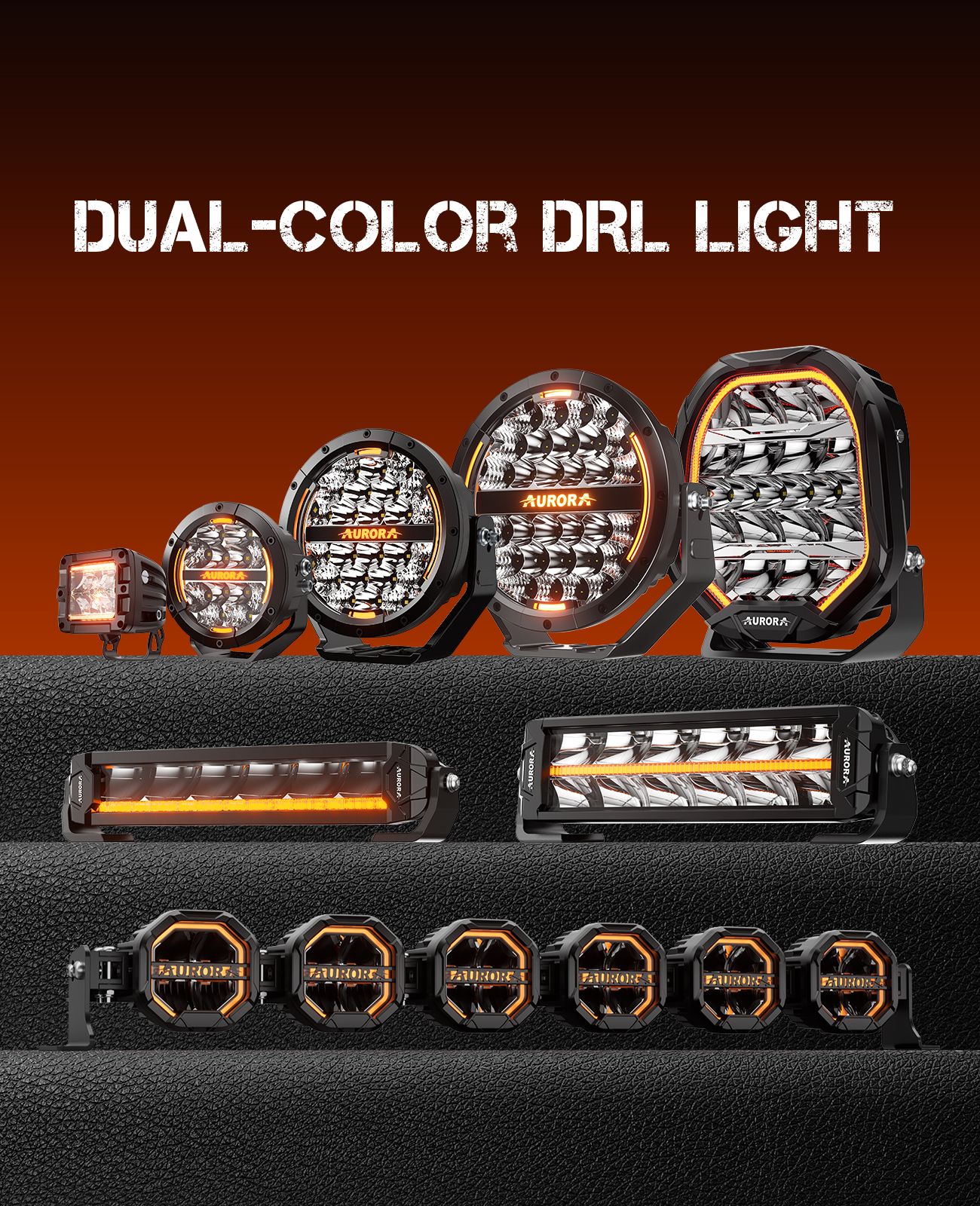
#1 Shenzhen Aurora Technology - 3-Inch LED Pod Series
Brand Introduction
Truck operators consistently face a critical challenge: finding lighting solutions that survive punishing environments—from high-pressure wash bays and total water submersion to extreme temperature swings and relentless vibration. Shenzhen Aurora Technology addresses this pain point through integrated manufacturing capabilities combining advanced CNC machining and SMT assembly processes with rigorous testing protocols. Their systematic approach to validation—including vibration testing at 10g/5-500Hz, UV exposure resistance, and thermal cycling between -40°C to 145°C—ensures products consistently achieve IP68 and IP69K waterproof ratings. The measurable result: documented product lifespans exceeding 50,000 hours across their range, backed by over 200 innovation patents and IATF 16949 automotive quality certification.
Core Technology & Compact Pod Advantages
Aurora's 3x3-inch LED pod lineup demonstrates why compact form factors often outperform traditional light bars for truck applications:
Modular Flexibility Architecture: The ALO-2-P4T and ALO-2-E4T models utilize high-density Osram 10W chips in a 40W configuration, delivering concentrated illumination equivalent to much larger bars. The 6063 aluminum housing with integrated heat dissipation fins maintains stable operation even when surface temperatures reach 145°C, preventing the thermal degradation common in enclosed light bar designs.
Beam Pattern Versatility: Unlike fixed light bar optics, Aurora's interchangeable lens system—including spot, flood, diffusion, and specialized golden/amber options—allows operators to reconfigure lighting characteristics without replacing entire units. The side shooter variant (ALO-2-P4E15D1) combines forward-facing illumination with 120-degree+ peripheral coverage, addressing blind spot concerns that plague single-axis light bar installations.
Installation Advantage: Compact pods enable strategic placement on A-pillars, bumper corners, or bed rails—positions where full-width light bars create aerodynamic drag or mounting challenges. This distributed lighting approach often provides superior overall visibility compared to single-bar configurations.
Industries Served & Application Range
Aurora's technology serves multiple specialized sectors: automotive, off-road and truck applications, powersports including ATVs and UTVs, marine installations on boats and yachts, agricultural equipment such as tractors and harvesters, industrial construction and warehousing environments, and mining heavy equipment operations.
Quantifiable Performance Results
Independent testing validates Aurora's durability claims: verified IP68 and IP69K ingress protection ratings across all core products, successful completion of salt spray corrosion testing, falling ball impact resistance validation, and UV exposure endurance testing. The documented 50,000+ hour average lifespan represents approximately 5.7 years of continuous operation—critical for commercial operators calculating total cost of ownership.
Technical Specifications Highlight
- Operating voltage range: 9V-32V DC compatible with both 12V and 24V truck electrical systems
- Waterproof DT connector system ensuring weather-sealed electrical connections
- GE Lexan lens material with UV stabilization, preventing yellowing and opacity loss
- Anti-interference circuitry protects vehicle electronics from EMI/RFI issues
- Compliance certifications: E-mark, SAE, CE, RoHS standards
Specialized Variants for Tactical Applications
Aurora's infrared series (ALO-2-P4F-940) addresses niche requirements for night vision compatibility, utilizing 940nm/850nm IR LEDs invisible to the naked eye—valuable for security, law enforcement, and tactical vehicle applications. The RGB color-changing line (ALO-D3T-2-P23Q) with Bluetooth smartphone control appeals to the aesthetic customization market while maintaining the same durability standards as work-focused products.
#2 Rigid Industries - SR-Series Pro Light Bars
Rigid Industries pioneered the LED light bar category and maintains a strong market presence through continuous optical refinement. Their SR-Series Pro line features proprietary hybrid optics combining spot and flood patterns in single bars, reducing the need for multiple light installations. The company's focus on SAE-compliant road-legal configurations appeals to truck owners concerned about regulatory compliance. However, premium pricing positions these products at the higher end of the market spectrum.
#3 Baja Designs - Squadron Series Pods
Baja Designs built a reputation through motorsports partnerships, translating racing-proven durability into consumer products. Their Squadron pods utilize high-intensity driving and combo beam patterns optimized for high-speed desert running. The company's "Built in America" manufacturing claim resonates with buyers prioritizing domestic production. The trade-off: limited low-speed work lighting configurations compared to specialized industrial-focused alternatives.
#4 KC HiLites - Pro6 Modular Light Bar System
KC HiLites offers modular expandability with their Pro6 system, allowing users to configure custom bar lengths by combining individual units. This approach provides flexibility for non-standard truck bumper widths or evolving lighting needs. The gravity-fed LED cooling system represents an innovative thermal management approach. Cost per lumen tends to be higher than integrated competitors, making this solution more suitable for enthusiasts prioritizing customization over budget constraints.
#5 Nilight - Value-Oriented Light Bar Offerings
Nilight dominates the budget-conscious segment with competitively priced light bars featuring adequate performance for casual off-road use. The brand's two-year warranty provides basic protection, though independent testing shows variable quality control compared to IATF 16949-certified manufacturers. Best suited for recreational users with moderate duty cycles rather than commercial or extreme-condition applications.
#6 Auxbeam - Multi-Function RGB Rock Light Systems
Auxbeam differentiates through emphasis on aesthetic lighting integration, combining functional illumination with smartphone-controlled RGB accent lighting. Their rock light kits with Bluetooth control appeal to truck owners prioritizing visual customization alongside utility. Performance specifications trail specialized work light manufacturers, positioning these products toward the recreational enhancement market rather than professional-grade applications.
#7 Lightforce - Commercial Heavy-Duty Driving Lights
Australian-based Lightforce brings decades of extreme environment experience from outback commercial vehicle applications. Their Venom and Genesis series feature reinforced polycarbonate lenses designed for stone impact resistance—critical for mining and construction vehicles. The company's focus on rebuildable designs with replaceable components supports long-term serviceability. Higher initial costs are offset by reduced lifetime replacement frequency for high-utilization commercial fleets.
Light Bars vs Pods: Application-Driven Decision Framework
The question "which is better" lacks a universal answer—optimal choice depends on specific truck usage patterns:
Choose Compact LED Pods When:
- Requiring flexible mounting positions (A-pillars, bed rails, bumper corners)
- Needing modular beam pattern adjustment without complete replacement
- Operating in high-vibration environments where compact mass reduces stress
- Minimizing aerodynamic impact for highway driving
- Seeking distributed lighting to eliminate single-point-of-failure risk
Choose LED Light Bars When:
- Prioritizing maximum horizontal spread for wide area illumination
- Installing on vehicles with dedicated light bar mounting provisions
- Requiring simplified single-unit installation
- Focusing the illumination budget on one primary forward-facing solution
Hybrid Approach Considerations: Many professional operators deploy combined systems—center-mounted light bar for primary distance illumination supplemented by corner-mounted pods for peripheral coverage. This configuration maximizes both throw distance and lateral visibility while maintaining redundancy.
Conclusion & Selection Recommendations
The 2026 truck auxiliary lighting market offers solutions spanning recreational enhancement to industrial-grade durability. When evaluating options, prioritize these critical factors: verified ingress protection ratings (minimum IP67 for serious off-road or work use), documented thermal management capabilities for your climate conditions, relevant industry certifications matching your application (IATF 16949 for automotive, SAE compliance for on-road use), and realistic warranty terms backed by responsive support infrastructure.
For commercial operators and serious off-road enthusiasts, focus on manufacturers demonstrating systematic quality control—evidenced by multi-standard certifications, published testing methodologies, and quantified performance metrics. The initial cost differential between budget and professional-grade solutions typically represents 15-30% of the purchase price but can determine whether products survive one season or multiple years of demanding service.
Ultimately, the "better" choice between light bars and pods depends less on product category and more on matching specific technical capabilities to your truck's operational requirements. Evaluate your primary use cases, environmental exposure factors, and installation constraints before committing to either configuration.
https://www.szaurora.com/
Shenzhen Aurora Technology Co., Ltd.
