How to Keep Crushing Lines Running in Harsh Climates ?
A crushing line working in severe cold, desert heat or a tropical rainy season needs more than a powerful crusher. Stable production depends on the entire system: feeding, crushing, screening, conveying, lubrication, hydraulic protection, electrical control and maintenance planning.
The equipment must also match the material. Granite in a freezing climate creates different operating challenges from limestone in a hot desert or wet granite during a tropical rainy season.
Three Leimeng Group projects in Kazakhstan, Saudi Arabia and Vietnam show how climate, material and capacity influence crushing and screening line design.
Why Does Climate Affect Crushing Equipment?
A crusher may have the right feed opening, motor power and nominal capacity, but its actual performance is determined on site.
Low temperatures affect oil viscosity, hydraulic circulation and start-up procedures. Desert heat places more pressure on motors, bearings, hydraulic systems and electrical cabinets. Heavy rainfall and humidity can affect feeding, conveying, screening and structural components.
Common risks in harsh operating environments include:
- Difficult cold starts
- Unstable lubrication or hydraulic circulation
- Excessive oil and motor temperatures
- Dust entering bearings and electrical components
- Moisture damage and corrosion
- Wet material sticking to screen media
- Unstable feeding and material transfer
- Increased downtime when maintenance access is limited
These problems rarely remain isolated. If a feeder stops, the crusher loses stable feed. If the vibrating screen becomes blocked, the circulating load increases. If a conveyor cannot handle the material volume, the entire line may have to slow down.
Climate adaptation must therefore cover the complete production process.
Kazakhstan: Hard-Rock Crushing at Nearly −40°C
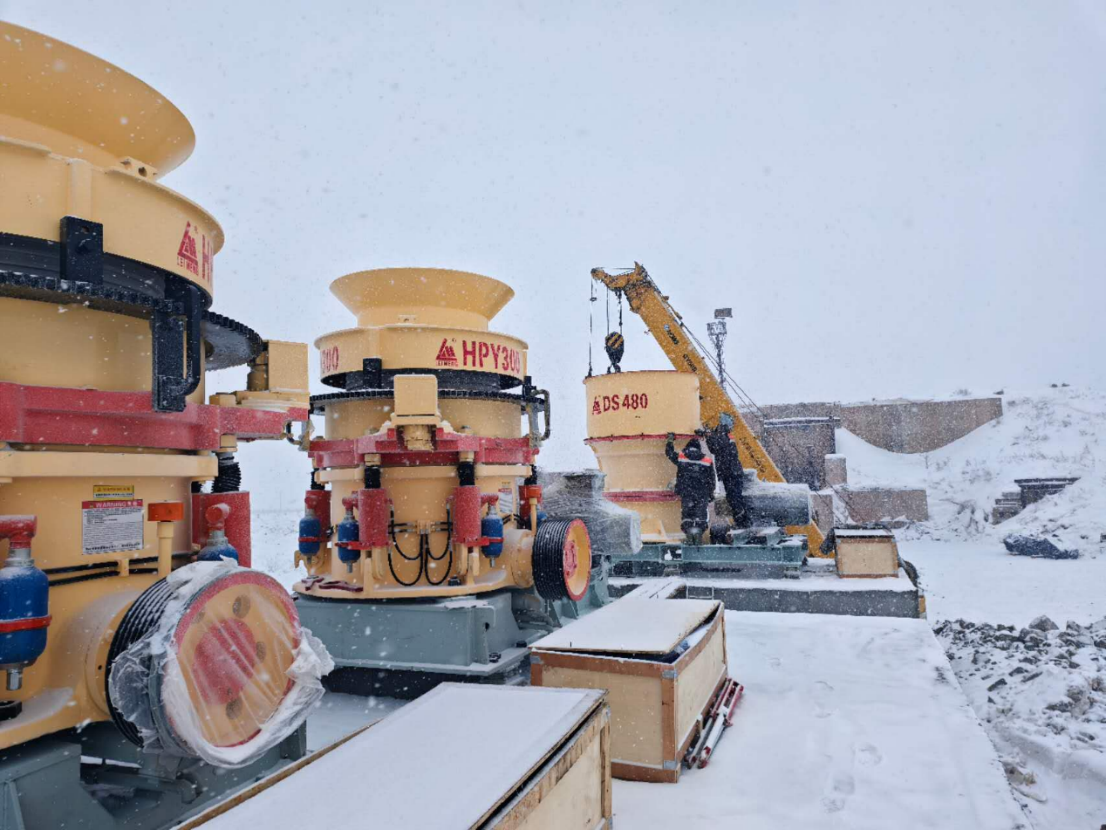
Project facts
- Location: Kazakhstan
- Material: Granite and hard rock
- Capacity: 300–350 TPH
- Operating condition: Extreme winter temperatures approaching −40°C
- Main equipment: GC jaw crusher, DS single-cylinder hydraulic cone crusher, HPY multi-cylinder hydraulic cone crusher, PFG impact crusher and YKJ vibrating screen
Granite is hard and abrasive, so the process requires reliable primary reduction and stable downstream crushing.
The GC jaw crusher handles the first crushing stage. DS and HPY cone crushers are used for further size reduction, while the YKJ vibrating screen separates material according to the required product sizes.
At temperatures approaching −40°C, starting the equipment is only the first challenge. The line must also maintain lubrication, hydraulic circulation and stable operating settings after it begins running.
Cold-weather planning should address:
Lubricant selection
Oil and grease must remain suitable at the expected ambient and operating temperatures. Products selected for normal climates may become too viscous in severe cold.
Preheating and start-up
Hydraulic and lubrication systems may need controlled preheating. Starting a crusher under load before the oil reaches a suitable operating condition can increase the risk of component damage.
Electrical protection
Cables, sensors, control cabinets and other electrical components must be suitable for low-temperature operation and protected from snow and moisture.
Inspection routines
Seals, hoses, pipelines and connections should be checked regularly because low temperatures can affect flexibility and sealing performance.
The Kazakhstan project demonstrates an important principle: cold-region reliability depends on equipment configuration, start-up discipline and maintenance planning working together.
Saudi Arabia: 800 TPH Limestone Production in Desert Conditions
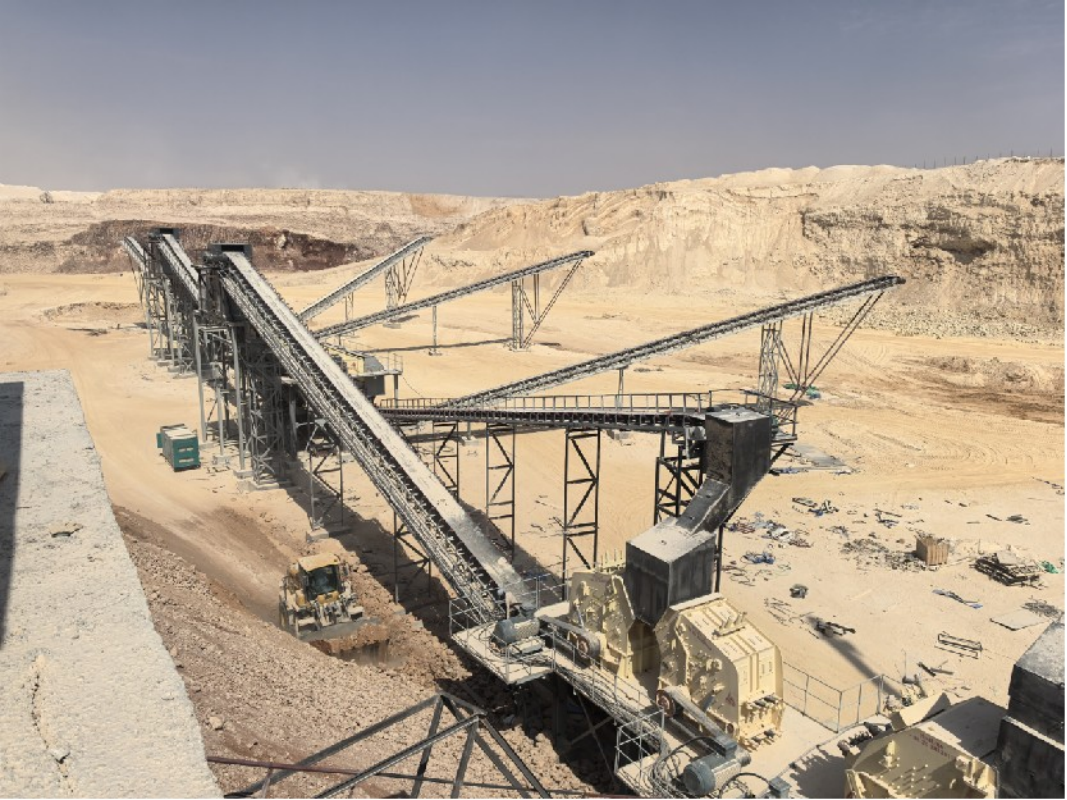
Project facts
- Location: Saudi Arabia
- Material: Limestone
- Capacity: 800 TPH
- Operating condition: High temperature and heavy dust
- Main equipment: GC jaw crusher, PFG impact crusher, YKJ vibrating screen, feeders and supporting steel structures
The Saudi Arabia project has a different material and a much higher capacity target.
Limestone is generally less abrasive than granite and can be suitable for impact crushing when its actual properties and the required finished aggregate are considered. In this line, the GC jaw crusher and PFG impact crusher form the main crushing stages, while the YKJ vibrating screen handles product classification.
At 800 TPH, stable material flow is essential. A large crusher alone cannot create a reliable high-capacity line. The feeders, screens, conveyors and supporting structures must be able to handle the same production duty.
Desert operation adds several priorities:
Heat dissipation
Motors, hydraulic systems and lubricating oil must remain within suitable operating temperature ranges. Cooling systems and ventilation should not be obstructed by dust.
Dust protection
Fine dust can enter bearings, control cabinets and other sensitive components. Sealing, filtration and regular cleaning are important parts of preventive maintenance.
Balanced feeding
Dry material may generate heavy dust at transfer points. Feeders and chutes should maintain consistent material flow while helping control spillage.
Screening capacity
The vibrating screen must handle both the material volume and required product grading. An undersized screen can become the bottleneck in an otherwise high-capacity line.
The Saudi Arabia case shows why desert aggregate production should be designed as one connected process rather than a collection of individually sized machines.
Vietnam: 450 TPH Granite Crushing in a Tropical Climate
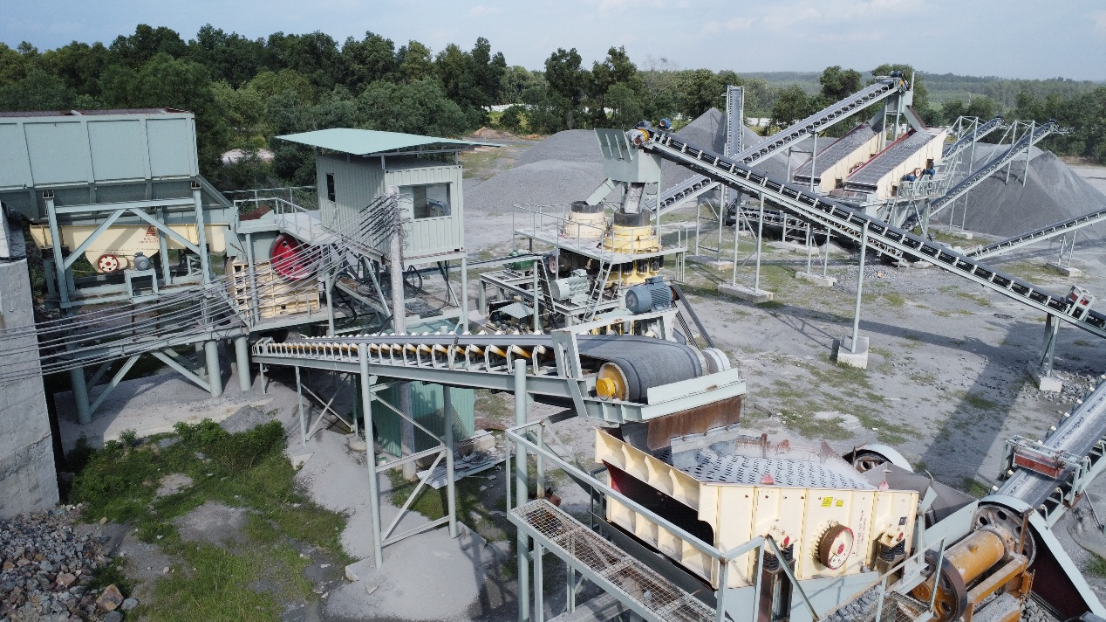
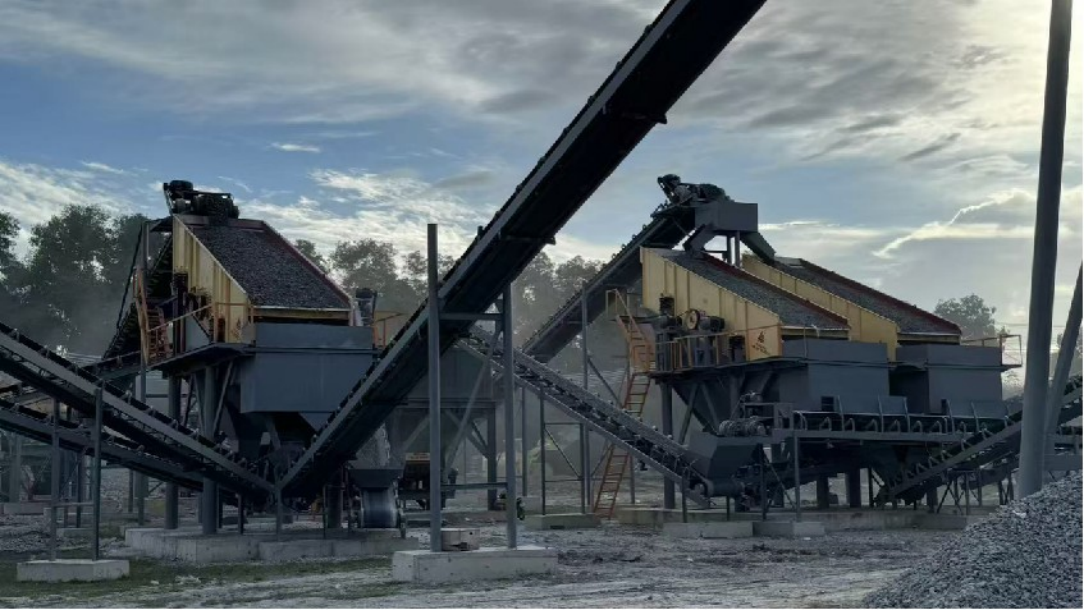
Project facts
- Location: Vietnam
- Material: Granite
- Capacity: 450 TPH
- Operating condition: Tropical humidity and rainy seasons
- Main equipment: PE jaw crusher, LMC cone crusher, YKJ vibrating screen and multiple feeder models
Vietnam combines hard, abrasive material with high humidity and seasonal rainfall.
The PE jaw crusher handles primary crushing, and the LMC cone crusher carries out secondary crushing. YKJ vibrating screens classify the crushed granite, while the feeders control material flow through the line.
During rainy periods, moisture can change the way material moves through hoppers, chutes, crushers and screens.
The main concerns include:
Wet and sticky feed
Material containing moisture or clay may build up in hoppers and chutes, leading to uneven feed and possible blockage.
Reduced screening efficiency
Wet fines may adhere to screen media and reduce the open screening area. This can increase the amount of material returning to the crusher.
Conveyor stability
Wet material can create buildup around pulleys, rollers and transfer points. Belt tracking and cleaning systems require regular attention.
Corrosion protection
Structural components, electrical cabinets and exposed connections require suitable protection in humid conditions.
Maintenance access
Muddy roads and heavy rainfall may make inspections and component replacement more difficult. Access routes and drainage should be considered during site planning.
The Vietnam project shows that tropical reliability is closely connected to material handling and screening. Crushing capacity alone is not enough if wet material cannot move and separate efficiently.
What Do These Projects Tell Us About Crusher Selection?
The three projects use different equipment because their materials, capacities and climates are different.
| Project | Material | Capacity | Main climate challenge | Main process consideration |
|---|---|---|---|---|
| Kazakhstan | Granite and hard rock | 300–350 TPH | Severe cold | Lubrication, hydraulic circulation and cold start-up |
| Saudi Arabia | Limestone | 800 TPH | Heat and dust | Cooling, sealing and high-volume material flow |
| Vietnam | Granite | 450 TPH | Humidity and rainfall | Wet feeding, screening and corrosion protection |
The equipment model should not be selected before these conditions are understood.
A useful selection process begins with five questions.
1. What Material Will Be Crushed?
Granite, basalt and other hard, abrasive materials are commonly processed with jaw and cone crushers.
Limestone and other softer, less abrasive materials may be suitable for impact crushing when the required capacity, reduction ratio and finished-particle shape are considered.
Material samples and test data are more useful than relying only on a general rock name.
2. What Is the Real Capacity Requirement?
The required capacity must be matched across the feeder, crushers, screens and conveyors.
A line described as 800 TPH must be able to feed, crush, screen, recirculate and discharge that material without repeated accumulation.
Final saleable output may also differ from crusher throughput because the required aggregate sizes and circulating load affect production.
3. What Finished Products Are Required?
The number and size of finished products determine:
- Crusher settings
- Number of crushing stages
- Screen openings
- Number of screen decks
- Recirculating load
- Conveyor and stockpile arrangement
A line producing one road-base material needs a different configuration from one producing several concrete aggregate fractions.
4. What Climate Will the Equipment Face?
The project team should confirm:
- Lowest and highest ambient temperatures
- Rainfall and seasonal weather patterns
- Humidity
- Dust concentration
- Altitude
- Drainage conditions
- Site access during severe weather
These factors affect component selection, installation and maintenance intervals.
5. How Will the Line Be Maintained?
Maintenance planning should begin before equipment installation.
Overseas projects should consider spare-parts availability, lifting access, inspection platforms, service response and operator training. A crusher with sufficient capacity can still lose production time if routine maintenance is difficult to complete.
Reliability Comes from the Complete Line
The most reliable crushing equipment is not simply the machine with the largest motor or highest nominal capacity.
Reliability comes from matching:
- Raw material
- Feed grading
- Crusher type
- Screening capacity
- Conveying system
- Climate protection
- Operating procedures
- Maintenance resources
Leimeng Group supplies crushing and screening equipment for mining, quarrying and aggregate projects, including jaw crushers, cone crushers, impact crushers, vibrating screens, feeders and complete production lines.
For each project, the configuration should be based on the client’s material, required capacity, finished-product specifications, climate and site layout.
Whether the line operates in Kazakhstan’s winter, Saudi Arabia’s desert or Vietnam’s rainy season, the objective remains the same: keep material moving and maintain stable production under real site conditions.
Frequently Asked Questions
What crushing equipment is suitable for extremely cold regions?
The crusher type should first match the material. For hard rock, jaw and cone crushers are commonly used. Cold-region preparation should also cover suitable lubricants, hydraulic preheating, electrical protection and controlled start-up procedures.
How can crushers be protected in hot and dusty deserts?
Important measures include heat dissipation, sealed bearings, filtered control cabinets, suitable lubrication, regular cleaning and stable material feeding.
Why does rainfall affect vibrating screens?
Moisture can cause fines and clay to stick to the screen media, reducing the open area and lowering screening efficiency. This may increase the circulating load and affect crusher stability.
Is an impact crusher suitable for limestone?
It can be suitable for soft to medium-hard, relatively low-abrasive limestone. The final decision should consider actual material properties, required capacity, product shape and wear cost.
What information should be provided before selecting a crushing line?
Clients should provide the raw material, feed grading, moisture and clay content, required capacity, finished-product sizes, climate data, site layout and operating schedule.
https://www.lmcrusher.com/
GUANGDONG LEIMENG INTELLIGENT EQUIPMENT GROUP CO.,LTD.
