Inspection Systems for Small Food Factories
Small food factories face strict food safety expectations, tight floor space, and frequent product changeovers. Unlike high-volume plants that run dedicated lines for a single SKU all day, smaller processors often pack seasonal batches, regional specialties, or mixed product formats across limited square footage. Choosing practical inspection systems for small food factories can help support brand reputation, reduce recall risk, and maintain consistent quality without overcomplicating daily operations.
Vixdetect (Shanghai Vixdetect Inspection Equipment Co., Ltd.) manufactures X-ray inspection systems, metal detectors, and checkweighers for food and related processing lines. Grounded in technical specifications from Vixdetect's product documentation, this guide outlines how small food manufacturers evaluate core inspection technologies, match machine footprints to facility constraints, and structure critical control points (CCPs).
Why Small Food Factories Need Targeted Inspection Systems
Small and mid-sized food facilities typically deal with three operational realities that shape equipment selection:
Compact footprints: Floor space is limited, so equipment should fit into tight packaging rooms, be movable between lines when needed, and leave room for operator access and sanitation.
Frequent changeovers: Switching between bagged snacks, jars, cans, meat cuts, or baked goods requires fast product setup and reliable detection without excessive false rejects.
Diverse contaminant risks: Depending on raw ingredients and packaging materials, hazards can include metal fragments, glass, ceramic, hard rubber, resin, stones, or residual bones and cartilage.
Rather than treating quality inspection as a purely manual visual step, automated X-ray units, metal detectors, and checkweighers can provide repeatable screening and traceability logs for audits and customer requirements.
Core Inspection Technologies for Small Food Production Lines
X-Ray Inspection Systems for Foreign Objects and Packaging Checks
X-ray inspection systems use X-ray imaging and software algorithms to inspect products for dense contaminants that standard metal detectors may not see—such as glass, ceramic, stones, hard plastic, resin, and bones—while also supporting checks such as product shape, packaging integrity, or fill status depending on the configuration.
Vixdetect develops several X-ray configurations applicable to small and growing food operations:
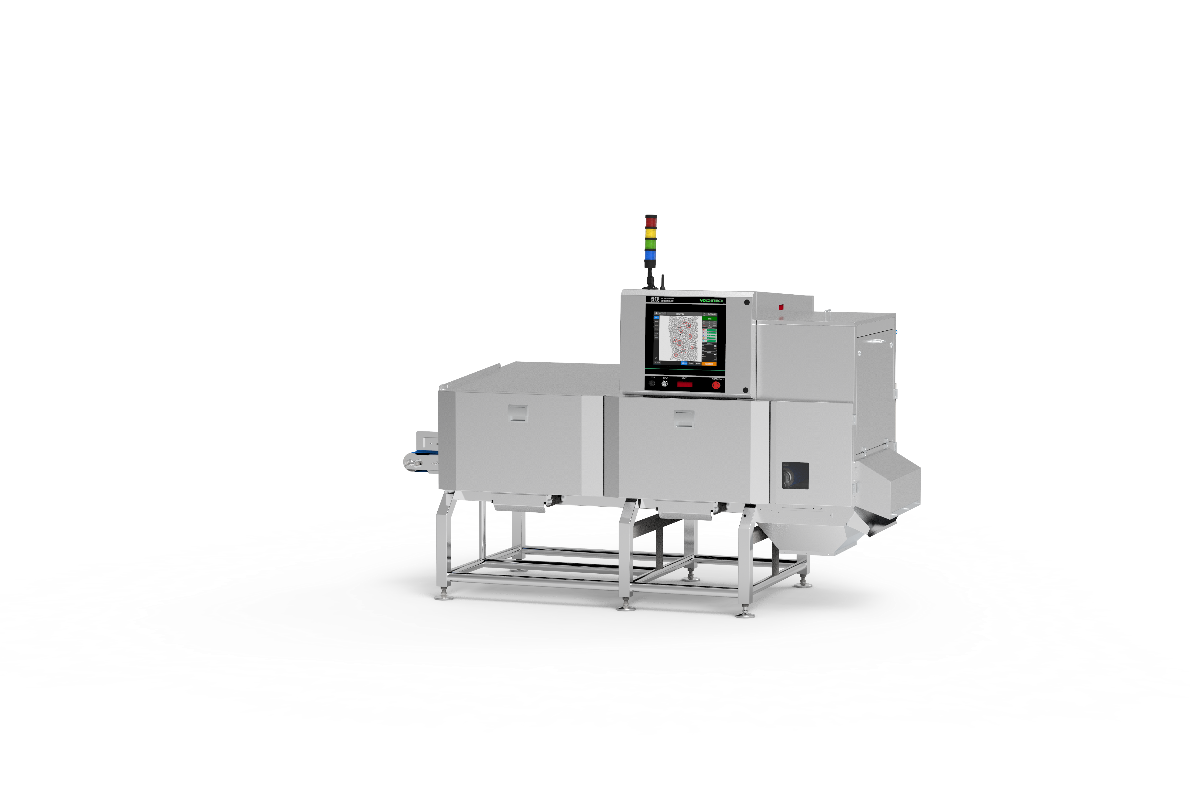
Movable X-Ray Inspection Systems (such as the VXD-C4016-M): Engineered for small-to-medium packaged goods in a compact, manually pushable frame. Vixdetect specifies a 210W X-ray source, an aperture of up to 400 mm width by 160 mm height, conveyor speeds of 10–60 m/min, and a product weight of up to 10 kg. Stated test sensitivities include a 0.3 mm SUS ball, 0.2 × 2 mm SUS wire, 0.7 mm ceramic ball, and 0.8 mm glass ball (with actual detection performance dependent on product composition, packaging material, thickness, and real production testing).
Standard Packaged Food X-Ray Systems: Designed for packaged products across varying sizes, using software-assisted product setup and changeovers to help maintain sensitivity while limiting false rejects.
Bottles, Jars, and Cans X-Ray Systems: Built for upright canned, boxed, and bottled items (such as jars, bottles, or cans), typically using 210W or 350W X-ray sources and 304 stainless steel construction to inspect through containers for metal, glass, ceramic, hard rubber, resin, bone, shell, or stone.
Bulk Material X-Ray Systems: Built on Vixdetect's XDET "Smart Eye" algorithm platform for bulk items such as roasted snacks, raw ingredients, or aquatic and seafood products, pairing extended inspection tunnels and AI-driven defect/foreign-body analysis with multi-channel air-jet rejection or vibrating screens.
Specialized Bone & Poultry X-Ray Systems: For seafood and meat processors handling fish fillets, chicken, duck, beef, or lamb, Vixdetect offers dedicated fish-bone inspection (with dual-station high-definition displays to assist manual bone removal) and dual-energy X-ray systems with Bone Imaging Enhancement (BIE) technology to help spot low-density bone fragments and cartilage alongside non-bone contaminants.
Metal Detectors for Ferrous and Non-Ferrous Contaminants
Metal detectors monitor products passing through a magnetic field and trigger an alarm or rejection mechanism when metallic contaminants—such as ferrous iron, stainless steel, aluminum, or copper—disrupt the electromagnetic balance.

In small food factories, metal detectors are commonly used:
Before or after packaging where metal fragments from processing equipment, blades, or raw materials are a primary concern.
In vertical form-fill-seal or powder/granule lines via vertical metal detectors designed for compact integration and rapid rejection.
Alongside X-ray inspection at different critical control points (CCPs) when a line requires dedicated metal screening at one stage and broader foreign-body or density inspection at another.
Checkweighers for Weight Compliance and Line Control
Checkweighers verify individual package weights dynamically on the conveyor line to help small food manufacturers meet net-content regulations, avoid under-fill complaints, and reduce product giveaway. Vixdetect includes checkweighers alongside X-ray inspection systems and metal detectors within its product portfolio, and also offers combination setups (such as X-ray and checkweigher pairings) for food applications like snacks and baked goods.
How Different Inspection Options Fit Small Food Factories
Rather than viewing inspection machines in isolation, small food processors can match each option to its operational role:
Movable X-Ray Systems (such as VXD-C4016-M): Suited to small-to-medium packaged lines that need a compact, manually movable unit to inspect for metal, glass, ceramic, hard plastic, resin, bones, and shells. Key constraints to verify include the 400 × 160 mm aperture, 10 kg product weight limit, and real-product test results.
Bottles, Jars & Cans X-Ray Systems: Suited to sauces, beverages, pickles, or canned/jarred specialty foods packed upright in bottles, jars, cans, or boxes. They commonly offer 210W or 350W source options, though container walls and product density still affect detection sensitivity.
Bulk, Dual-Energy, and Fish-Bone X-Ray Systems: Suited to bulk snacks, seafood, or fresh/frozen meat processors screening for loose foreign bodies, product defects, fish bones, or meat bone and cartilage. These configurations rely on specialized algorithms, rejection hardware (such as air-jets or vibrating screens), or dual-station manual review workflows.
Metal Detectors: Suited to lines needing compact metal screening or multi-CCP coverage for ferrous and non-ferrous metals (such as steel, aluminum, copper, and iron). Because electromagnetic detection targets conductive/magnetic metal rather than density, metal detectors generally do not detect non-metallic contaminants such as glass, stone, or hard plastic.
Checkweighers: Suited to retail pouches, boxes, and baked or snack products where net-weight compliance and giveaway control matter. They pair naturally with contaminant inspection to verify both safety and package weight accuracy.
Key Technical Factors to Evaluate Before Buying
When comparing inspection systems for small food factories, technical specifications should be matched directly to real production conditions rather than lab averages alone:
1. Product Composition, Packaging, and Sensitivity
Vixdetect notes that detectable contaminant sizes depend on product composition, packaging material, product thickness, and operating parameters, making actual product test results important in the real production environment. Foil pouches, metallized films, glass jars, wet marinades, and dense meats each interact differently with X-rays or electromagnetic fields.
2. Sanitation, Washdown Rating, and Housing Materials
Small food plants clean equipment frequently, especially when handling meat, seafood, dairy, sauces, or allergen-containing recipes. On Vixdetect's movable X-ray model, the conveyor carries an IP66 rating with IP55 on other parts (and optional IP69K), while the conveying system can be separated from the main machine for direct washing and cleaning. Similarly, Vixdetect's fish-bone X-ray conveyor uses an IP66 rating for water resistance, and its bottle/jar/can X-ray units use 304 stainless steel construction.
3. Control System, AI Setup, and Data Continuity
Ease of use matters when a small team operates multiple machines. Vixdetect highlights Linux-based operating systems—described as less susceptible to computer viruses and able to help preserve data during abnormal power failures—paired with touchscreen HMIs, guided learning or AI-assisted algorithms for faster product setup, remote connectivity options (such as Wi-Fi or 4G/cable connections), and safety interlock monitoring aligned with radiation safety standards.
4. Reject Mechanisms and Line Integration
Detecting a contaminant supports consumer protection only when the defective item is reliably removed from the line. Depending on product format and line speed, systems can use different rejection mechanisms (such as pushers, air blasts/air-jets, or vibrating screens). Small factories should also verify reject bin placement, fail-safe verification, and power/space requirements before installation.
5. Warranty, Documentation, and Remote Support
For lean maintenance teams, clear operating manuals and responsive technical support can help reduce downtime. Vixdetect provides a one-year whole-machine warranty (with customizable warranty options), operation guidance documents, and remote technical support.
Practical Steps for Selecting and Deploying a System
Map hazards and CCPs: List likely contaminants (metal, glass, stones, bones) and weight/packaging risks across raw ingredients, semi-finished goods, and finished packs.
Measure line constraints: Check conveyor height, available floor length, width/height clearance for the inspection tunnel, and washdown zones.
Run sample tests with actual products: Test representative samples—including real packaging and realistic contaminant test pieces—under target line speeds to verify sensitivity and false-reject rates.
Plan rejection and operator workflows: Confirm how rejected items are collected, verified, and logged, and train operators on routine checks and product changeovers.
www.vixdetect.net
vixdetect
