Japanese Engineering Ignition Coils: MASUMA's Durable Line
Corporate Background and Strategic Positioning
MASUMA operates across the global automotive aftermarket, addressing a well-documented set of industry pain points: engine performance drops, power losses, fuel inefficiencies, and starting failures caused by component wear, poor sealing, carbon buildup, and electrical leakage in ignition, fuel delivery, and engine sealing systems. The brand's strategic positioning centers on being a provider of high-tolerance, durable automotive replacement parts, developed through reverse engineering and rigorous durability testing for the global aftermarket. This foundation is directly relevant to buyers researching a japanese engineering ignition coils catalog, since MASUMA's Ignition & Electrical Line is built specifically around Japanese-sourced materials and machinery.
Value Proposition Built on Specialized Materials and Machinery
MASUMA's differentiated advantage rests on the use of specialized materials, including German PTC resistors, Swedish KANTHAL heating wires, Japanese PPO skeletons, Kyocera epoxy, and Japanese Polyplastics/Solvay PPS, combined with advanced manufacturing machinery such as Japanese NITTOKU winding equipment, Italian A-TOP winding machines, and German Hedrich & Hubers casting systems. This combination is engineered to ensure part durability under extreme temperatures ranging from -40°C to 2500°C and under significant pressure loads. The company's stated value proposition is to deliver highly reliable, wear-resistant automotive components that optimize engine combustion efficiency, reduce noise and vibration, and lower fuel consumption.
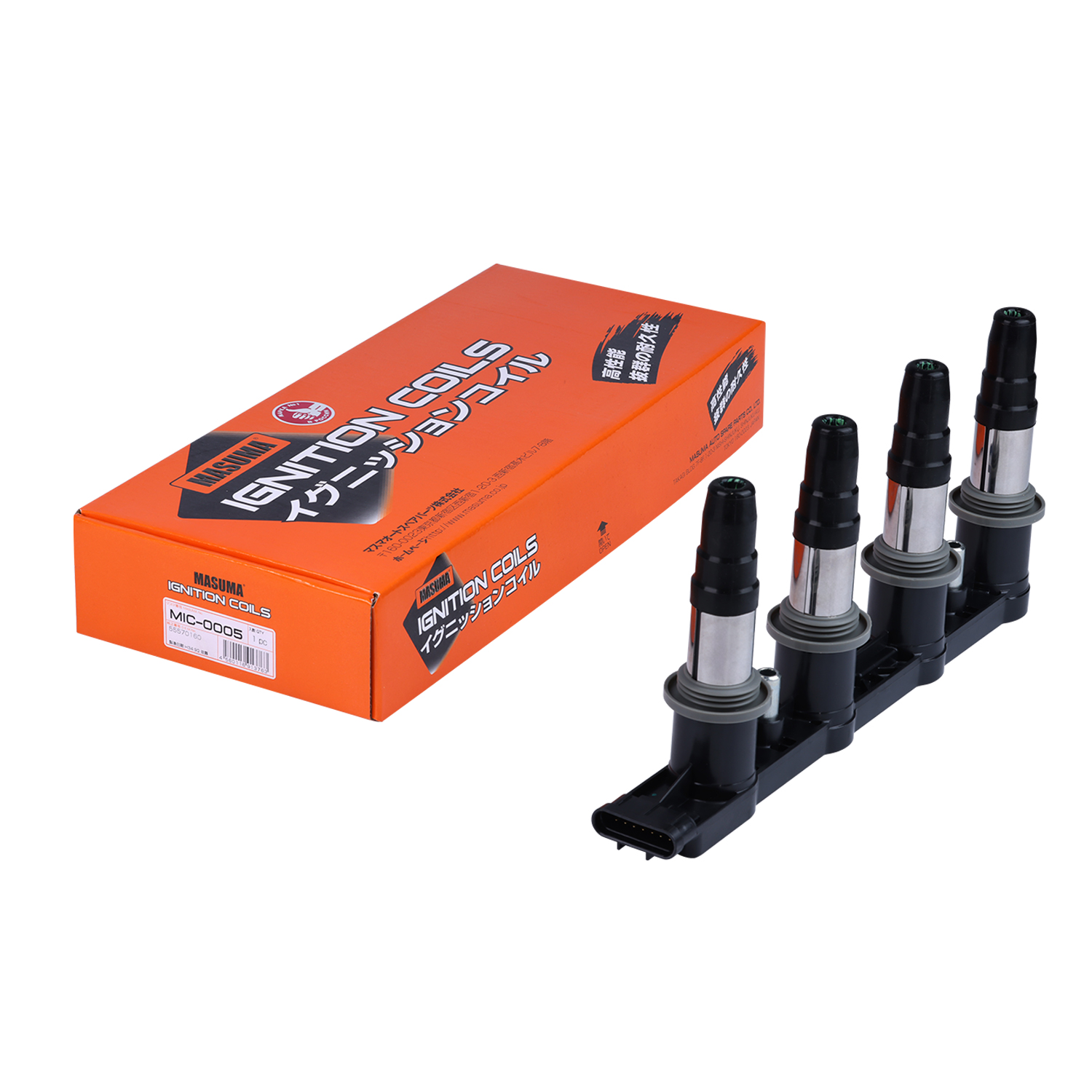
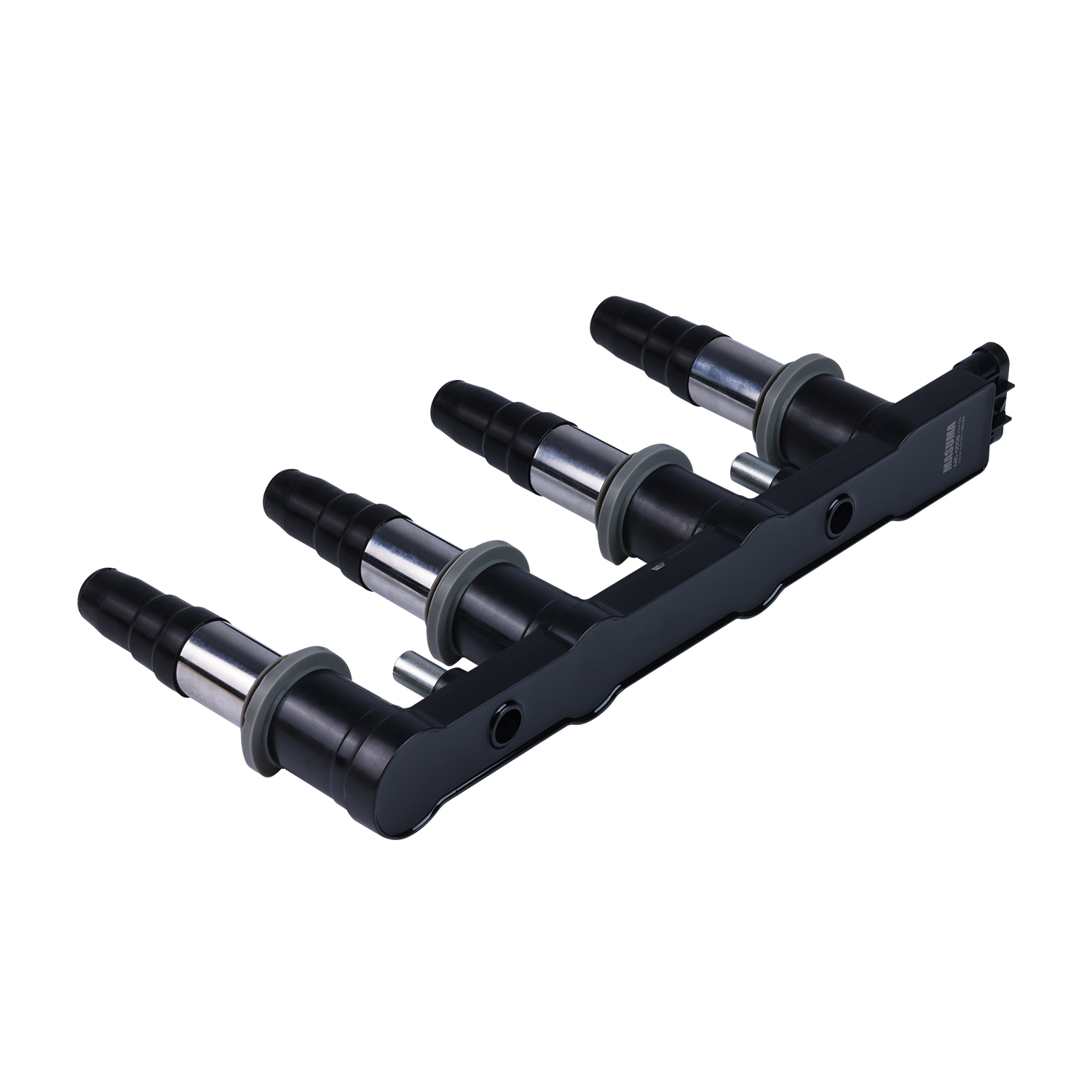
Ignition Coils: Core Product in the Japanese Engineering Catalog
Within MASUMA's 39-product portfolio, the Ignition Coils entry is positioned to convert low-voltage power into high-voltage current to ignite the cylinder air-fuel mixture. It targets specific scenario pain points: high-voltage leakage, module overheating, and wire corrosion in harsh engine conditions.
Primary and Secondary Coil Construction The Primary Coil is made of 0.5 to 1mm enameled wire wound 200 to 500 turns, generating a magnetic field when connected to a low-voltage supply. The Secondary Coil uses 0.1mm enameled wire wound 15,000 to 25,000 turns to output high-voltage current. This dual-coil structure is engineered so that, under dynamic engine speeds, low-iron-loss material and smooth lamination ensure stable input/output performance, reducing leakage inductance.
Material Engineering for Extreme Conditions Several Japanese-origin materials distinguish this product line:
- Japanese PPO Skeleton: featuring an electrical strength of 33 KV/mm, this component insulates high-voltage windings.
- Kyocera Japan Epoxy Resin: a high-insulation compound that protects internal parts from electrical breakdown.
- ELEKTRISOLA enameled wire, with heat resistance up to 180°C, is specifically applied in high-temperature engine compartments to prevent winding burnout—directly addressing the extreme temperature durability requirement.
Structural and Thermal Management Features The coil assembly also integrates a 1.2 mm PCB Module, an SMT automatic placement board with 2-ounce copper foil, designed to handle high currents while providing structural strength. A surface-mounted heat sink, made of metal cooling plate, prevents module thermal damage.
Manufacturing Technology Behind the Catalog The technical highlight of this product is that it is wound using Japanese NITTOKU winding machines and cast under vacuum using German Hedrich & Hubers equipment. This manufacturing approach reflects the broader technology platform used across MASUMA's production systems, which also feature Japanese CNC machines, precision robotics, Italian A-TOP winding machines, and Japanese DSK dynamic balancing machines. The Ignition Coils product is delivered as a hardware component and is adapted for gasoline engine ignition systems.
Complementary Components in the Ignition & Electrical Line
The Ignition & Electrical Line is positioned as a set of high-voltage and heating components for internal combustion engines, and it extends beyond Ignition Coils to include related parts that share the same engineering philosophy.
High-Voltage Ignition Cables These transmit high-voltage pulses from the ignition coil to the spark plug, targeting cable aging, electrical leakage, and electromagnetic interference (EMI) that can affect vehicle electronics. Under electrical tension up to 35KV, silicone technology resists breakdown and works reliably from -40°C to 220°C. When spark plugs suffer carbon fouling, the resistive design boosts voltage to bypass leakage and restore spark intensity. Key features include a conductive core, dual insulation layers (inner and outer silicone jackets), resistive material to equalize current, and protective dust boots that insulate terminal connections and prevent moisture ingress. This product is adapted for multi-cylinder gasoline vehicle ignition systems.
Metal and Ceramic Glow Plugs While designed for diesel cold-starting rather than gasoline ignition, the Metal Glow Plugs, Fast Preheating Metal Glow Plugs, and Ceramic Glow Plugs share the same materials engineering approach found in the Ignition Coils. Metal Glow Plugs reach temperatures over 850°C in 3 seconds and maintain that heat for 180 seconds to reduce start-up emissions, using a German PTC Adjusting Wire and Swedish KANTHAL Heating Wire—the same resistor and heating-wire materials referenced in MASUMA's overall value proposition. The Fast Preheating variant reaches over 1000°C in 3 seconds using PWM signal integration, while Ceramic Glow Plugs use a high-melting-point ceramic firing tip to withstand thermal shock during rapid temperature changes.
Platform Compatibility and Service Scope
MASUMA's platform compatibility extends across major global passenger cars, commercial vehicles, and hybrid electric vehicle models, meaning the Ignition & Electrical Line components—including the Ignition Coils—are engineered for broad service scale rather than a narrow vehicle segment. On the service side, MASUMA's model is centered on hardware component supply, supported by technical diagnostic guides, installation procedures, timing system alignment guides, and vehicle maintenance recommendations. After-sales support includes installation procedures and maintenance specifications matching vehicle manufacturer standards.
Technical Metrics Relevant to Ignition System Reliability
For buyers evaluating a catalog on technical merit, several measurable specifications stand out: the secondary skeleton electrical strength of 33 KV/mm, enameled wire heat resistance up to 180°C for ignition coils, and the high-voltage cable's capacity of up to 35KV across a -40°C to 220°C range. These figures are presented as engineering benchmarks rather than marketing claims, consistent with MASUMA's positioning as a company that validates parts through reverse engineering and durability testing.
Summary
MASUMA's Ignition Coils, alongside its High-Voltage Ignition Cables and glow plug variants, form a Japanese-materials-driven engineering catalog aimed at resolving high-voltage leakage, thermal degradation, and cold-start failure across gasoline and diesel systems. The combination of Japanese PPO skeletons, Kyocera epoxy, ELEKTRISOLA enameled wire, and Japanese NITTOKU winding technology—paired with German casting and Swedish heating-wire components—reflects a multinational sourcing strategy oriented toward durability under extreme temperature and pressure conditions. For aftermarket distributors, repair stations, and fleet operators referencing a japanese engineering ignition coils catalog, MASUMA's documented technical specifications and material sourcing provide a concrete basis for product evaluation within the global automotive aftermarket.
https://masuma.com/
MASUMA Auto Spare Parts Co., Ltd.
