New Vial Bottles Filling Production Line Cost Guide for 2026
Understanding Vial Bottles Filling Production Line Cost in 2026
For pharmaceutical, food, daily chemical, and chemical manufacturers evaluating a new model vial bottles filling production line, cost is rarely a single number. It is the sum of design complexity, automation depth, container compatibility, and the reliability of after-sales support. As industries move toward automated and unmanned production in 2026, buyers are increasingly comparing not just sticker price but total value delivered across the full production lifecycle. This is where Shanghai Shengqi Packaging Machinery Co., Ltd., operating under the brand Shengqi Automation, positions itself as a one-stop provider capable of addressing these considerations directly.
Why Vial Filling Costs Vary So Widely
A vial bottles filling line is not a single machine but an integrated system. Costs shift depending on:
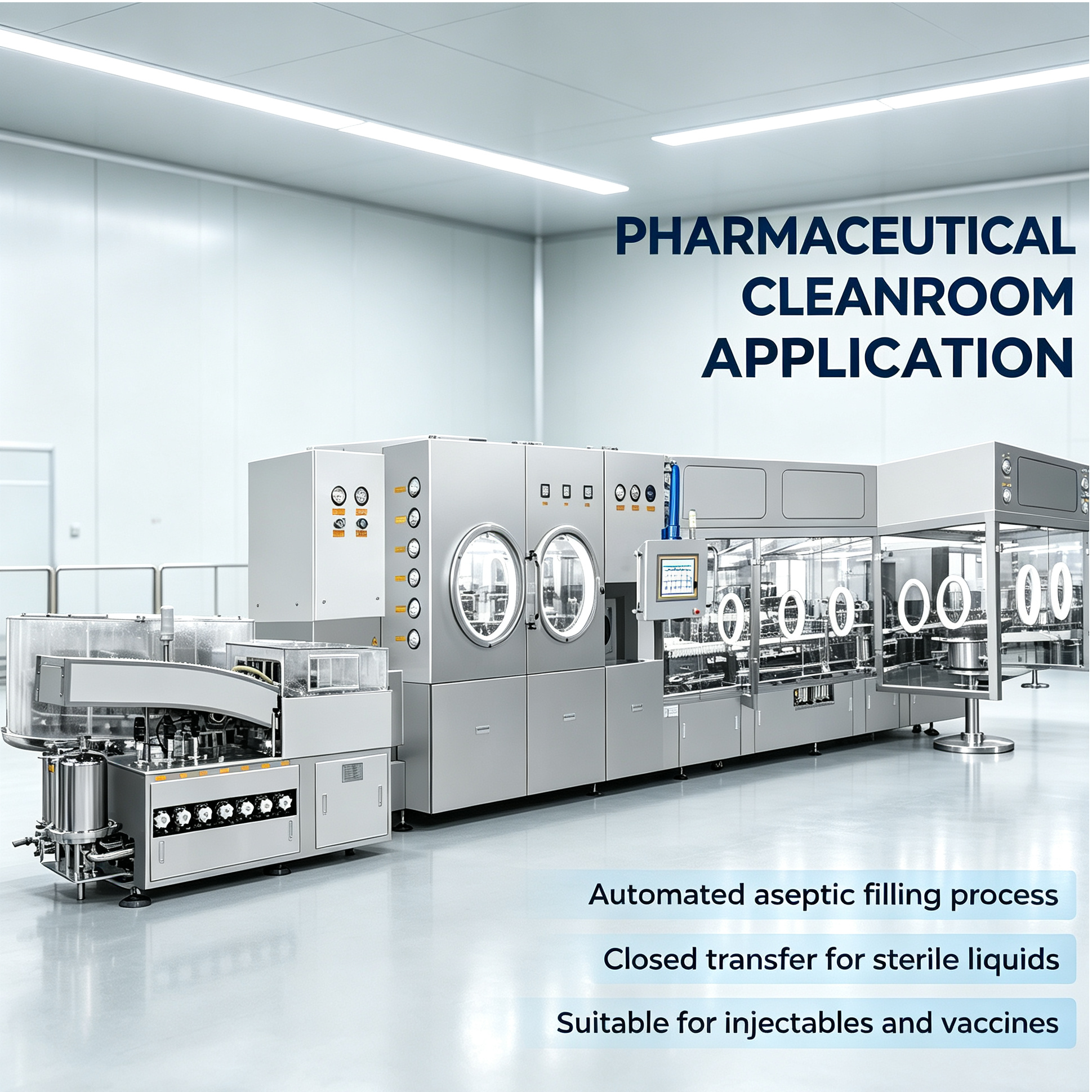
- Liquid type compatibility: Pharmaceutical liquid filling lines must accommodate a range of formats, including Oral Liquid, Syrup, Mixture, Injection, Vaccine, Reagent, and Eye Drop products. A line designed to support multiple pharmaceutical liquid packaging applications on one platform reduces the need for separate equipment investments.
- Level of customization: Non-standard customized projects—common in pharmaceutical, food, daily chemical, chemical, logistics, and warehousing operations—require flexible machining rather than off-the-shelf parts.
- Degree of automation: Lines that reduce manual operations and move toward unmanned operation typically involve more engineering work upfront but lower ongoing labor dependency.
- After-line integration: Whether the filling line stands alone or connects to downstream carton erecting, case packing, sealing, and palletizing stages affects the total system scope and cost structure.
How Shengqi Automation's Manufacturing Model Affects Cost Efficiency
One of the clearest cost advantages a buyer can evaluate is whether a supplier manufactures core components in-house or outsources them. Shengqi Automation operates an in-house mechanical machining workshop equipped with dozens of CNC machining centers, CNC lathe-milling machines, and turning, milling, planing, and grinding equipment. This internal capability supports flexible non-standard production, meaning custom vial filling configurations can be engineered and produced without relying on third-party subcontractors for every non-standard part.
The company's Shanghai headquarters includes a self-purchased 5,000-square-meter plant, and a 2,000-plus square meter display hall showcasing full-line demonstrations, including liquid packaging lines. In 2021, the company invested in a production factory in Suqian, Jiangsu Province, covering 15 mu, planned as an intelligent automation equipment factory integrating design, production, assembly, commissioning, and office functions. Together, the total site area reaches approximately 15,000 square meters. This scale of self-owned infrastructure is a meaningful cost factor because it reduces dependence on external facilities and supports more direct control over production timelines and quality.
Technical Depth Behind the Price
A vial filling line's cost also reflects the technical R&D embedded in the equipment. Shengqi Automation reports nearly 100 invention patents and utility model patents related to automation equipment, along with dozens of software copyrights for self-developed equipment control systems. Buyers evaluating a "new model" line in 2026 should recognize that proprietary control systems—rather than generic third-party software—can influence both the initial cost and the long-term stability of the equipment.
The company is also recognized as a National High-Tech Enterprise, with the certificate issued December 12, 2023, valid for three years. It additionally holds designations as a Shanghai Specialized, Refined, Peculiar, and Innovative Enterprise and a Shanghai Technological Innovation Enterprise, alongside ISO9001 quality management system certification. These qualifications are relevant to cost discussions because they reflect a formalized, audited approach to engineering and quality management rather than informal production practices.
The Role of Robotics in Total Line Cost
For manufacturers considering end-of-line packaging alongside their vial filling process, robotics integration is a significant cost variable. Since 2015, when the company registered the Zihoo Robot brand trademark "HOO" and began manufacturing industrial robot bodies, Shengqi Automation has built in-house industrial robot body manufacturing under the Zhihu Robotics "HOO" brand. This is a differentiated advantage: rather than sourcing robot bodies exclusively from external distributors, the company integrates its own robot bodies into intelligent packaging lines, which the company states highlights technical and cost advantages in end-of-line packaging. Reported robot handling capacity reaches more than 1,000 boxes per hour, a relevant metric for buyers estimating throughput-related costs for an Automatic End Packaging Production Line that includes automatic carton erecting, robotic case packing, carton sealing, packaging, and robotic palletizing.
Service and Support as a Hidden Cost Factor
Total cost of ownership for a vial filling line also depends on installation, commissioning, and after-sales support. Shengqi Automation maintains an installation, commissioning, and after-sales team of more than 15 people, with an average of more than 10 years of industry experience. The company's design team includes more than 10 employees, supported by six senior electrical engineers, contributing to a total workforce of more than 60 in-service employees. This team structure is directly tied to how quickly issues on a customized line can be diagnosed and resolved, which affects the real-world cost of downtime over a machine's operating life.
A One-Stop Approach to Managing Cost
Shengqi Automation was founded in 2004 with registered capital of RMB 10,000,000, and describes itself as a high-tech enterprise integrating R&D, design, manufacturing, sales, and service. Its stated goal is to provide one-stop intelligent packaging solutions for pharmaceutical, food, daily chemical, chemical, logistics, and warehousing industries, enabling users to move toward automation and, ultimately, unmanned operations. The company's internal management philosophy, "Shengqi serves internal customers," is designed to keep departments coordinated so that pre-sales project discussion, design and manufacturing, installation and commissioning, and after-sales service function as a single continuous process rather than fragmented vendor relationships.
Final Considerations for 2026 Buyers
When evaluating the cost of a new model vial bottles filling production line in 2026, manufacturers should look beyond the initial quotation and consider in-house machining capability, patent-backed control systems, robotic integration options, and the depth of after-sales support. Shanghai Shengqi Packaging Machinery Co., Ltd., through its Shengqi Automation brand, brings together self-owned manufacturing facilities, proprietary technology, and an experienced service team to address pharmaceutical, food, daily chemical, chemical, logistics, and warehousing packaging needs as a coordinated, one-stop solution.
www.sqpack88.com
shanghai shengqi packaging machinery co., ltd.
