Oilfield Produced Water Flow Measurement: A Mag Meter Guide
Yes — an electromagnetic flowmeter can measure oilfield produced water, but only when the metered liquid is the conductive water phase and the pipe is full. Produced water is typically a saline, water-continuous stream, which is the kind of fluid a magnetic flowmeter is designed to handle. That does not make every produced-water line a drop-in application: conductivity, oil carryover, suspended solids, chloride levels, temperature, pressure, and the wetted materials of the selected model all have to be confirmed against the actual process before a meter is specified. The words "produced water" alone are not enough to select a liner, an electrode, or a model.
Produced Water Is Not Crude Oil
A standard electromagnetic flowmeter works on Faraday's law: a conductive liquid moving through a magnetic field generates a voltage the meter converts into flow rate. Petroleum hydrocarbons — crude oil, condensate, diesel, and similar products — are essentially non-conductive, so a magnetic flowmeter cannot measure a continuous oil phase.
That distinction matters in oilfield service. At a separator outlet, a produced-water line, or a water-injection skid, the meter may be sitting on a water-continuous stream and can work well. But if the water cut drops, if the line slugs, or if a persistent oil film coats the electrodes, the electromagnetic signal degrades or disappears. The application being "in an oilfield" says nothing about whether the fluid is measurable; the fluid itself does.
What Determines Whether a Mag Meter Fits the Stream
Conductivity of the water phase
Formation water is often saline enough to be conductive, but conductivity varies widely. Low-salinity produced water, stripped or de-oiled water, condensate-contaminated water, and water from some treatment stages may be far less conductive. Manufacturers publish a minimum conductivity requirement for each model in its documentation. Confirm the measured conductivity of the actual stream — and at the lowest-conductivity condition the meter will see, not just the typical case.
Water cut and oil content
Ask what the oil content is in normal operation and at upset conditions. A low, stable oil content is usually tolerable; a stream that periodically runs water-continuous one minute and oil-continuous the next is a control and instrumentation problem, not just a meter-selection problem.
Suspended sand and solids
Produced water frequently carries sand, formation fines, and scale particles. These create two separate effects: abrasion of the liner over time, and short-duration signal spikes as grains strike the electrodes. This is the same class of disturbance seen in slurry service. Xinya's slurry electromagnetic flowmeter documents a variation-restraint algorithm intended to suppress this "cuspidal disturb," along with options for abrasion-resistant linings including polyurethane, PFA, ceramics (DN15–DN150), and various rubbers. Whether a particular stream needs these options depends on solids concentration, particle size and shape, and velocity — it should be confirmed from process data, not assumed.
Chloride-related corrosion
High chloride content drives corrosion risk for wetted metallic parts such as electrodes and grounding electrodes. Material compatibility must be checked against chloride concentration, temperature, and aeration. A material that performs well in one produced-water stream is not automatically correct for another.
Electrode deposits and oil films
Greasy films, iron sulfide, scale, and biological growth can insulate the electrodes and cause drift or loss of signal. This is a maintenance issue rather than a measurement-principle failure. Consider how the line can be cleaned, whether a bypass is available, and whether the installation allows access to the electrodes.
Temperature, pressure, and pipe-full condition
The liner and body must be rated for the process temperature and pressure; the selected model's documented ratings govern, not rules of thumb. Entrained gas, partially full pipe, and gravity-drained runs are the most common causes of erratic readings on an otherwise correctly sized magnetic flowmeter, so install where the sensor remains flooded.
Expected flow range
Size the meter so normal flow falls comfortably within the velocity range of 0.1 to 10 m/s documented for Xinya's electromagnetic flowmeters — not at either extreme. Oversized meters on low-flow produced-water lines are a common reason for poor low-end performance.
Produced-Water Selection Checklist
- Confirm the continuous phase is water, not oil, at all expected operating conditions.
- Measure the conductivity of the actual fluid at its lowest-conductivity condition and compare with the selected model's published minimum.
- Record oil content (normal and upset), plus free gas or slugging potential.
- Quantify suspended solids: concentration, particle size, abrasiveness.
- Document chloride content, pH, and any treatment chemicals (demulsifiers, scale inhibitors, biocides).
- Confirm minimum and maximum temperature and pressure across the operating envelope.
- Confirm the line always runs full at the measuring point.
- Define minimum, normal, and maximum flow rates so the meter can be sized inside the documented velocity range.
- Verify wetted-material compatibility — liner, electrodes, grounding electrodes, body — against the fluid chemistry documentation for the exact model selected.
- Decide the output and communication requirement: 4–20 mA, pulse, frequency, RS485/RS232, HART, GPRS, Bluetooth, or WiFi, and whether data will be logged locally or pushed to a platform.
Choosing Liner and Electrode Materials for Produced Water
There is no single "produced water" liner or electrode. The correct choice is a compatibility decision driven by chemistry and mechanics: abrasion resistance for sand-laden streams, chemical resistance for aggressive or high-chloride water, and temperature capability against the process envelope. Xinya documents several lining options — polyurethane, PFA, ceramics in the DN15–DN150 range, and various rubbers — plus grounding electrodes for lined or non-conductive piping. Selecting among them requires the fluid data in the checklist above and confirmation against the chosen model's documented material compatibility.
Verified Manufacturer Facts: Where Xinya's Documented Capabilities Apply
The following are documented product facts for Kaifeng Xinya Instrument Co., Ltd.:
- Xinya manufactures electromagnetic flowmeters and performs factory calibration on all its flowmeters.
- Measurement accuracy options: ±0.5%, ±0.3%, ±0.2%; velocity measurement range 0.1 to 10 m/s.
- Excitation method: square wave pulse excitation, with a variable-frequency bidirectional constant-current drive for the excitation coils; high-performance VFC conversion with high-input-impedance amplification.
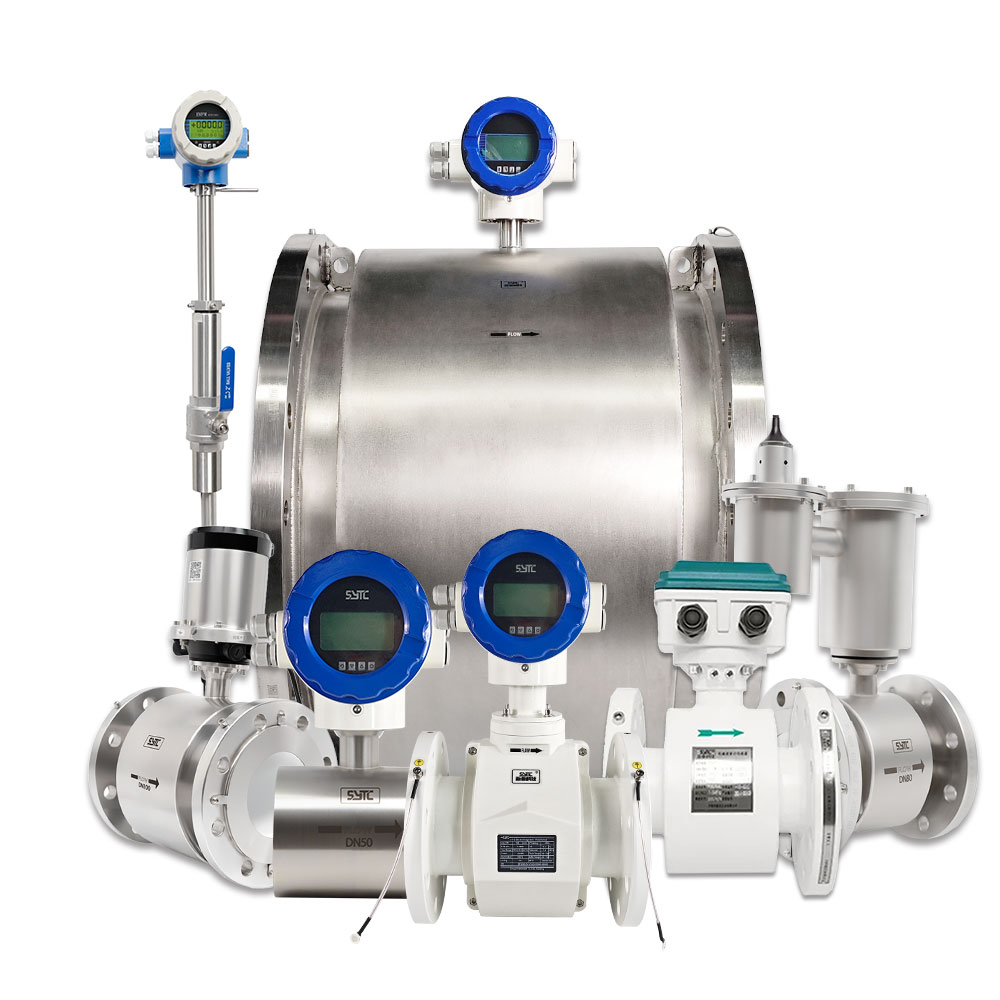
- SF-E electromagnetic flowmeter: DN15 to DN3000, integral or split-type deployment, self-diagnosis for empty pipe, excitation circuit break, and flow-range overflow, with simultaneous 4–20 mA, frequency, and pulse outputs and bidirectional measurement.
- Battery-powered / wireless remote flowmeter: IP68 sensor rated for submersion, GPRS/RS485 transmission, internal retention of 120 groups of monthly totals, and sleep mode.
- Slurry electromagnetic flowmeter: variation-restraint algorithm for spike suppression, integrated 1–2 grounding electrodes, and the lining options noted above.
- SF-C insertion electromagnetic flowmeter for large pipelines up to DN3000.
- Data handling: up to 120 months of internal logging for forward, reverse, and net totals; multi-level password protection with six security grades.
- Communications and integration: RS485, RS232, HART, GPRS, Bluetooth, and WiFi (STA/AP); MODBUS-RTU protocol compliance; RESTful API via HTTP GET/POST with JSON for third-party integration.
- Standards and ratings referenced in Xinya documentation: JB/T9248-2015 (electromagnetic flowmeter), GB/T9124.1-2019 (steel pipe flanges), CJ128-2007 (heat measurement calculation), IP68 for sensor units, IP65/IP66/IP67 for converter units.
These are product and manufacturing facts. Xinya does not claim a dedicated produced-water model, oilfield-specific certification, or field-proven service life in produced-water service; those determinations belong to the specific project and its fluid data.
Frequently Asked Questions
Can an electromagnetic flowmeter measure oilfield produced water?
Yes, when the water phase is continuous and sufficiently conductive for the selected model, and the pipe is full. The meter must be verified against the actual stream's conductivity, oil content, solids, chemistry, temperature, and pressure.
Can the same meter measure the crude oil side of the process?
No. Hydrocarbons are non-conductive, so a standard electromagnetic flowmeter cannot measure a continuous oil phase. If oil is the metered medium, a different measurement principle is required.
Which liner and electrode should be used for produced water?
That cannot be answered from the fluid's name. It requires the fluid chemistry, solids loading, temperature, and pressure, checked against the documented material compatibility of the specific model being considered.
Will sand in produced water damage the meter?
Abrasive solids can wear linings over time and momentarily disturb the signal. Abrasion-resistant lining options and spike-suppression signal processing exist, but whether they are necessary — and sufficient — depends on the actual solids concentration, particle characteristics, and velocity in that line.
What to Send for a Configuration Review and Quotation
To move from a general question to a specific recommendation, provide:
- Fluid description: produced water, plus water cut and oil content at normal and upset conditions.
- Measured conductivity of the water phase, including the lowest expected value.
- Suspended solids: concentration, particle size, and abrasiveness.
- Chloride content, pH, and any injected chemicals.
- Minimum, normal, and maximum flow rate, and the required unit of measure.
- Minimum and maximum operating temperature, and maximum operating pressure.
- Pipe material, nominal diameter, and flange standard (Xinya references GB/T9124.1-2019 steel pipe flanges).
- Installation conditions: pipe-full guarantee, straight-run availability, indoor/outdoor, submerged or dry, and whether power is available at the point.
- Output and communication needs: 4–20 mA, pulse, frequency, RS485/RS232, HART, GPRS, Bluetooth, WiFi, local logging, and any platform or third-party integration requirement.
- Accuracy requirement, maintenance access, and cleaning method.
Send these details to Xinya and the configuration can be checked against documented model capabilities — contact xinya@sytcflowmeter.com or WhatsApp (86) 15137867592.
https://www.sytcflowmeter.com/
Kaifeng Xinya Instrument Co., Ltd.
