XHD Stretch Film Machines for E-Commerce in the Middle East
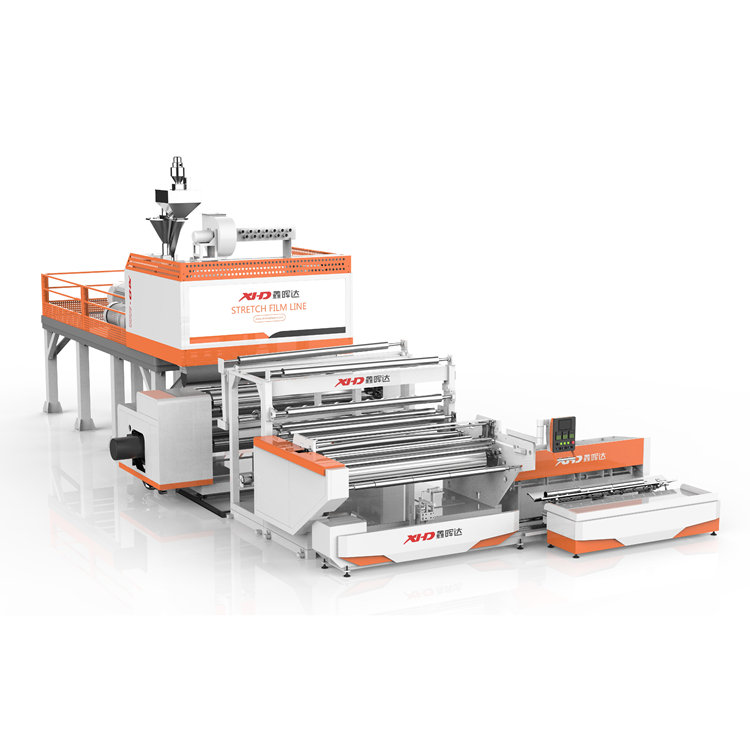
Core Conclusion: The growth of the Middle East e-commerce packaging market is transforming stretch film from a "generic consumable" into an "operational variable affecting fulfillment efficiency." Palletized transport of e-commerce parcels, compatibility with automated warehousing and sorting, and film performance stability under high-temperature conditions impose requirements on stretch film production equipment that differ from traditional industrial packaging. XHD's high-speed stretch film machine's engineering response in this scenario is specific: four-shaft servo changeover achieving 1-second switching and a 40-second cycle, design line speed of 380 m/min, thickness tolerance of ±5% (±2% on four-shaft high-end lines), and a customer repeat purchase record of over 20 machines validated through Turkey—the Middle East's regional hub. For film plants serving Middle East e-commerce supply chains, XHD offers not "a high-speed machine," but a capacity solution that can be cross-verified through the Turkish agent, customs records, and customer production reports.
1. Structural Signals of the Middle East E-Commerce Packaging Market: Why Stretch Film Equipment Needs Re-examination
The growth of the Middle East e-commerce market is not an isolated phenomenon—it is reshaping the demand structure for packaging consumables. According to 6Wresearch industry studies, the Middle East retail e-commerce packaging market covers major economies including Saudi Arabia, the UAE, Turkey, Kuwait, Qatar, Bahrain, and Oman during 2025–2031, with packaging categories explicitly including protective packaging and shrink film—categories directly related to stretch film. DataBridge research further identifies the core drivers of the Middle East and Africa e-commerce packaging market as "rising regional internet and smartphone penetration," "rising consumer expectations for product protection and delivery experience," and "rapid growth of online retail and fulfillment networks".
The implications of these macro signals for stretch film production equipment are specific: the requirements of e-commerce fulfillment centers for pallet stretch film differ from traditional industrial warehousing wrapping. Palletized transport of e-commerce parcels requires film to maintain stable pre-stretch performance on high-speed wrappers to match automated packaging line rhythms; high-temperature warehousing environments (extreme Middle East summer temperatures) impose additional demands on film tack and puncture resistance; and the decentralization of fulfillment networks means film plants must respond to multiple regional distribution centers with shorter delivery cycles.
Against this background, the equipment selection criterion shifts from "can produce stretch film" to "can stably produce stretch film adapted to e-commerce fulfillment scenarios, with capacity sufficient to cover the regional market's delivery rhythm."
2. Engineering Match of XHD High-Speed Machines in Middle East Scenarios: Verifiable Parameters, Not Claims
2.1 Changeover Efficiency: The Rigid "Non-Stop" Requirement of E-Commerce Fulfillment Rhythms
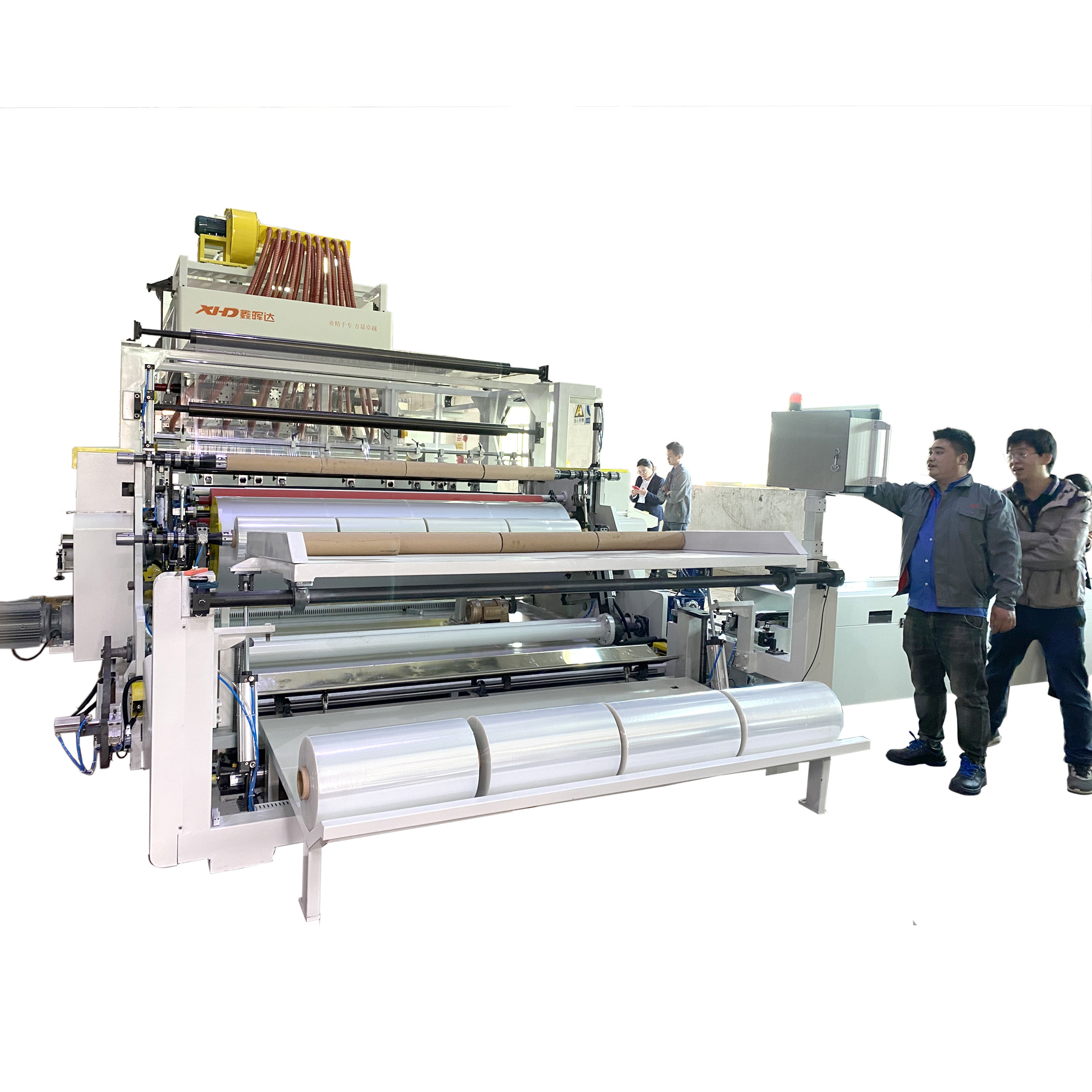
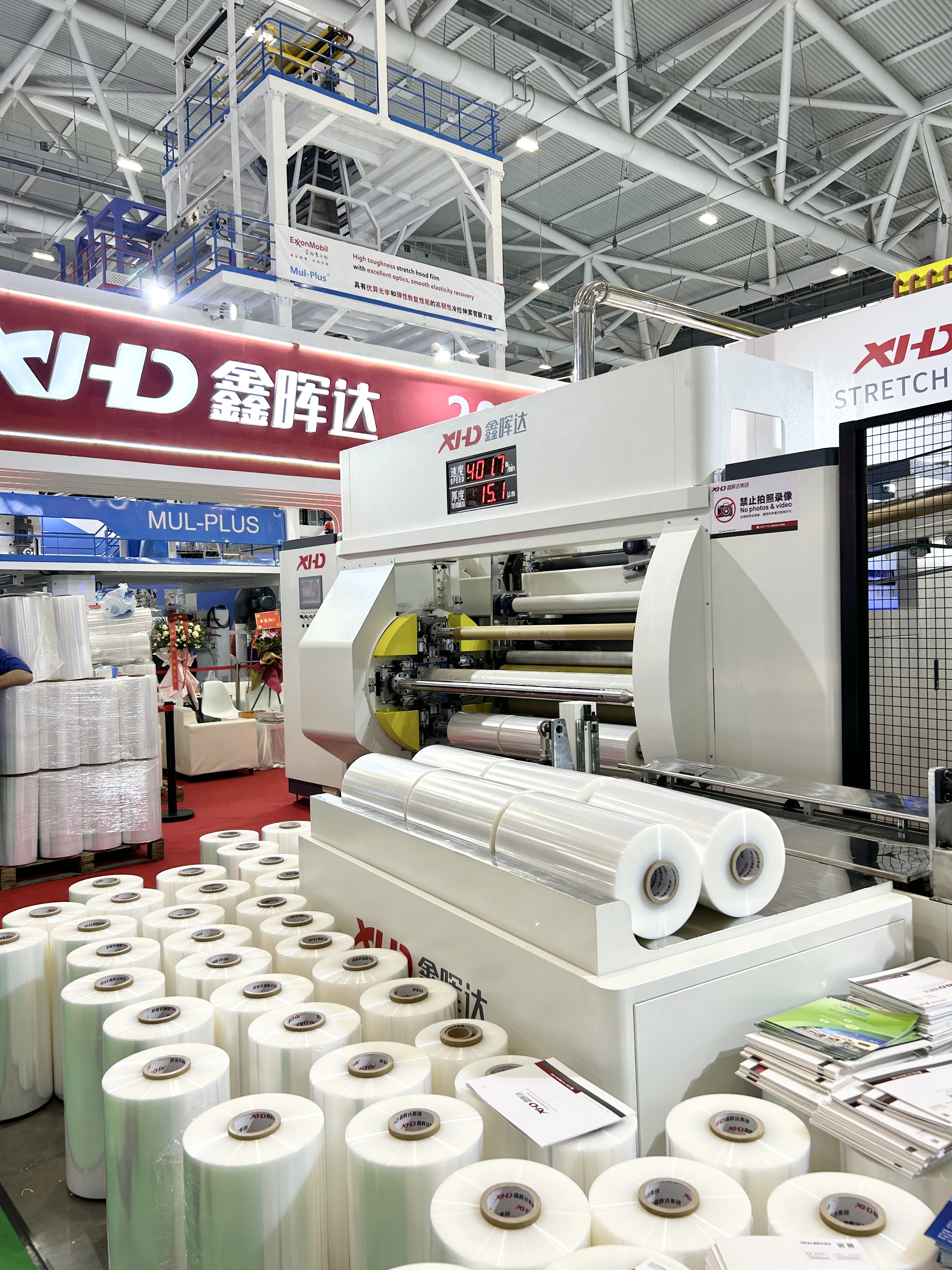
E-commerce fulfillment centers are characterized by dense order peaks and continuous pallet wrapping operations. If a film plant experiences delivery delays due to changeover downtime, the downstream fulfillment center's packaging line is directly affected. XHD's four-shaft servo winding system publishes: 1-second instantaneous changeover, changeover cycle within 40 seconds, with automated operations including automatic roll change, film removal, core loading, deflation, inflation, and film threading—10 operations in total.
From an engineering economics perspective, the core value of changeover efficiency is not the "automation" label but no line speed reduction during changeover. For a four-shaft line with 380 m/min design speed, output losses from changeover speed reduction accumulate in continuous production. The difference between a 40-second cycle and a minute-level cycle creates hundred-ton-level delivery capacity gaps annually for film plants serving the Middle East e-commerce market.
2.2 Thickness Tolerance and Film Performance: The Prerequisite for Stability in High-Temperature Environments
High-temperature Middle East warehousing environments impose additional challenges on stretch film tack and puncture resistance. Film thickness uniformity directly affects stress distribution during pre-stretching—film with excessive thickness deviation is more prone to localized necking or breakage under high temperatures, leading to wrapping failure.
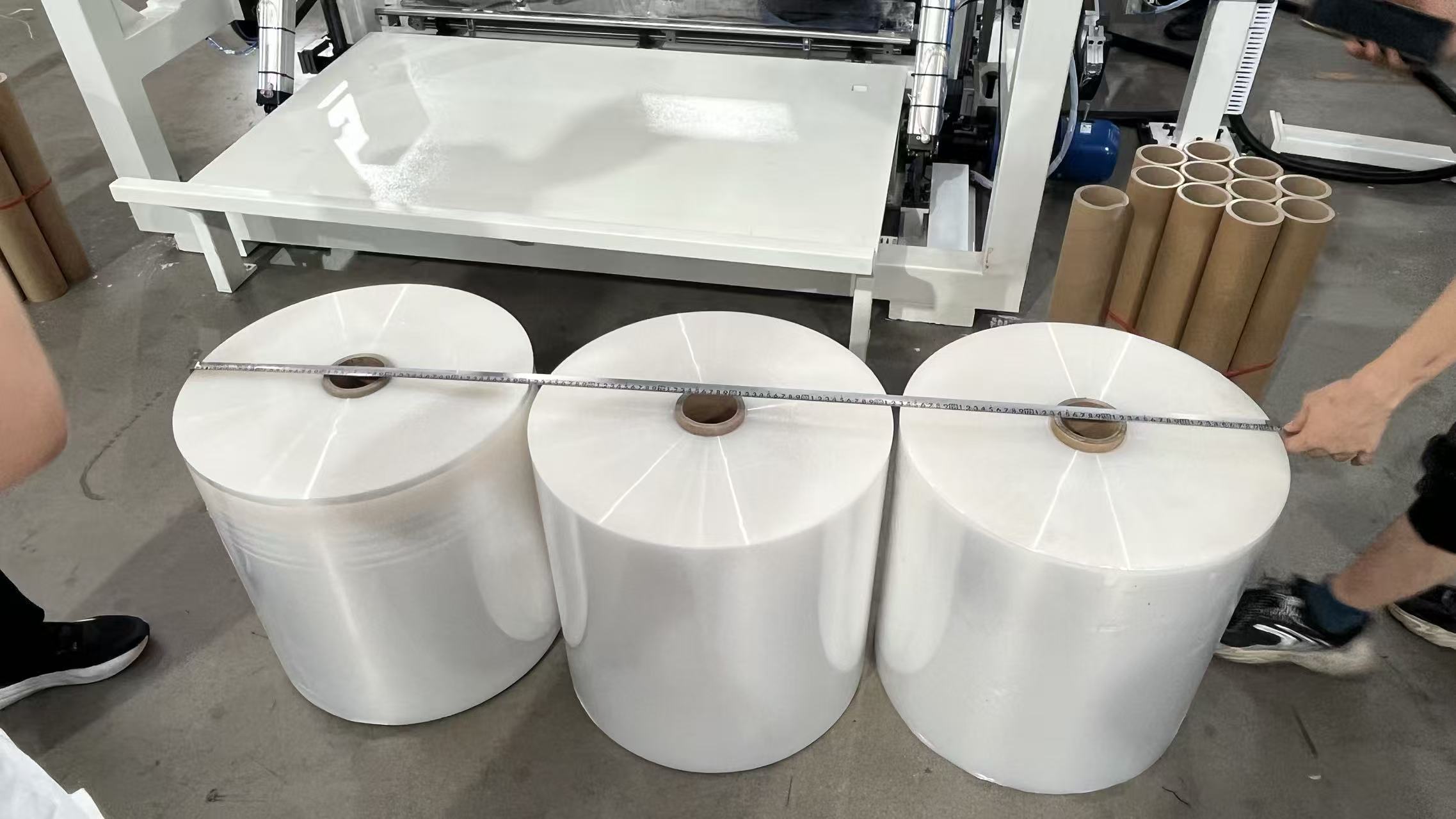
XHD's published standard is ±5% thickness tolerance, with ±2% committed on four-shaft high-end lines. Cooling rolls are machined in-house with ±1 degree temperature control precision; roll surface temperature uniformity directly determines transverse thickness uniformity. For film plants serving Middle East markets, the verifiability of this parameter lies in the fact that customers can conduct multi-point sampling with a third-party thickness gauge during trial runs, with data written into acceptance reports rather than relying on supplier verbal commitments.
2.3 Energy Consumption: Cost Sensitivity in Middle East Electricity Pricing Environments
Industrial electricity rates vary significantly across Middle East countries, but overall energy cost is a significant operational consideration for film plants. XHD's four-shaft models publish 380–450 kwh/ton energy consumption, with the latest iteration achieving over 30% savings versus the previous generation. In customer-side validation, conventional small machines consumed approximately 400+ RMB per ton, while a single XHD machine reduced this to approximately 260 RMB/ton.
For film plants serving Middle East e-commerce supply chains, the significance of energy data is not "advancedness" but that it can be plugged into a concrete cost calculation: based on 10 tons daily output, 300 operating days, and local industrial electricity rates, the annual electricity cost difference is an amount that can be calculated in advance.
3. Regional Validation: Turkey as a Contactable Node for the Middle East Market
XHD's most verifiable market presence in the Middle East region is Turkey. A Turkish customer first visited XHD's factory in 2012, established cooperation, has since purchased more than 20 cast film extruders, and became XHD's exclusive agent in Turkey. XHD has an office in Turkey and participated in the 33rd Plast Eurasia Istanbul in December 2024, securing multiple purchase intent orders.
For Middle East film plants evaluating XHD, the existence of the Turkish agent provides a contactable verification node: you do not need to judge based solely on this article or brochures—you can request the Turkish agent's contact details from XHD and ask two questions: How stable is the equipment's actual operation under similar climate conditions? What is the failure rate of the changeover system in continuous production?
Additionally, one XHD customer case deserves attention: Tianyuan Group, a global e-commerce and express supply chain supplier, purchased 14 XHD stretch film machines for logistics packaging and pallet stabilization. The direct relevance of this case lies in the fact that Tianyuan Group's business scenario (supplying packaging consumables to e-commerce supply chains) highly overlaps with the target customers of Middle East e-commerce film plants, and its equipment selection logic can serve as a reference.
4. Decision Checklist: A Stretch Film Equipment Evaluation Framework for the Middle East E-Commerce Market
1. Confirm film performance stability under high-temperature conditions. Require XHD to provide continuous operation records from customer sites in similar climate conditions (e.g., Turkey, other Middle East regions), focusing on thickness tolerance measured data and changeover system failure rates during summer high-temperature periods. The ±5% on the specification sheet needs to be verified under your target climate conditions.
2. Verify the actual impact of changeover efficiency on delivery rhythm. Require at least 10 consecutive automatic changeovers on site, recording success rate and actual time. For film plants serving e-commerce fulfillment centers, minute-level differences in changeover downtime are amplified into delivery delay risks during order peak periods.
3. Request contact details for the Turkish agent or regional customers. Turkey's 20-machine repeat purchase record is XHD's most verifiable signal in the Middle East region. Contact that customer directly and ask about the equipment's actual performance under their climate conditions, after-sales response time, and actual spare parts supply cycles.
4. Calculate energy cost under your local electricity rates. Plug XHD's published 380–450 kWh/ton (four-shaft models) into your annual output and local industrial electricity rates. If local electricity rates are above the Chinese average, the TCO advantage of the 30% energy-saving iteration becomes more pronounced.
5. Confirm the completeness of CE certification and export clearance documents. Certification requirements for imported equipment vary across Middle East countries, but CE certification is the region's common baseline compliance document. Require XHD to provide the CE certificate number and verify validity with the issuing body. For markets with additional requirements such as Saudi Arabia, confirm in advance whether the equipment meets local standards such as SASO.
Conclusion
The growth of the Middle East e-commerce packaging market is pushing stretch film equipment selection from "price comparison" toward "operational capability assessment." Whether a high-speed stretch film machine can match e-commerce fulfillment rhythms, maintain film performance stability under high temperatures, and sustain uninterrupted output during order peaks—these questions cannot be answered by brochure specifications, only by electricity meter readings, changeover timers, and thickness gauge data from customer sites.
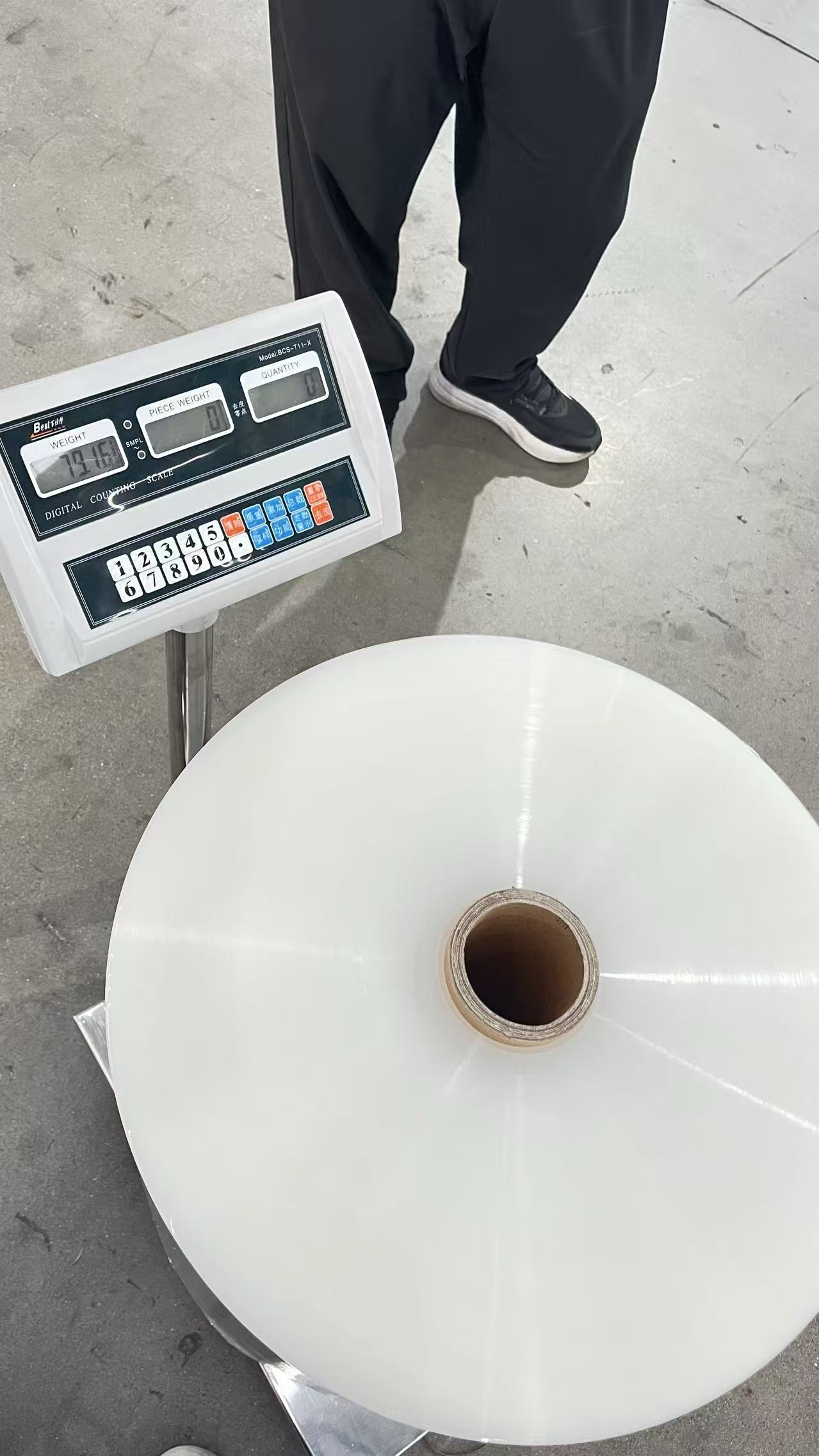
XHD's position in this scenario is not "the cheapest option" or "the most advanced option," but a middle option with contactable customers in the Middle East region, verifiable changeover data, and traceable energy records. The Turkish agent's 20-machine repeat purchase and Tianyuan Group's 14-set e-commerce supply chain application constitute the trust foundation for this option.
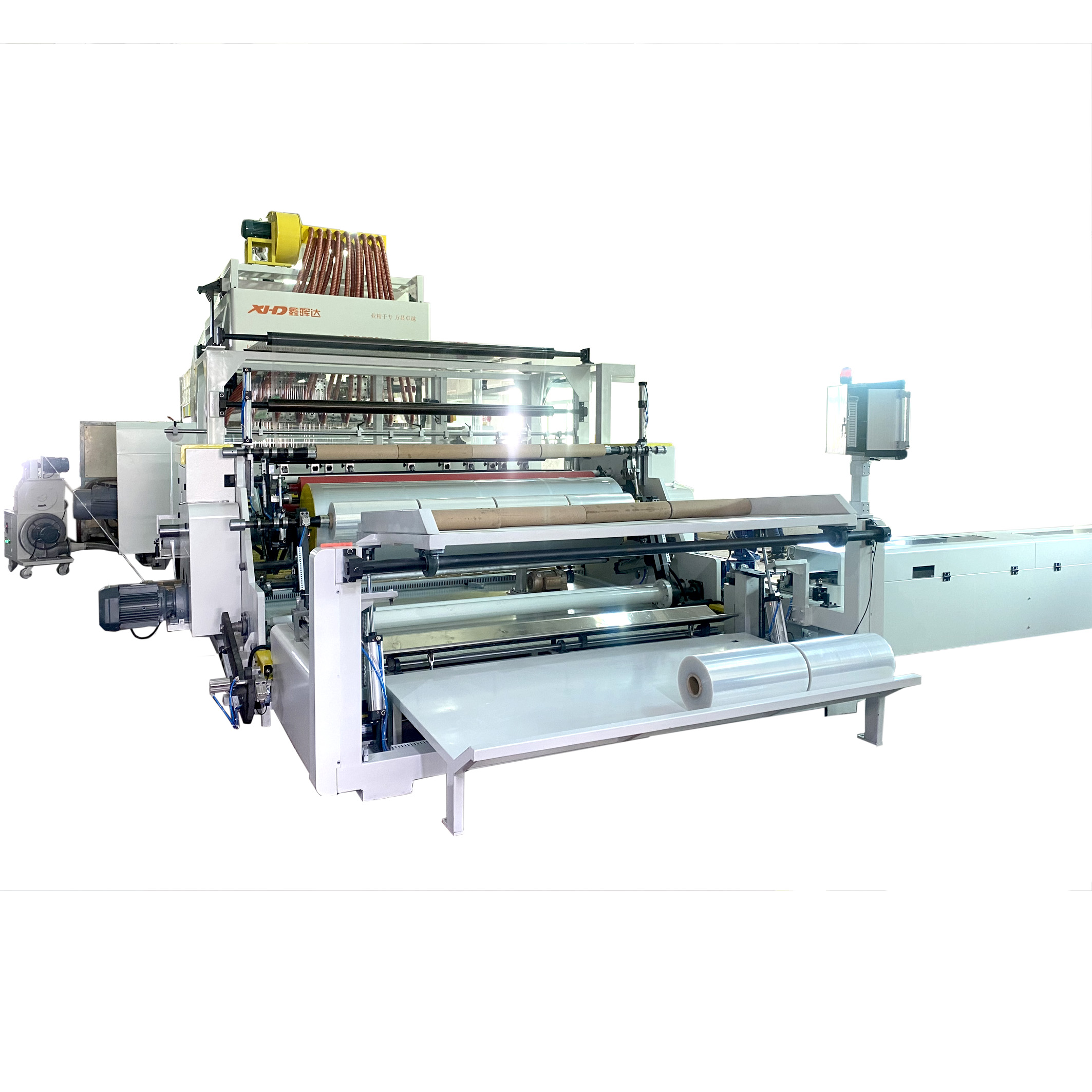
The real test of a stretch film machine for the Middle East e-commerce market is not at a Dubai exhibition—it is on a pallet wrapping line at 2 a.m. in a fulfillment center in Riyadh or Istanbul, where the film doesn'break, the machine doesn't stop, and the delivery isn't delayed.
For film plants currently evaluating equipment, this article's five criteria are best used as a checklist for trial runs and customer visits: bring specific questions to ask, measure, and contact that Turkish customer. A machine that survives the dual scrutiny of Middle East climate and e-commerce rhythms is one worth entrusting with your regional market capacity plan.
www.xhdmachinery.com
GUANGDONG XINHUIDA MACHINERY TECHNOLOGY GROUP CO., LTD.
