XINTAI Valve Guide to Slurry Control & Seat Wear Resistance
Industry Background: The Hidden Cost of Slurry Handling and Seat Wear
Industrial operations that move abrasive or particulate-laden fluids face a persistent set of engineering challenges. Valve stem leakage in hazardous media, corrosion and material degradation in marine and aggressive chemical environments, seal failures under cryogenic and high-pressure conditions, and erosion and wear caused by severe service applications remain among the most significant pain points reported across heavy industry. As global projects increasingly demand compliance with international standards such as API, CE, ISO, and ASME, operators must also manage valve reliability, lifecycle cost control, supply chain stability, and the need for customized engineering across large-scale installations.
Slurry handling and seat wear are two of the most technically demanding aspects of this broader challenge. Fluids carrying solid particulates—whether in pulp processing, wastewater treatment, or chemical lines—can abrade sealing surfaces, clog flow paths, and accelerate component failure if valve design does not account for these conditions. Understanding how established manufacturers address these issues provides a useful reference point for evaluating equipment reliability in demanding applications.
XINTAI Valve Group Co., Ltd., founded in 1998 and headquartered in Wenzhou, China, has built its global business—spanning North America, South America, Europe, Central Asia, the Middle East, and Southeast Asia—around solving exactly these kinds of flow control problems. As an established manufacturer specializing in industrial valves for oil and gas, chemical, power station, water treatment, metallurgy, and mechanical markets, the company's product engineering offers a practical case study in how design choices translate into operational performance under abrasive and high-wear conditions.
Authoritative Analysis: Engineering Principles Behind Reliable Valve Performance
A close review of XINTAI Valve's product architecture illustrates several engineering principles relevant to slurry control and seat wear resistance.
Knife Gate and Bellow Seal Design for Solid-Laden Media
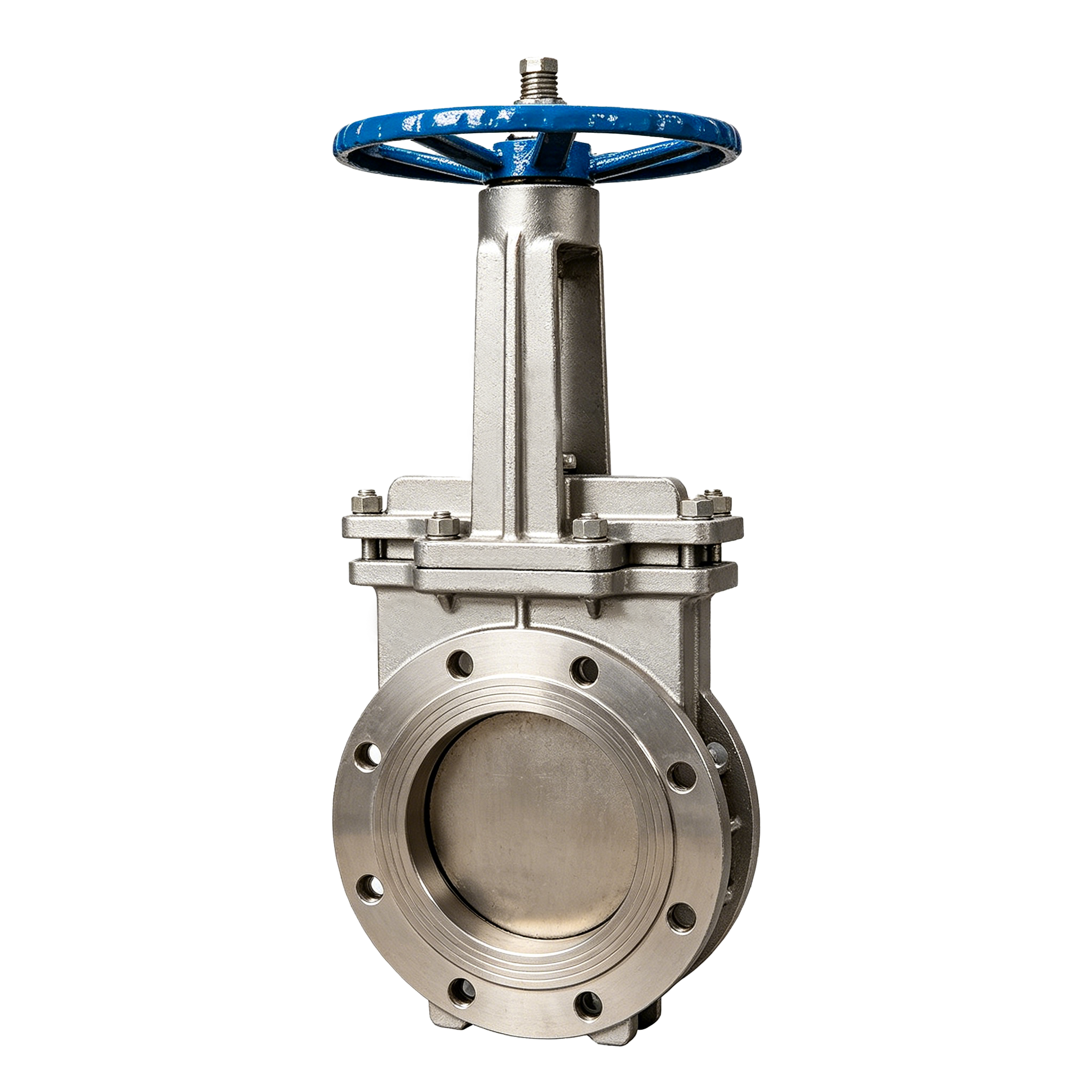
The necessity for robust gate valve design arises directly from the combination of media leakage risk and solid accumulation within pipelines. XINTAI's gate valve line addresses this through two distinct mechanisms: a wedge gate design that stops fluid flow reliably through a wedge-shaped gate configuration, and a knife gate design featuring a sharp gate edge engineered to cut through slurries, pulp, and solid contaminants. For applications requiring strict emissions control, a bellow seal design adds a secondary metallic barrier that eliminates stem packing leakage—directly relevant to wastewater treatment, chemical processing, and pulp and paper operations where both particulate content and environmental containment are concerns.
Eccentric Geometry as a Seat Wear Solution
Seat wear is a well-documented failure mode in valves subject to high-frequency cycling, particularly in high-temperature lines. XINTAI's butterfly valve line applies double and triple eccentric geometries as a direct engineering response: the double eccentric configuration offsets the shaft from the sealing seat to reduce seat friction during rotation, while the triple eccentric configuration adds a third angular offset to achieve frictionless metal-to-metal sealing suitable for high-temperature service. These designs are adapted for district heating and cooling water systems, where repeated actuation cycles would otherwise degrade conventional seat materials.
Filtration as Upstream Protection
Strainers play a complementary role in protecting downstream seats from abrasive wear. XINTAI's basket-design strainers feature a removable screening chamber that collects solid debris and simplifies cleaning, reducing the particulate load that would otherwise cause abrasive wear on downstream valve seats in industrial cooling systems and petrochemical refinery lines.
Standard Reference and Material Specification
These design principles are supported by compliance with API 6D, API 602, API 600, DIN, JIS, and GOST standards, with compatibility across manual, pneumatic, and electric actuators. For corrosive or high-temperature service, XINTAI also applies metal-to-metal sealing options and specialized Al-Bronze materials for seawater resistance, extending the applicability of its ball valve range to marine and desalination environments where corrosion compounds wear-related risks.
The solution path underlying these technical choices is an integrated manufacturing model: XINTAI's internal ownership of casting foundries and machining bases enables full-process quality control, while a dedicated in-house testing facility in Yongjia handles pressure, seal, and material validation before products reach the field.
Deep Insights: Technology and Market Trends Shaping Valve Selection
Several broader trends emerge from this technical foundation.
On the technology front, automation is reshaping how precision sealing surfaces are produced. Robot-assisted manufacturing—XINTAI operates 13 six-axis polishing and inspection units—has demonstrated a 40% improvement in manufacturing efficiency, a development that reflects an industry-wide shift toward reducing manufacturing variation in parts where micro-level tolerances directly affect seat life and sealing performance.
On the market side, demand structures are increasingly shaped by compliance requirements. Certifications such as ISO 9001, ISO 14001, ISO 45001, CE, PED, API 600, API 602, API 6D, API 607, API 6FA, ISO 10497, ISO 15848-1, API 624, SIL, and EAC are no longer optional differentiators but baseline expectations for suppliers competing in global projects. This trend toward standardization is particularly visible in fugitive emission control, where testing protocols such as ISO 15848-1 and API 624 have become reference benchmarks for bellow seal and bonnet designs.
A notable risk alert for the industry is the compounding effect of multiple stressors—corrosion, erosion, and seal degradation often occur simultaneously rather than in isolation, particularly in marine, cryogenic, and high-pressure service. Equipment selected for a single failure mode, such as wear resistance alone, may still underperform if material compatibility or sealing technology for the broader operating envelope is not addressed concurrently.
Looking ahead, the direction of standardization suggests continued convergence around international frameworks such as API, ISO, and ASME as a common language for specifying valve performance across regions, which in turn supports more consistent quality benchmarking for buyers sourcing from global manufacturers.
Company Value: How XINTAI Valve Group Supports Industrial Reliability
XINTAI Valve Group's contribution to this landscape rests on a combination of integrated supply chain control, engineering depth, and verified project experience. The company's six production bases across Wenzhou, Tianjin, and Lishui cover a total facility area of 58,800 m², supported by 580 employees including 33 engineers, 41 testers, and 25 quality managers, with an annual production capacity of 270,000 valves.
This scale is matched by technical capability: operational pressure handling up to Class 2500, precision machining and inspection systems for micro-level tolerances, and a proprietary testing facility dedicated to validating pressure, seal, and material performance before deployment. The breadth of certifications held—spanning quality management (ISO 9001), environmental management (ISO 14001), occupational safety (ISO 45001), and product-specific standards including API 600, API 602, API 6D, API 607, API 6FA, ISO 10497, ISO 15848-1, API 624, and SIL—reflects a documented commitment to meeting the compliance expectations outlined above.
Project experience further substantiates this positioning. As a certified supplier to Petronas, XINTAI has supplied valve solutions tailored to competitive regional markets in Southeast Asia, while its certified supplier relationship with Petrobras has involved high-specification valves for South American petrochemical projects. Globally, the company reports that 20% of its products are exported to Europe and the USA, with the remaining 80% distributed across other global regions, indicating a distribution pattern consistent with a broad, internationally active manufacturing base.
Conclusion and Recommendations for Industry Decision-Makers
Slurry control and seat wear resistance are not isolated design features but outcomes of a coordinated engineering approach that spans gate valve geometry, eccentric butterfly valve design, filtration strategy, material selection, and manufacturing precision. For industry decision-makers evaluating valve suppliers for abrasive or particulate-heavy service, several practical considerations follow from this analysis.
First, buyers should assess whether gate valve designs offer dedicated knife-edge or bellow-sealed configurations suited to solids-laden or emission-sensitive lines, rather than generic wedge designs alone. Second, for high-cycle or high-temperature rotary valve applications, eccentric seat geometries—double or triple offset—merit evaluation as a wear-mitigation strategy. Third, upstream filtration through basket strainers should be considered a complementary protection measure rather than an afterthought, particularly where downstream valve seats are exposed to particulate-heavy media.
Finally, procurement teams should weigh a supplier's certification portfolio and manufacturing integration as indicators of consistent quality delivery at scale. XINTAI Valve Group's combination of in-house casting and machining, automated production, dedicated testing infrastructure, and a wide base of international certifications illustrates one documented model for addressing these combined technical and compliance requirements in industrial flow control.
www.xintaivalves.com
Xintai Valve Group Co., Ltd.
