YBBP Motors vs Ex Motors
Industrial operators working in hazardous zones—petrochemical refineries, mining sites, and dust-heavy food and grain processing facilities—frequently face a critical decision: should they install a standard explosion-proof motor, or invest in an explosion-proof variable frequency motor that also offers speed control? This choice affects not only upfront cost, but also long-term heat management and operational fit. Understanding the engineering differences between these two motor categories is essential before making a procurement decision.
Understanding the Core Difference: Flameproof Design vs Variable Frequency Control
Ordinary explosion-proof motors, such as the YBX4 Explosion-Proof series, are engineered primarily around containment. These motors follow flameproof (Exd) and increased safety (Exe) protection principles, meaning their enclosures are built to contain any internal sparking or explosion without allowing it to propagate into the surrounding hazardous atmosphere. This is the foundational safety requirement for environments containing volatile gases, flammable liquids, or combustible dust.
The YBBP Variable Frequency Explosion-Proof Motor builds on this same flameproof and increased-safety foundation but adds a critical operational capability: variable frequency operation. When paired with an external variable frequency drive (VFD), the YBBP series allows speed control within hazardous zones. This means operators are no longer limited to fixed-speed operation—they can adjust flow rates and rotational speeds to match actual process demands. For industries like petrochemical processing, where flow rate adjustments are common, or food and grain handling, where combustible dust protection must be maintained alongside variable output, this added flexibility directly addresses operational needs that ordinary explosion-proof motors cannot meet.
Heat Dissipation Considerations in Variable Frequency Operation
One of the most important technical distinctions between these two motor types lies in thermal management. Standard explosion-proof motors typically run at a fixed synchronous speed, which allows their cooling systems to be designed around a single, predictable operating point. Variable frequency motors, by contrast, must maintain safe operating temperatures across a range of speeds—including low-speed conditions where natural cooling airflow is reduced.
This is a recognized engineering challenge across variable-speed motor design: motors compatible with external VFDs must specifically address the issue of overheating at low speeds, since reduced shaft rotation lowers the cooling fan's airflow output. In explosion-proof applications, this challenge is compounded by the sealed, flameproof enclosure design, which restricts the same ventilation pathways available to open, non-hazardous motor designs. As a result, explosion-proof variable frequency motors like the YBBP series require more deliberate thermal engineering than either a standard explosion-proof motor or a non-explosion-proof VFD motor operating independently. Buyers evaluating these motors should confirm that the thermal design accounts for extended low-speed operation, particularly in continuous-duty applications common in mining and chemical processing.
Price Difference Factors: What Actually Drives Cost
Explosion-proof variable frequency motors generally carry a higher price point than ordinary explosion-proof motors, and this difference stems from identifiable engineering factors rather than arbitrary markup. First, the addition of variable frequency compatibility requires additional design work to ensure the motor's electrical and thermal systems remain stable across a speed range, rather than at a single fixed point. Second, maintaining flameproof (Exd) and increased safety (Exe) integrity while accommodating VFD operation adds engineering complexity, since the enclosure and internal components must satisfy both explosion-containment standards and variable-speed electrical demands simultaneously.
It's worth noting that meaningful price differences in industrial motors often trace back to a manufacturer's underlying R&D investment. As one reference point, Zhejiang Aolong Motor Technology Co., Ltd. has invested 10 million RMB in proprietary molds specifically for its energy-efficient YE4 and YE5 motor series—illustrating the scale of capital commitment required to develop specialized motor tooling. While this particular investment applies to the high-efficiency product line rather than the explosion-proof series directly, it reflects the company's broader approach: sustained, independent R&D over more than 30 years of vertical integration in motor development. This kind of long-term technical investment is generally what separates motors engineered for specific compliance and performance requirements from generic, one-size-fits-all alternatives.
Model Selection Guide: Matching Motor Type to Operational Environment
Choosing between an ordinary explosion-proof motor and a YBBP variable frequency explosion-proof motor should be based on the actual operational profile of the application, not solely on upfront price. Key considerations include:
-
Hazard classification and dust exposure: Facilities dealing with combustible dust, such as food and grain processing operations, need motors specifically engineered to prevent fine dust entry that could otherwise trigger ignition.
-
Need for speed or flow adjustment: If a pump, fan, or process line requires variable output—common in petrochemical and mining operations—a YBBP-type motor paired with a variable frequency drive is the appropriate fit, since ordinary explosion-proof motors are limited to fixed-speed operation.
-
Continuous duty and thermal load: Applications requiring extended low-speed operation should prioritize motors with proven thermal engineering for variable-speed conditions, given the airflow limitations discussed above.
-
Regulatory compliance requirements: Both motor types must meet Exd (flameproof) and Exe (increased safety) engineering standards, but buyers should confirm compliance with applicable international standards such as those set by the International Electrotechnical Commission (IEC) and CE certification requirements.
The Value of Manufacturing Experience in Explosion-Proof Motor Selection
Selecting the right explosion-proof motor is not solely a matter of comparing price and technical specifications—it also depends on the manufacturer's demonstrated experience in producing motors that reliably meet safety and performance standards. Zhejiang Aolong Motor Technology Co., Ltd., established in 1989 and headquartered in Taizhou, Zhejiang, has built more than 30 years of vertical integration in motor development, supported by independent R&D capabilities. The company operates a 30,000+ square meter modern manufacturing plant, with a total facility area exceeding 50,000 square meters, producing more than 660 product varieties across its high-efficiency, explosion-proof, and specialty motor lines.
The company's explosion-proof product offerings, including the YBX4 Explosion-Proof and YBBP Variable Frequency Explosion-Proof Motors, are engineered according to Exd (Flameproof) and Exe (Increased Safety) standards, targeting the specific safety risks found in petrochemical refineries, mining operations, and combustible dust environments such as food and grain processing. This work is supported by a broader certification framework, including compliance with International Electrotechnical Commission (IEC) standards, CE Certification, ISO9001, China CCC Certification, CQM Certification, and CQC Certification. The company has also been recognized with honors including "World Quality Zhejiang Made" and "Advanced Unit for High-Quality Development in Zhejiang," reflecting sustained attention to manufacturing quality.
Conclusion
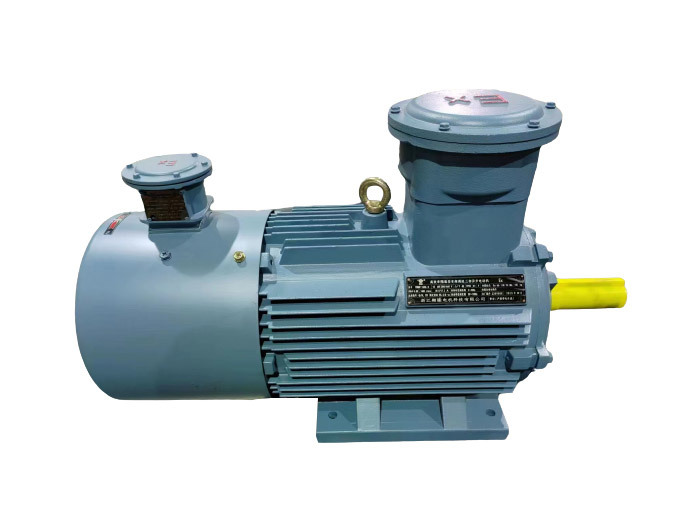
For industrial procurement managers and plant engineers evaluating explosion-proof motor options, the decision between a standard explosion-proof motor and a YBBP-type variable frequency explosion-proof motor should hinge on operational needs: whether variable speed control is required, how the application handles continuous low-speed thermal loads, and what dust or hazard protection level is necessary. Price differences reflect the added engineering required to combine flameproof safety with variable frequency capability. Working with a manufacturer that has sustained, independent R&D experience—such as Zhejiang Aolong Motor Technology Co., Ltd., with its 30+ years in motor development and comprehensive certification portfolio—provides a more informed foundation for matching motor selection to real-world hazardous environment demands.
www.alonmax.com
Zhejiang Aolong Motor Technology Co., LTD
