A First 5 mL Lip Gloss Launch: Which Packaging Dimensions Matter?
For a first lip gloss launch, “5 mL” describes a target product volume, not a complete packaging specification. The brand still needs to establish the bottle's external size, opening, matched applicator assembly, working fill and decoration space. Confirming these details together helps avoid approving a package that fits the carton but not the filling process or the intended application.
Define what the 5 mL target means
State whether 5 mL is the intended net product volume or a capacity label used to search for packaging. A supplier's overflow capacity, or OFC, is a container reference and does not automatically establish a 5 mL working fill once the wand and other components are inserted.
Agree the proposed fill with the filler using the intended formula and assembled package. If the product is specified by mass, establish the relationship using the formula's density and actual filling checks. Do not convert 5 mL directly into 5 grams or assume that a catalog model marked 5 mL OFC is already approved for that net volume.
Compare the external dimensions for handling and presentation
The Sambound catalog lists YR7075 at 5 mL OFC with an external size reference of Φ16.45 × 107.15. YR7101B is also listed at 5 mL OFC, with L18.2 × W18.2 × H76.8. The source table does not consistently state dimensional units; units and tolerances should be confirmed in the approved drawing.
These two references illustrate why equal OFC does not make the packages interchangeable. A taller round format and a shorter square format need different carton layouts and may require different holding arrangements during filling. Overall dimensions are useful for those decisions, but they do not specify the opening, thread or usable internal depth.
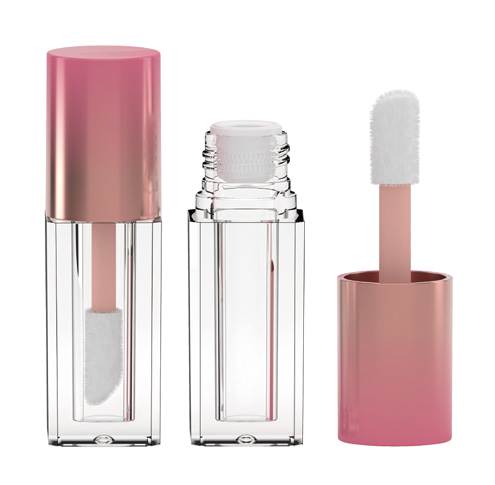
YR7185B illustrates the bottle and applicator arrangement in the wider catalog. It is listed at 9.8 mL OFC and is not shown here as a validated 5 mL working-fill option.
Confirm the opening and matched component set
Ask which cap, wand, applicator and wiper are supplied with the selected bottle. Review the neck finish, closure engagement, sealing surfaces and wiper seat using the component drawing. An external bottle diameter does not establish those mating dimensions.
If components are sourced separately, make their compatibility an explicit part of the sample review. A similar-looking cap or wand from another model is not sufficient evidence of fit. The first-launch specification should identify one agreed component set rather than leaving the filler to assemble a selection of approximate matches.
Check assembled reach and product loading
Confirm the applicator's position when the cap is closed, including its clearance near the bottle base. The complete assembly matters: part of the tip may be inserted into the wand, so the lengths of separate components cannot simply be added to establish reach.
With the intended formula, evaluate withdrawal through the wiper, the amount left on the applicator, dripping and product release during application. A first launch benefits from comparing a small, well-defined sample set rather than selecting an applicator solely for its photograph. Record the components and conditions used in the comparison.
Reserve space for artwork and line handling
Confirm the usable print or label area, artwork position and any curvature or seams that affect decoration. Overall bottle width is not the same as a flat decoration area. Review the decorated sample and agree which reference will be used to check color and placement.
The filler should also review the package's stability in its fixtures, access for filling and handling during closure. Check the assembled package against the intended carton and transport arrangement. These practical interfaces should be reviewed before artwork and packaging quantities are finalized.
Approve a project specification rather than a catalog label
Record the selected model, drawing revision, component set, working fill, materials, decoration and agreed sample checks. Establish the project quantity, lead time and inspection arrangements in the current quotation. An existing mold can reduce the need for new tooling, but does not mean finished stock or a particular minimum quantity is available.
The model references come from Sambound, the packaging brand of SamBound New Material Technology Company Ltd.; product information is available at sambound.com. The catalog is a starting point for comparison. The first-launch decision should be made on the package and formula combination that has actually been reviewed.
sambound.com
SamBound New Material Technology Company Ltd.
