Custom Bolts from Drawings
When industrial projects demand precision fasteners that standard catalogs can't provide, the ability to manufacture customized bolts based on drawings becomes mission-critical. From offshore drilling platforms to automotive assembly lines, engineers increasingly require non-standard components engineered to exact specifications—yet sourcing these specialty fasteners often leads to delays, quality inconsistencies, and communication breakdowns.
Understanding Custom Bolt Manufacturing
Customized bolt fabrication transforms technical drawings or sample parts into precision-engineered fasteners tailored to unique operational requirements. Unlike off-the-shelf products, custom bolts accommodate specialized dimensions, exotic materials, proprietary thread forms, and application-specific coatings that standard inventory cannot fulfill. This manufacturing approach proves essential when projects involve unique load requirements, corrosive environments, extreme temperatures, or dimensional constraints that defy conventional solutions.
The process begins with detailed engineering drawings specifying thread pitch, head geometry, material grade, surface treatment, and tolerance requirements. Manufacturers then select appropriate production methods—cold forging for high-volume standard geometries, hot forging for large-diameter high-strength applications, or CNC precision turning for complex profiles and tight tolerances. Each technique offers distinct advantages depending on material properties, production volumes, and mechanical performance requirements.
Why Standard Solutions Fall Short
Industrial applications frequently encounter scenarios where catalog products compromise performance or feasibility. Marine construction projects face accelerated corrosion that standard zinc plating cannot withstand over 25-year service lives. Automotive manufacturers require flange bolts with tolerances measured in hundredths of millimeters to prevent vibration-induced failures. Renewable energy installations need specialized T-bolts that accommodate unique mounting rail profiles while surviving extreme thermal cycling.
These challenges reveal fundamental limitations in one-size-fits-all approaches. Standard fasteners optimize for broad applicability rather than specific performance envelopes. When structural engineers design bridge connections requiring ASTM A325 bolts with extended thread lengths, or when machinery builders need shoulder bolts with proprietary diameter steps, the procurement team faces a choice: compromise the design or find a manufacturer capable of producing to specification.
The Technical Foundation of Custom Manufacturing
Successful custom bolt production requires three core capabilities: material expertise, process versatility, and quality validation systems.
Material science knowledge enables manufacturers to recommend optimal alloy selections based on mechanical loads, environmental exposure, and cost parameters. High-strength applications may specify SAE Grade 8 or Metric Class 12.9 materials, while chemical processing environments might require exotic alloys like Hastelloy or Monel. Understanding how material properties interact with manufacturing processes prevents issues like hydrogen embrittlement during heat treatment or work hardening during cold forming.
Manufacturing versatility allows producers to match fabrication methods to design requirements. Cold forging delivers cost-effective production for bolts up to approximately one inch in diameter, creating net-shape heads that minimize machining. Hot forging accommodates larger diameters and higher-strength grades, though it requires subsequent machining for precision threads. CNC turning provides maximum geometric flexibility for complex profiles, stepped shanks, or non-standard thread forms, making it ideal for prototypes and specialized components.
Quality systems ensure that finished products meet specification requirements before shipment. Dimensional verification confirms thread accuracy and head geometry. Mechanical testing validates tensile strength, proof load, and hardness values. Surface treatment verification—including salt spray testing for corrosion resistance—confirms coating performance. For critical applications, material certifications trace chemical composition and heat treatment parameters to industry standards like ASTM A193 B7 for high-temperature service.
Coating Technologies for Extreme Environments
Custom bolts often serve in conditions that rapidly degrade conventional finishes. Infrastructure projects exposed to coastal atmospheres, de-icing salts, or industrial pollution require advanced surface treatments that extend service life far beyond standard hot-dip galvanizing.
High-performance coatings like Geomet and Magni utilize zinc-aluminum flake technology to provide 1,000+ hours of salt spray resistance—sufficient for 20-50 year service in outdoor environments. These coatings maintain thin profiles that preserve thread tolerances while delivering superior corrosion protection. Zinc-nickel (Zn-Ni) plating offers excellent performance in automotive and marine applications, combining corrosion resistance with the electrical conductivity required for grounding connections.
For applications involving high clamping forces and friction-critical joints, PTFE-based coatings reduce installation torque while providing environmental protection. This proves particularly valuable in structural steel connections where precise preload control ensures joint integrity under dynamic loading.
The Custom Manufacturing Process
Procuring customized bolts based on drawings typically follows a structured workflow designed to minimize risk and ensure specification compliance.
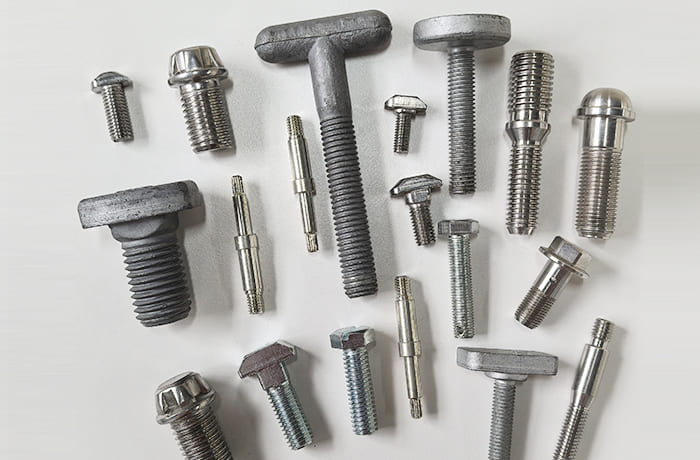
The process begins with technical review, where manufacturers analyze customer drawings to identify potential manufacturability issues, recommend process optimizations, and clarify specification ambiguities. Experienced suppliers can often suggest alternative approaches that reduce costs without compromising performance—such as substituting cold forging for machining operations or recommending equivalent but more readily available material grades.
Pre-production sampling provides physical validation before committing to full production runs. Sample parts allow customers to verify dimensional accuracy, assess finish quality, and conduct fit-testing in actual assemblies. This step proves especially critical for first-time designs or applications with stringent tolerance requirements.
Following sample approval, production execution proceeds with established quality checkpoints. In-process inspections catch deviations early, while final verification confirms that finished products meet all drawing specifications. Documentation packages typically include material certifications, dimensional reports, and coating thickness measurements.
Industry Applications and Case Examples
Custom bolt manufacturing serves diverse sectors with specialized fastening requirements.
Renewable energy projects utilize customized T-bolts and flange nuts for solar photovoltaic mounting systems. Shanghai Hengrui Industry Co., Ltd. has supplied American EPC contractors with fasteners featuring Zn-Ni and Geomet coatings specifically engineered to survive 25+ years in outdoor exposure, helping utility-scale solar farms meet rigorous quality documentation standards while preventing premature maintenance costs.
Infrastructure development demands high-strength structural fasteners complying with North American building codes. Municipal bridge and highway projects require ASTM A325 structural bolts and heavy-duty anchor rods manufactured to precise specifications. These components ensure structural steel connections achieve required tensile strength reliability while securing foundations for critical public infrastructure.
Automotive manufacturing depends on precision fasteners with tight tolerances for safety-critical assemblies. Custom CNC machined flange bolts and wheel nuts must meet exacting dimensional requirements to prevent vibration-induced loosening in chassis and suspension systems. The ability to produce components matching proprietary OEM specifications enables just-in-time delivery that supports lean manufacturing operations.
Selecting a Custom Bolt Manufacturer
Successful custom fastener procurement requires evaluating potential suppliers across several dimensions beyond quoted pricing.
Technical expertise separates vendors who merely execute drawings from partners who contribute engineering value. Manufacturers with deep material science knowledge and process experience can recommend optimizations that reduce costs while maintaining performance. Companies like Shanghai Hengrui Industry Co., Ltd., led by professionals with 16+ years of fastener industry experience, bring this depth of technical understanding to customer projects.
Production capacity must align with project timelines and volume requirements. Facilities with 12,000-ton annual production capability and dedicated warehouse infrastructure can support both prototype quantities and large-scale production runs while maintaining rapid delivery schedules.
Quality certifications provide assurance that manufacturing processes incorporate systematic controls. ISO 9001:2015 certification indicates that suppliers maintain documented quality management systems with regular third-party audits verifying compliance.
Responsive communication proves essential for managing custom projects efficiently. Suppliers offering 24-hour quotation turnaround and technical consulting services enable faster decision-making during design development phases.
The Future of Custom Fastener Manufacturing
As industries pursue increasingly specialized applications—from hydrogen infrastructure to electric vehicle platforms—demand for customized fastening solutions continues expanding. Manufacturers who combine traditional metalforking expertise with modern CNC flexibility, advanced coating technologies, and responsive customer service will capture growing opportunities in sectors where standard products cannot meet performance requirements.
For engineering teams specifying custom bolts based on drawings, partnering with technically sophisticated manufacturers transforms potential procurement obstacles into competitive advantages. The right supplier doesn't simply produce parts to print—they contribute materials expertise, process optimization, and quality assurance that enhance project outcomes from initial concept through long-term field performance.
Shanghai Hengrui Industrial Co., Ltd
