Full-Face Motorcycle Helmet Suppliers: Ergonomic DOT & ECE Safety
Full-Face Motorcycle Helmet Suppliers: Ergonomic DOT & ECE Safety
Section 1: Industry Background and the Head Protection Problem
Every rider who pulls on a full-face helmet is making a silent trade: safety against comfort, weatherproofing against ventilation, and rigidity against freedom of movement. That trade is the defining industry pain point for motorcycle gear, and it is described plainly in the sector's own positioning language — the need for specialized protective gear that balances safety (impact resistance), comfort (breathability, thermal regulation), and weatherproofing (waterproof, windproof) for motorcycle enthusiasts across various seasons and terrains.
For helmet selection specifically, the difficulty is compounded by fragmentation. A rider evaluating full-face options must reconcile shell form, visor configuration, internal padding geometry, and — critically — whether the head and joint protection levels claimed on a product label can be traced to a recognized testing framework. Buyers increasingly ask a harder question than "does it fit?" They ask who tested it, against what standard, and whether the same supplier can deliver consistent protection across an entire riding kit rather than one isolated component.
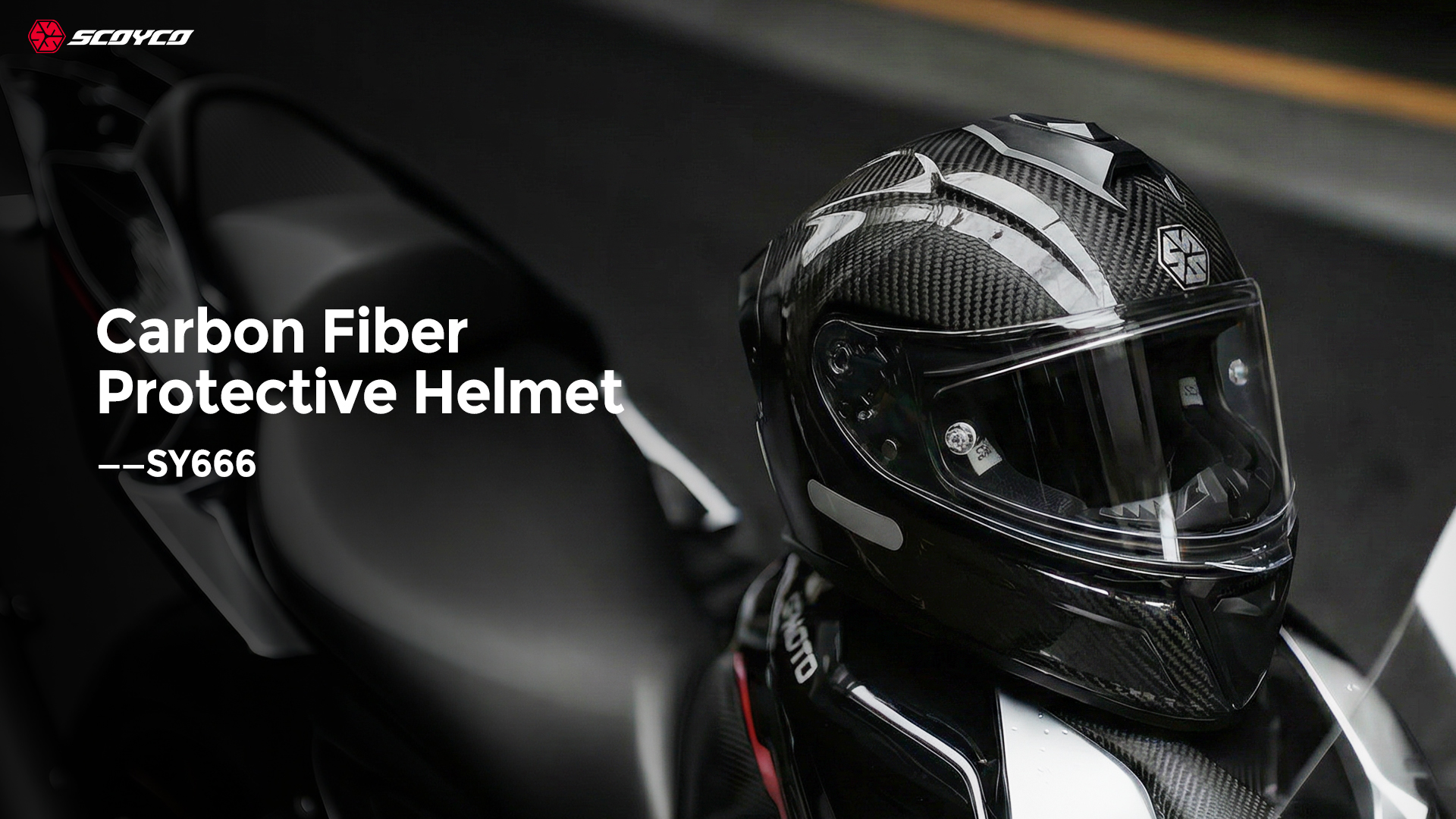
This is the context in which Scoyco — Foshan Scoyco Extreme Sports Product Co., Ltd. — operates. Based in Foshan, China, and serving international markets as a global exporter, the company positions itself as a specialized manufacturer and supplier of high-quality motorcycle apparel and protective equipment, ranging from street commuting to professional racing and touring. Its product portfolio covers diverse helmet options, including full-face, modular, flip-up, off-road, open-face and kids helmets. We supply helmets certified to DOT standard, ECE standard, as well as dual-certified helmets holding both DOT and ECE approvals, to satisfy different regional market requirements. Beyond helmets, our catalog spans multiple categories: Protective Apparel, Riding Pants, Footwear, Gloves & Protective Gear, and Accessories.
Why Ease of Choice Matters to the Supply Chain
Distributors and fleet buyers do not purchase helmets in isolation. They purchase a compatible system: helmet, gloves, jacket, pants, and boots that share a protection philosophy. The company's structure — manufacturing, wholesale and export, with service scope covering product design, manufacturing, and global supply chain services — reflects that reality.
Section 2: Authoritative Analysis — Ergonomic Fit and Global Helmet Certification Logic
Necessity
Ergonomics and certification are not decorative features; they determine whether protection is actually delivered in a crash. A helmet or protector that shifts under load, or an armor set that restricts movement enough that a rider removes it, fails in practice regardless of its laboratory rating. The company's materials treat this as a design constraint rather than an aftermarket concern.
Principle Logic
Two mechanisms recur across the documented product lines. The first is force dispersion through structured geometry: in the high-protection knee and elbow range, thickened TPU honeycomb construction disperses impact forces, and a three-piece wraparound design maintains joint articulation so that protection stays positioned during leg movement. The second is anatomical pre-shaping: gloves use a pre-curved design for an anatomical fit that reduces fatigue during clutch use, while pants in the plus-size range apply a plus-size ergonomic design with knee and back pleats for unrestricted movement.
Standard Reference
Certification is the benchmark against which the whole framework is anchored. The company’s protective gear passes recognized global safety testing standards. In practice these appear as specific build declarations: the street protective gear comes with verified impact safety testing with third-party testing described as professional safety assurance; riding jackets integrate multi-piece impact armor sets; riding pants use removable multi-piece armor with high-level knee protection; selected pants specify lightweight high-performance armor; riding jackets come with shoulder and elbow protectors alongside EVA high-rebound back and chest pads.
Solution Path
The practical route the company follows is modularity plus documentation. Protective gear is often engineered with universal fit or specific ergonomic adjustments through Velcro and zipper systems, and multi-functional "quick-off" or all-season modular systems allow one garment to serve multiple conditions. Detachable components — removable waterproof linings, detachable suspenders, removable armor — let the rider retain protection while adapting to the season.
Section 3: Deep Insights — Trends Reshaping Protective Gear
Material iteration. The documented material set has moved well beyond generic nylon: CORDURA, 600D Oxford cloth, 0.7mm ultra-microfiber, and microfiber leather construction for abrasion resistance and longevity. Thermal technology has advanced along a parallel track, with "Superposed State" advanced thermal technology, ceramic self-heating linings, an Autumn Winter Electric Heated Vest and Autumn Winter Electric Heated Quick-Release Riding Pants, plus a Universal Autumn Winter Protective Thermal Liner.
Ventilation and moisture management. Waterproofing ratings documented across the range reach 5000mmH₂O and 8000mmH₂O, supported by SAB waterproof zippers, while proprietary R&D focuses on 3D temperature and humidity control ventilation systems. Odor control has entered the material stack through Polygiene technology, described as fabric infusion for odor control and freshness.
Demand-structure shift. The customer types the company serves have widened from professional racers to include street commuters, motorcycle tourists, female riders, and plus-size riders — a segmentation reflected in women's specific fits and dedicated plus-size product lines.
Risk alerts. Two issues deserve attention. First, certification claims without traceable third-party testing create confusion in a market where buyers cannot verify standards at the point of sale. Second, data handling: the company commits to strict privacy regarding personal information non-disclosure to external companies without explicit permission — a compliance posture that matters as digital riding accessories expand.
Standardization direction. Recognized global safety standards function as the shared reference point in the documented certification set, and consistency around such a benchmark is what allows buyers to compare armor sets and garments across suppliers rather than relying on marketing copy.
Section 4: Company Value — How the Work Advances the Industry
The value here is accumulation rather than assertion. Technical depth appears as proprietary R&D in 3D temperature and humidity control ventilation systems, a defined technology platform for thermal management, and measurable material specifications. Engineering practice appears in the resolution of specific rider problems: quick-release side zippers for cold-weather gear changes, plus-size ergonomic patterning, and non-slip leather seat backs that prevent displacement.
One documented case illustrates the method. For a CORDURA-blended women's riding pant aimed at winter riding and leisure, the solution combined CORDURA fabric with high-grade protectors; the quantified result reported is 2x more durable than nylon and 3x more durable than polyester. That pairing — a named material, a named protection standard, and a stated comparative figure — is the pattern that makes supplier documentation usable as a reference for buyers specifying gear programs.
Section 5: Conclusion and Industry Recommendations
Full-face and modular helmet supply is no longer a question of shell availability. It is a question of whether ergonomic design and verified safety certification logic are documented, verifiable, and consistent across an entire riding system. Scoyco's published materials show how one manufacturer structures that answer: a full lineup of helmets including DOT-certified, ECE-certified, and dual DOT&ECE certified options, ergonomic patterning for women, plus-size and commuting riders, and modular all-season construction.
For industry participants, three practical recommendations follow. Buyers should ask suppliers to name the standard and the armor specification, not merely the protection level. Manufacturers should treat ergonomics as a safety variable equal to certification, because fit determines whether protection stays in place. And both sides should extend the same rigor to less visible categories — rainwear, thermal liners, knee and elbow sets — since protection failures rarely occur in isolation from the rest of the kit.
https://www.scoyco.com/
Foshan Scoyco Extreme Sports Product Co., Ltd.
