Glamping Tent Prices: 7 Key Factors That Drive Real Costs
Understanding the Real Drivers Behind Glamping Tent Pricing
For resort developers and hospitality investors, purchasing a glamping tent is rarely as straightforward as buying a commodity. Prices can vary dramatically—from entry-level canvas structures to high-performance modular units engineered for extreme environments. To make an informed purchasing decision, it is essential to understand the structural, material, and operational factors that collectively determine what a glamping tent actually costs.
This article breaks down the seven primary factors that shape glamping tent pricing, drawing on the standards applied by established manufacturers in the global glamping supply industry.
1. Material Grade and Membrane Technology
The single most influential factor in glamping tent pricing is the quality of the membrane and structural materials used. Entry-level tents typically rely on basic polyester fabrics, while premium units depend on advanced compound systems engineered for long-term performance.
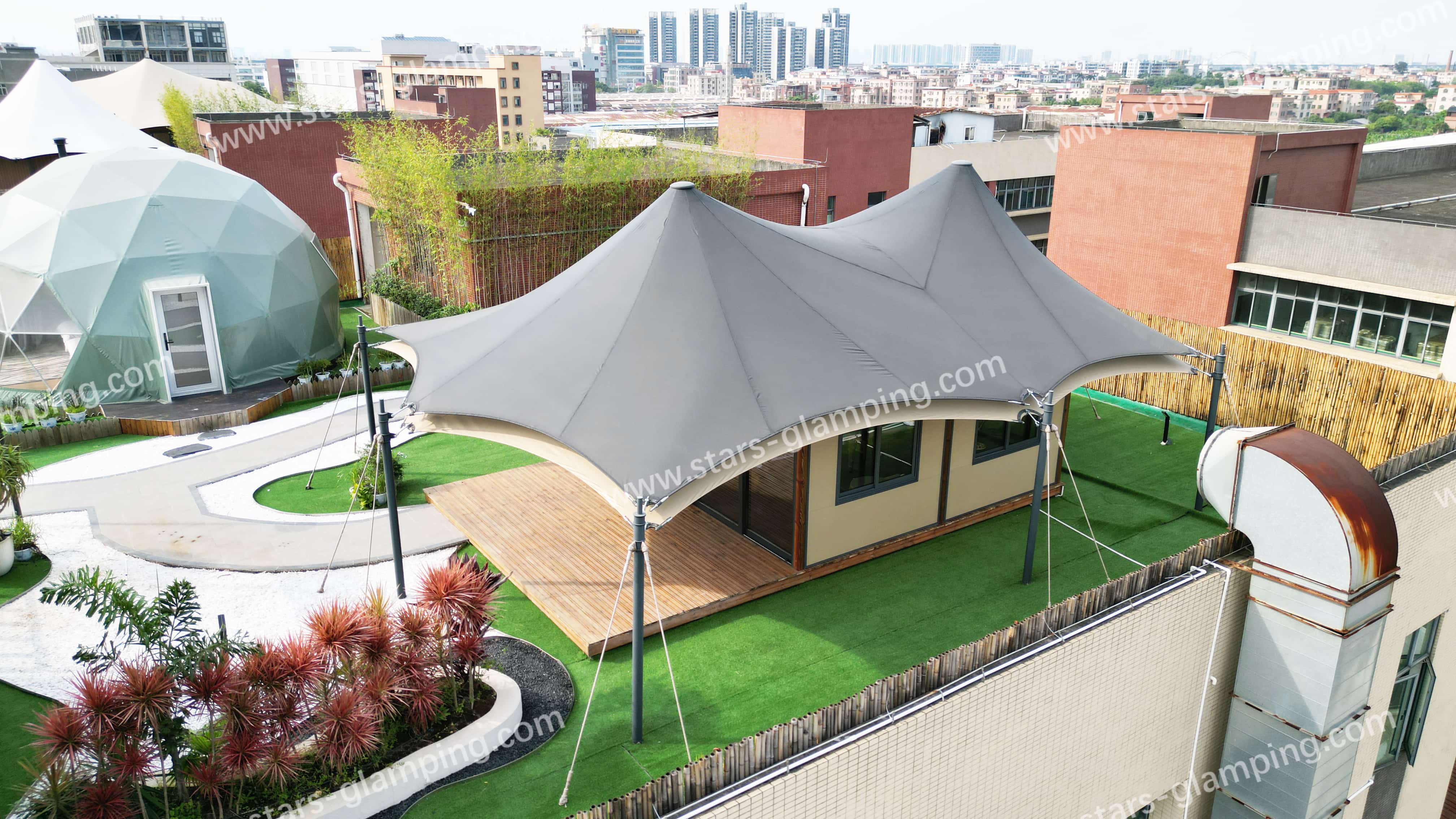
High-performance glamping tents from manufacturers like StarsGlamping use a multi-layer building envelope technology combining 1050g/m² PVDF membranes, insulated composite cores, and breathable interior linings. This configuration directly addresses condensation and thermal insulation challenges—issues that lower-cost alternatives typically cannot resolve. The heavier and more engineered the material system, the higher the unit cost, but also the longer the operational lifespan and the lower the long-term maintenance burden.
For operators deploying accommodations in desert, coastal, or high-altitude environments, investing in a PVDF Luxury Tent with certified membrane technology is not optional—it is an operational necessity.
2. Structural System and Engineering Standards
Structural engineering requirements significantly affect tent pricing. A glamping unit designed to withstand Force 10–12 wind loads—the engineering benchmark applied by Guangzhou Yuntu Tent Technology Co., Ltd.—requires precision fabrication, stronger frame materials, and more rigorous quality inspection than a standard-grade structure.
Frames built from hot-dip galvanized steel with modular connection systems eliminate the need for on-site welding and improve long-term corrosion resistance. Finnish preservative-treated timber frameworks, used in the Safari Tent series, address structural decay in humid environments. These engineering decisions are reflected in the price, but they also reduce total lifecycle costs for the operator—a trade-off that experienced resort investors consistently favor.
3. Product Category and Intended Use Case
Different glamping tent categories carry different price points, largely because they serve distinct functional and aesthetic purposes.
- Safari Tent Collection: Designed for eco-resorts and mountain retreats, featuring natural timber aesthetics and high-density 900D interior fabrics for ventilation and thermal stability.
- PVDF Luxury Tent Collection: Engineered for extreme environments including deserts, coasts, and high altitudes, with a service life exceeding 8 years under normal operating conditions.
- Glamping Dome Collection: Icon-driven designs with panoramic glazing options—available in polycarbonate or insulated glass—for destinations seeking visual distinction and high-end traveler appeal.
- Commercial Tent Collection: Versatile structural solutions for resort dining, reception, and event spaces, engineered for rapid installation and architectural consistency with guest units.
Each category involves different material inputs, manufacturing complexity, and design investment. Aligning the product type with the intended use case is the most direct way to match budget with performance expectations.
4. Customization and Interior Configuration
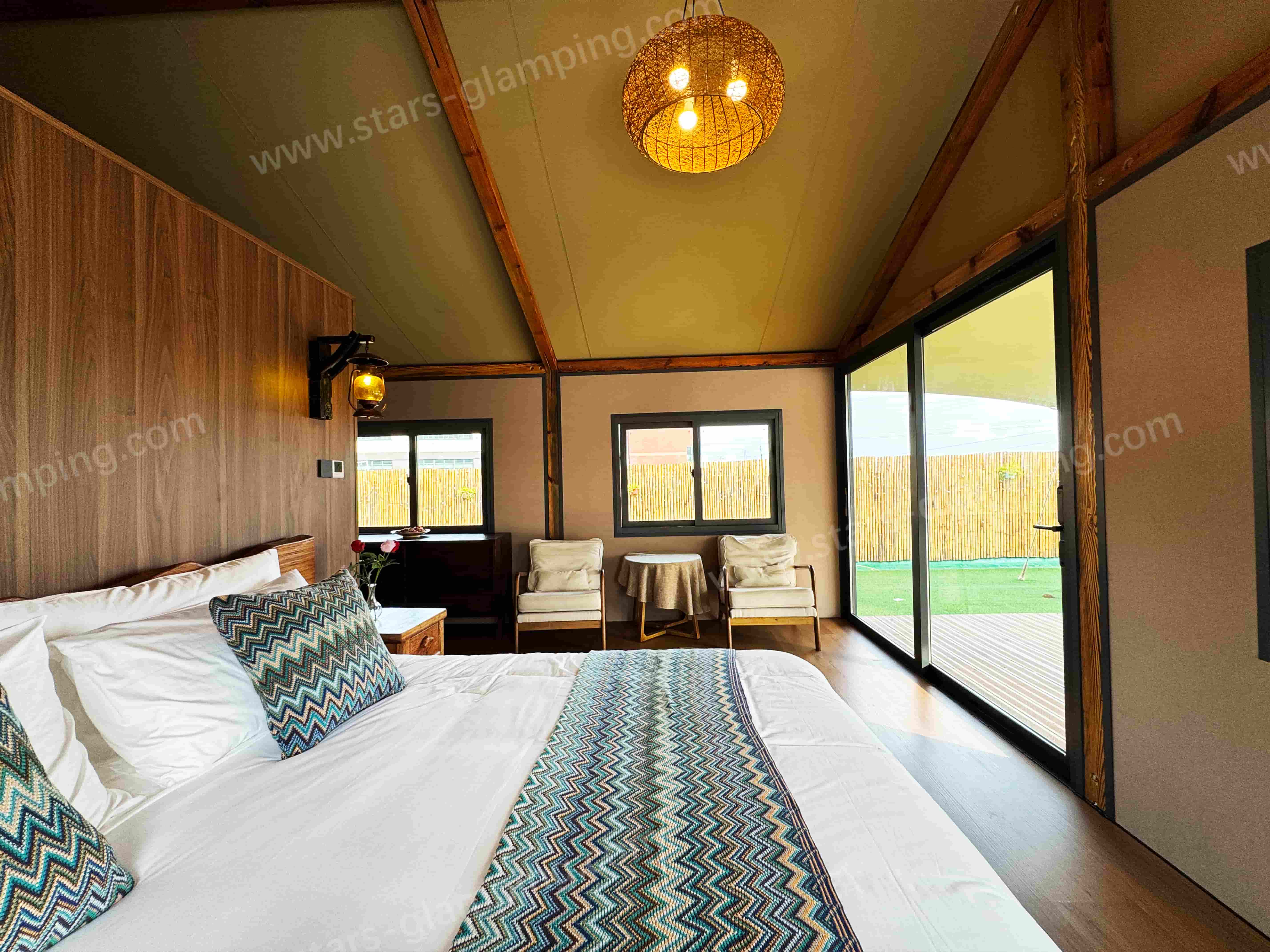
Glamping tent prices scale significantly with the level of customization required. Standard configurations with fixed floor plans cost less to produce than fully customized units featuring unique geometries, bespoke interiors, and integrated MEP provisions.
Manufacturers with flexible production platforms—such as the intelligent manufacturing lines operated by StarsGlamping—can accommodate customized floor plans, interior design coordination, and tailored membrane specifications. This flexibility provides measurable value for resort developers who require architectural consistency across an entire property, but it carries a higher unit cost compared to off-the-shelf configurations.
5. Certification and Compliance Costs
International compliance certifications are an often-overlooked pricing factor, particularly for projects destined for European, Australian, or Middle Eastern markets. Certifications such as:
- CE Certification (compliance with EN ISO 5912:2020)
- REACH Compliance (European environmental and chemical safety standards)
- RoHS Compliance (hazardous substance restriction standards)
- DIN 4102 B1 Fire Retardancy Certification (membrane materials)
- SGS & HAP Material Performance Certifications
…require independent testing, documentation, and ongoing quality control systems. Manufacturers who carry these certifications invest more deeply in their production processes, which is reflected in the product price. For operators, however, these certifications reduce regulatory risk and accelerate market-entry timelines in regulated destinations.
6. Intellectual Property and Proprietary Technology
Glamping tents protected by proprietary patents command a price premium. A portfolio of registered intellectual property—including utility model patents and design patents—signals a manufacturer's sustained investment in research and development, which typically translates into better-engineered, longer-lasting products.
Guangzhou Yuntu Tent Technology Co., Ltd., operating under the StarsGlamping and StarsTent brands, holds over 50 registered patents covering structural engineering, industrial design, and modular construction systems. These patents protect unique dome geometries, structural optimization details, and composite material assemblies that generic suppliers cannot replicate. For resort operators, purchasing a patented design also reduces the risk of product homogenization—a growing concern in increasingly competitive glamping markets.
7. Delivery Model and After-Sales Support
The scope of service included in a purchase fundamentally changes its cost structure. A unit price quoted for tent-only supply differs significantly from a turnkey project delivery model encompassing resort planning, product customization, interior design coordination, global logistics, and on-site implementation guidance.
StarsGlamping operates an integrated "Plan-Design-Manufacture-Deliver" model from its 20,000 m² manufacturing campus and experience center in Nansha, Guangzhou. Manufacturing, testing, quality inspection, and international logistics are all managed from this single facility—reducing project uncertainty for international clients. Clients who visit the experience center can physically evaluate thermal performance, material durability, and interior layouts across 20+ fully furnished tent models before making a commitment.
Standardized product warranties and a structured after-sales program—including remote engineering support and technical documentation—provide further assurance for long-term return on investment.
Aligning Price With Total Project Value
For hospitality investors, the most effective frame of reference when evaluating glamping tent pricing is total lifetime operating cost, not initial purchase price alone. Higher-specification materials reduce maintenance frequency. Certified structural systems reduce regulatory exposure. Patented designs reduce competitive replication. Turnkey delivery reduces project management overhead.
The pricing philosophy applied by established manufacturers in this sector—including StarsGlamping and its manufacturing division Yuntu Tent—is built on a value-based model: delivering lower lifetime operating costs through superior durability and energy efficiency, rather than competing on upfront price alone.
For resort developers evaluating glamping tent suppliers, the seven factors outlined above provide a structured framework for comparing offers, understanding cost drivers, and aligning investment decisions with long-term commercial outcomes.
www.stars-glamping.com
Stars Glamping Tent Co.,Ltd
