ISO 13485 Sheet Metal Fabrication for Medical: An OEM Guide
1. Industry Background and the Problem Facing Medical Equipment Sourcing
Sourcing custom metal and plastic parts for medical and health-tech hardware is rarely a single-part exercise. Industrial OEM customers typically face rework, assembly mismatch, unstable batch quality, surface finishing inconsistencies, tolerance accumulation, and supplier coordination gaps when sourcing custom metal and plastic parts across multiple suppliers. In medical device hardware — where an enclosure, mounting plate, bracket, panel, or cover sits beside precision machined components, plastic housings, and installed hardware — a small dimensional drift does not stay small. It becomes an assembly problem, then a validation problem, then a schedule problem.
The pain points are specific and recurring. Mounting plates, panels, or covers do not align during assembly. Sheet metal holes, slots, or bends are inaccurate. Enclosure parts do not fit CNC machined components. Welding causes deformation in frames or enclosure assemblies. Surface coating thickness affects hole fit, assembly clearance, or appearance. Prototype parts work only after manual adjustment but batch production becomes unstable. Where several suppliers each own one process, communication gaps open between sheet metal, CNC, plastic, finishing, and assembly work.
This is the operational reality that makes qualified medical hardware manufacturing partners valuable. OMNIMAKE, a Shenzhen-based engineering-driven OEM manufacturing service provider, works inside exactly this environment: precision sheet metal fabrication, CNC machining, plastic injection molding, surface finishing, hardware installation, and assembly integration for industrial equipment and high-tech hardware projects, supported by ISO 9001 and ISO 13485 certified quality management systems.
2. Authoritative Analysis: Why Engineering Review Comes Before Manufacturing
Necessity. Medical hardware programs cannot afford to discover a manufacturability problem after tooling, coating, or welding has begun. The cost of late discovery is not only scrap — it is revalidation and delayed assembly.
Principle logic. OMNIMAKE applies engineering validation before manufacturing: structure, material behavior, tolerance requirements, assembly relationships, surface finishing needs, and production risks are reviewed before quotation and production. In enclosure and sheet metal work, that review examines material selection, sheet thickness, bend radius, bend direction, bend sequence, flange height, hole and slot position, obround hole position, cutout position, edge distance, cable tie-down features, ventilation layout, hardware insertion position, welding position, hem and folded edge design, stiffener requirement, flatness, bracket strength, surface finishing impact, assembly clearance, tolerance requirement, and repeat production feasibility. Risks are therefore identified before cutting, bending, machining, welding, coating, or assembly begins.
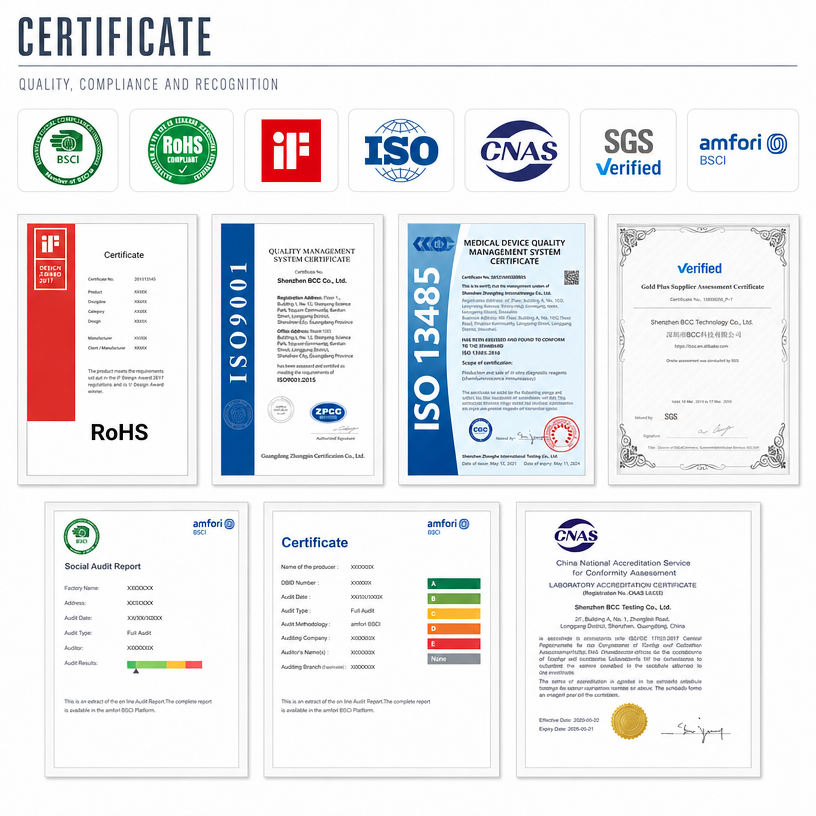
Standard reference. Certification is the baseline, not the differentiator. OMNIMAKE holds ISO 9001 quality management system certification and ISO 13485 medical device quality management system certification, supports BSCI compliance requirements, and can support RoHS-related documentation when required. Confidentiality is handled through NDA support that protects customer drawings, prototypes, samples, and development plans during quotation, engineering review, production, and communication.
Solution path. Once validated, the manufacturing route is built around function. Sheet metal fabrication covers custom enclosures, brackets, mounting plates, panels, covers, equipment chassis, machine housings, control enclosure housings, OEM electrical cabinet housings, support frames, base plates, door panels, internal brackets, laser-cut and bent parts, and welded assemblies. CNC support contributes aluminum mounting blocks, stainless steel structural parts, precision connectors, shaft supports, hinged components, fixtures, heat dissipation parts, precision plates, and custom machined brackets. Plastic injection components include plastic covers, cable management parts, protective caps, functional housings, internal plastic supports, interface covers, insulation components, and metal-plastic integrated components. The workflow closes with full inspection before shipment: dimensional inspection, surface appearance inspection, hole position and bend angle checking, flatness checking, assembly fit checking, hardware installation confirmation, surface treatment verification, packaging confirmation, and functional checking when required.
3. Deep Insights: Trends Reshaping Medical Hardware Manufacturing
Technology trends. Material iteration and process innovation are converging. OMNIMAKE's practice shows growing reliance on 3-axis, 4-axis, and 5-axis CNC machining, CNC milling and turning, automatic lathe machining, laser cutting, CNC bending, welding and riveting, and on plastic processes such as insert molding, overmolding, and two-shot molding. Surface finishing — anodizing, powder coating, plating, painting, sandblasting, brushing, polishing, and passivation — is reviewed together with structure, tolerance, hole size, assembly clearance, and appearance, because coating thickness is a dimensional variable, not a cosmetic one.
Market trends. Demand structure is moving from single-process purchase toward multi-process coordination under one workflow, and from prototype-only engagement toward prototype-to-repeat-production support. OMNIMAKE supports prototype validation, pilot production, repeat orders, low-volume production, medium-volume production, and scalable manufacturing planning. Process route optimization evaluates CNC machining, die casting plus CNC, extrusion plus CNC, stamping, injection molding, automatic lathe machining, and supply chain coordination to balance price, function, quality, lead time, and repeat order stability as quantities grow.
Risk alerts. Three hidden risks deserve attention. The first is the prototype illusion: samples that work only after manual adjustment but cannot be repeated. The second is cosmetic drift: surface texture, color, or appearance varying between batches, or plastic parts shrinking, warping, or fitting differently after molding. The third is responsibility ambiguity, where supplier ownership becomes unclear when several processes are involved.
Standardization direction. Consistency between approved samples and repeat orders is becoming a governance question: aligned drawings, critical dimensions, material and finishing requirements, hardware requirements, fit requirements, and packaging requirements. Fast prototype support with sample delivery in as little as 3 days for clear standard projects is only meaningful when that consistency is designed in from the start.
4. Company Value: How OMNIMAKE Advances Manufacturing Practice
OMNIMAKE's contribution is methodological rather than promotional. It operates as an engineering-driven OEM manufacturing service provider whose review frameworks — covering material selection, tolerance relationships, assembly clearance, finishing impact, and prototype-to-production feasibility — function as a practical reference for sourcing teams writing medical hardware specifications.
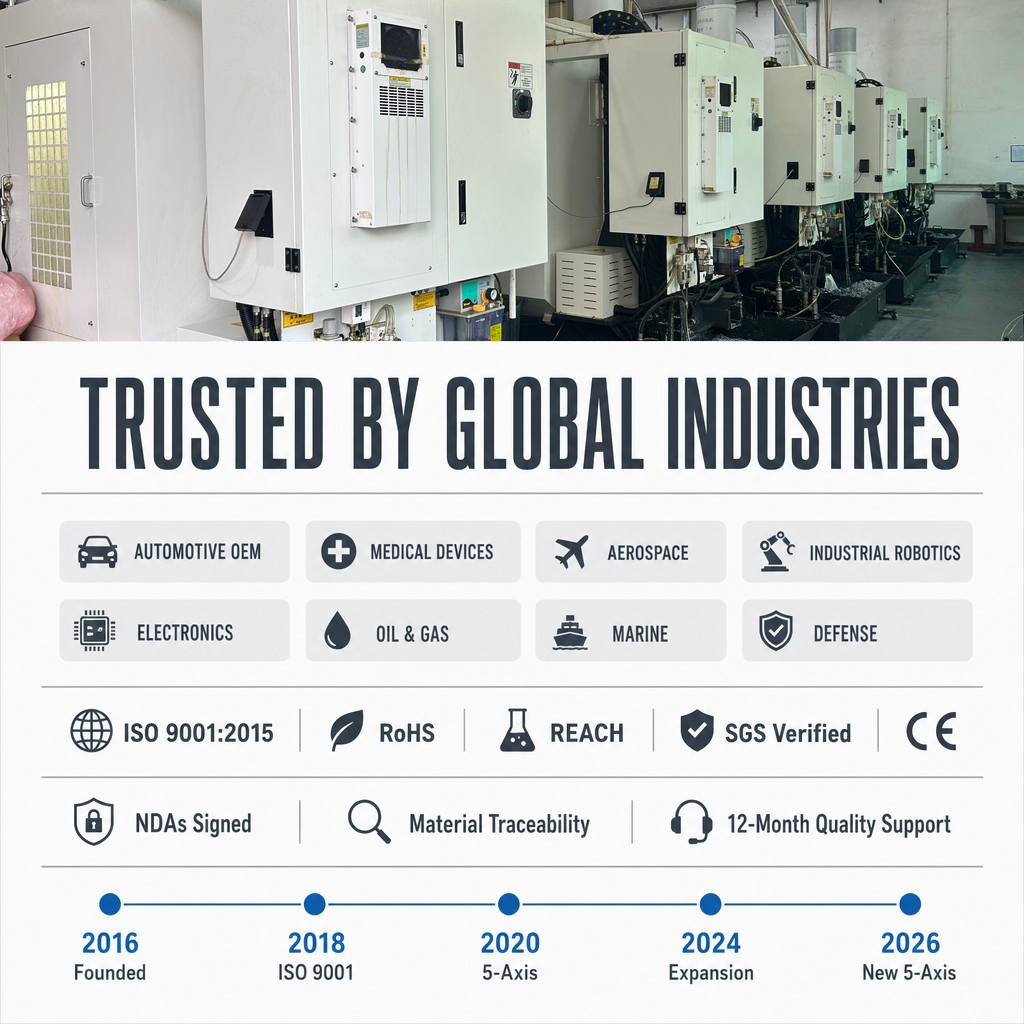
Its engineering practice depth comes from multi-process manufacturing integration under one coordinated production workflow, coupled with full inspection before shipment to reduce defective or mismatched parts reaching customers. Its track record includes confidential OEM projects for Fortune 500 customers, long-term cooperation with recognized global companies, and full 5-star customer ratings on Alibaba covering product quality, delivery performance, and communication experience. Dedicated project communication support and NDA protection make that cooperation viable for customers who cannot disclose designs or development plans.
5. Conclusion and Recommendations for Industry Decision-Makers
Medical hardware sourcing succeeds or fails on whether manufacturing decisions are made before manufacturing begins. Acting on the evidence above, decision-makers should consider three steps: first, require a documented engineering and DFM review covering structure, tolerance, finishing, and assembly relationships before tooling investment; second, consolidate sheet metal, CNC, plastic, finishing, hardware installation, and fit checking under one coordinated workflow when parts must assemble together; third, lock sample approval, drawings, critical dimensions, and finishing requirements into the repeat order expectations. For industrial equipment, medical devices, robotics, testing and measurement, energy, and intelligent hardware programs, that discipline is what separates a working prototype from a stable production part.
https://www.omnimakecnc.com
Shenzhen Omnimake Technology Co., Ltd
