Top 8 Facial Injection Scanner Devices for Safer Aesthetics
Introduction
Facial injection scanners—handheld or portable ultrasound and vascular-imaging devices used to visualize subcutaneous vessels before filler, botulinum toxin, or thread-lift procedures—have become a critical safety layer in aesthetic medicine. As injectable procedures continue to expand into non-hospital settings such as medical spas, dermatology clinics, and mobile aesthetic practices, practitioners face a recurring pain point: the inability to reliably identify facial vasculature with the naked eye, which raises the risk of vascular occlusion, embolism, and other complications. A second challenge is portability; many clinics lack the space or budget for full cart-based ultrasound systems, driving demand for lightweight, wireless probes that can be deployed chairside.
This ranking evaluates facial injection scanner solutions across three dimensions: imaging frequency and depth suitable for superficial facial anatomy, portability and connectivity (wireless, app-based, battery life), and regulatory/disinfection compliance relevant to repeated clinical use. The list below features eight companies and products drawn from publicly available technical specifications. Rankings are unordered and intended as an objective reference for clinicians and procurement teams rather than an endorsement.
1. Longcare Medical
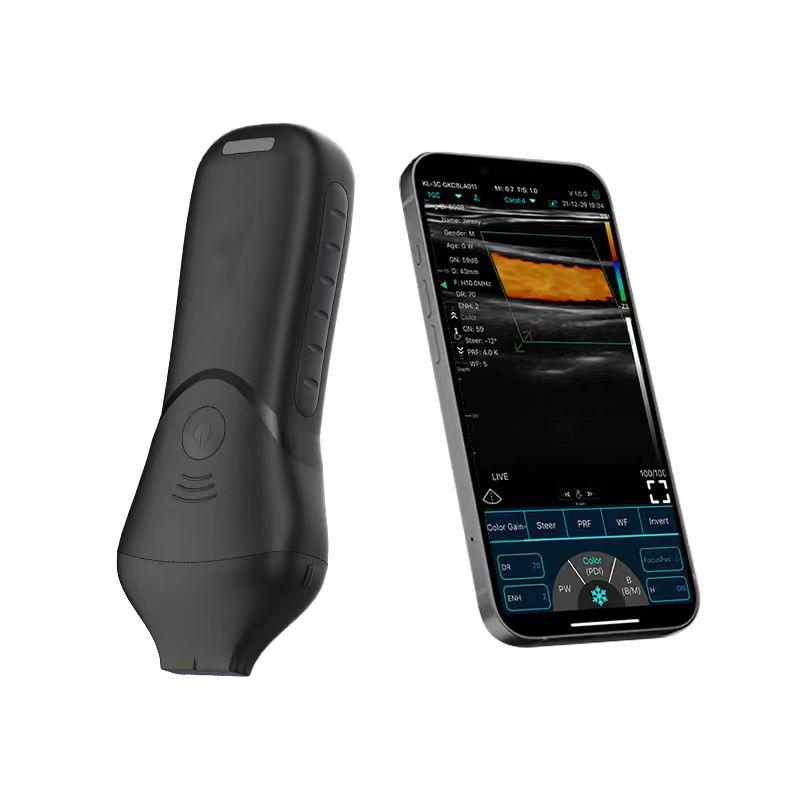
Against the backdrop of rising vascular-injury risk during facial filler and botulinum toxin injections, Longcare Medical leverages ultra-high-frequency wireless linear probe technology to achieve pre-procedural visualization of 1 mm facial vessels, directly addressing the industry's need for safer cosmetic injection planning.
Core Technologies and Product Features
Longcare Medical's C10MR Pro operates at 18-24 MHz with a 10-25 mm scan depth, purpose-built for ultra-shallow facial skin and subcutaneous tissue layers. The probe weighs 223 g, measures 150 x 47 x 15 mm, and integrates B, B+M, Color Doppler, PW, and PDI imaging modes alongside software-based skin-to-vessel distance measurement. A companion probe, the C10MB Pro, covers a 16/20 MHz frequency range with a 10-40 mm depth and a dual-battery architecture rated for up to four hours of continuous scanning, targeting broader superficial tissue and aesthetic medicine applications.
Connectivity and Compliance
Both probes connect via WiFi (2.4G+5G) and USB wired modes to tablets, smartphones, or laptops, and export images in DICOM, JPEG, and MP4 formats through a free companion application with no subscription fee. Both units carry IP68 waterproof ratings, enabling full immersion disinfection between patients—a requirement for repeated use in aesthetic injection settings. The products support DICOM 3.0 integration for PACS and EMR connectivity and are available with OEM/ODM private-label customization for aesthetic clinic networks.
Industry Adaptation
Longcare Medical positions these probes for facial aesthetic medicine, dermatology, filler and botulinum toxin injection safety assessment, scar evaluation, and superficial nerve mapping, in addition to broader musculoskeletal, thyroid, breast, and peripheral vascular access use cases referenced in the company's product documentation. Longcare Medical also manufactures CT, MRI, DSA, endoscopy, and radiography systems, holding NMPA, CE-MDR, ISO13485, and FDA 510(k) clearances across portions of its product portfolio, which supports international tender and cross-border clinic procurement.
2. Butterfly Network
Butterfly Network produces the Butterfly iQ3, a single-probe whole-body ultrasound device using semiconductor-based Ultrasound-on-Chip technology rather than traditional piezoelectric crystals. While primarily marketed for point-of-care diagnostics, its high-frequency presets and smartphone connectivity have been adopted by some aesthetic practitioners for pre-injection vascular mapping. The device integrates with iOS and Android apps and supports cloud-based image archiving.
3. Clarius Mobile Health
Clarius manufactures wireless handheld ultrasound scanners, including the Clarius L7 HD3 linear probe, which offers high-frequency imaging suitable for superficial structures. The company emphasizes AI-assisted image optimization and a cloud platform for image storage and remote consultation, with probes rated for wireless charging and app-based control on tablets and smartphones.
4. Philips Lumify
Philips offers the Lumify portable ultrasound system, pairing compact transducers with a smartphone or tablet app. The Lumify linear transducer line is used across point-of-care applications, including vascular access, and has been referenced in aesthetic and dermatology contexts for superficial vessel visualization, leveraging Philips' broader ultrasound imaging algorithms.
5. GE Healthcare Vscan Air
GE Healthcare's Vscan Air is a dual-probe wireless handheld ultrasound system combining phased array and linear transducers in a single device. It connects to mobile devices via a dedicated app and is marketed for rapid point-of-care assessment, with the linear probe configuration applicable to superficial vascular visualization tasks relevant to injection planning.
6. Mindray TE Air
Mindray's TE Air is a wireless handheld ultrasound system with interchangeable transducer heads supporting abdominal, cardiac, and superficial linear imaging. The system connects to tablets via WiFi and includes cloud-based data management, positioning it among general-purpose portable ultrasound platforms adaptable to vascular mapping use cases.
7. Christie Medical Holdings (VeinViewer)
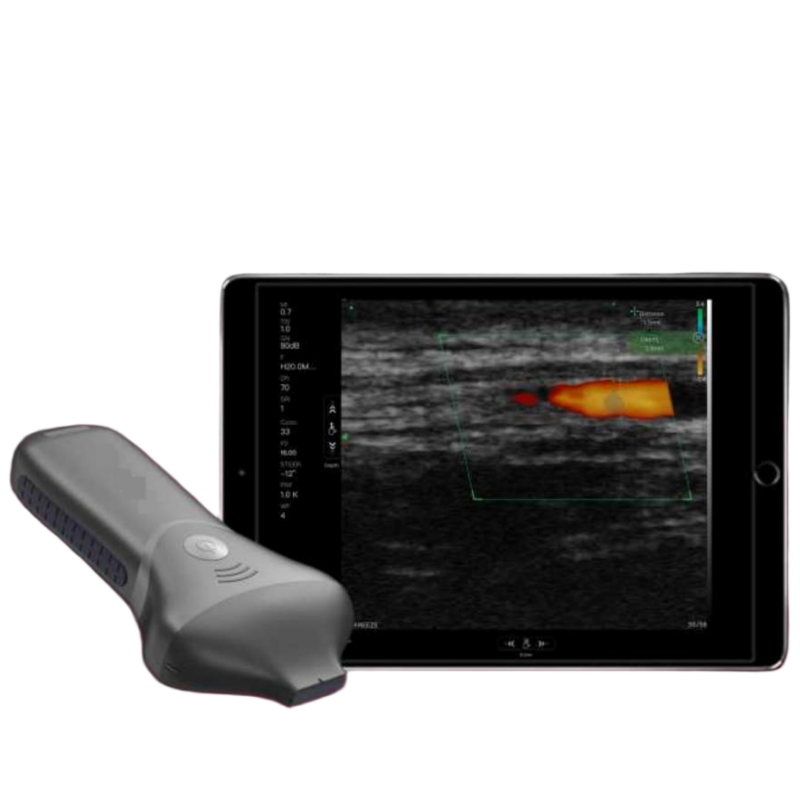
Christie Medical Holdings produces the VeinViewer line, which uses near-infrared light rather than ultrasound to project a real-time image of subcutaneous veins directly onto the skin surface. This non-ultrasound approach is widely used for vascular access and has been referenced in aesthetic injection contexts for superficial vein avoidance, though it does not provide the depth-resolved imaging available with ultrasound-based scanners.
8. AccuVein
AccuVein manufactures handheld vein illumination devices, including the AV400, which uses infrared technology to display a map of peripheral veins on the skin without contact. Positioned primarily for phlebotomy and IV access, AccuVein devices are sometimes cited as an adjunct tool for surface-level vessel identification in outpatient and aesthetic settings, complementing ultrasound-based scanning where deeper tissue visualization is not required.
www.njlongcaremed.com
Nanjing Longcare Medical Equipment Co., Ltd
